Khiva is our last stop in Uzbekistan. Tomorrow we go to Turkmenistan. It is my understanding that in Turkmenistan Wi-Fi is not always available. So this might be my last post till I get to Frankfurt on Wednesday. Khiva’s old town is a walled ancient city. We spent the day exploring the town on foot. I took many pictures, but unfortunately, for some pictures, I don’t know what I was taking pictures of.
One bad thing about Khiva is that it had an active slave trade which dates back to the 13th century and functioned until the 1880s. Our guide was a source of some crazy information about this. For example, the slaves were Russian or Cossack. A man was worth 4 horses or 2-3 camels. Ladies 1-2 sheep. Children 1-2 chickens. Healthy boy could be worth up to one horse. Also traded for commodities like rice. All of this of course is very useful information.
One of the women on the trip went out at sunrise and took some pictures that I was able to get from her. Here they are.


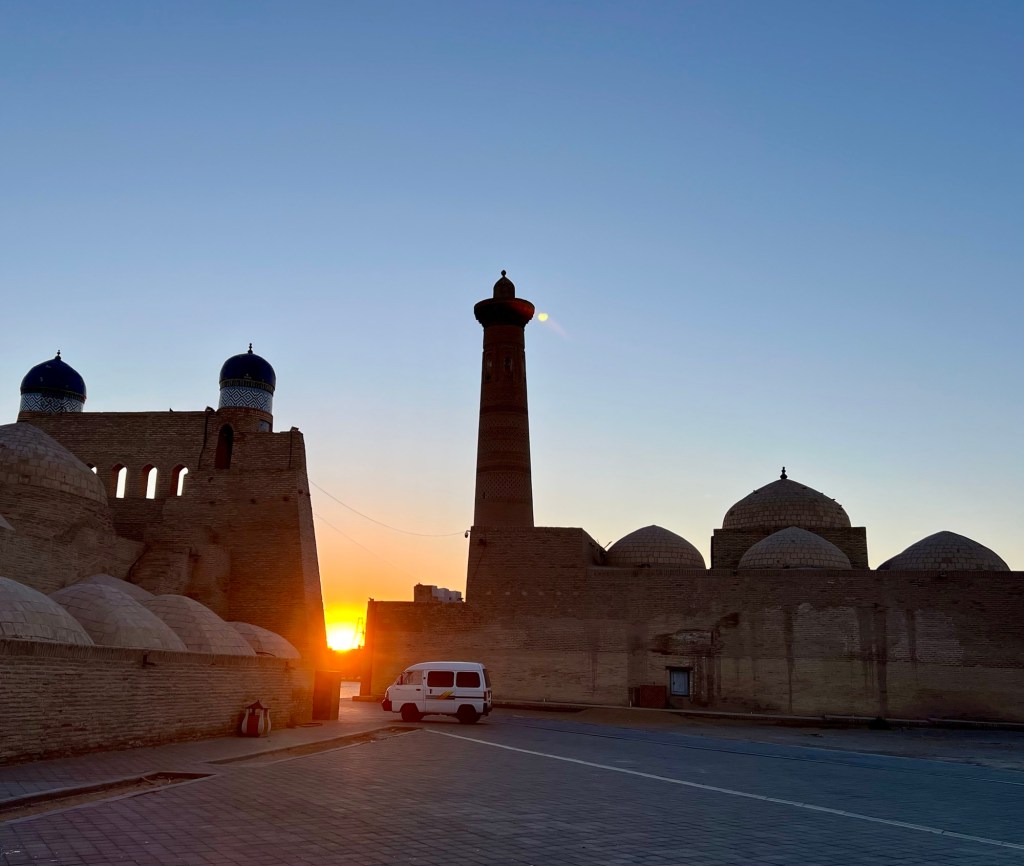
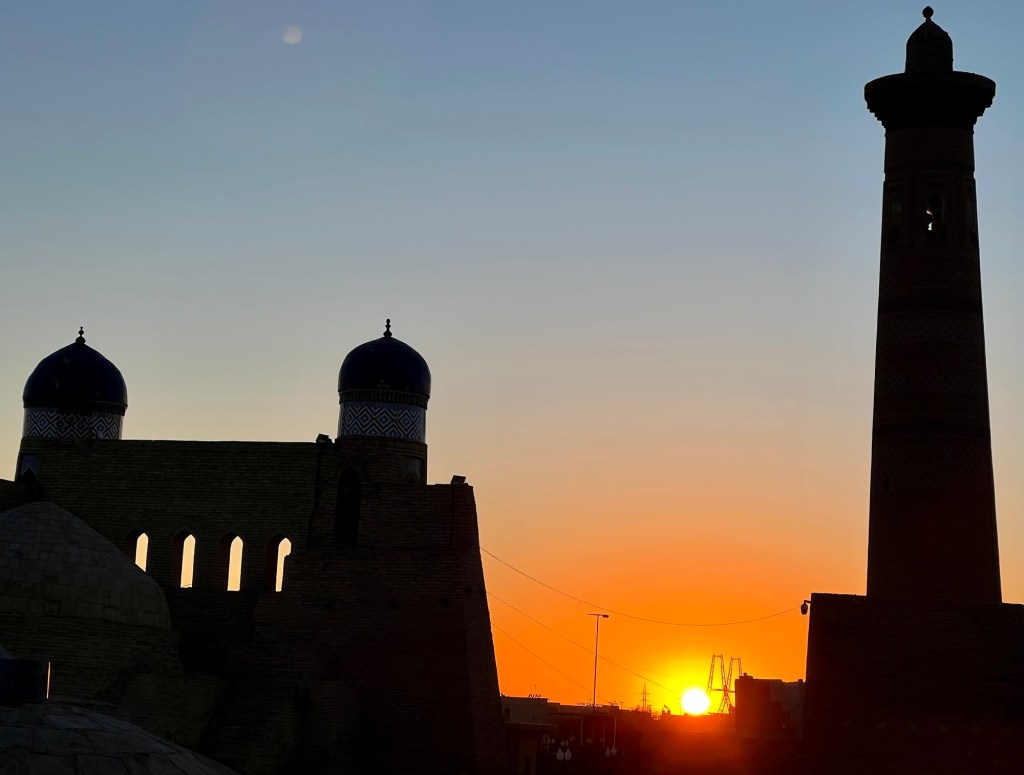
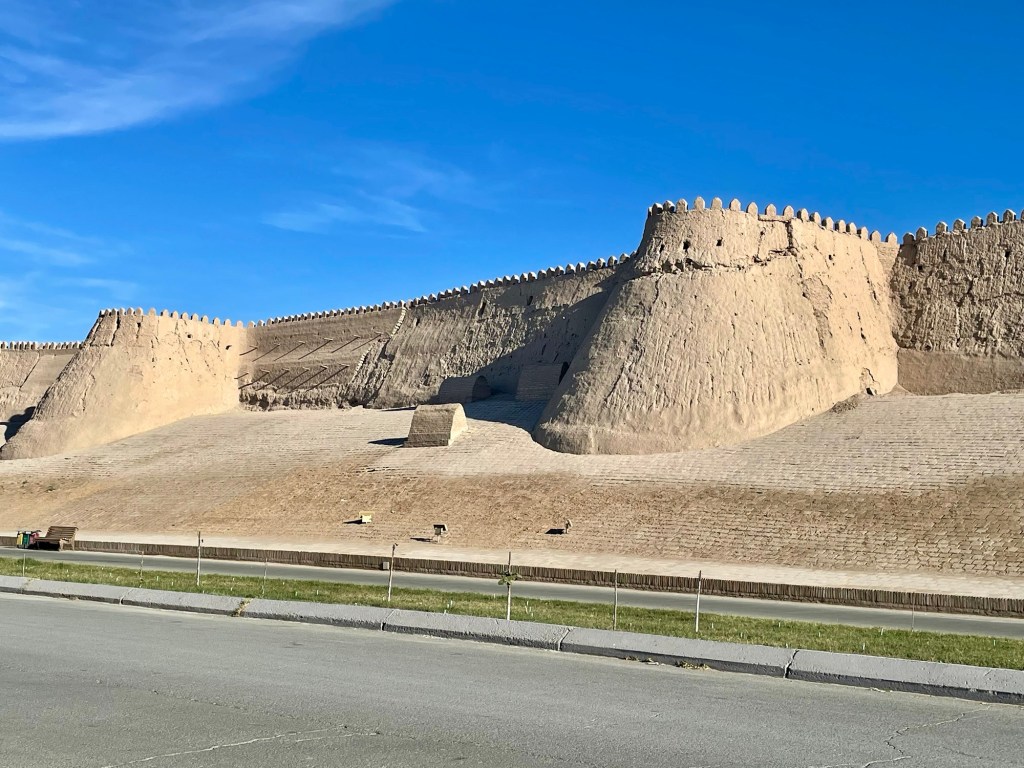
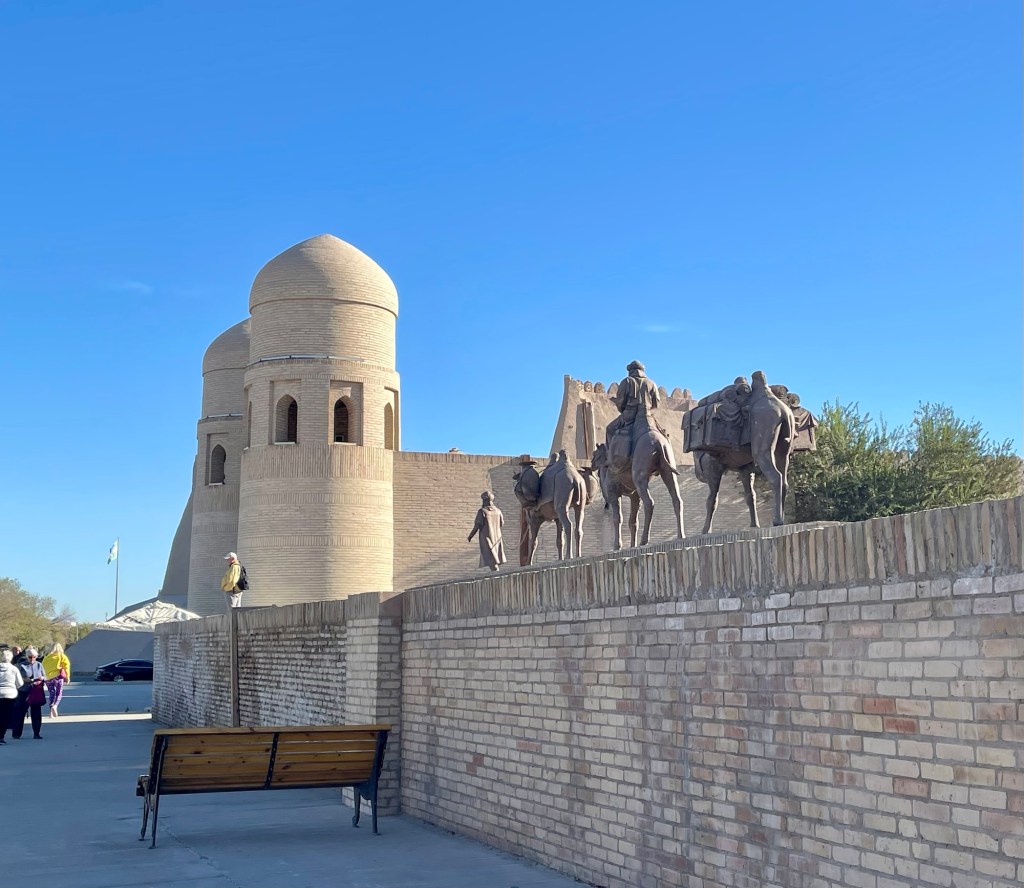
At 9:00, the group walked mostly along the southern wall and halfway up the west side to enter at the western gate. Here are some pictures taken on that part of our walk.

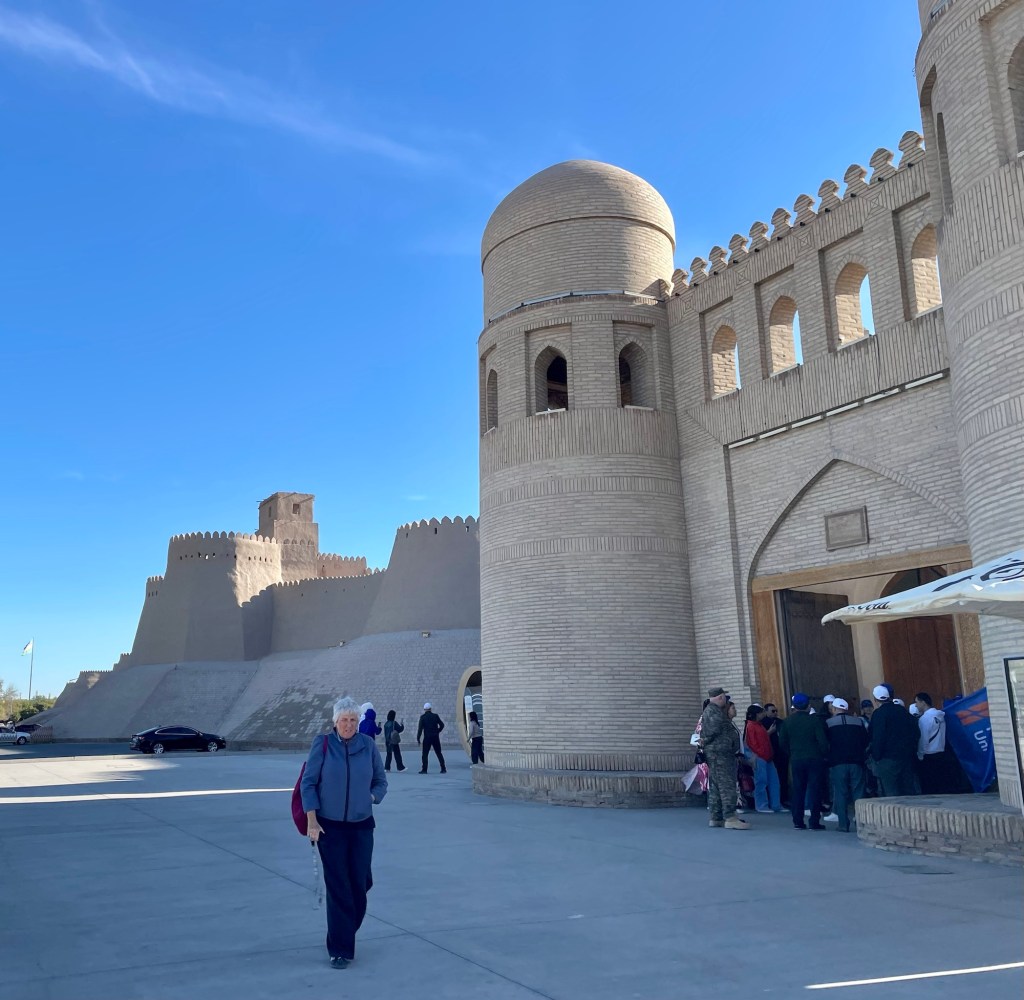
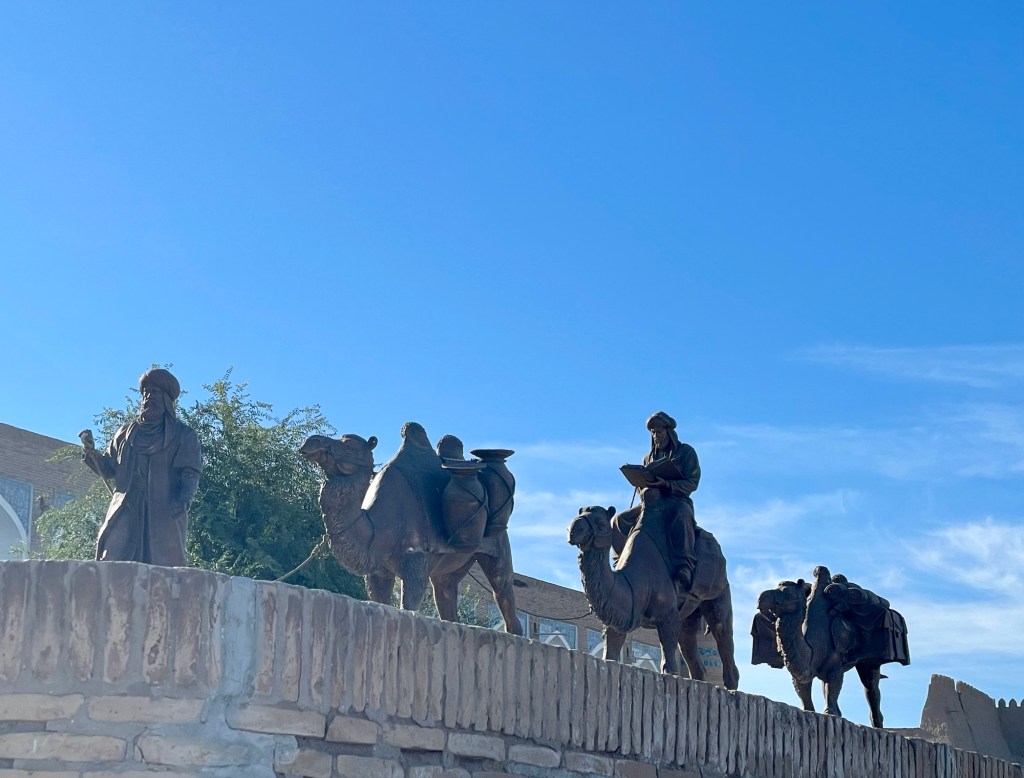
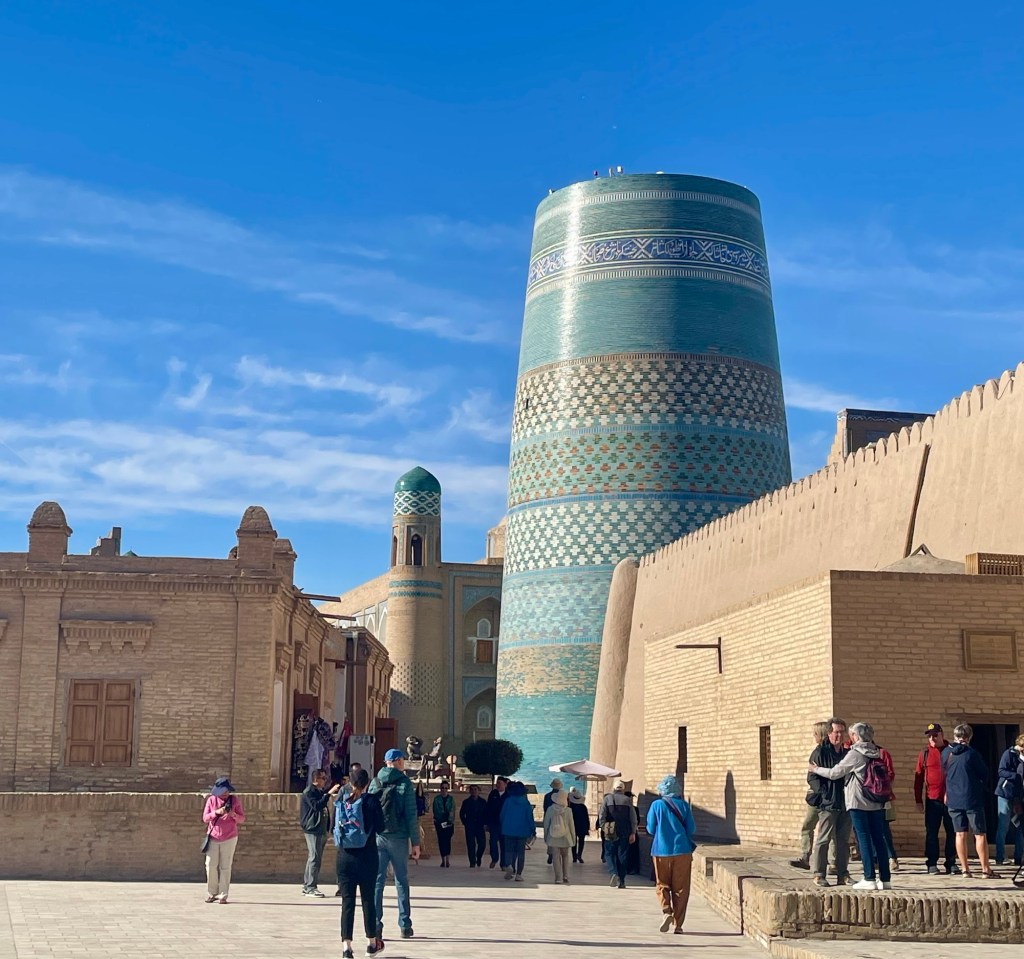
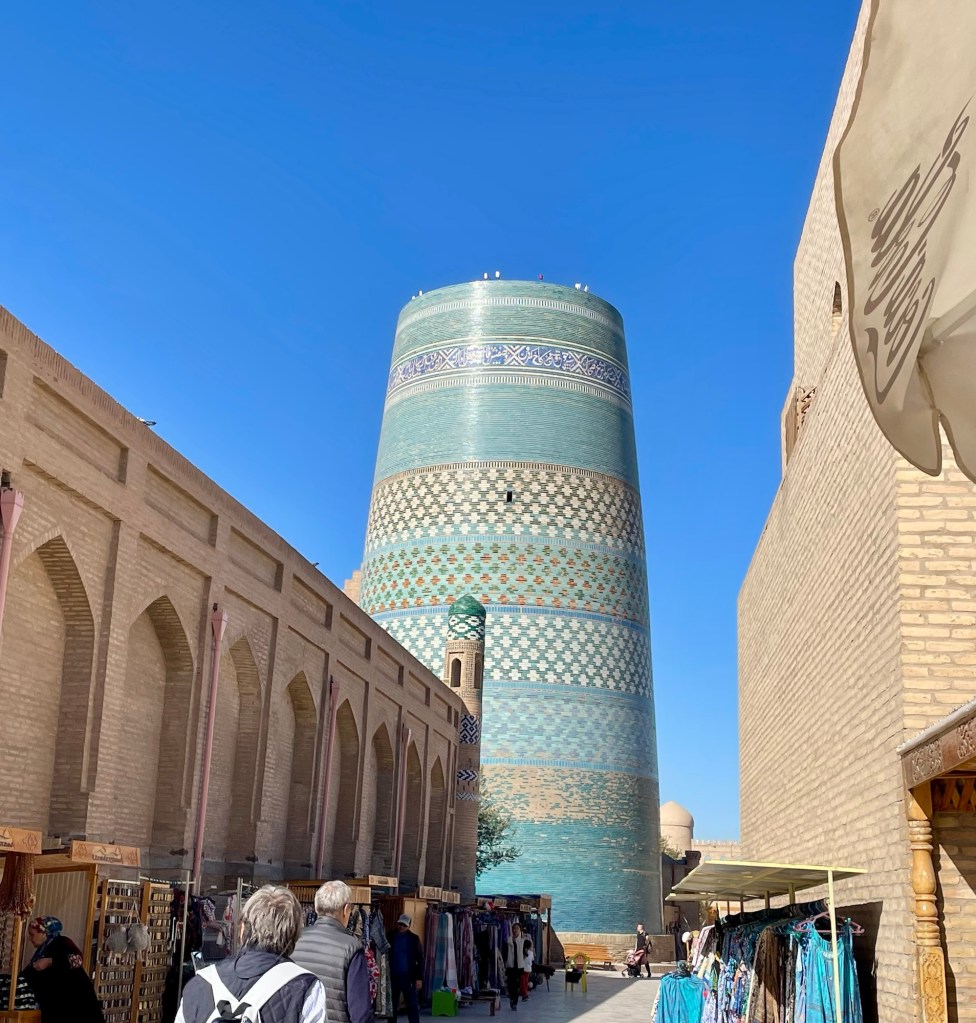
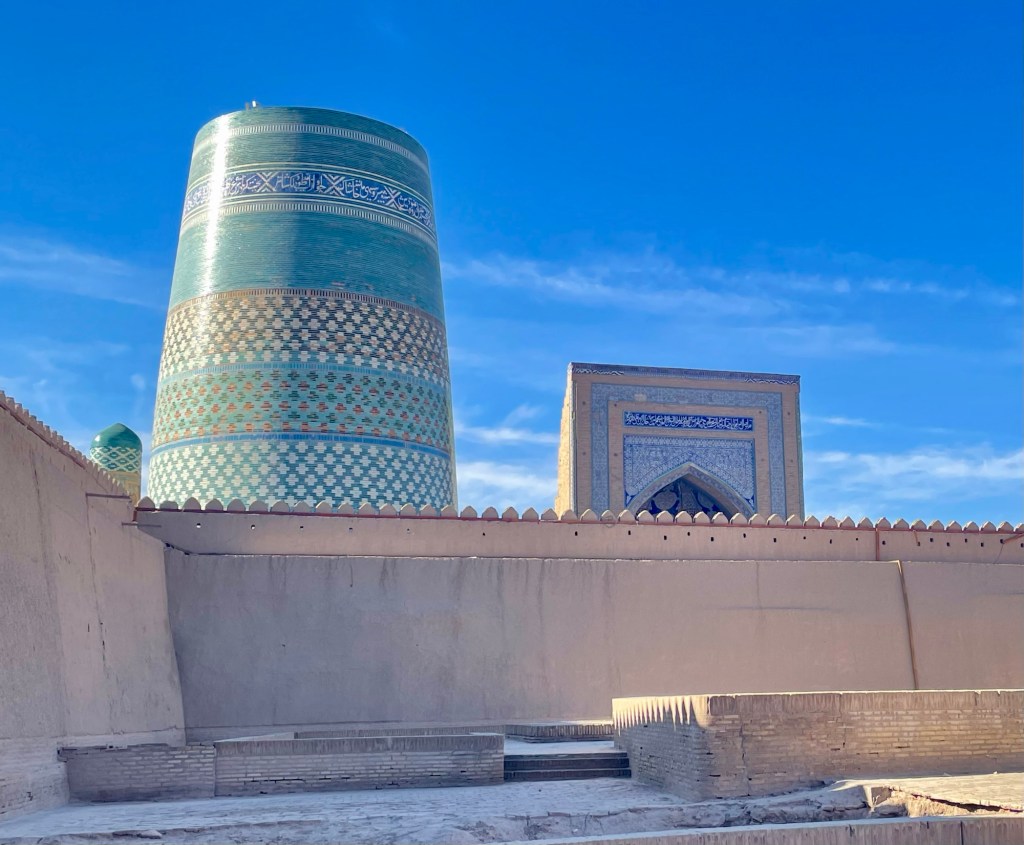
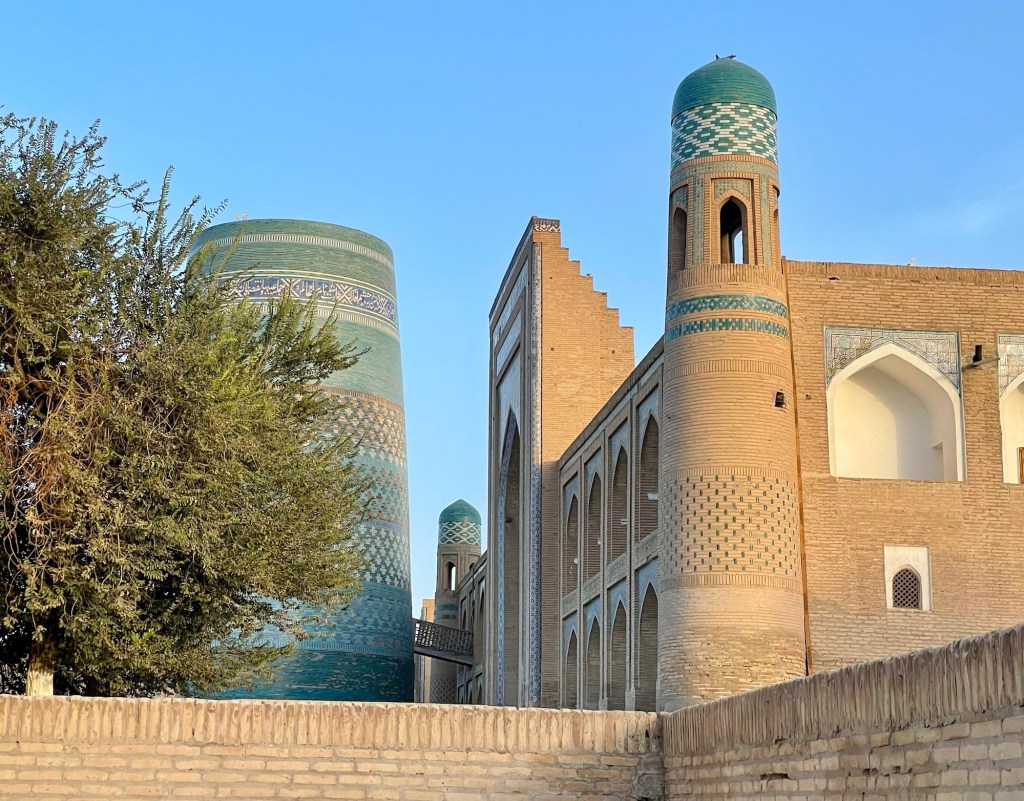
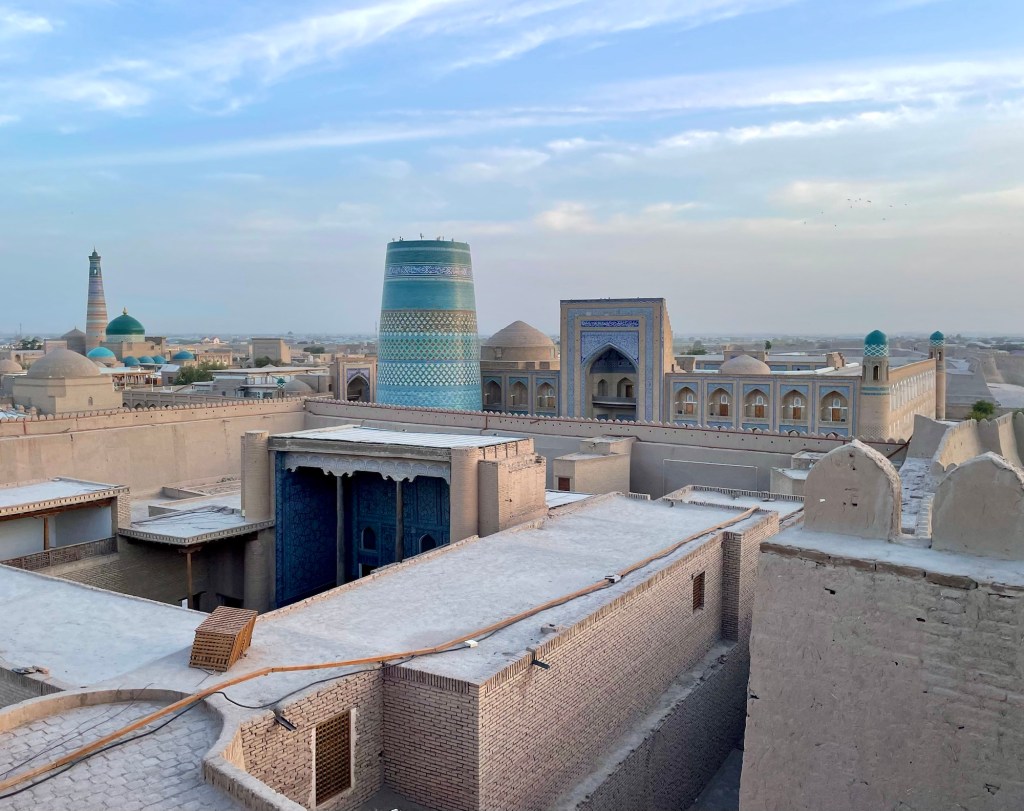
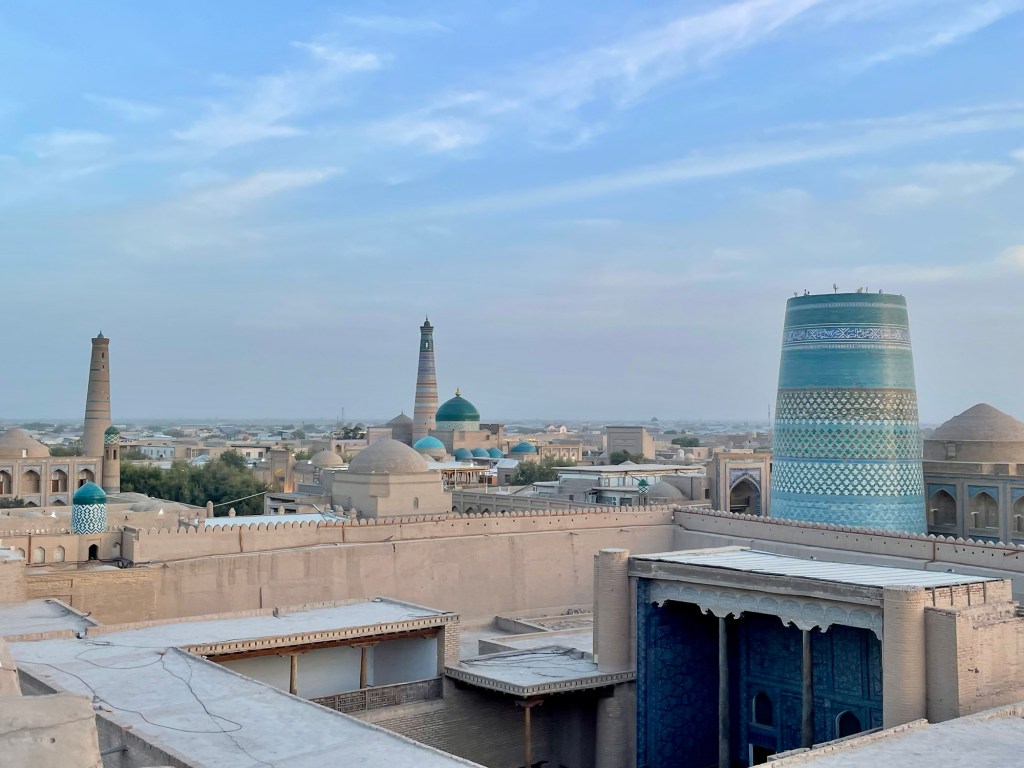
Once inside, we were greeted by a view of the unfinished mineret. It was going to be one of the biggest minerets in the world, but then the ruler of Samarkand made them stop building it.

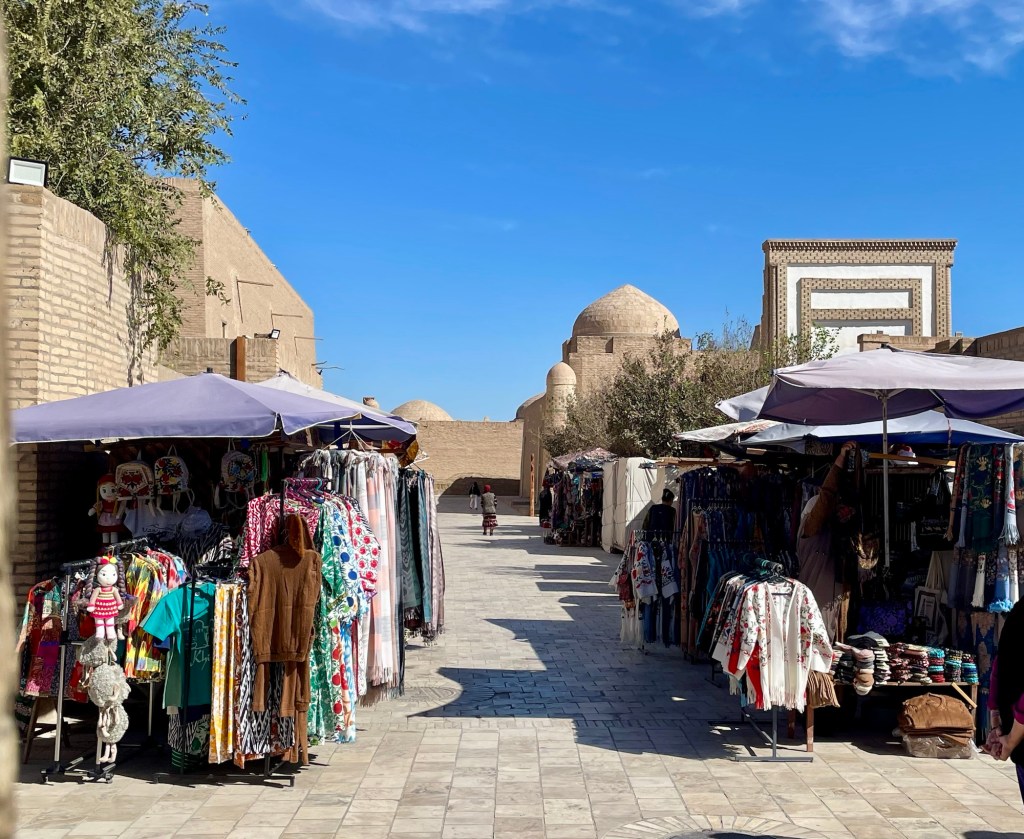
Throughout the old city, of course there are all kinds of merchants trying to sell stuff. The next picture is our guide modeling a hat that is used in the summertime because the sheep’s wool comes down and protects your eyes.

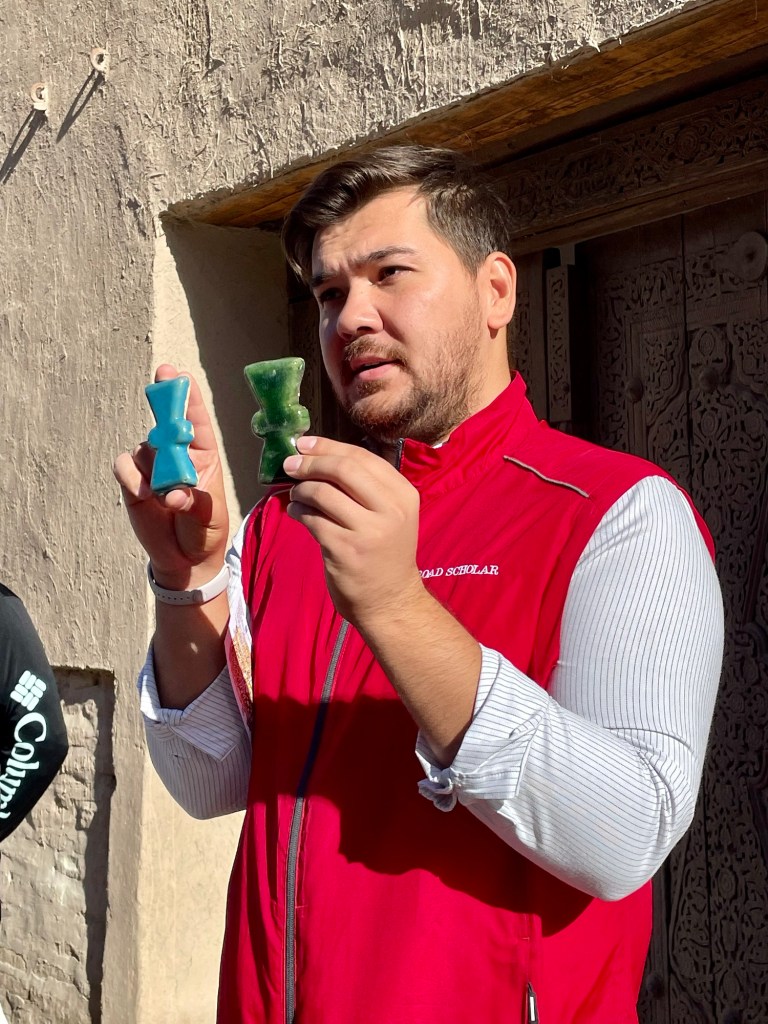
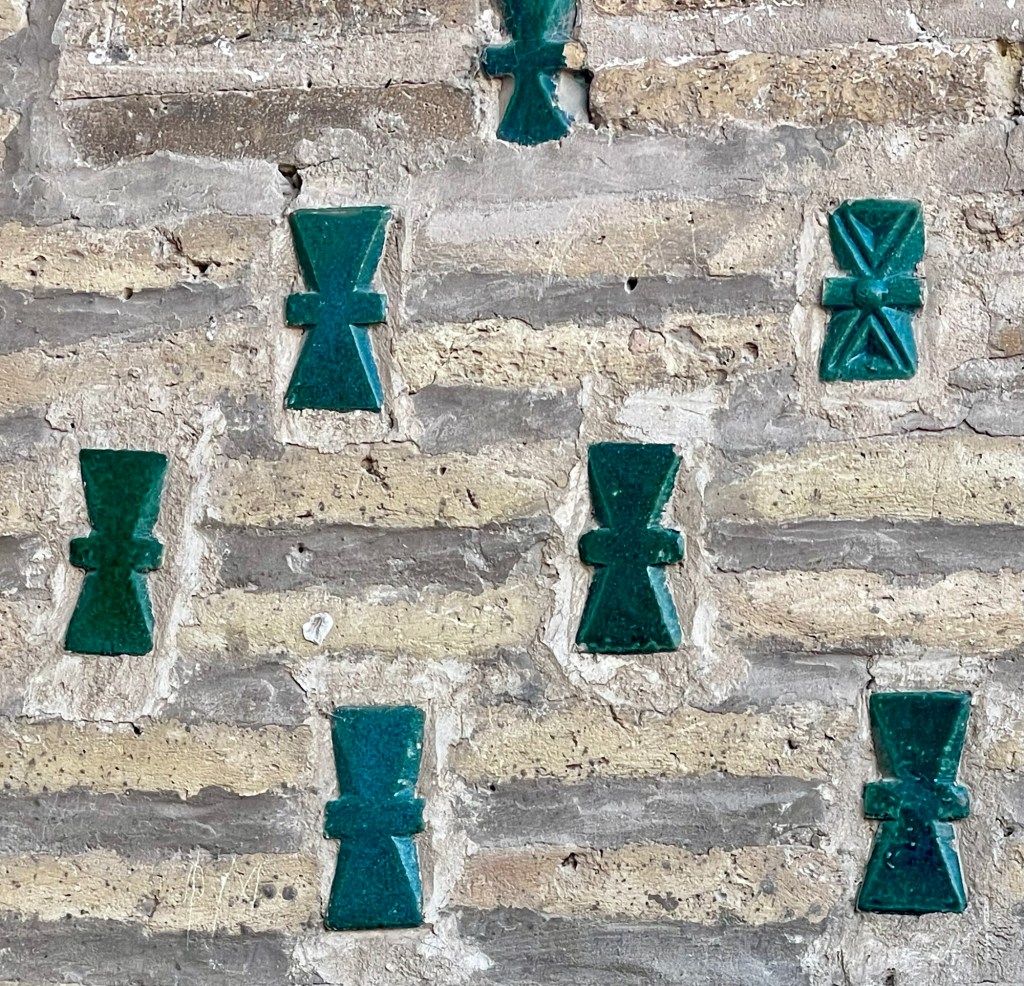
It is believed that these triangles, also called Zoroastrian butterflies, represent the major beliefs of Zoroastrian religion: good thoughts, good words, and good deeds. Zoroastrians “believe that there is a continuous war between the good forces (forces of light) and the evil forces (forces of darkness). The good forces will win if people will do good deeds, think good and speak well”.
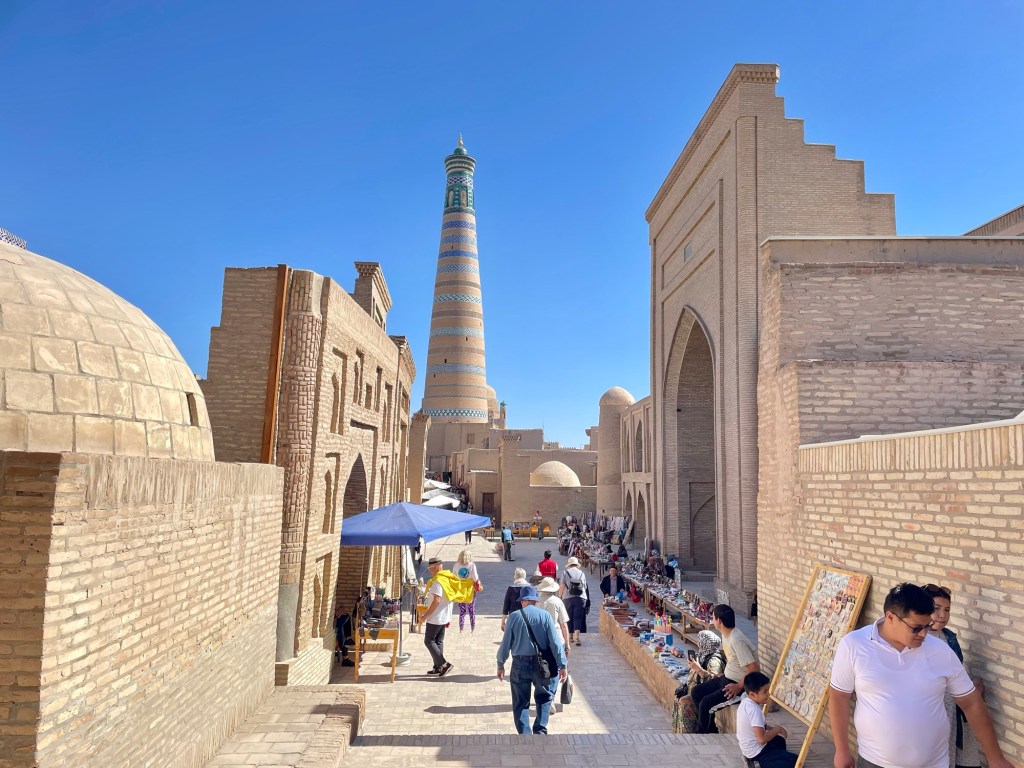
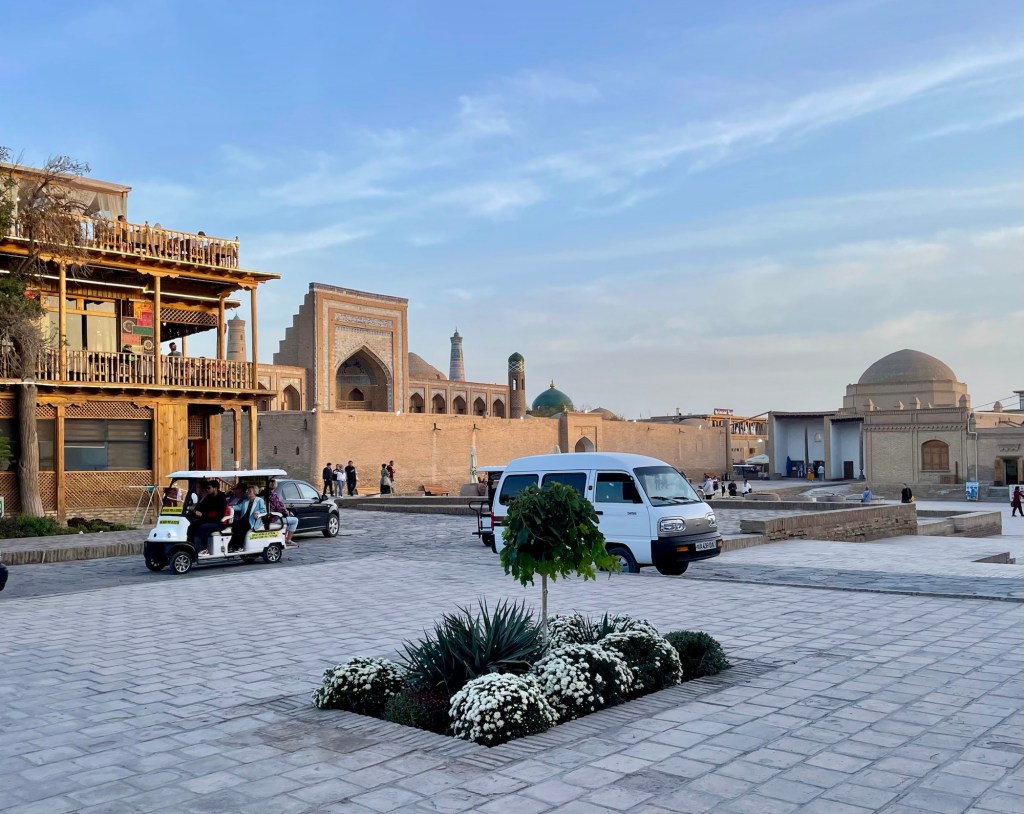
Here are some street scenes.
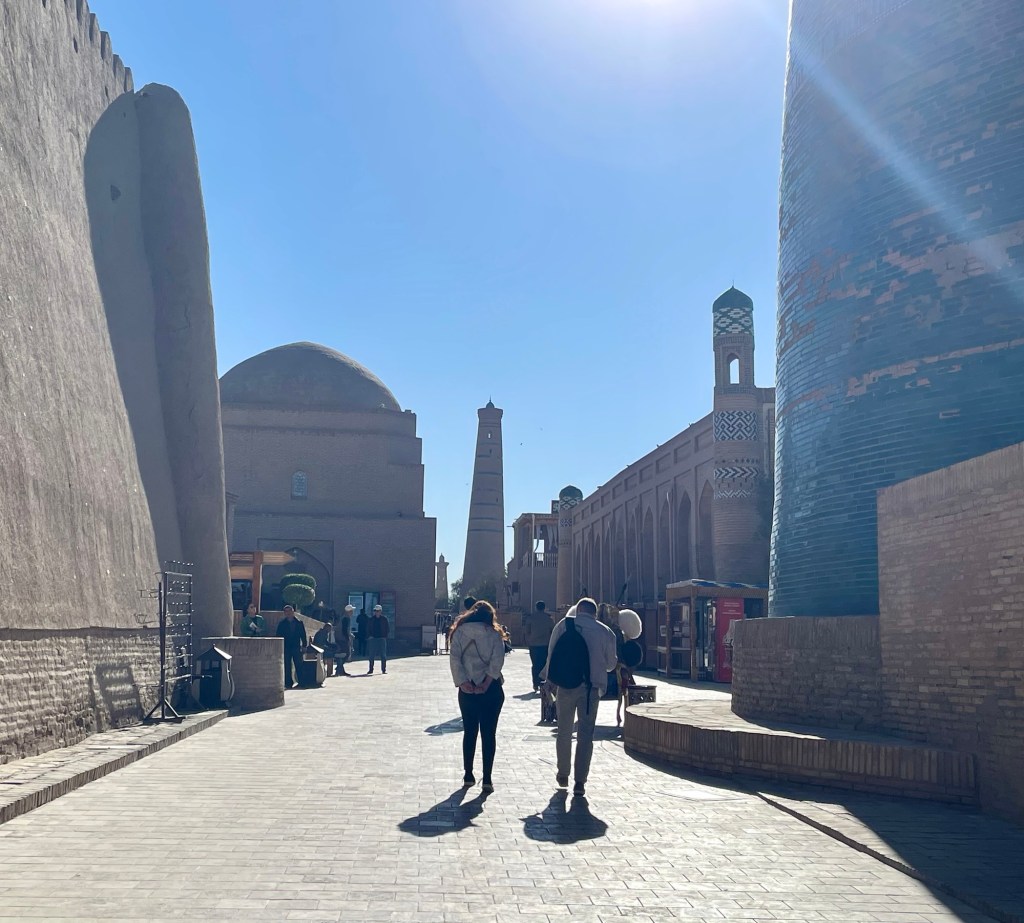
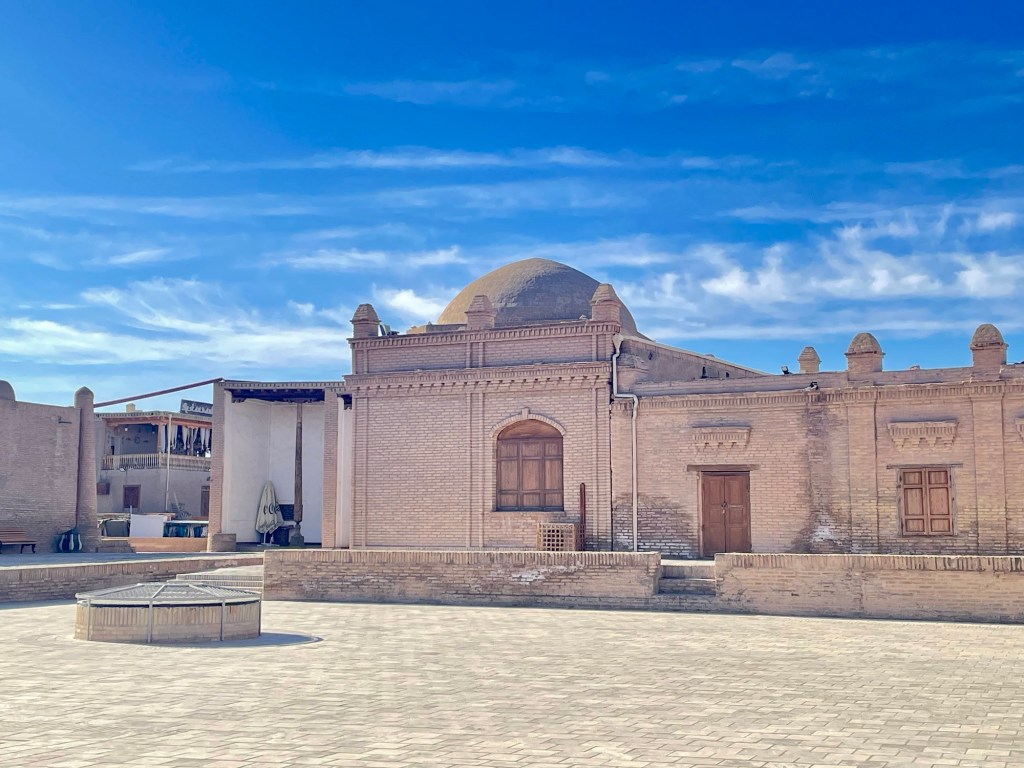

The Kunya Ark was originally built in the 12th century as the khan’s fortress and residence, and encompass numerous small courtyards, surrounded by administrative buildings, sleeping quarters, kitchens, guard house, stables, parade area, and weapon stronghold. Much of it was lost when Persia invaded the Khivan Khanate in the 18th century, but what remains, including the mosque, harem and throne room are beautifully decorated with ceramic tiles and majolica (a form of pottery).
Here are some pictures taken inside the fortress.
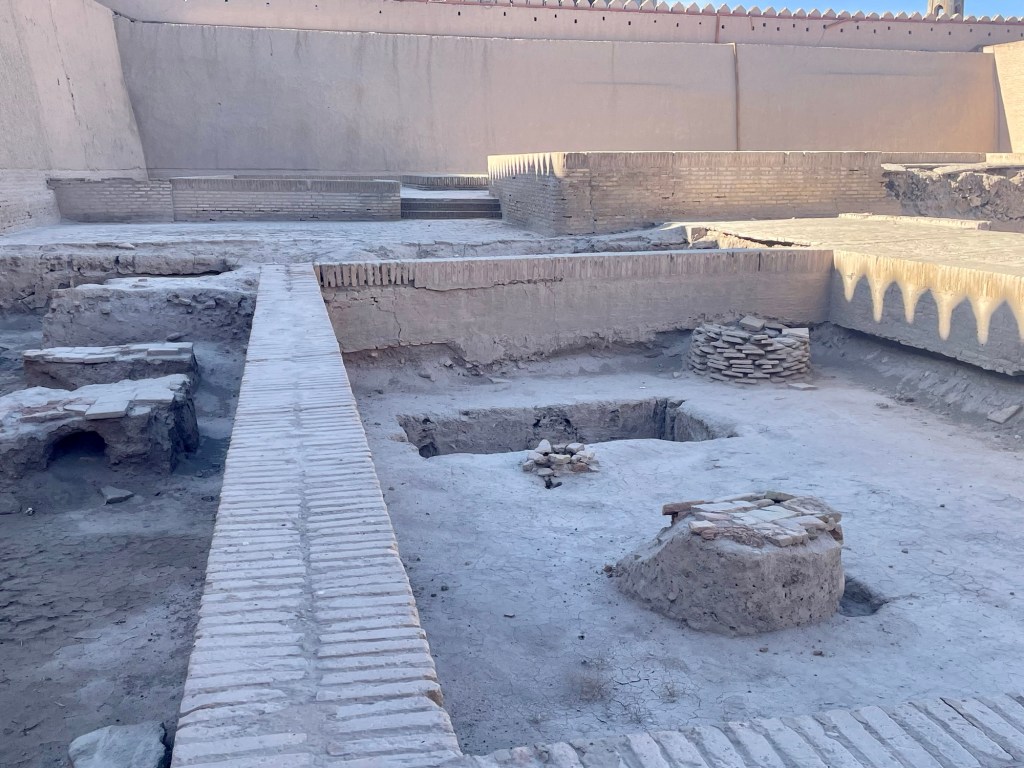
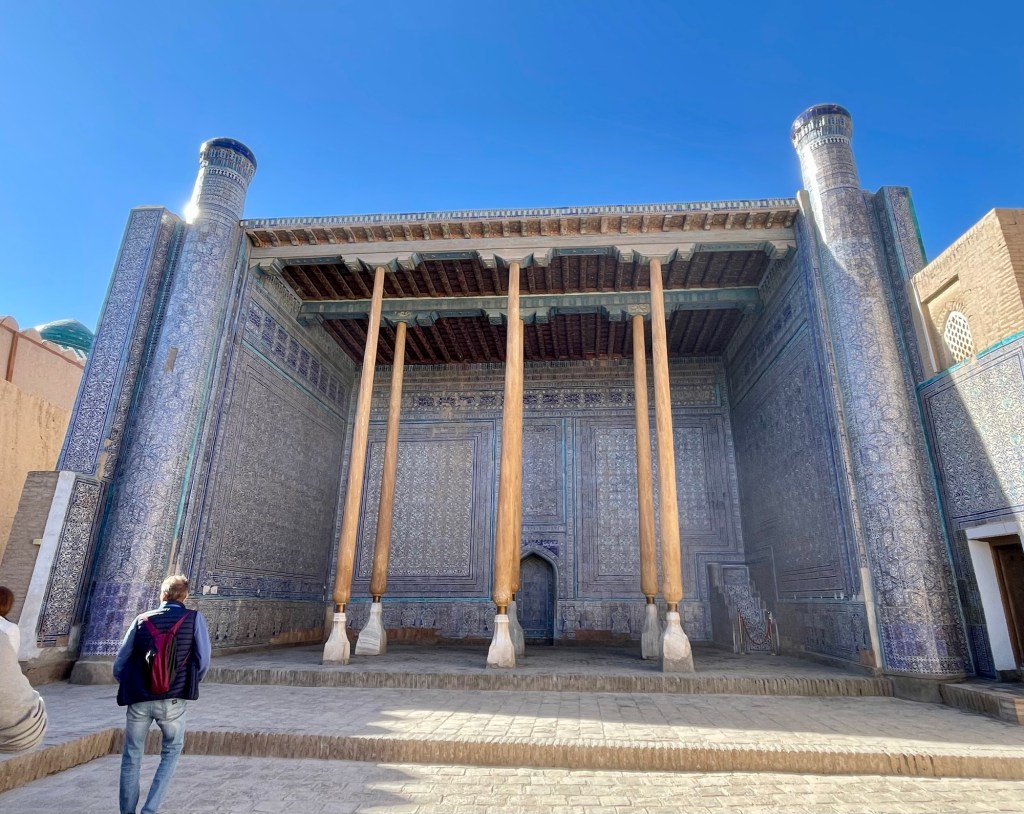
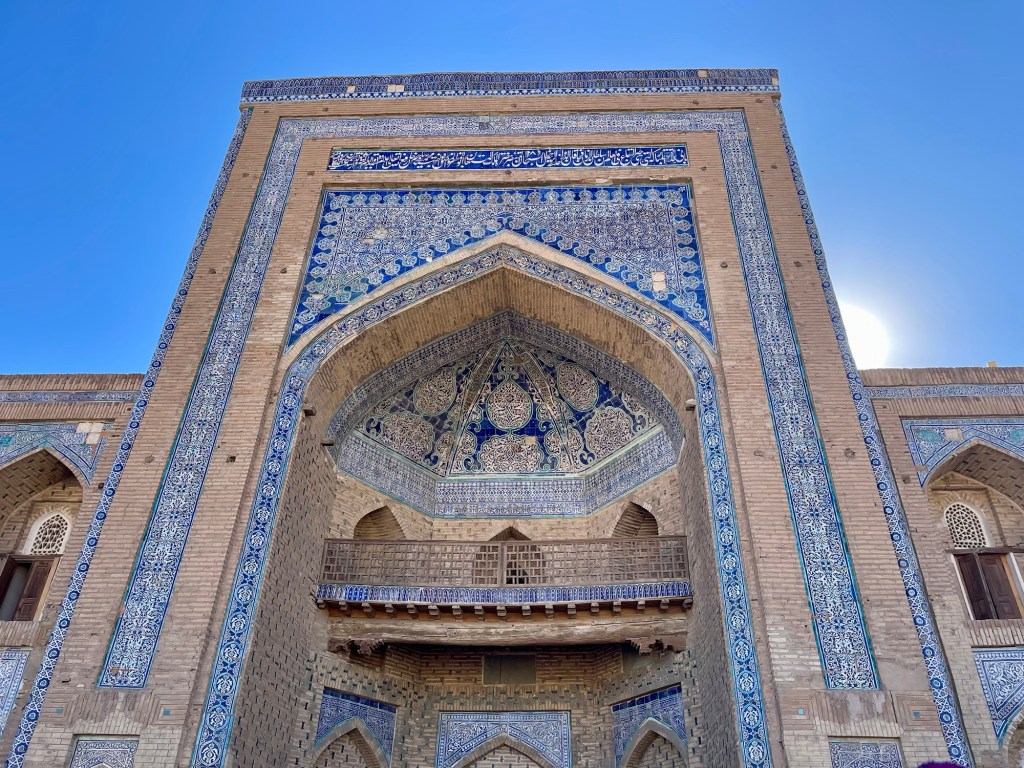
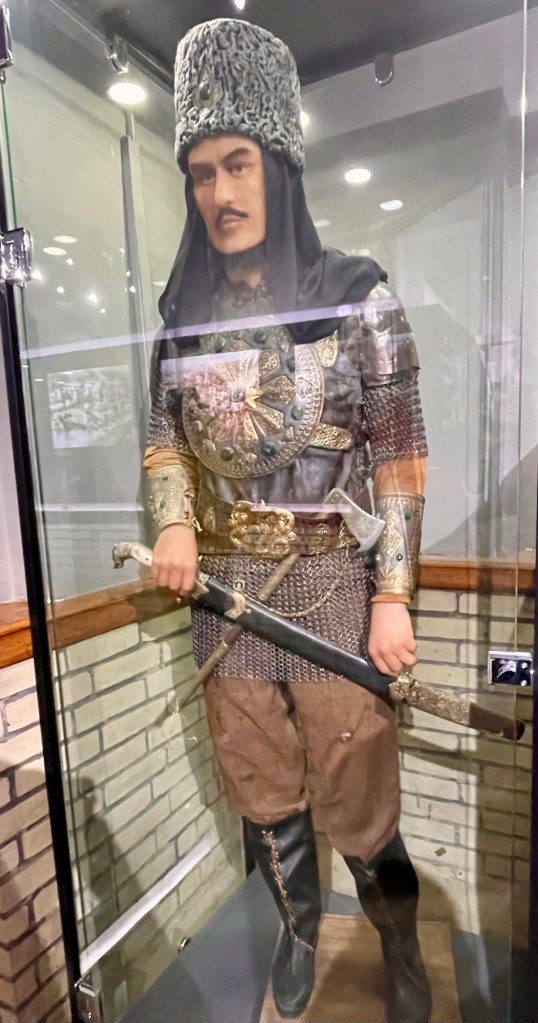
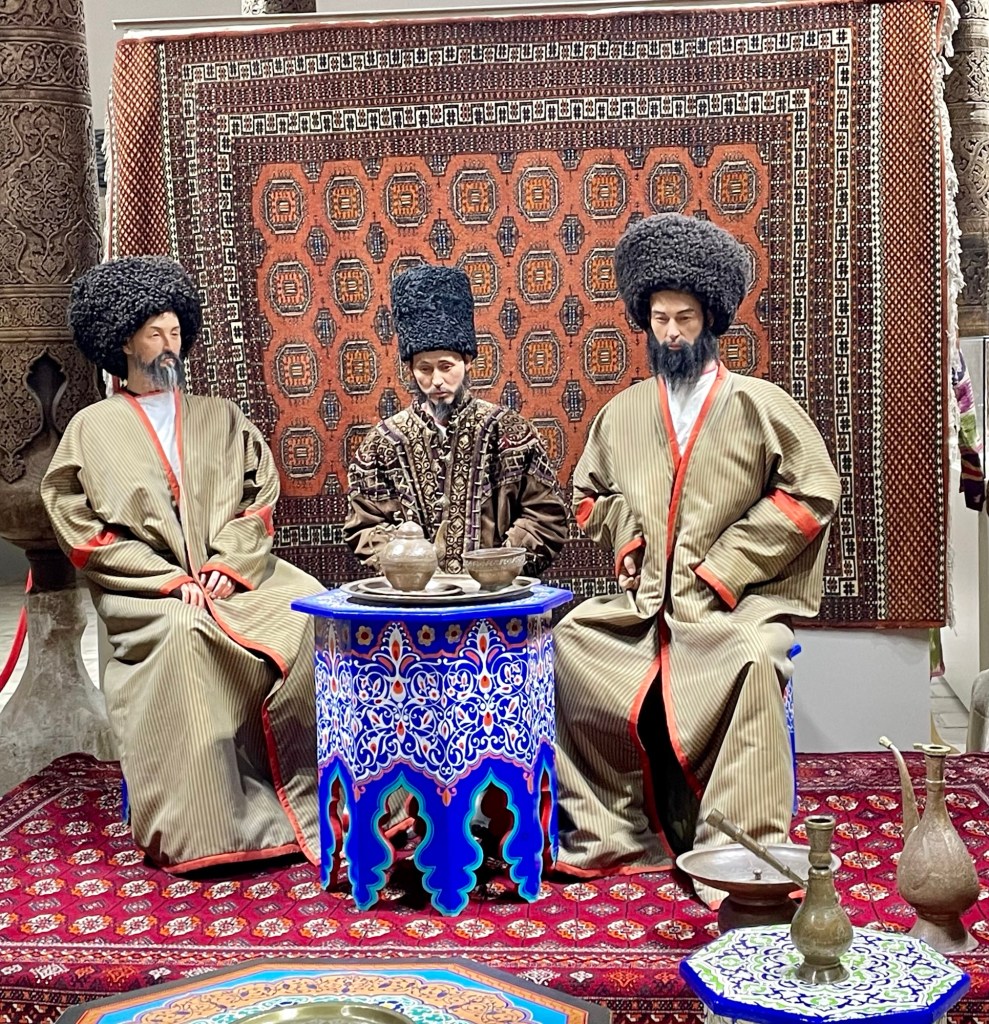
There is a museum inside one of the buildings. Here are a couple of pictures from inside the museum.



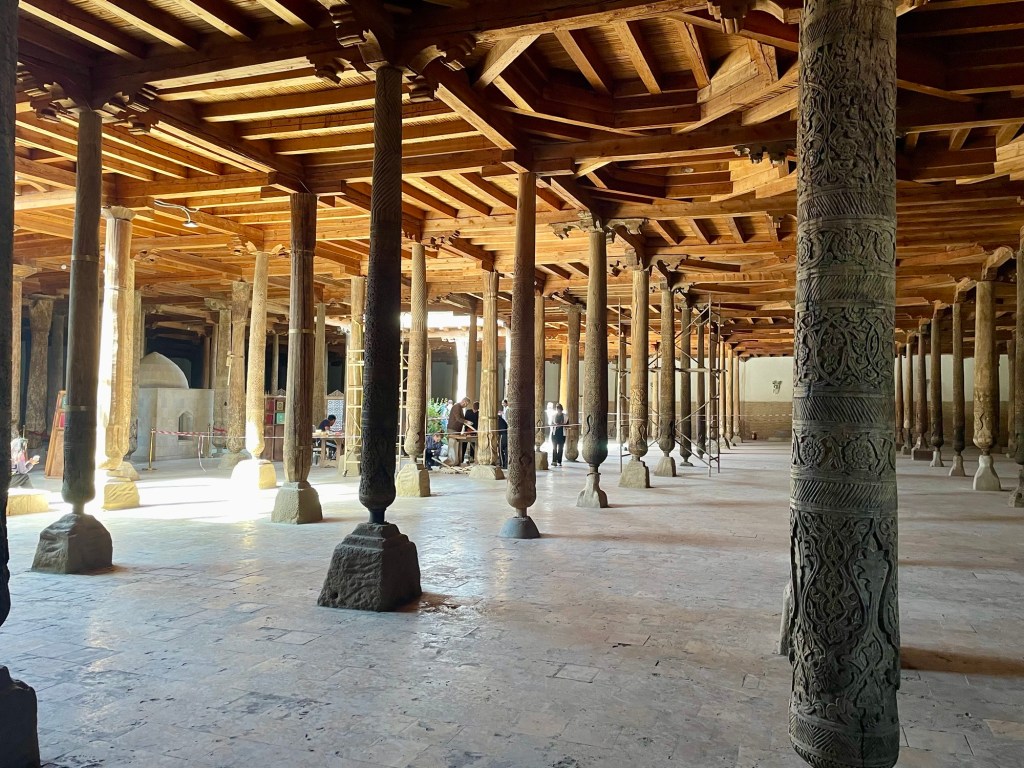
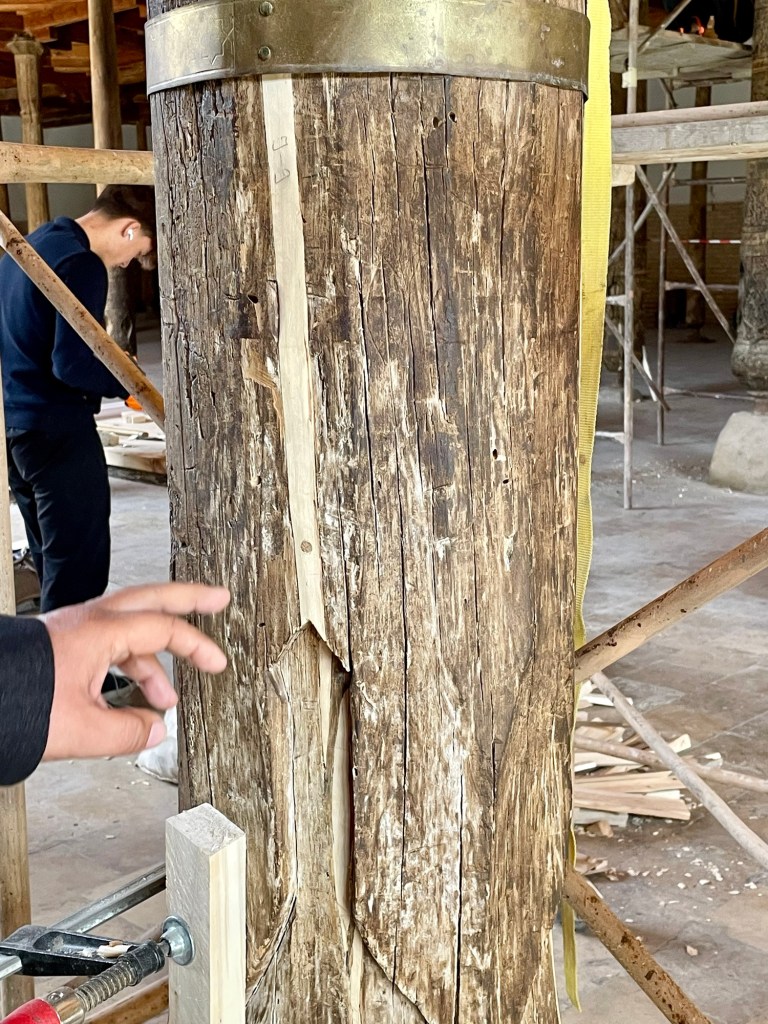
Our next stop was the Dzhuma Mosque. The mosque is partially below ground level and has 118 carved columns to support the wooden ceiling creating a forest like effect around two square light wells.


Some more street scenes.

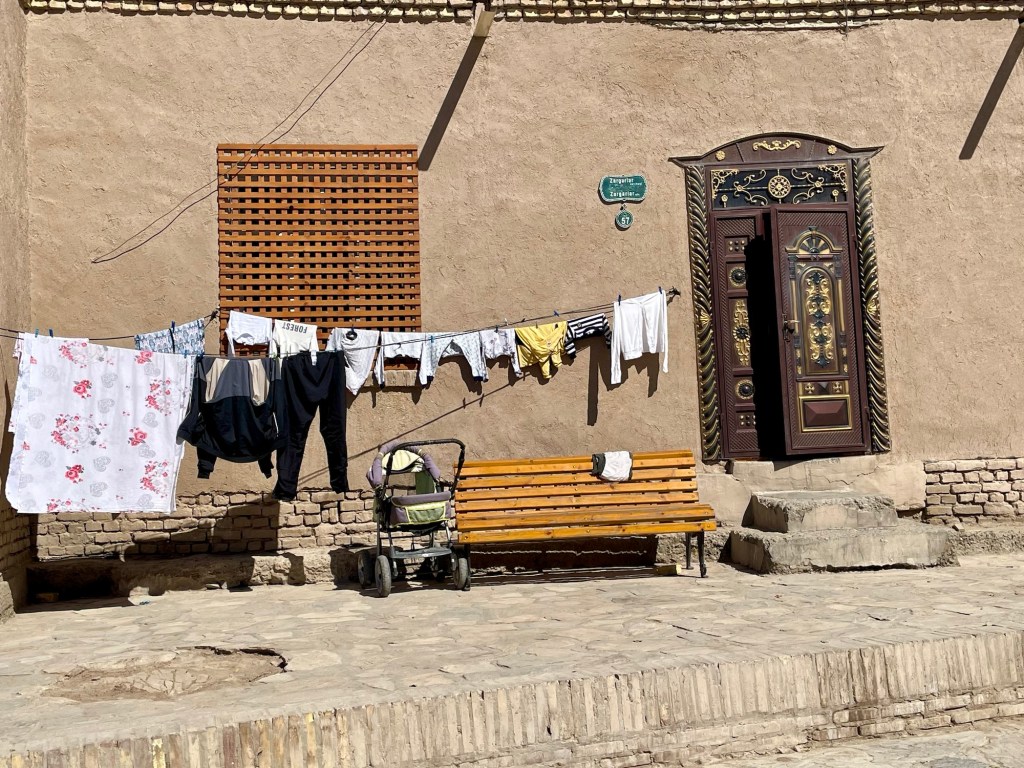
Our next stop is the Tash Hauli Palace built in the 1830s.
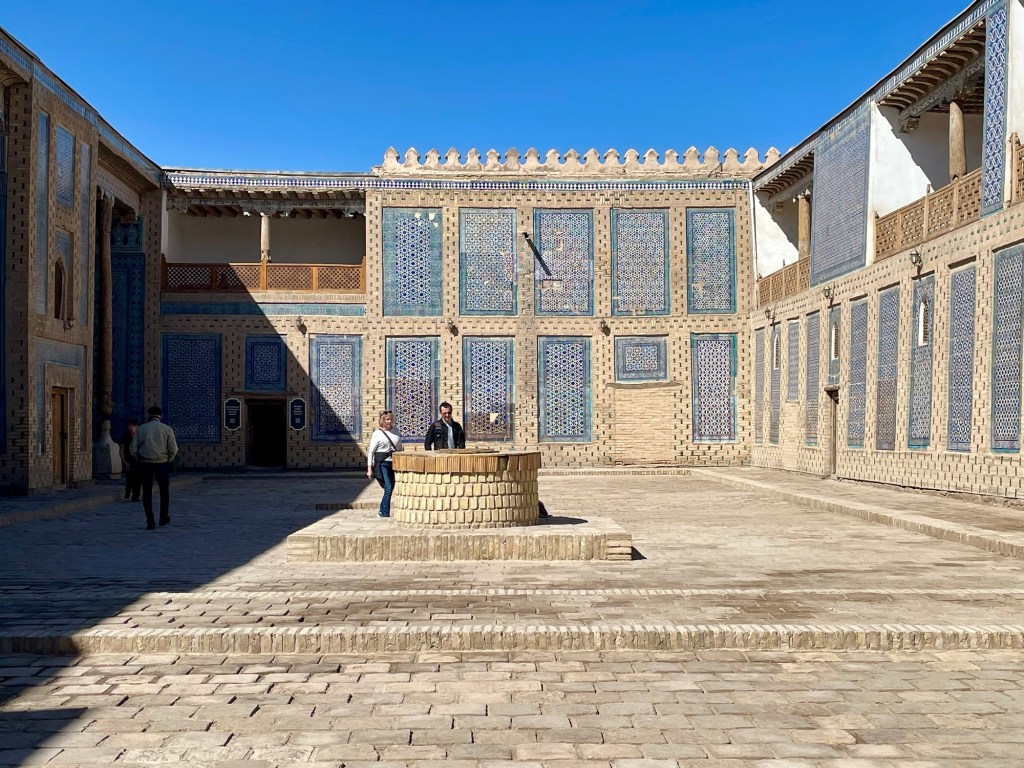

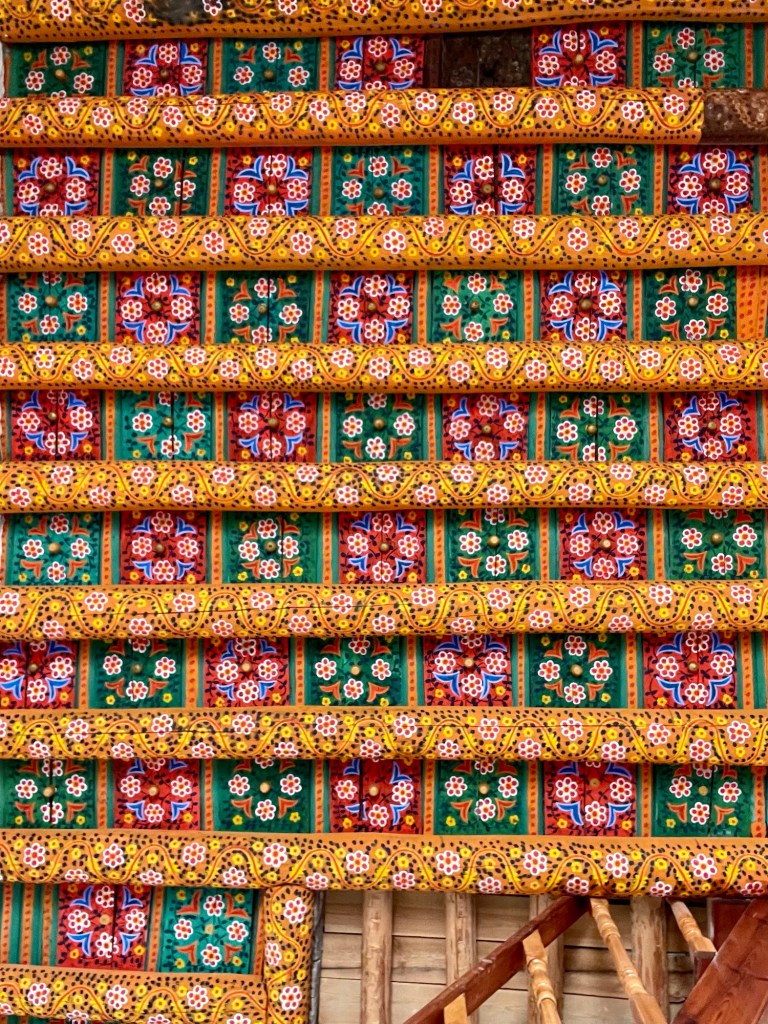
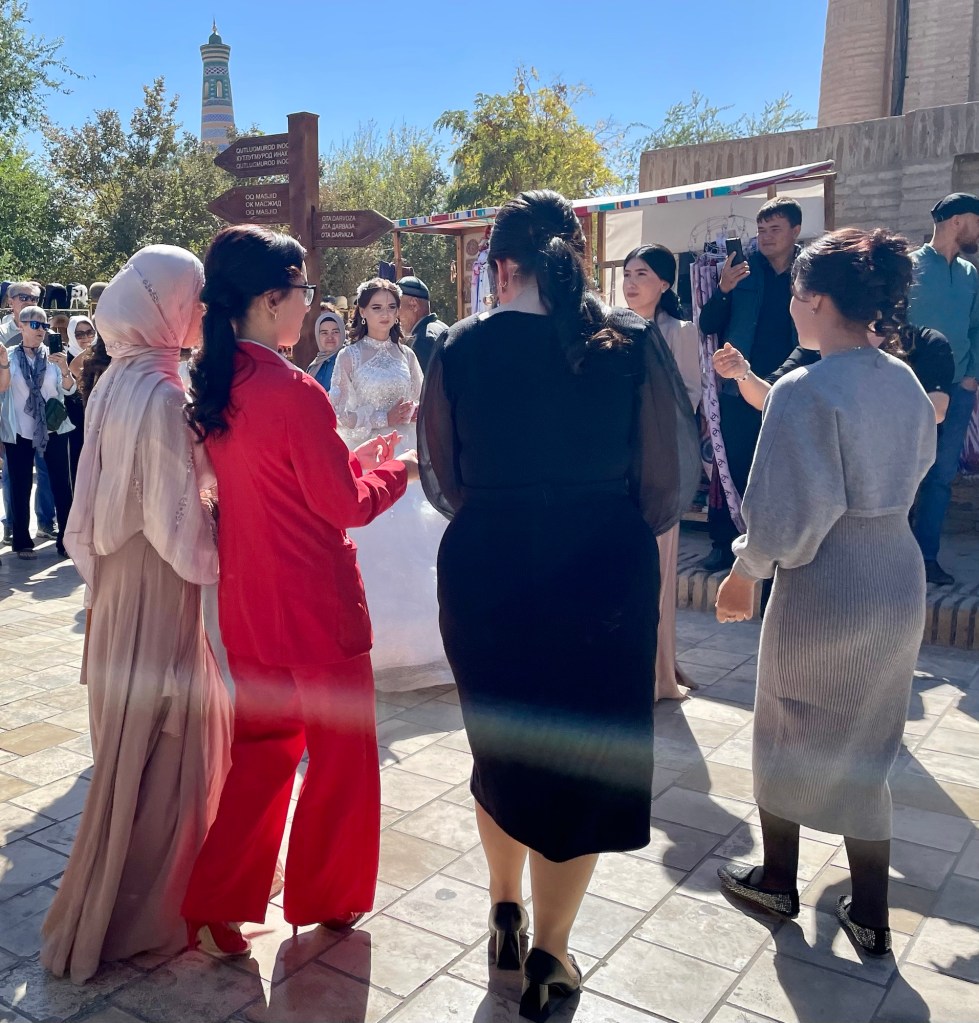
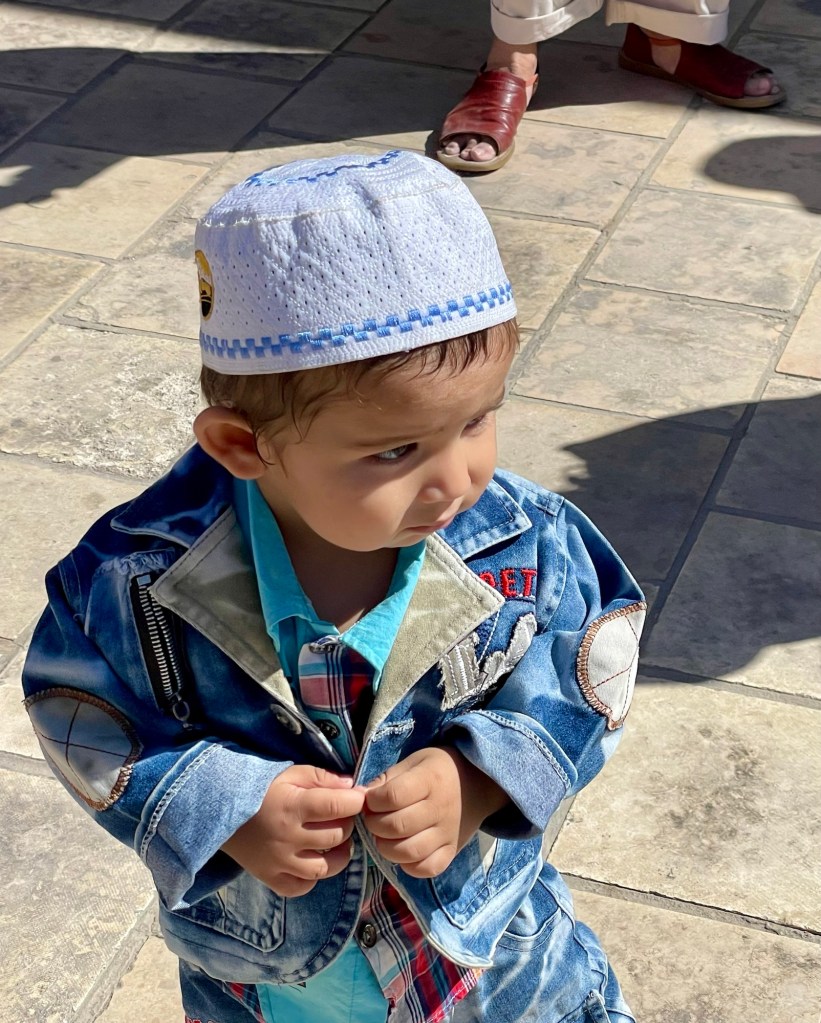
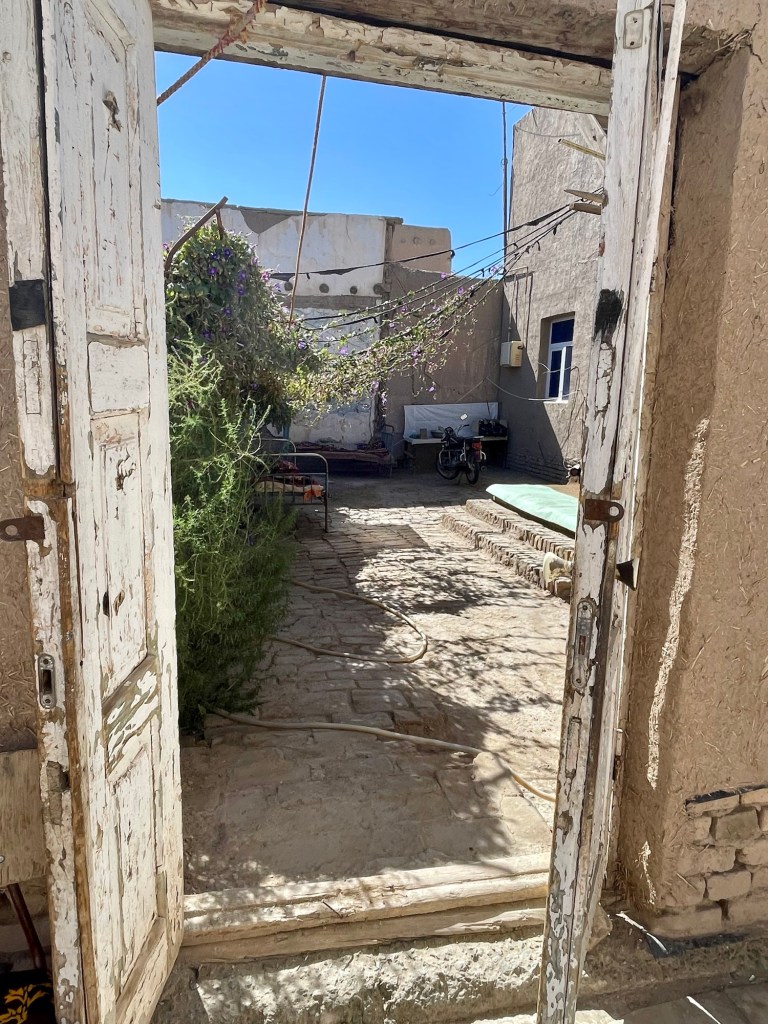
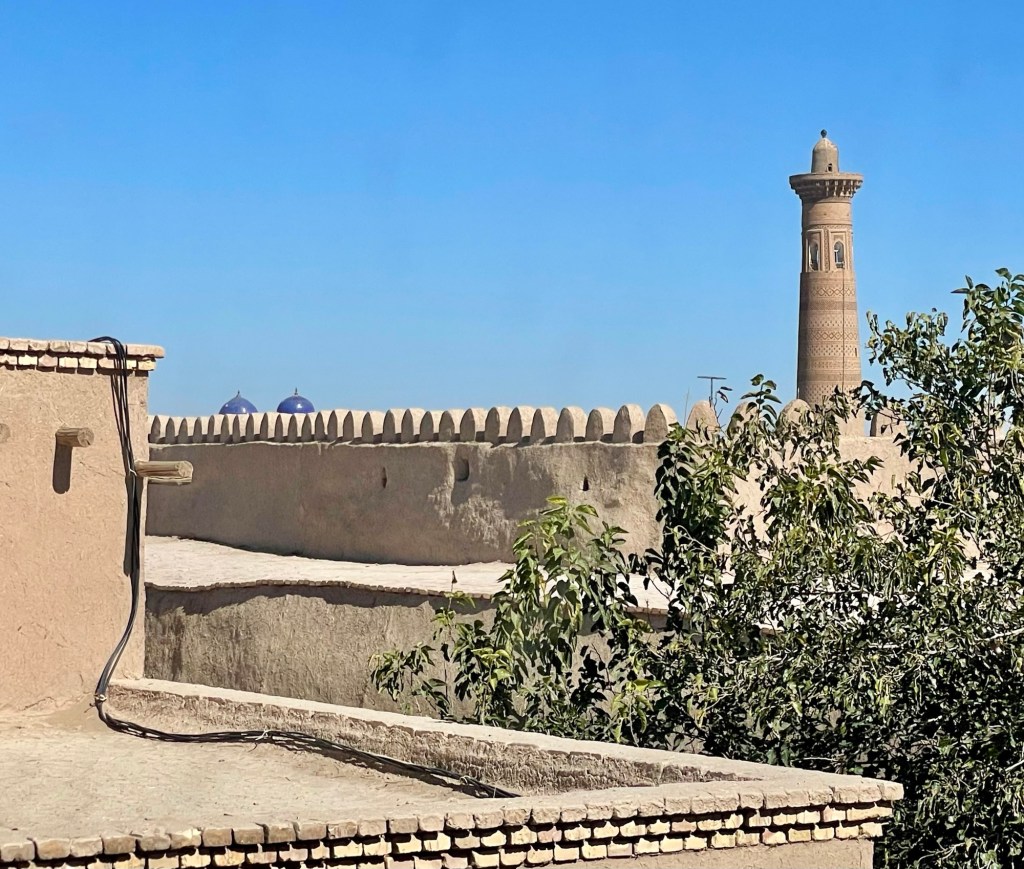
More street scenes.



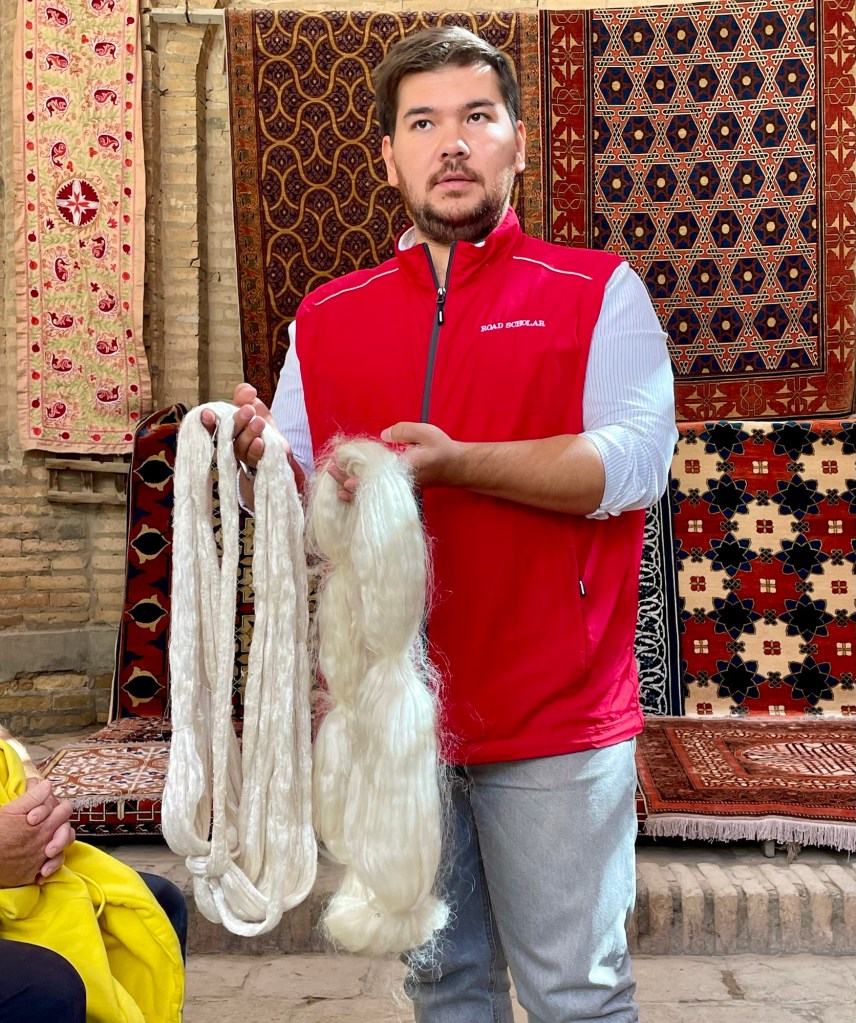
We next visited a place that makes silk carpets.

More street scenes

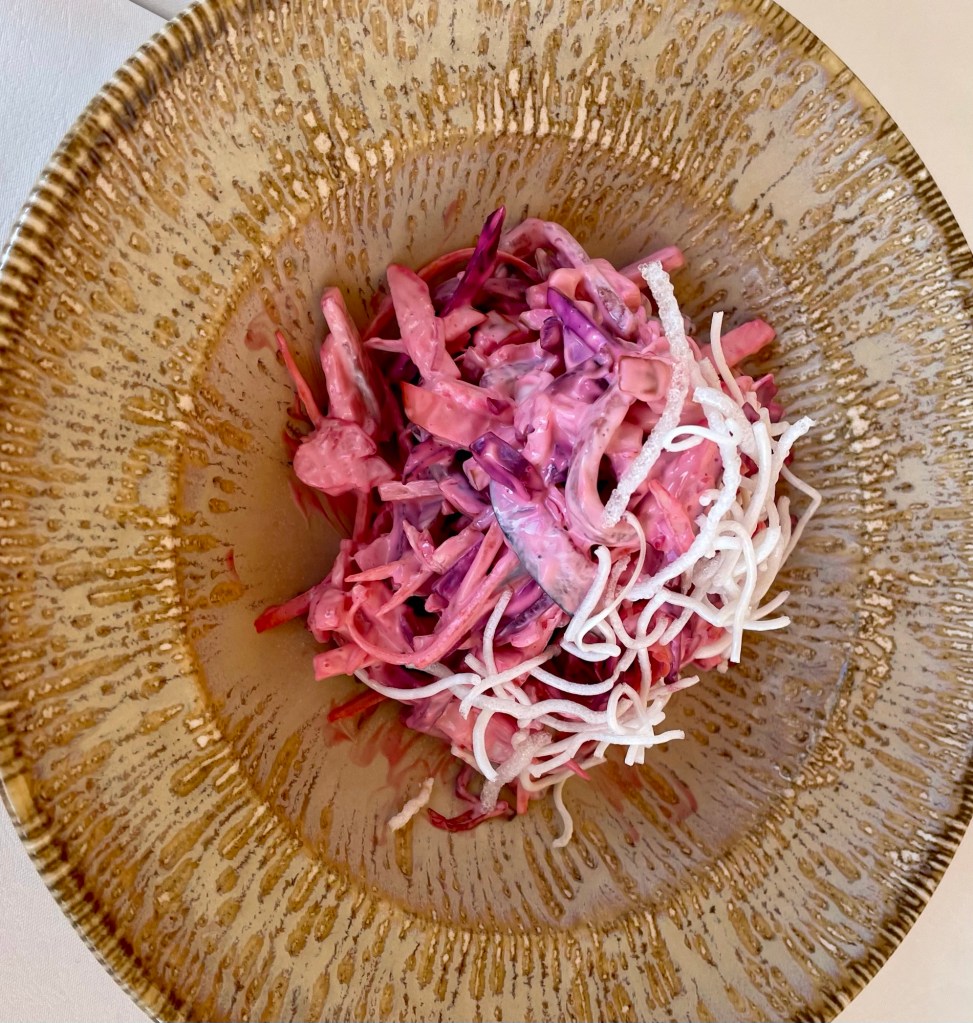
Lunchtime.


After lunch, I made some purchases and then went back to my room


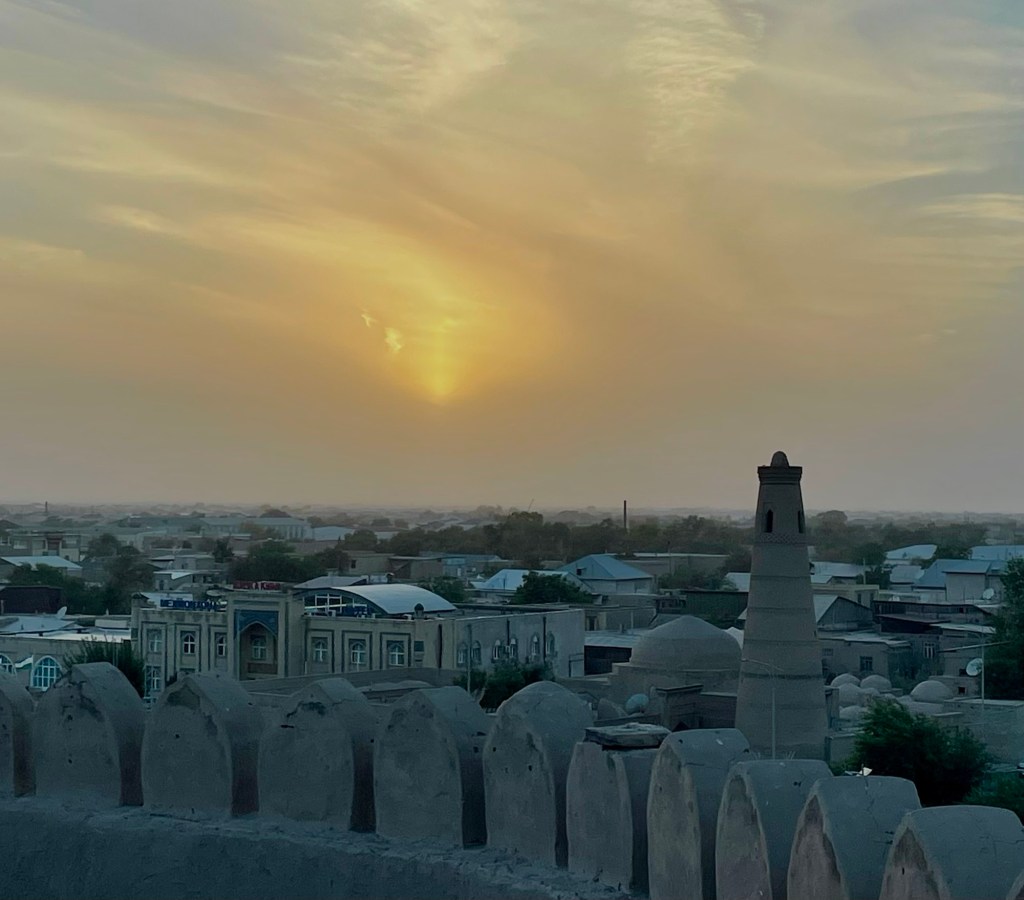
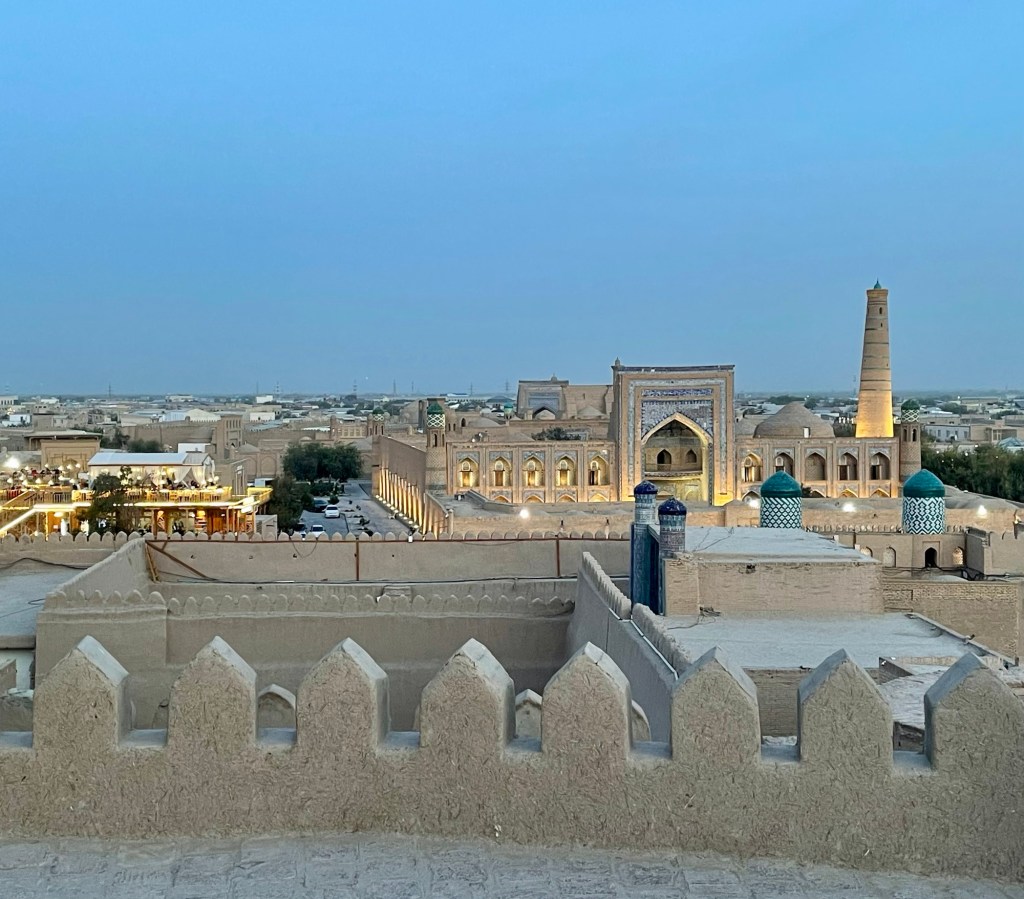
At 6 o’clock a group of us went back to the Kunya Ark Fortress to watch the sunset. We climbed up to the top of the wall. Unfortunately the sunset turned out to be quite a dud. The sun just simply went down behind some clouds without producing any color. However, I did take a number of pictures up there.
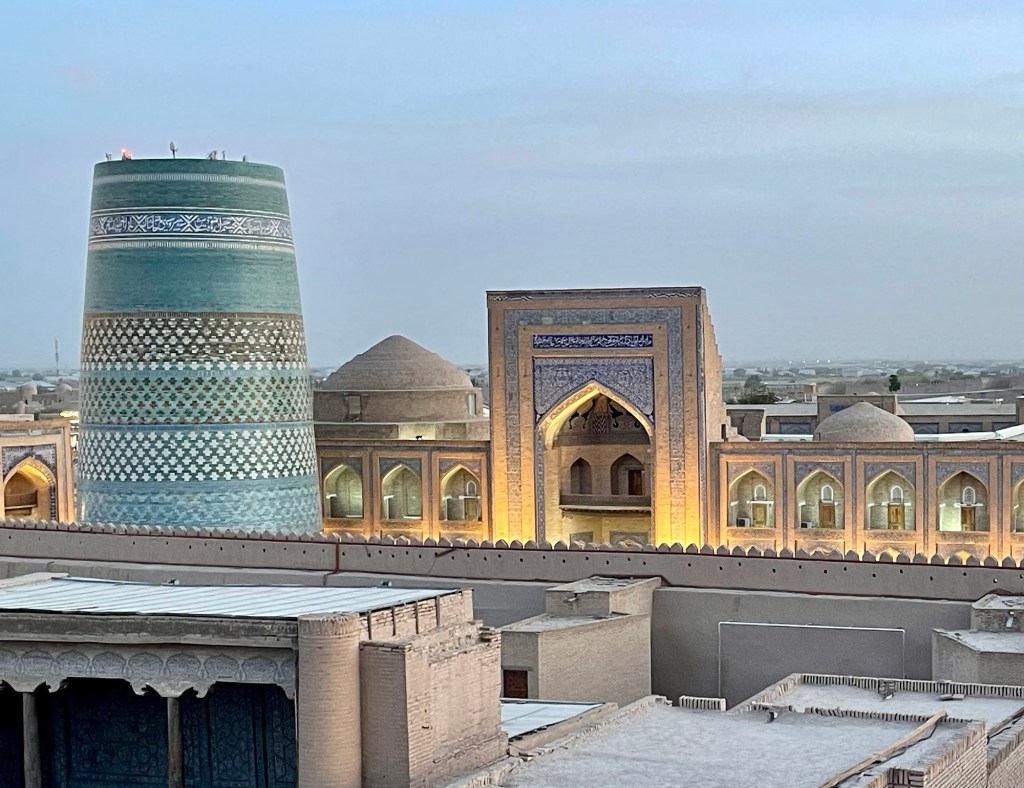
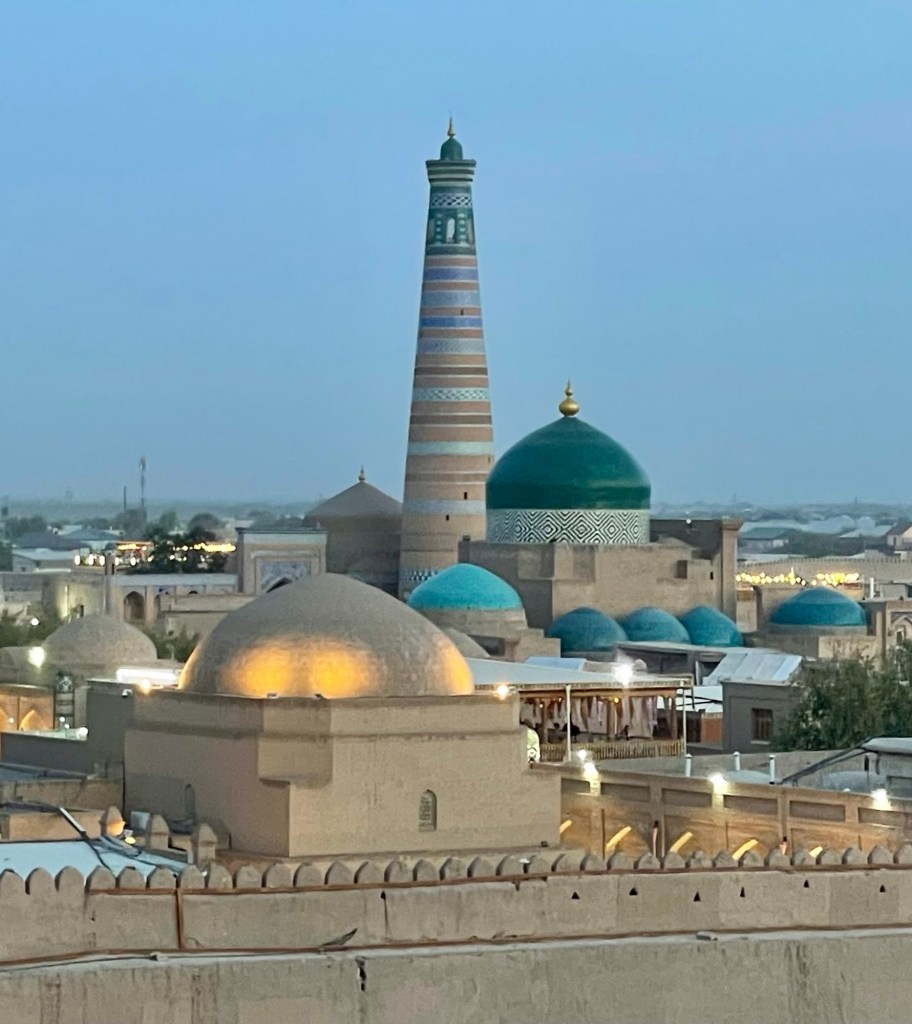
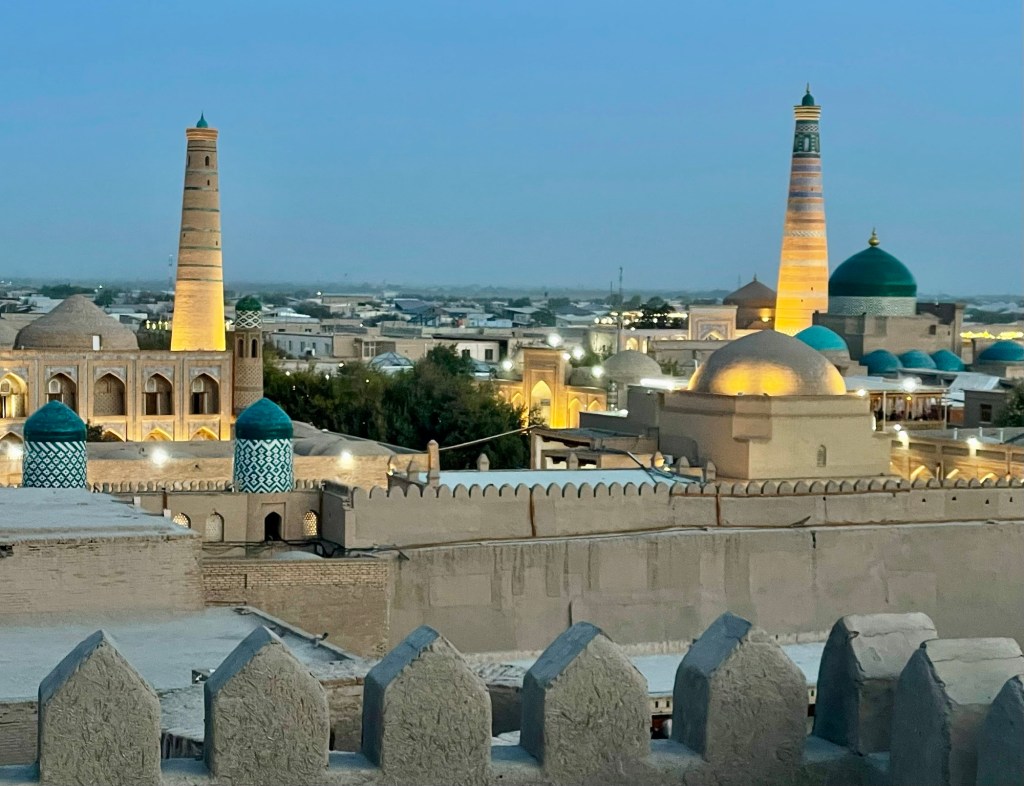

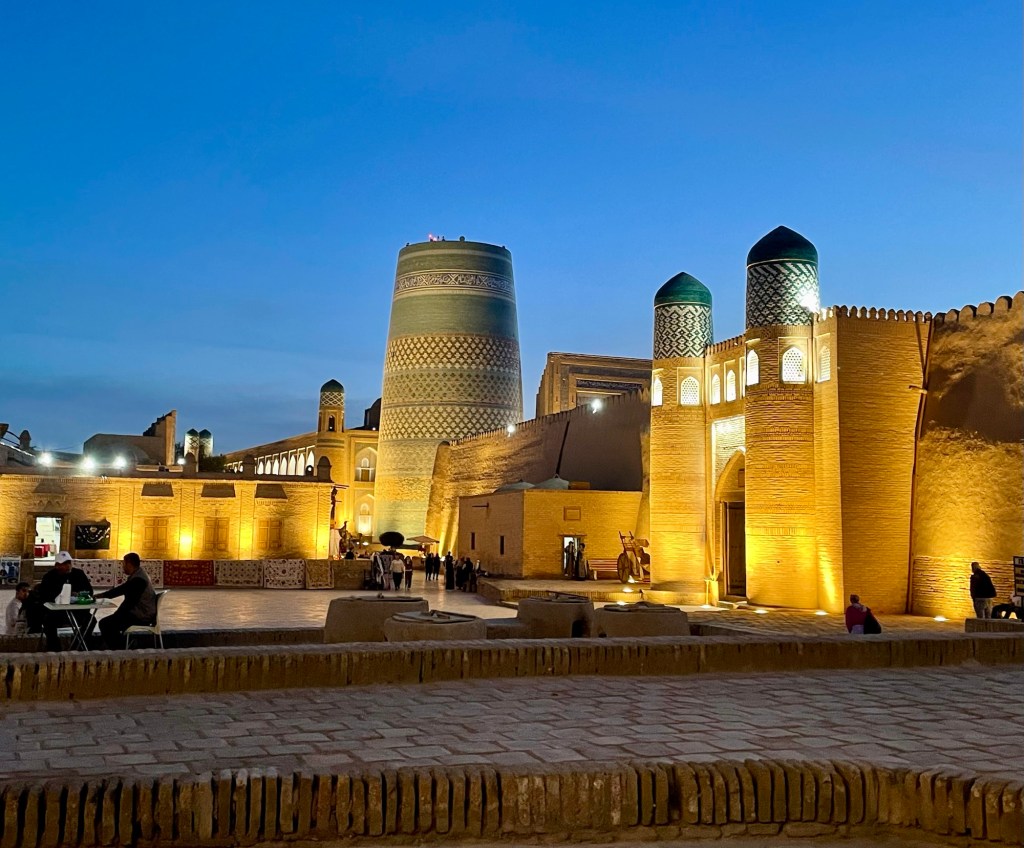
Then it was dinner time.
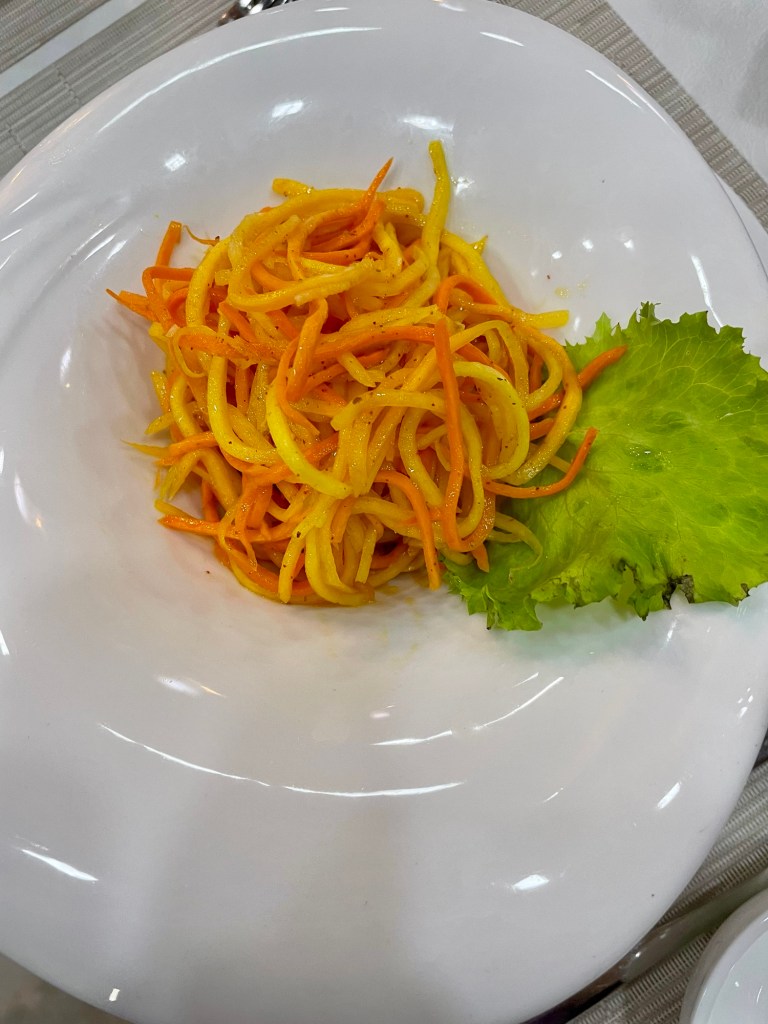
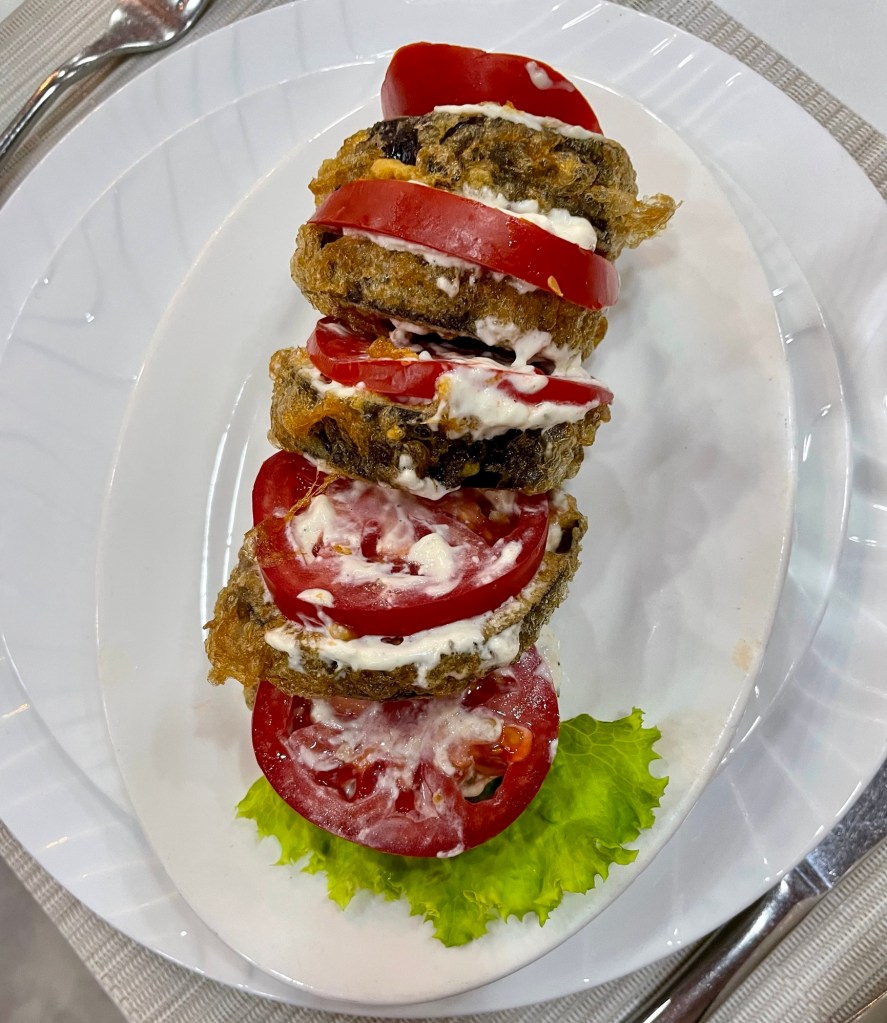
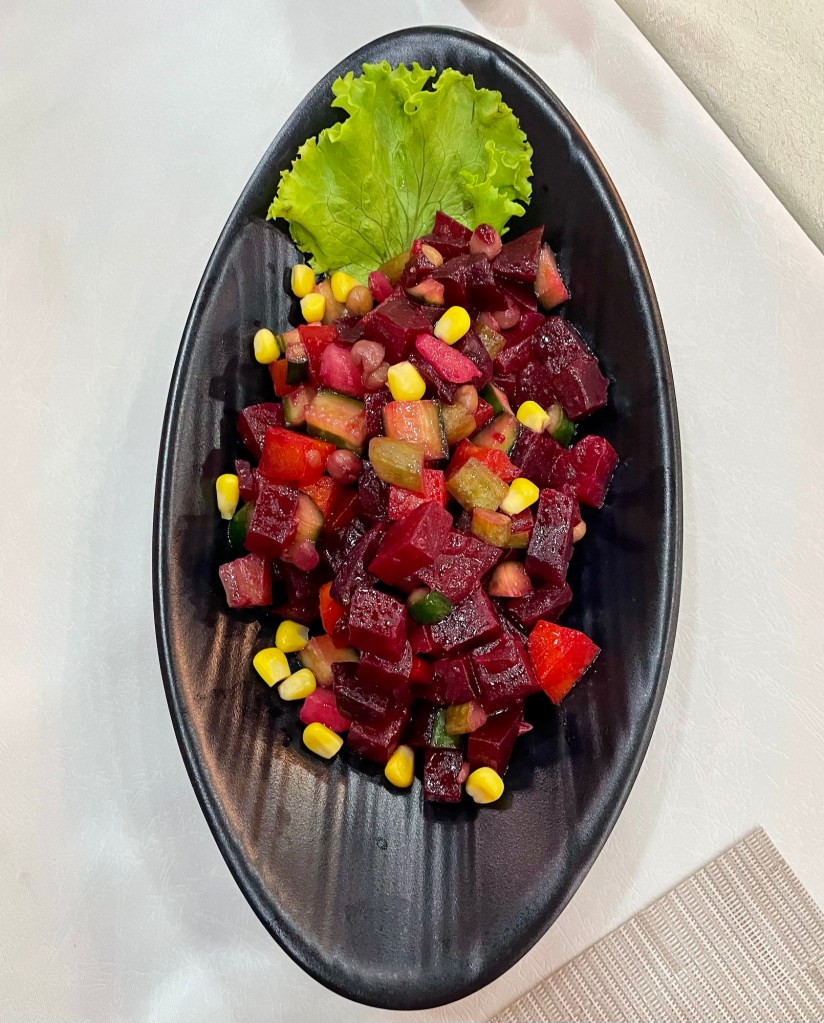
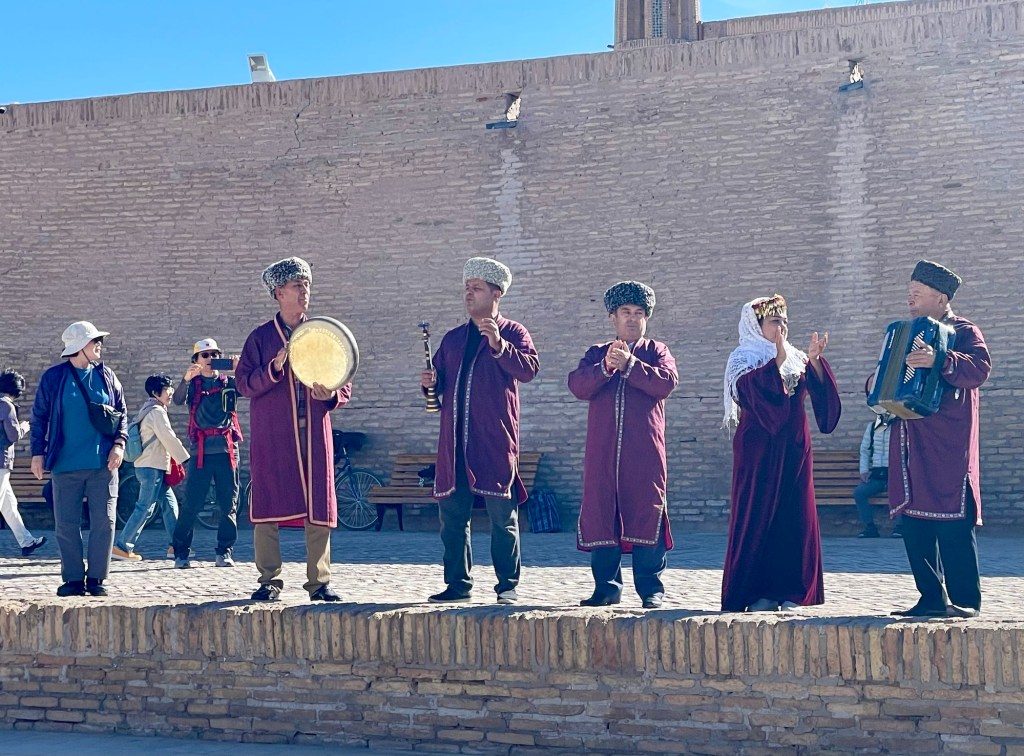
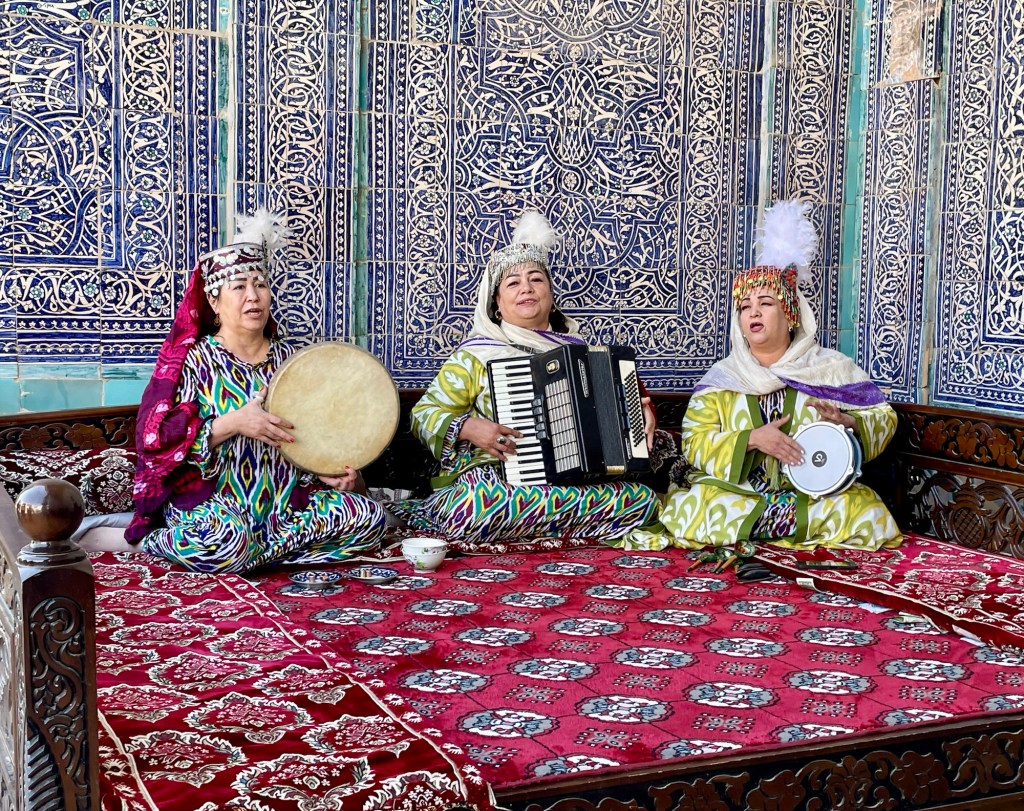
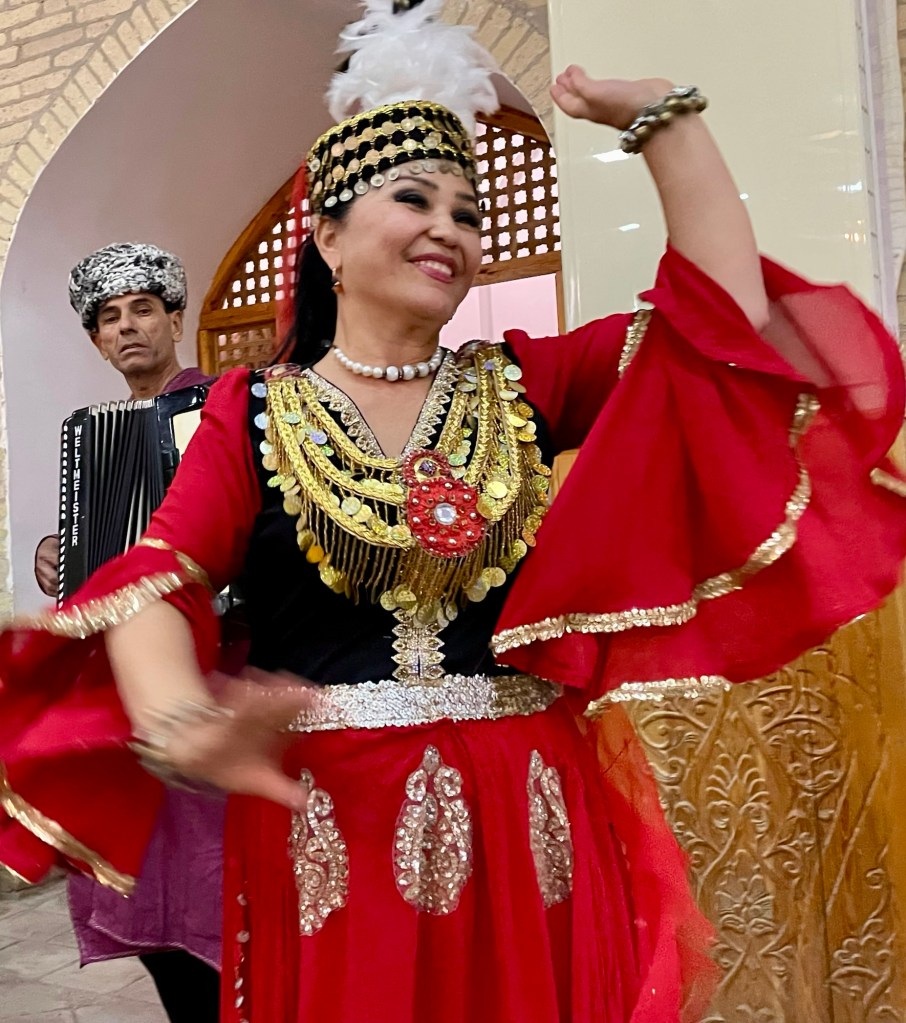
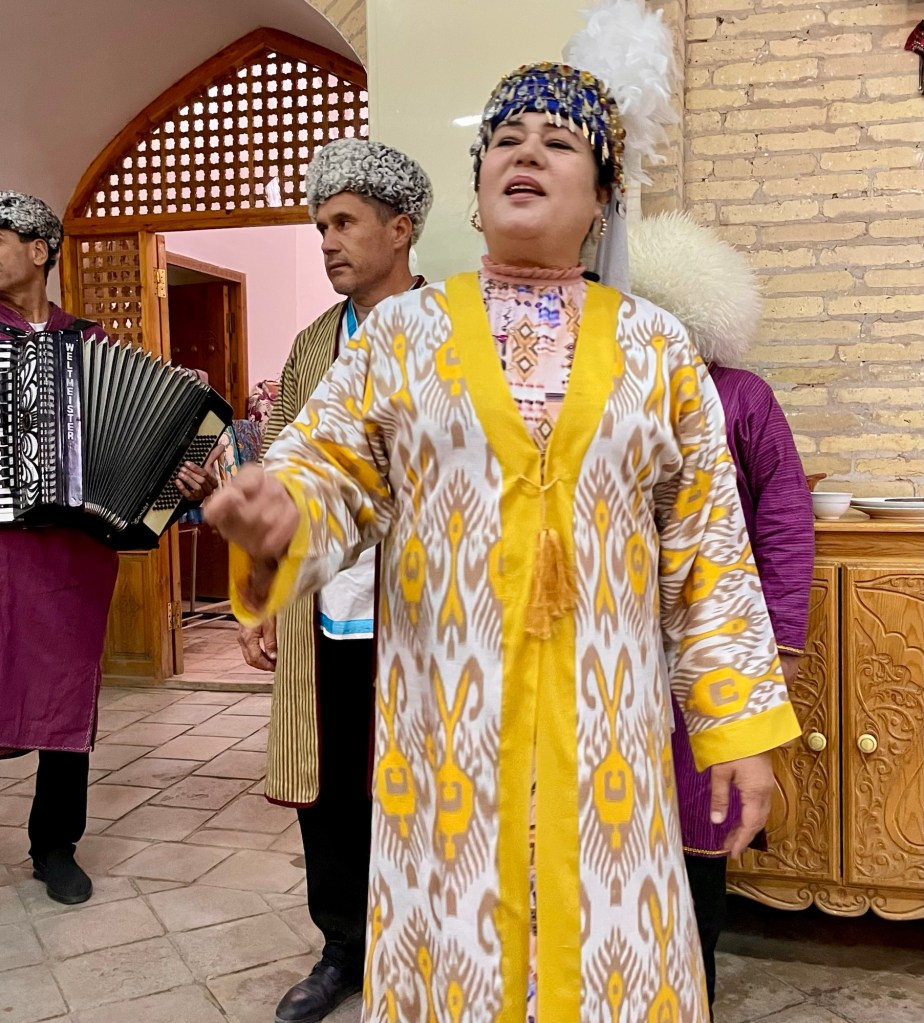
The main course was some meat and noodles and we did have a nice squash soup. I really enjoy our first course of salads, but I am really getting tired of the main entrées. We were entertained during dinner. The group seemed to be a family because the two women look like sisters and they had this young boy perform also.


 RobbieLambertsTravels
I can really get a feel for the culture from your descriptions and pictures.
>
LikeLike
I know nothing about that part of the world, but these latest pictures are so beautiful. The street scenes look like movie sets.
LikeLike