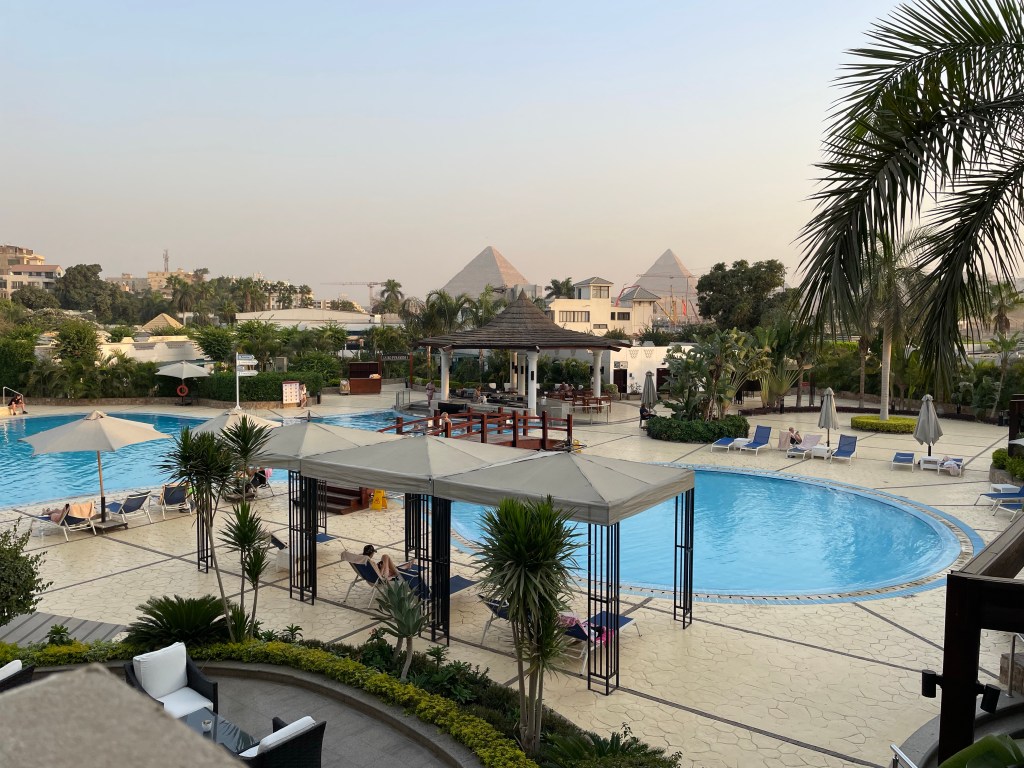
After a wonderful stay in Boston, and a pretty uneventful flight to Egypt, I am in a five-star hotel in Giza. Below is a picture of the view from my room. I actually went swimming this afternoon. The pyramids are in the background of this picture. Even though the room is wonderful, I am disappointed in the food. It looks interesting but it’s not cooked very well. Tonight they had duck that was so tough, I didn’t eat all of it. They had lamb cooked in coconut milk, which was so bland it was totally uninteresting. I have, however had some really incredible appetizers. Desserts are also always good. I might just eat a dinner entirely of appetizers and dessert.
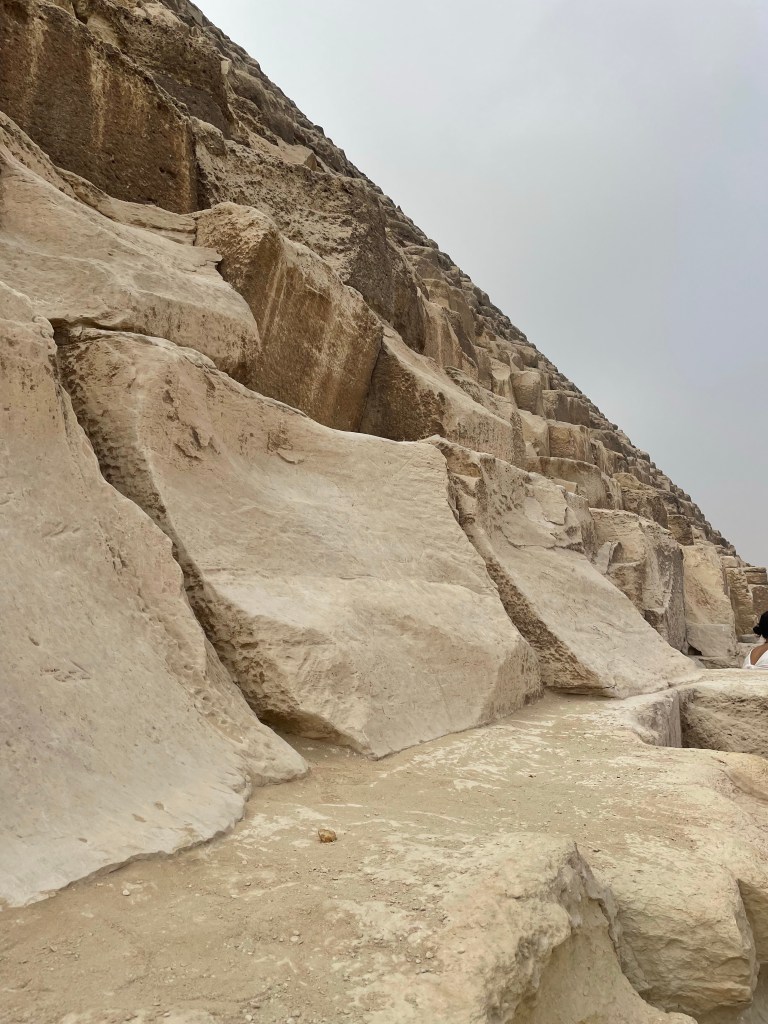
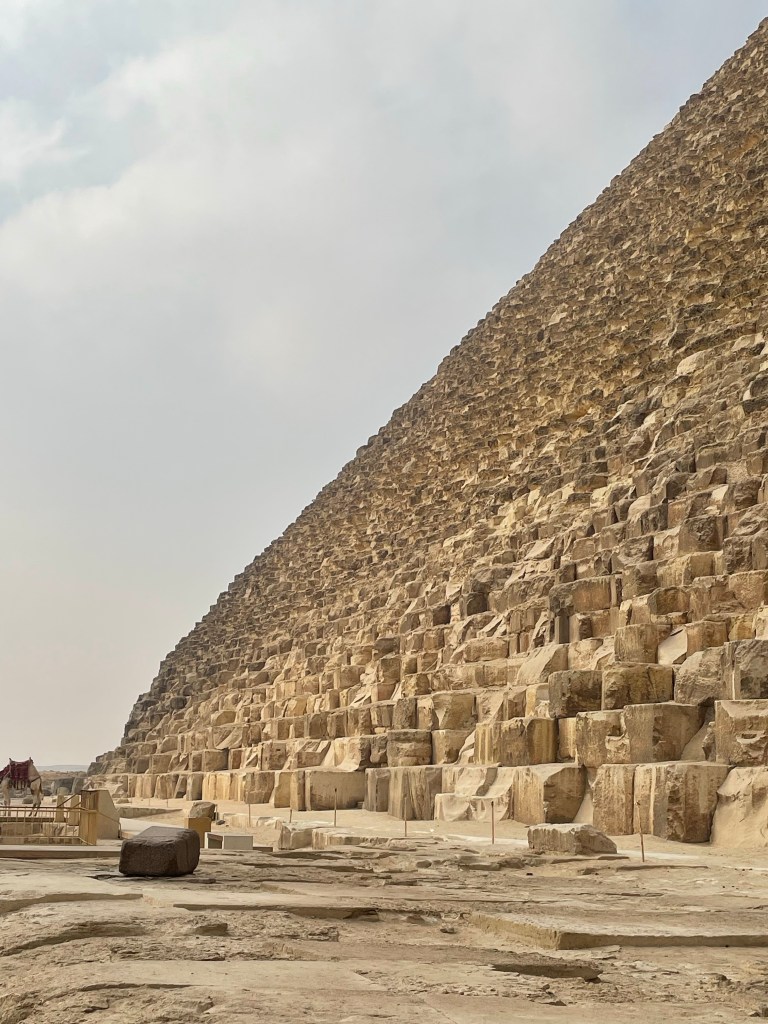
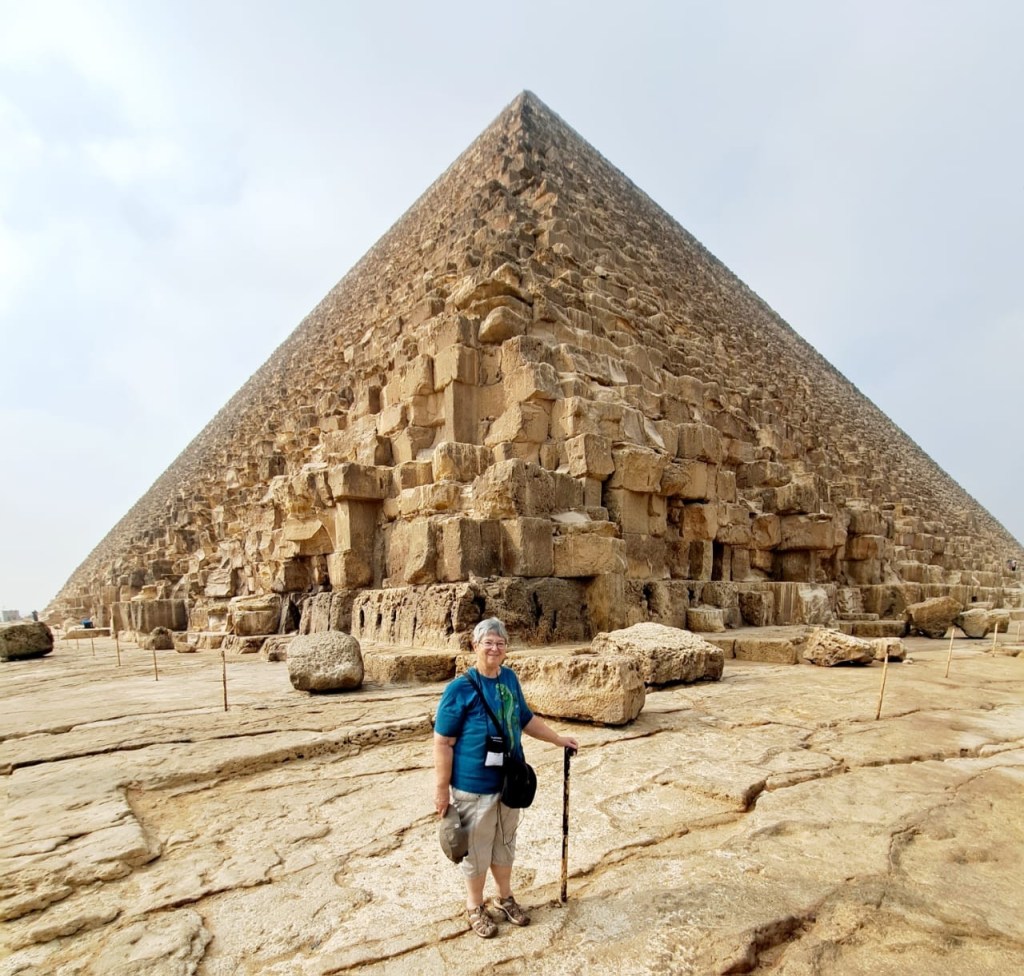
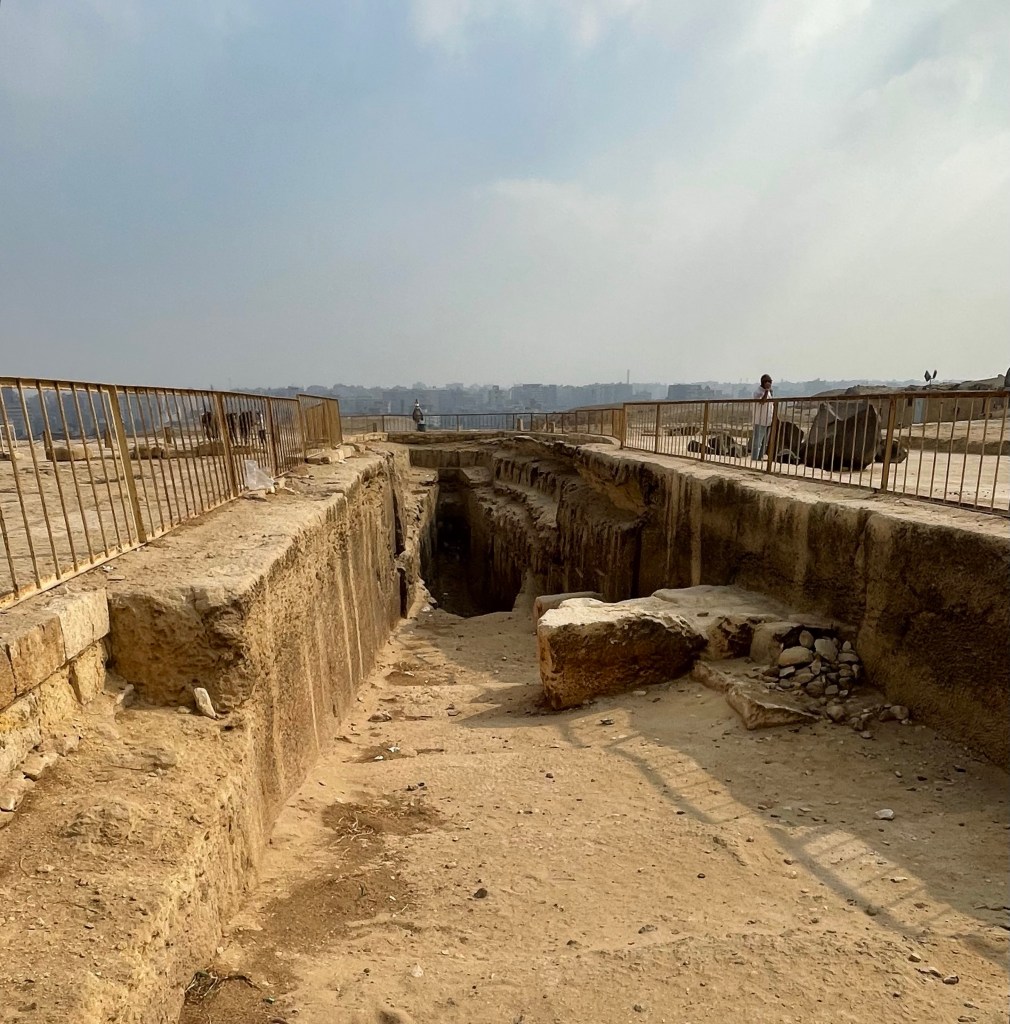
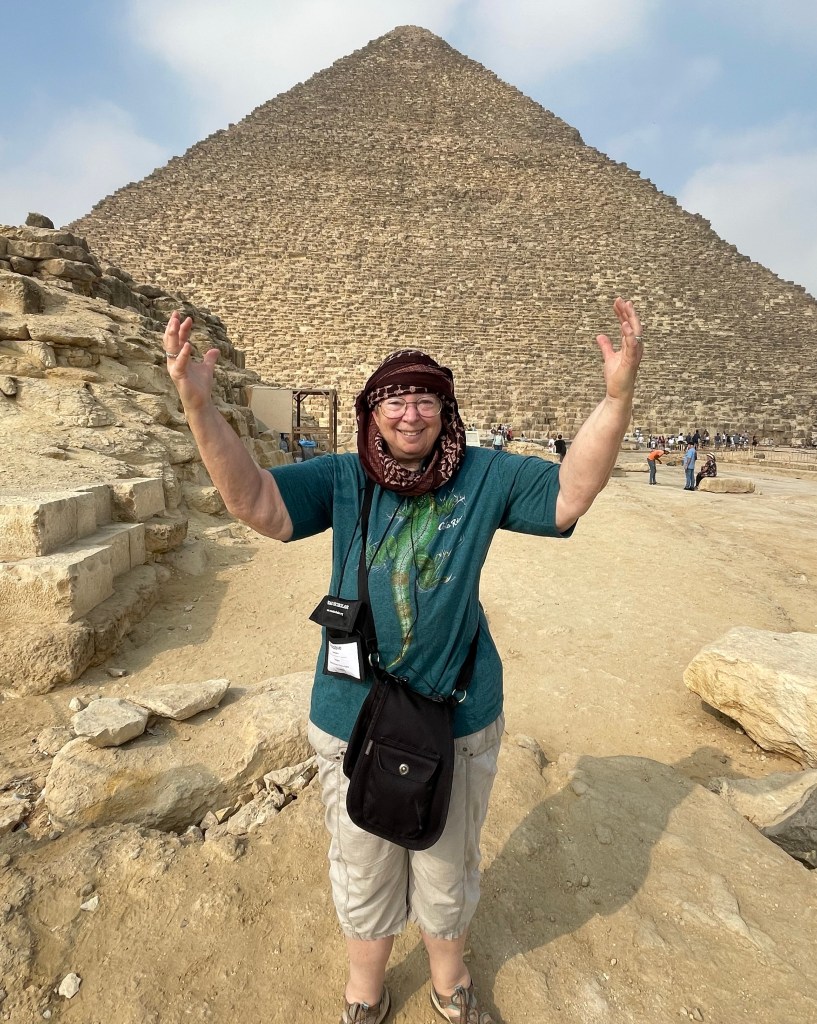
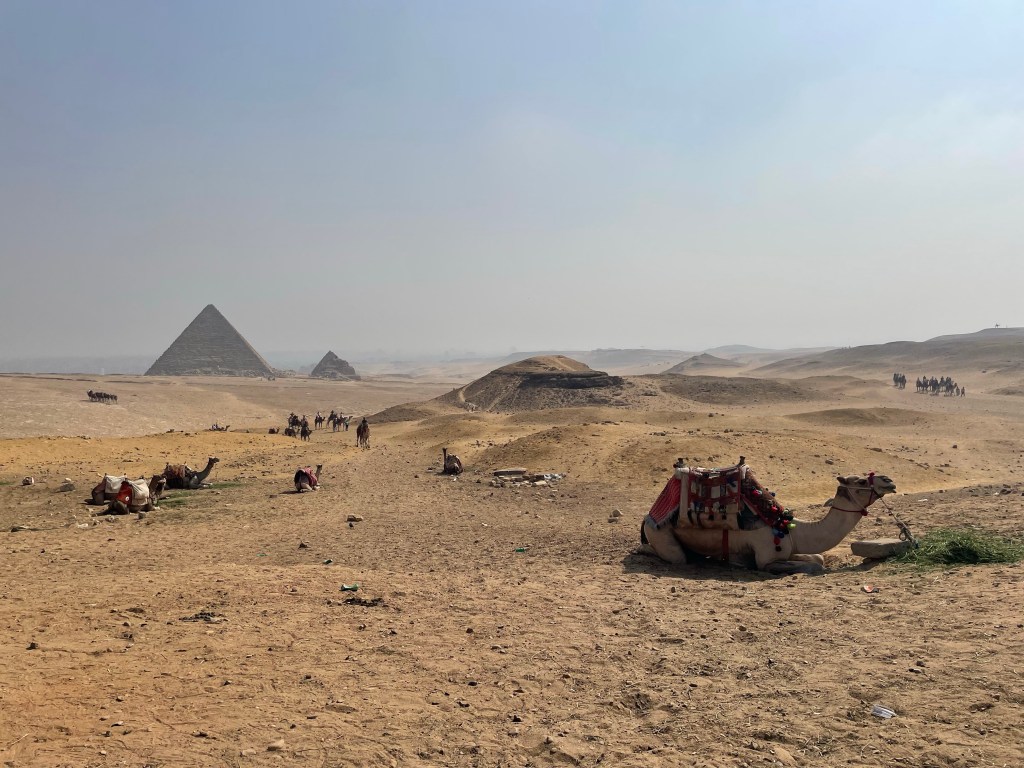
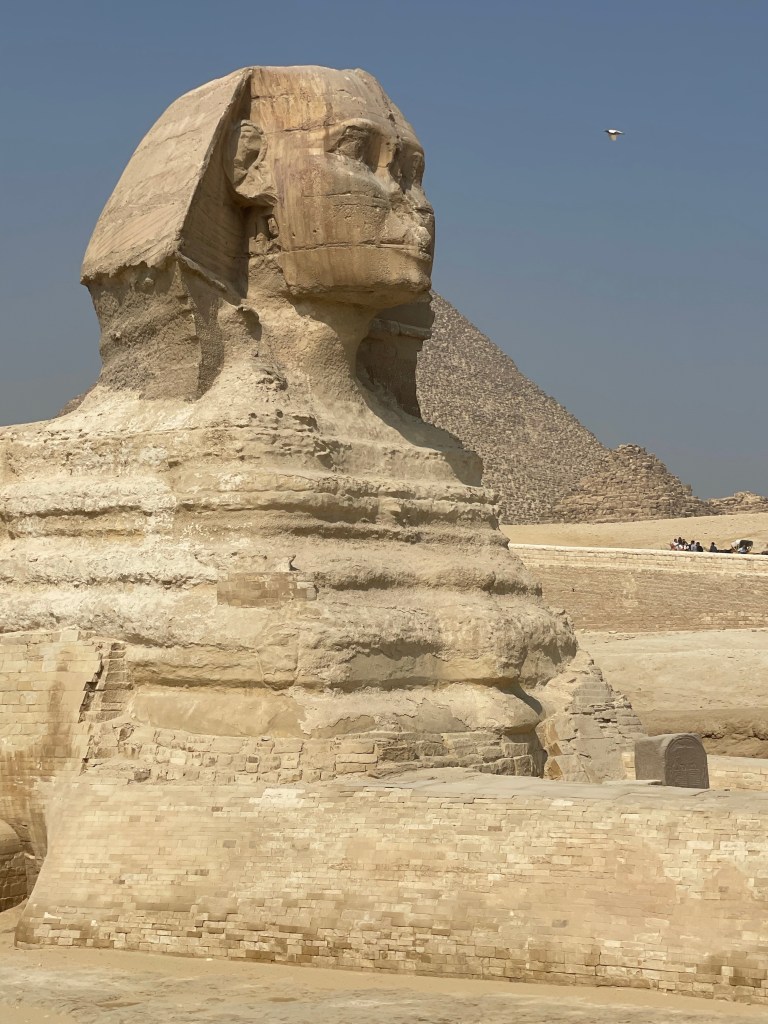
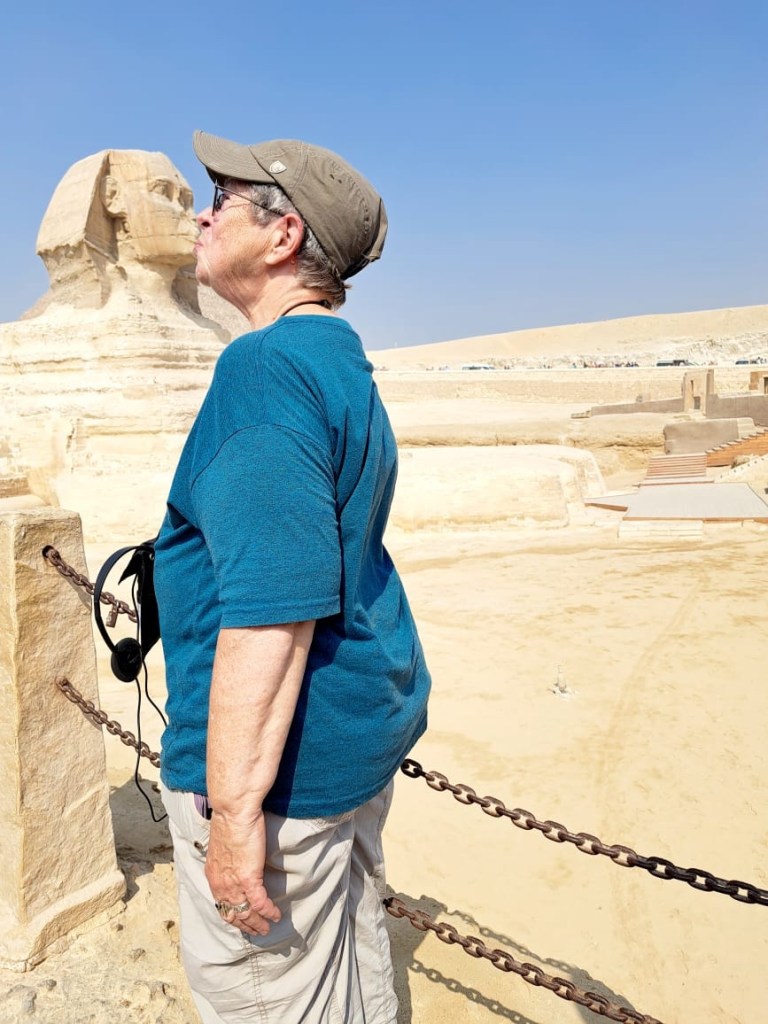
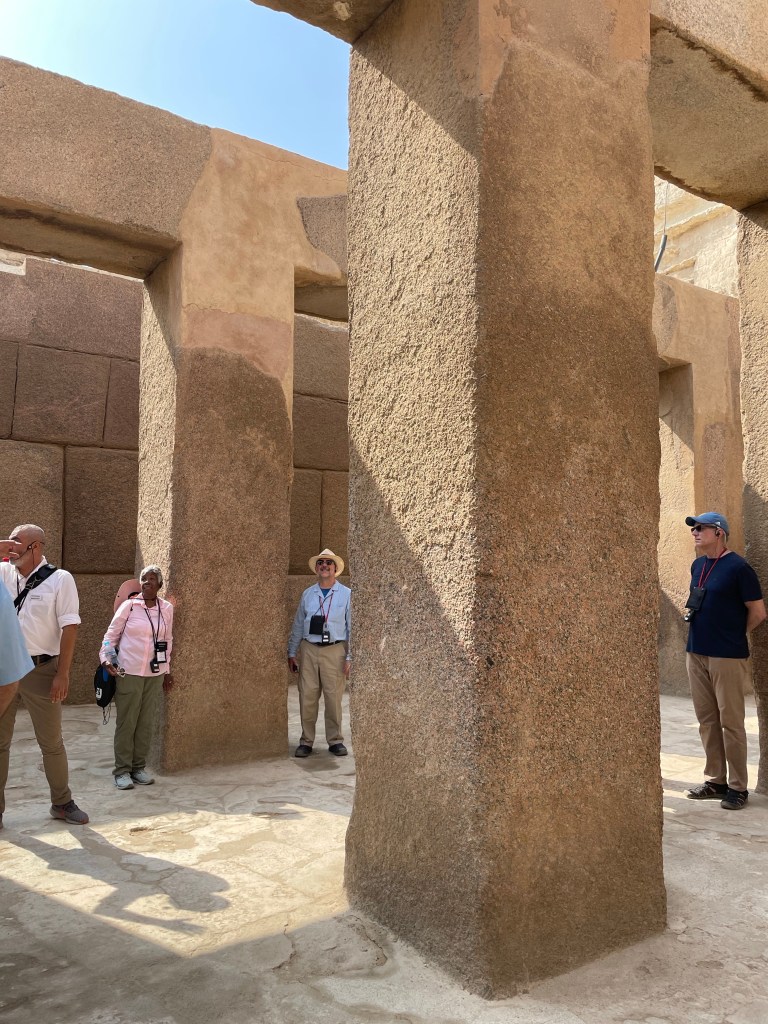
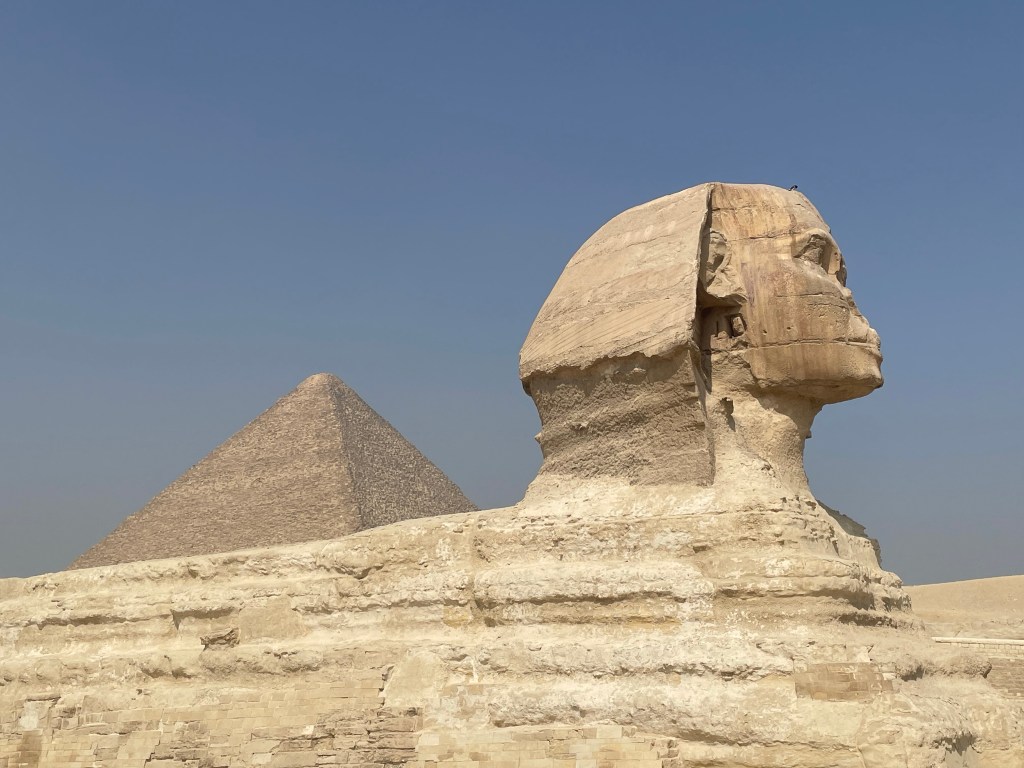
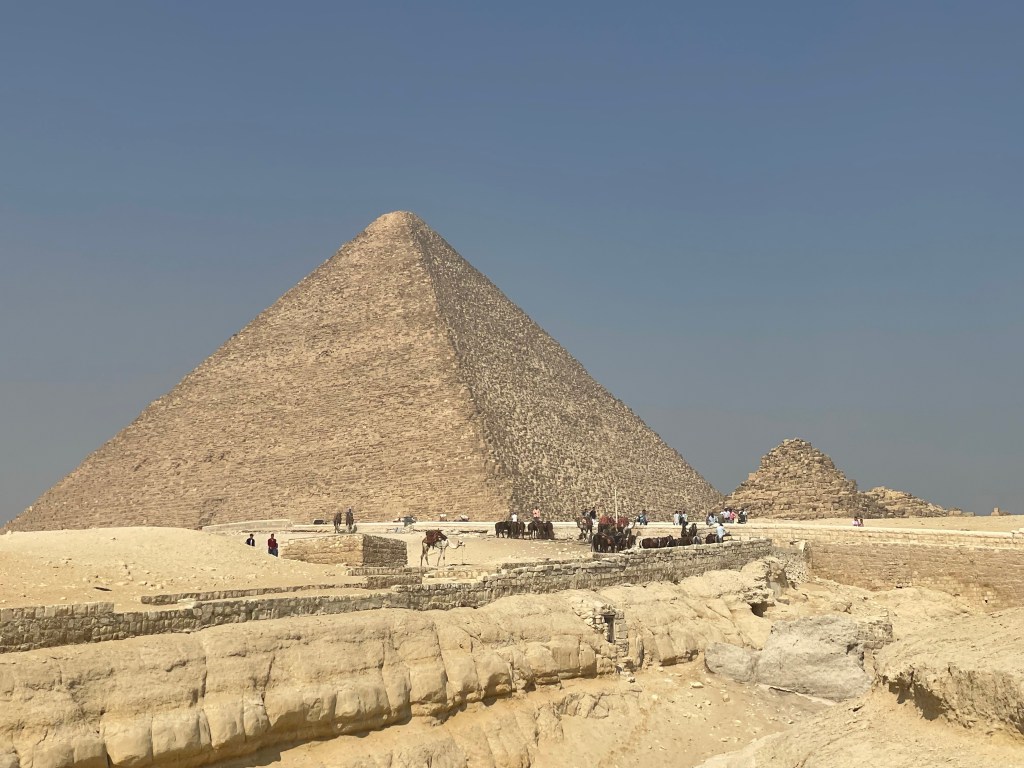
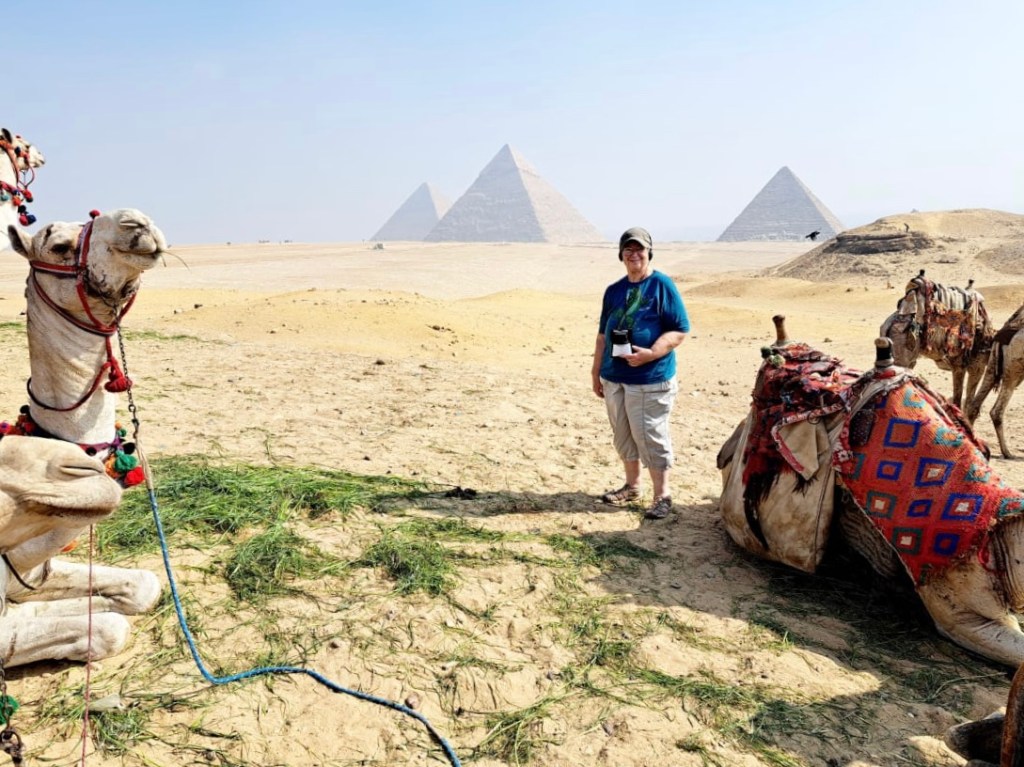
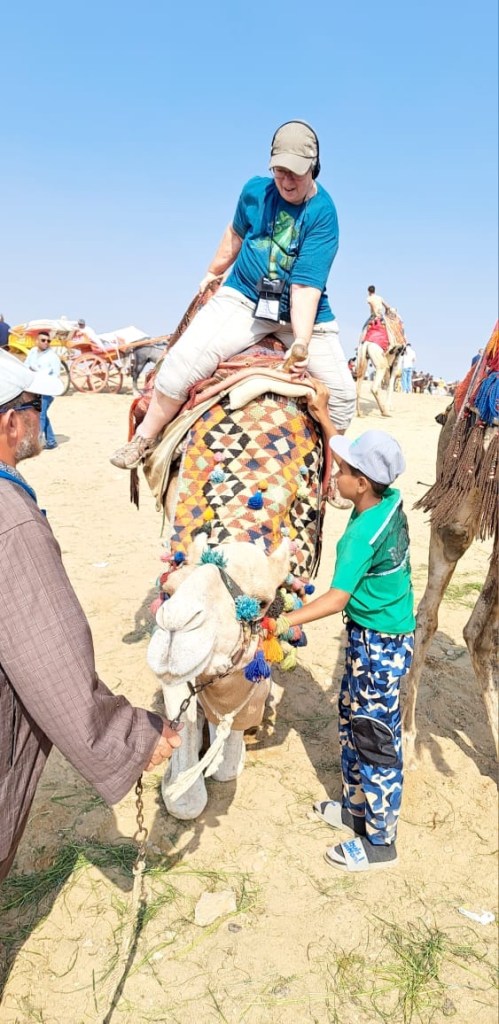
Our first day consisted of two major outings, one to the pyramids and the other to the Egyptian museum. We walked around the big pyramid, and also the Sphinx. The group took a camel ride which I had to turn down because of the arthritis in my hips. I got up onto the camel and decided that was a bad thing for me and my arthritis so I immediately got off. The group only went for about a 15 minute ride so I’m actually glad I didn’t go. When Janet and I were here in 2001 we rode around the pyramids for at least an hour on a camel. Here are the pictures from around the pyramids. The pyramids were constructed during the old kingdom dating from 2700 to 2160 BCE.
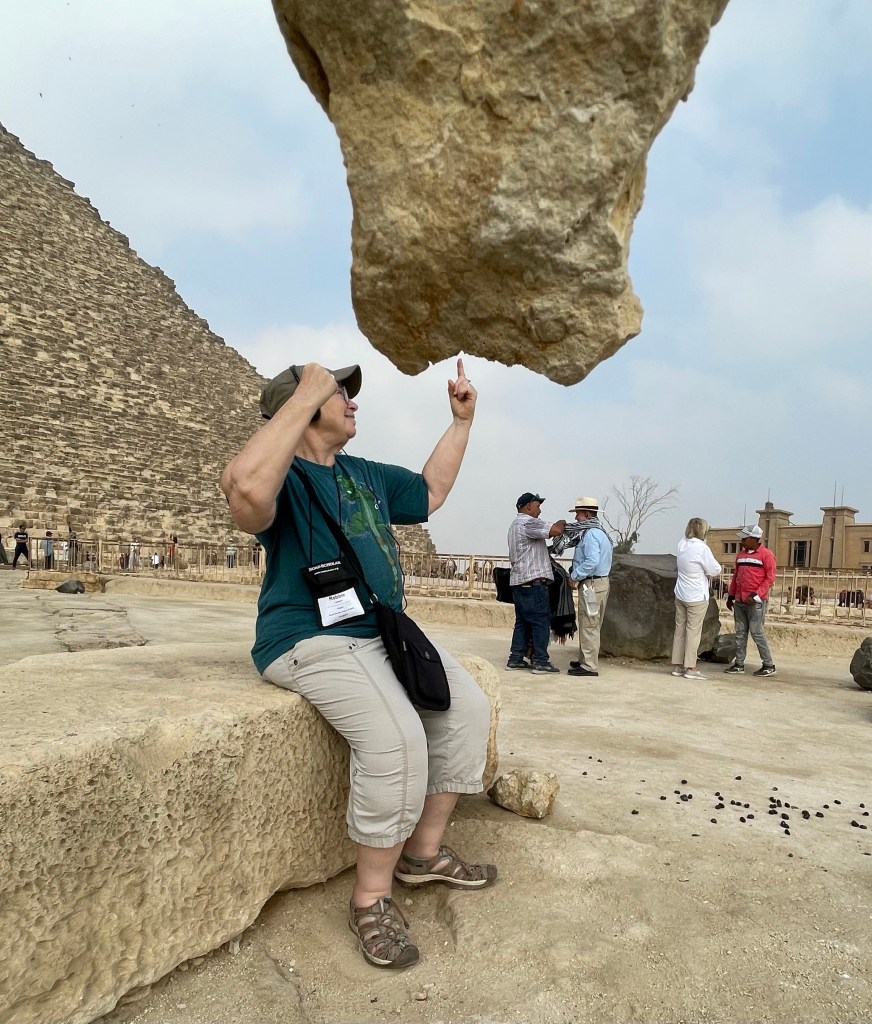
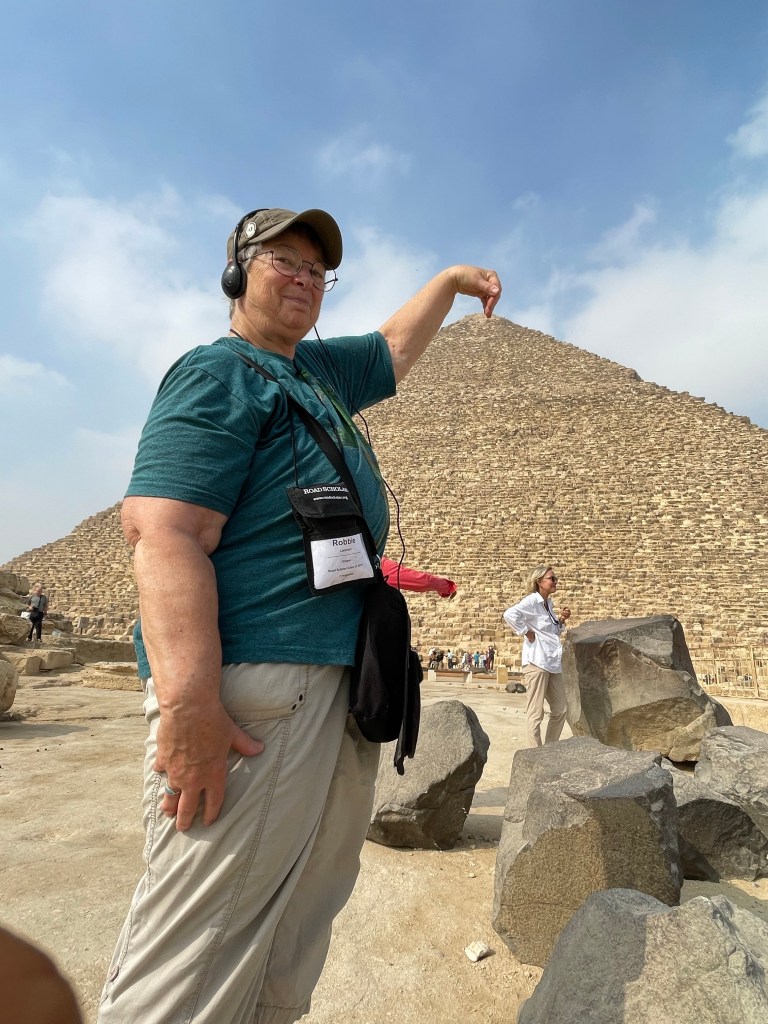
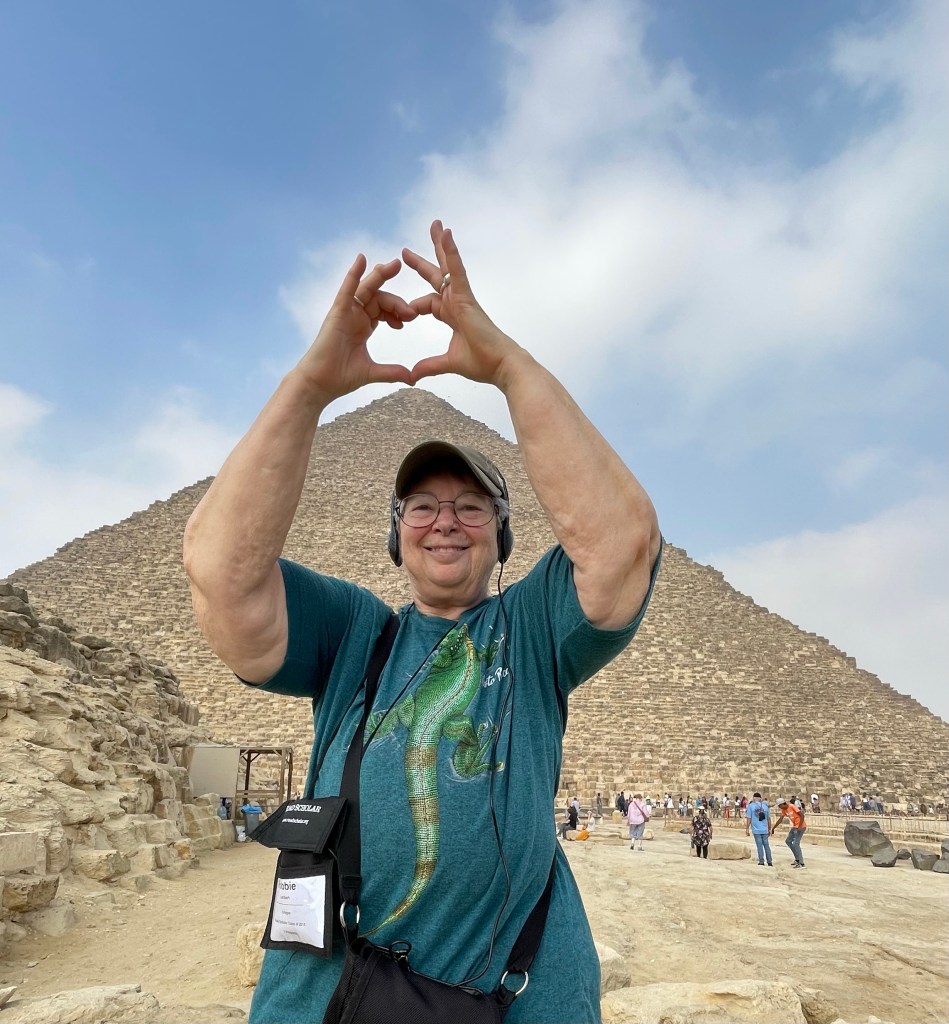
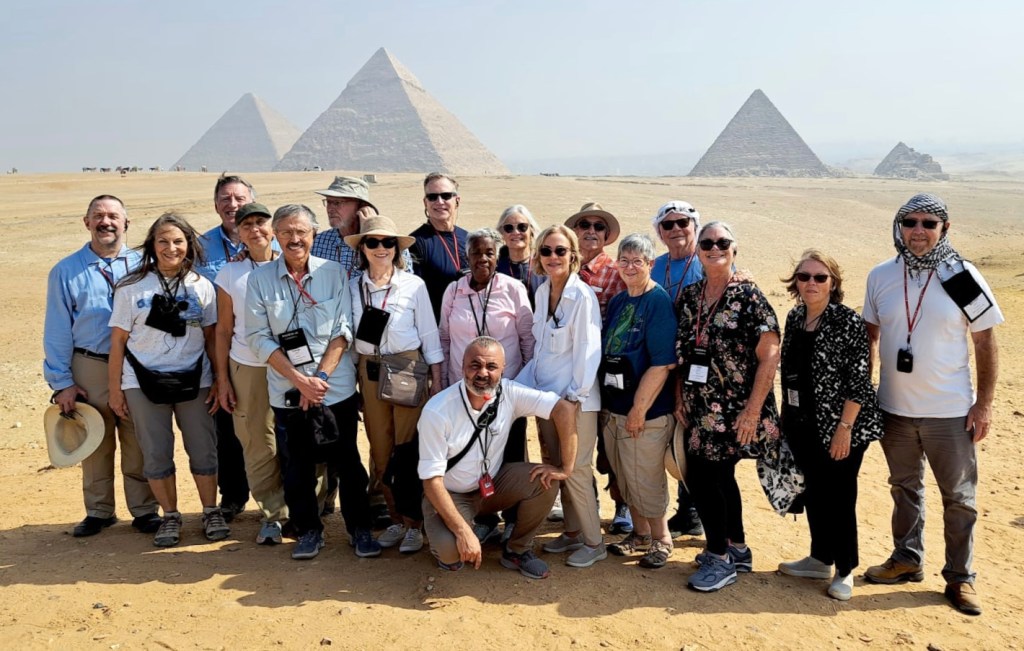
Close-up view of the surface of the pyramidAgain more detail of the structure. When the pyramids were finished, they actually put a smooth surface over them. That surface is long since disappeared.When excavating around the pyramid, they found these boats that were buried. The boats were intended to take the pharaoh to the afterlife. Here is one of those excavations.There are these people that will take crazy pictures of you and the pyramids. All I had to do was pay the guy one dollar for the four pictures shown here.The terrain around the pyramids, including a camel in the foregroundGotta love that sphinxThe temple near the Sphinx that was used for purification of the dead. After purification, then the body was embalmed. The sphinx and one of the pyramids Three pyramids in a row. The pyramids were built in groups since they were used to bury members of the same family. For example, there could be the pharaoh, his wife, and a child. Our group. Our leader Bassem is kneeling in front. My attempt to ride a camel.
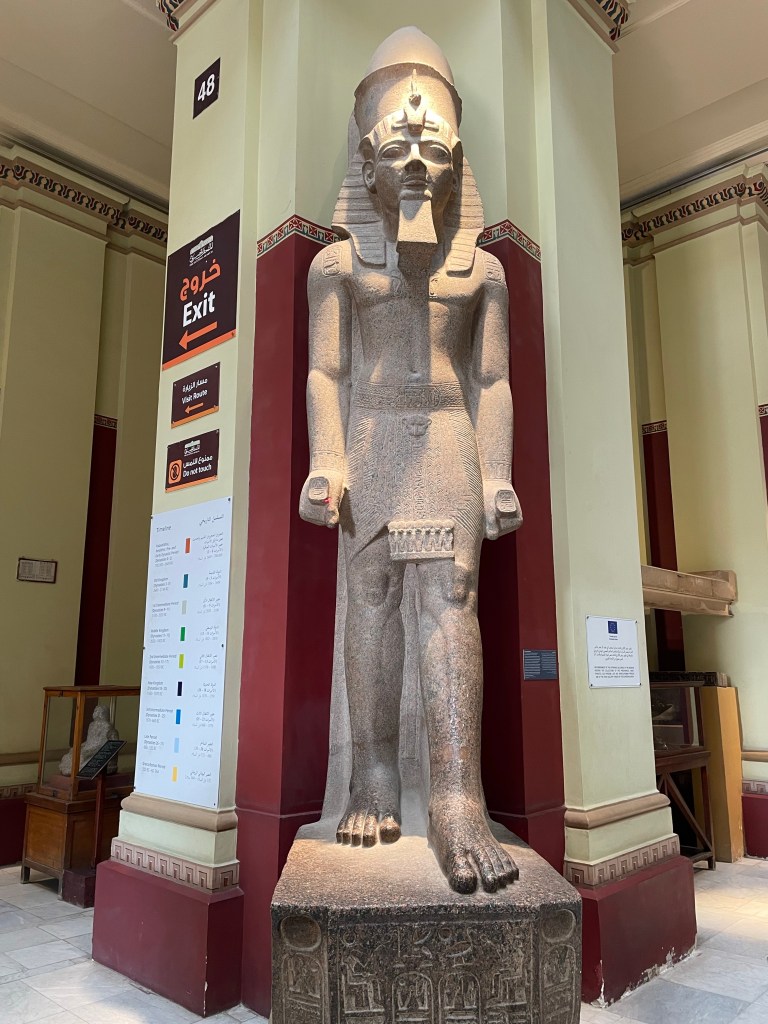
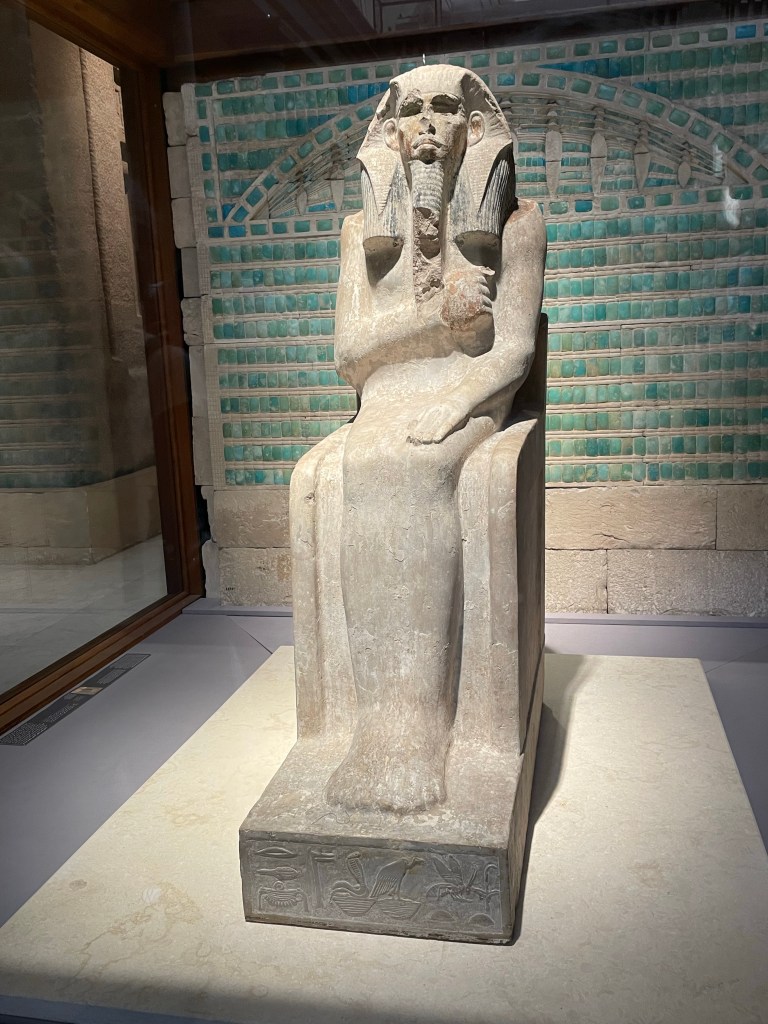
After lunch, we went into Cairo to go to the Egyptian museum. This is still the old museum. There is a new one which is actually close to where we are staying and to the pyramids. Unfortunately they haven’t completed moved everything over there. When Janet and I were here in 2001, the museum was just filled up with these big blocks from floor to ceiling, and there was very little labeling of anything. Most of that is now gone. They still have the King Tut stuff on display but the mummies have been moved to another museum. So I found this museum to not be nearly as exciting as when I was here before. Really disappointed that I didn’t get to go to the new museum. I just might have to come back to Egypt. Here are the pictures from the museum.
Ramses II
We learned why most Egyptian statues have the left foot forward. It is because it means that the person is still alive. The heart is on the left side of the body so a forward left foot means a living person. A forward right foot means a dead person. Feet together means they’re in the afterlife.
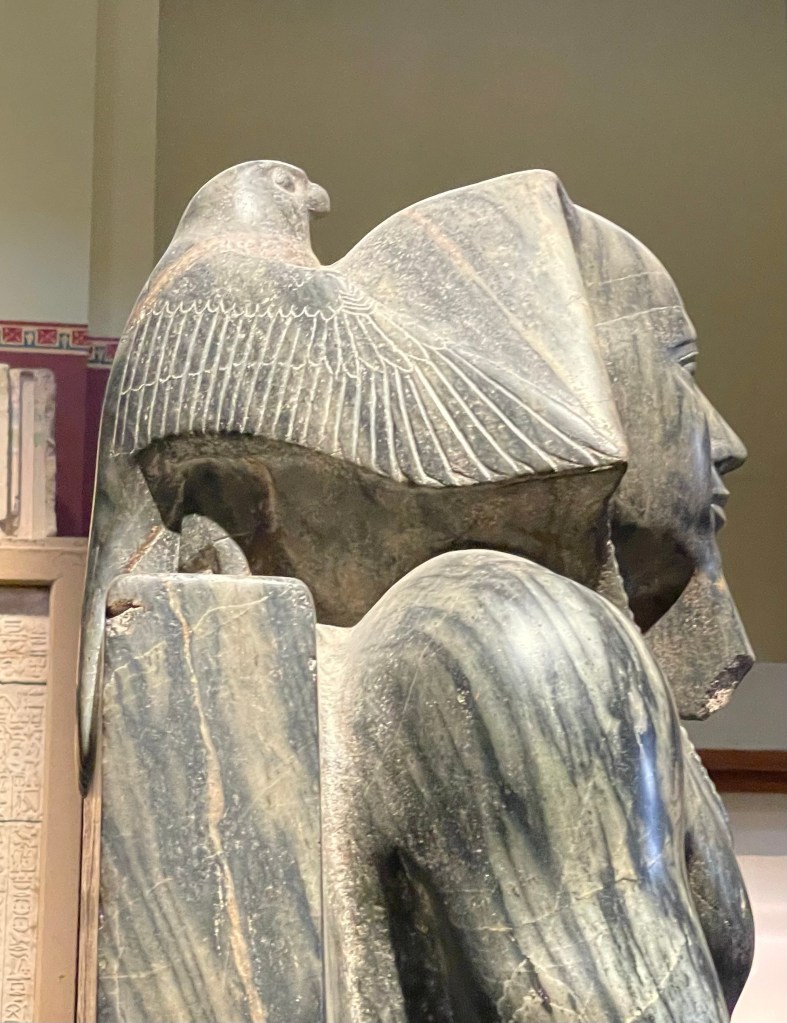
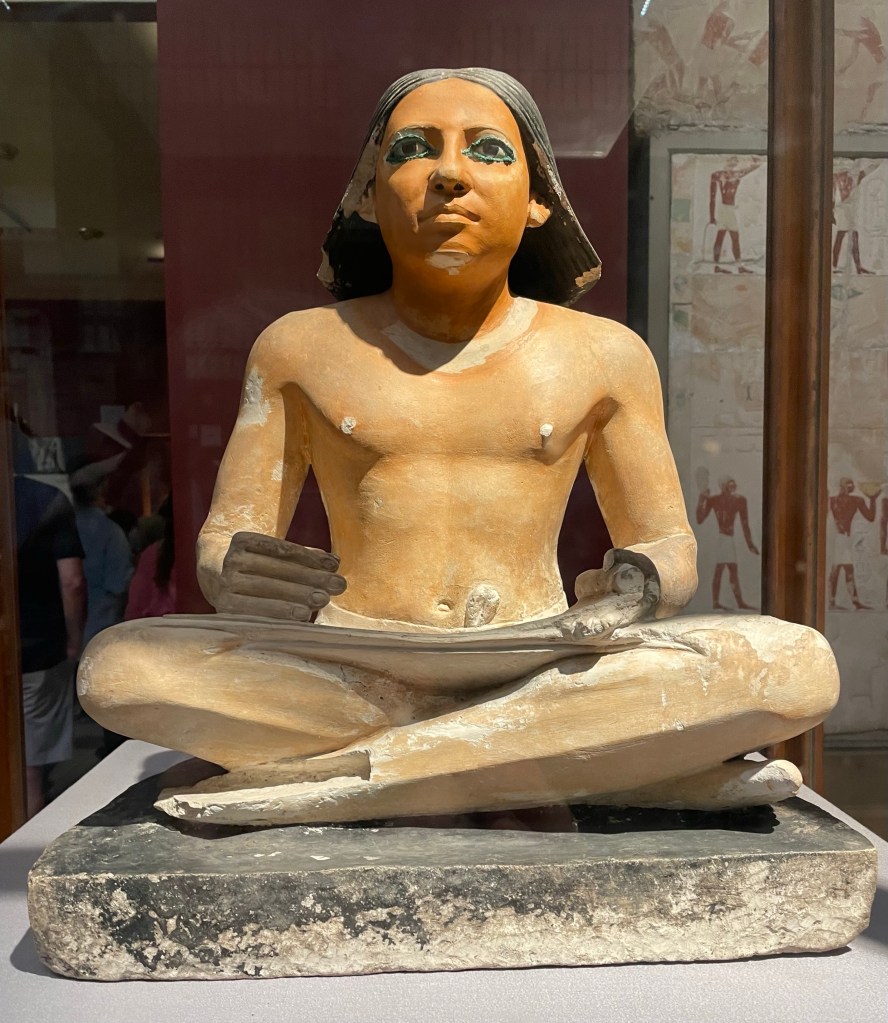
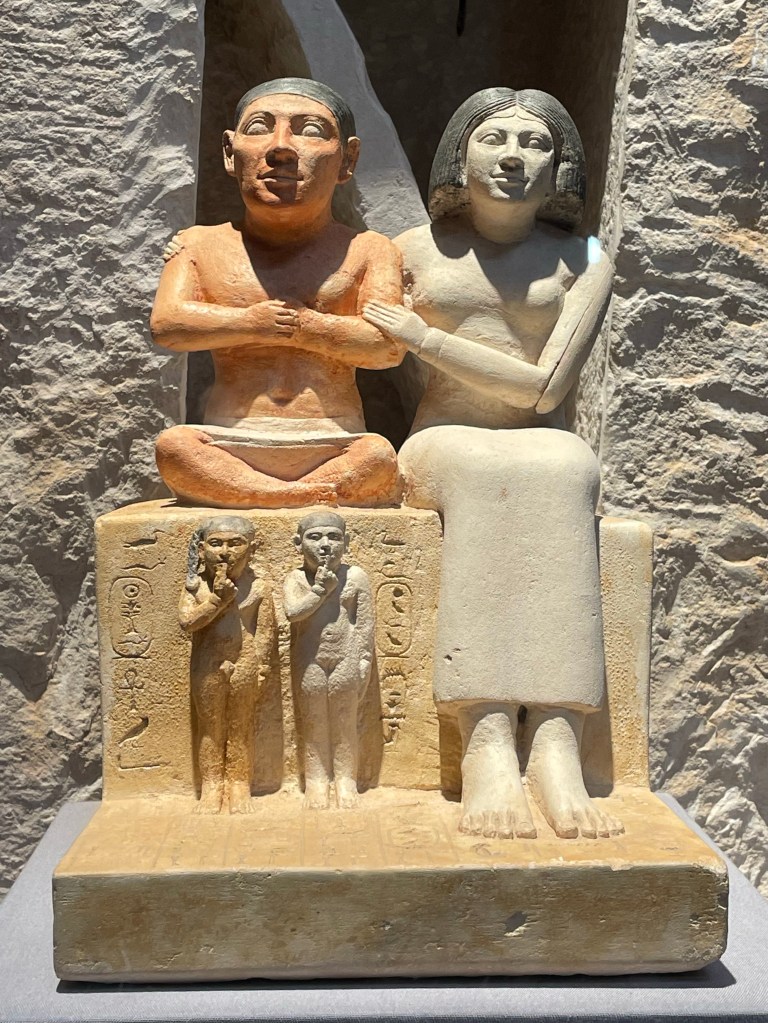
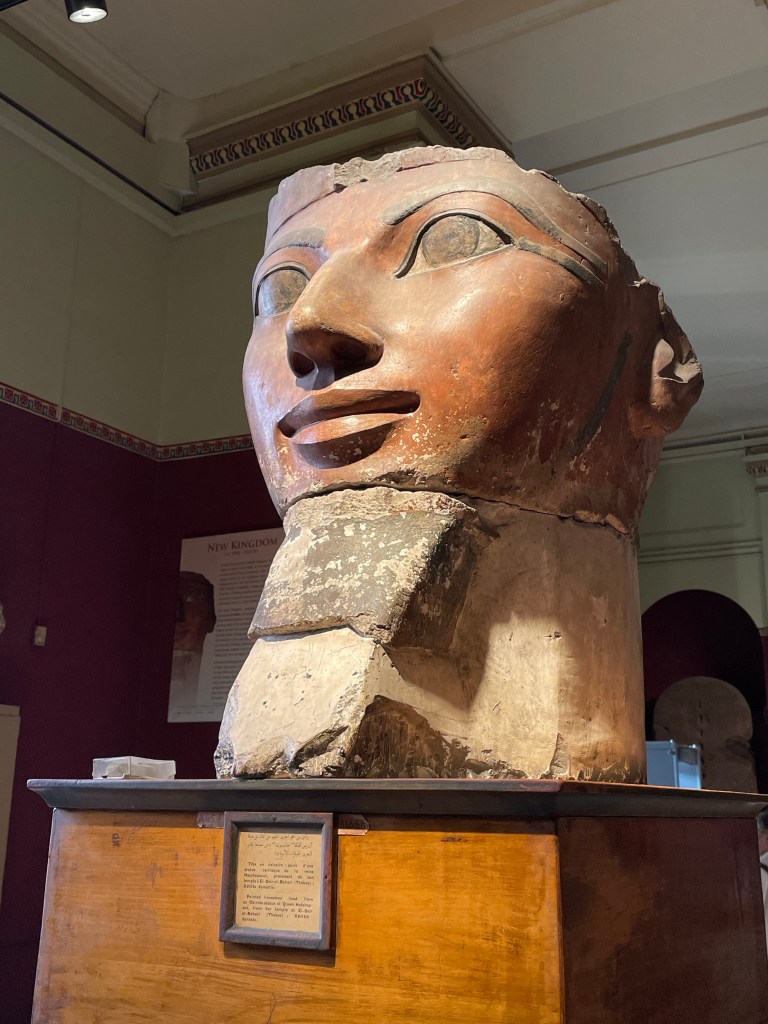
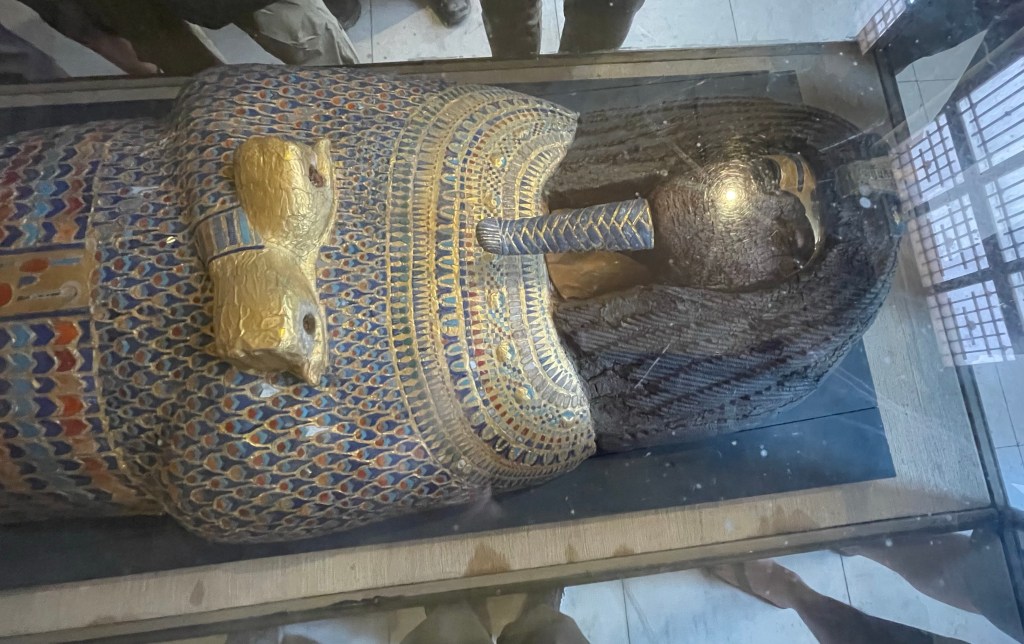
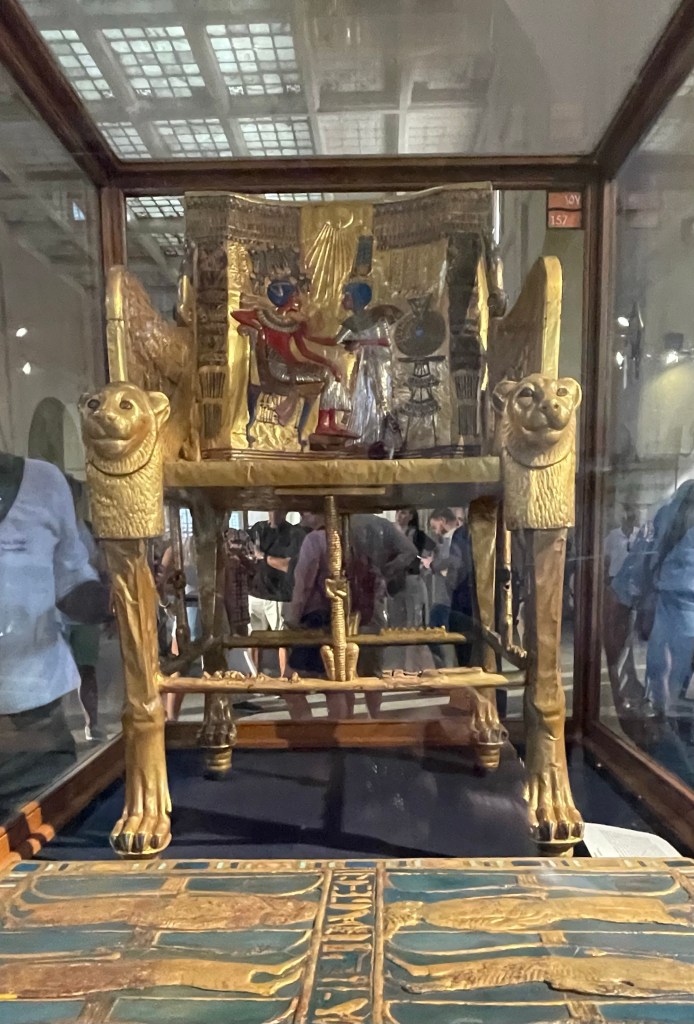
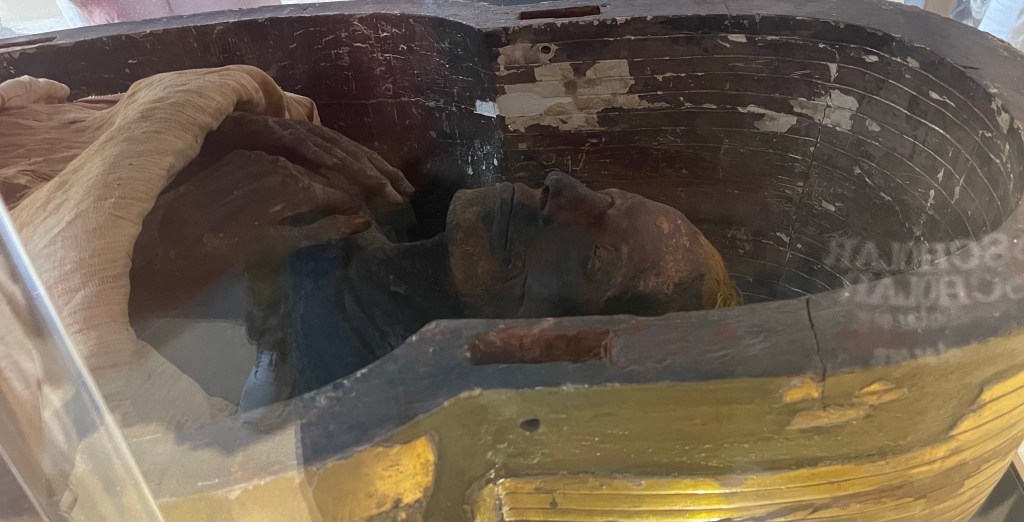
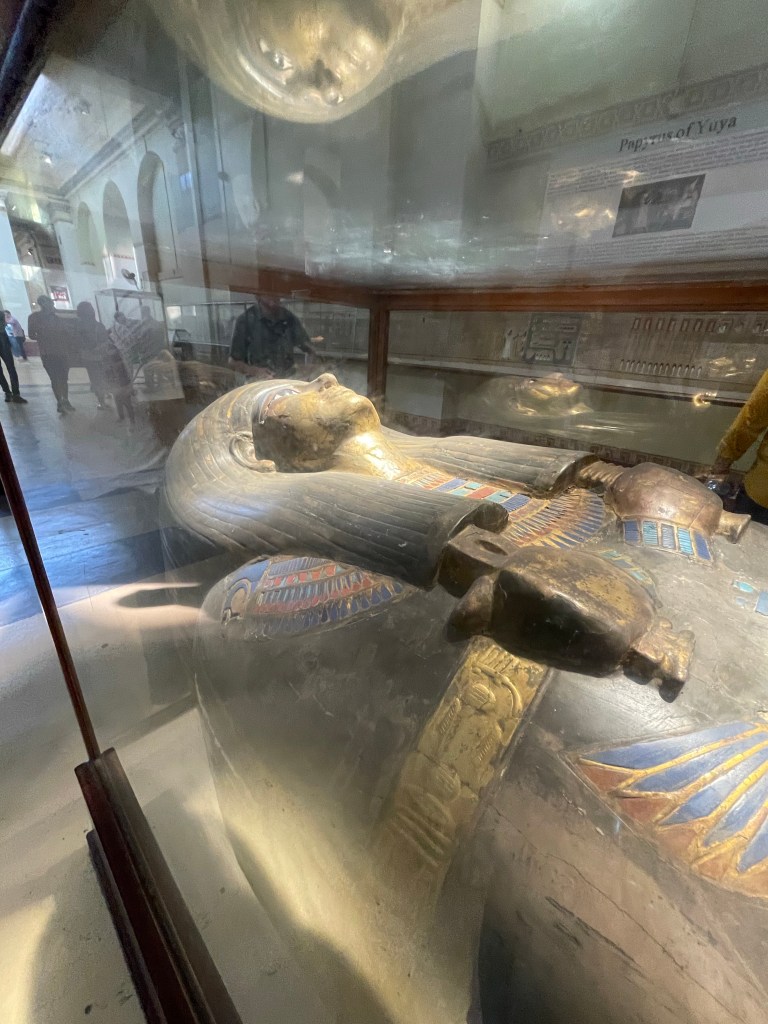
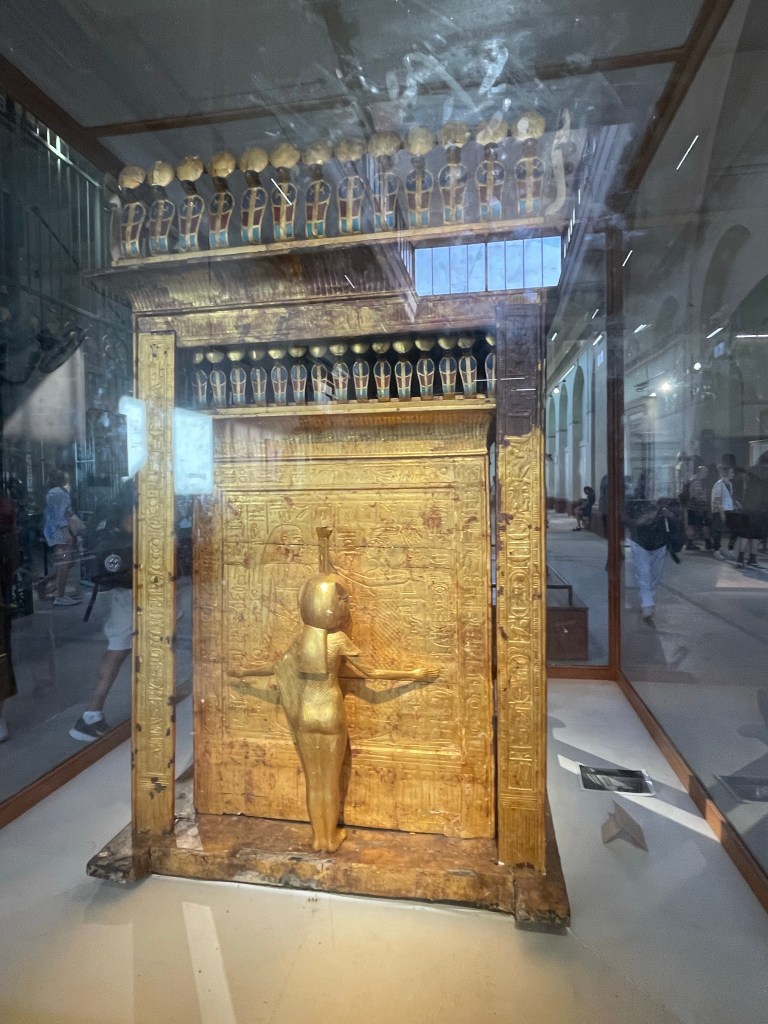
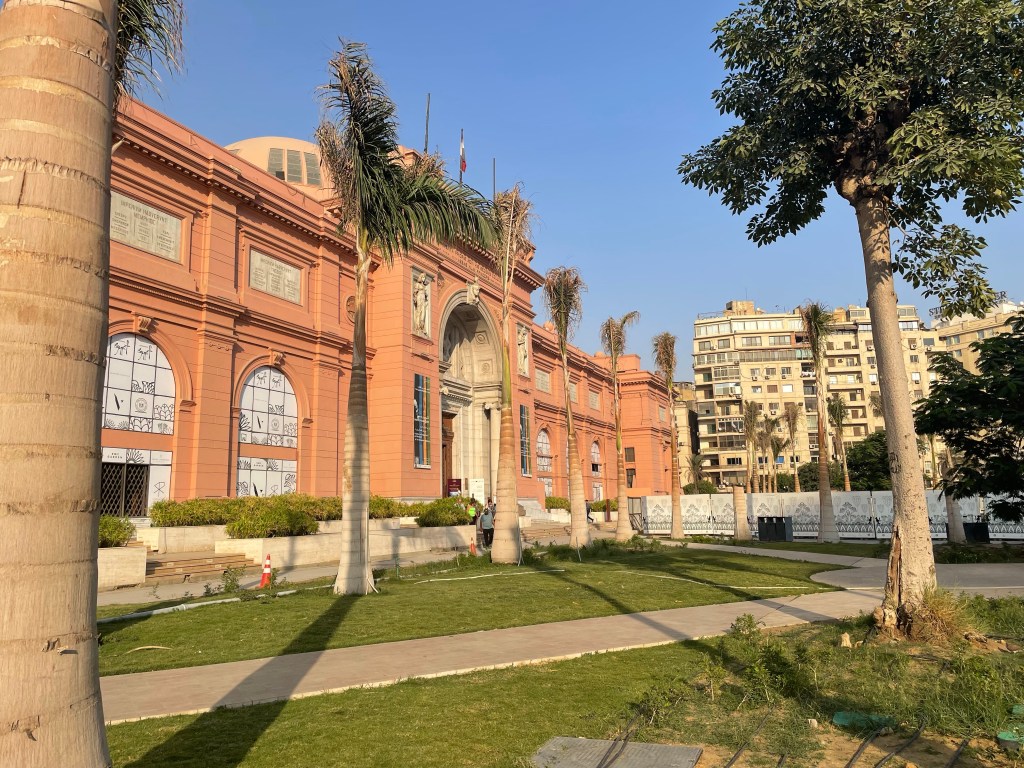
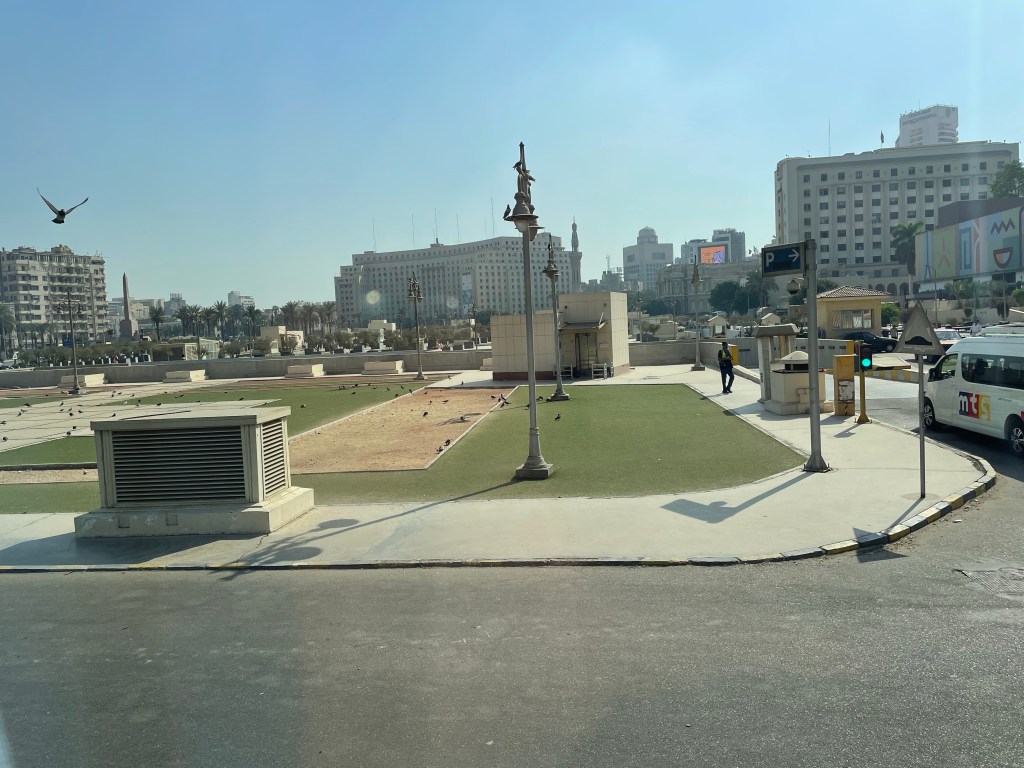
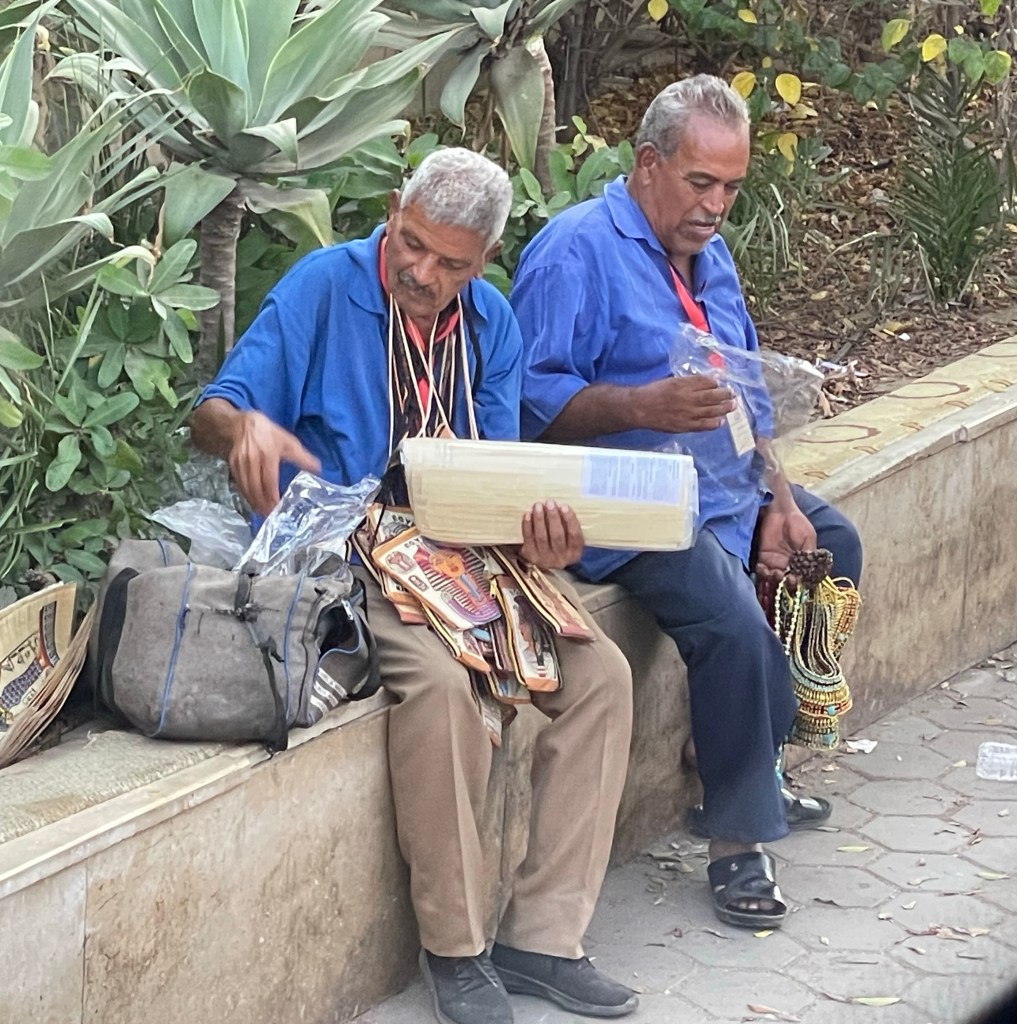
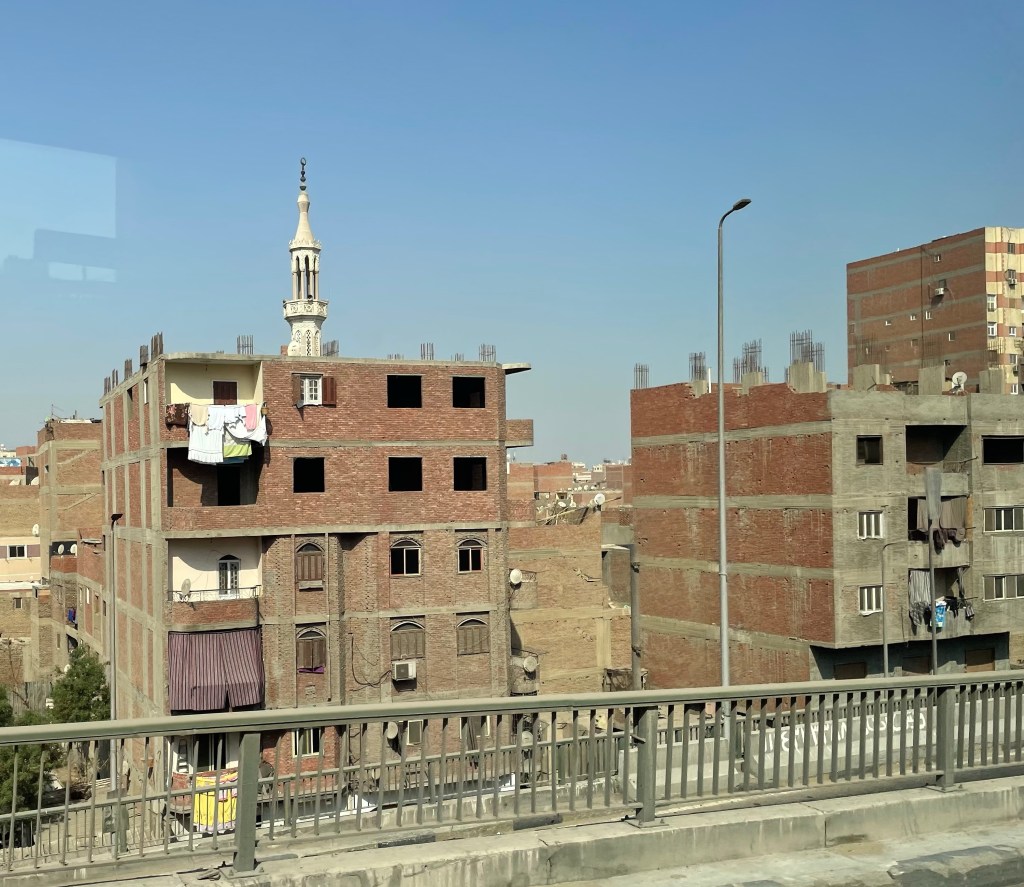
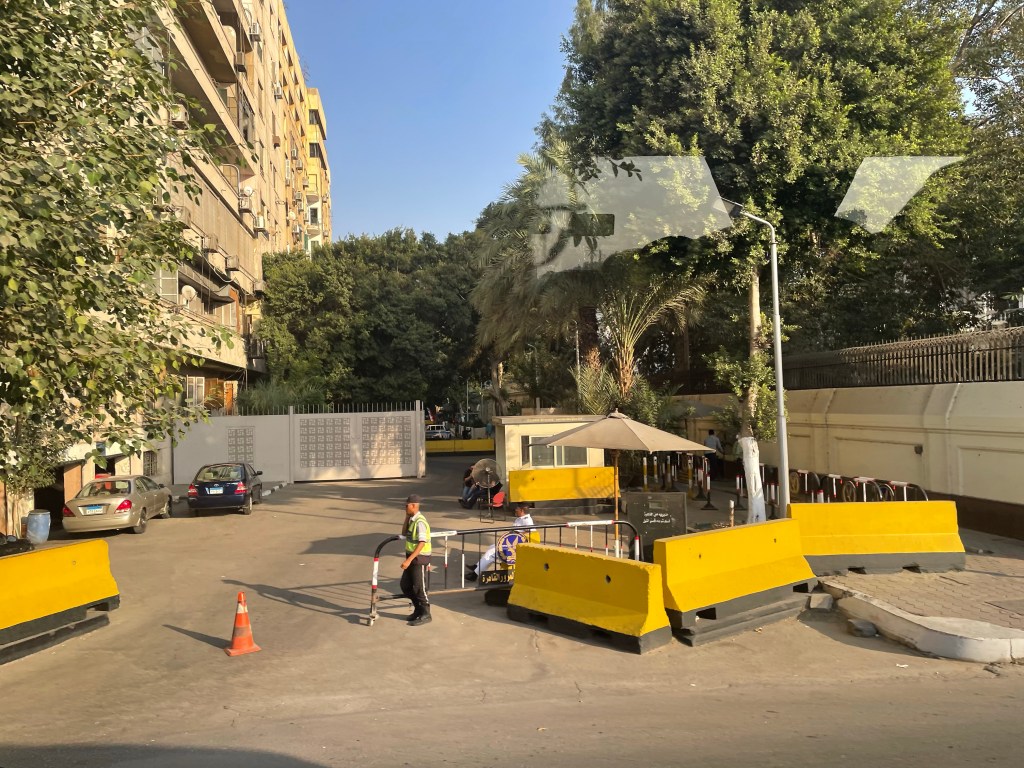
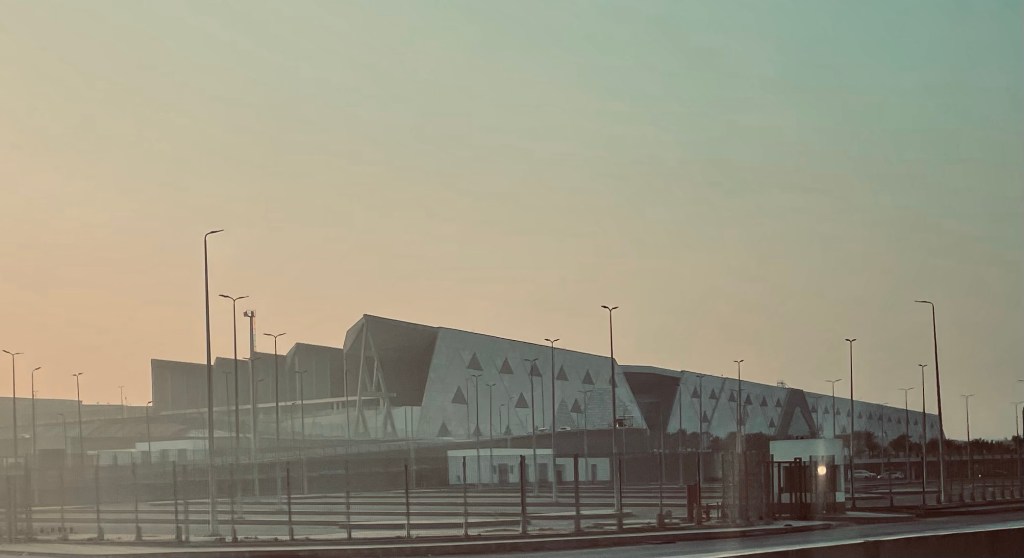
King Djoser who built the first monumental stone structure, called the step pyramid.King Menkaure who built the third pyramid on the Giza plateau, is shown between two female figures. At the time the statute was made, he was still alive, since his left foot is forward. Part of the statue contains material between the arms and the torso and material behind the neck. The stuff was needed in order to make sure that the statue did not fall apart. As you can tell, these statues have survived for thousands of years.Discovered in a pit under his temple on the valley floor at Giza, this statue of king Khatre is one of the most iconic sculptures of ancient Egypt. One of the interesting things about it is the use of the falcon god Horus to support the neck of the king.A statue of a scribe. This is a more modern statue so that the arms are no longer supported.Sculpture of a woman married to a dwarf and their children. Dwarfs had special status in Egypt at this time.Painted limestone head from an Osiride statue of Queen Hatshep-sut, from her temple at El-Deir el Bahari. Akhenaten’s coffin lid. Akhenaten is the pharaoh who tried to create a religion that was based on a belief in one god. King Tut was his son who brought back the belief in many gods during his reignKing Tut’s throne, which was buried with him.One of the few remaining mummies in the museum. This one is the grandmother of King Tut. King Tut’s grandmothers coffin lid When they embalm a body, they first remove all of the insides. These insides are buried in separate jars. This is the structure that king Tut’s insides are buried.Outside of the Egyptian MuseumTahrir Square, whichlocated in front of the museum, is where the demonstrations in 2011 were held. Two older Egyptian’s who were taking a rest from selling souvenirs to touristsTypical building in the poor part of Cairo. Notice some of the apartments aren’t even completed. Some are obviously occupied. The state lets people get away with it because their taxes are lower if the building is not complete. The state knows that these people are having financial difficulties. In spite of the obvious poverty, most of the buildings have significant numbers of television receptor disks on the roofs. Entrance to the US EmbassyThe new museum. It’s very hard to get a good picture of it from the bus. You’ll have to take my word that it looks like a fascinating structure.

 RobbieLambertsTravels
Thank you for sharing all these pictures!
LikeLiked by 1 person
Is that a cat sleeping on Akhenatens stomach?
Can’t live them, can’t live without them!
LikeLike