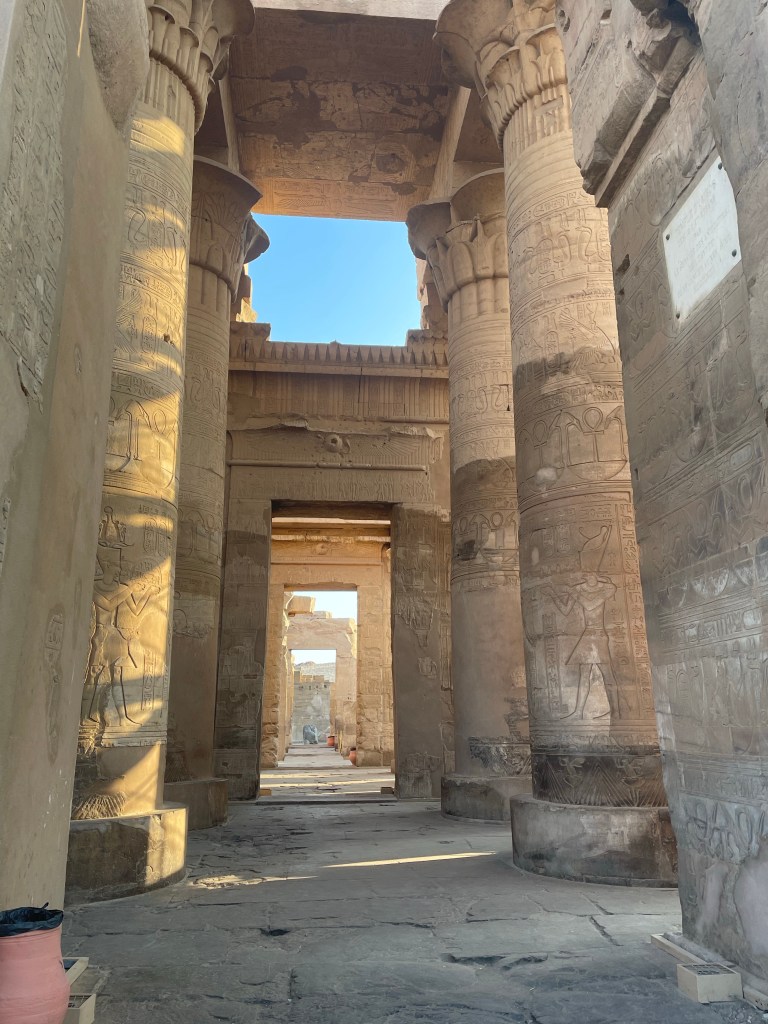
The first temple we visited, was the well preserved Kom Ombo Temple. Built during the Ptolemaic dynasty in the second century BCE, this temple is highly unusual, because of its symmetrical, double design. All the rooms of the temple are duplicated, mirrored among the building’s main access. The southern half of the building was dedicated to the crocodile god Sobek while the northern part of the building was dedicated to falcon god Horus. During initial evacuations, over 300 crocodile mummies were discovered at this site.
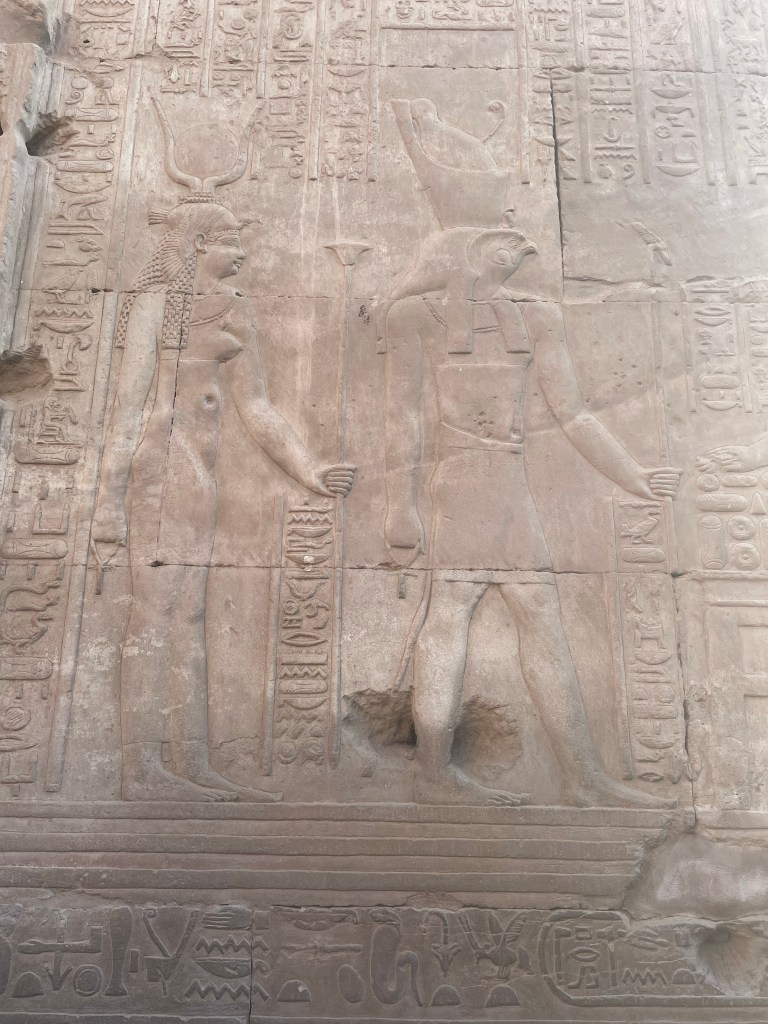
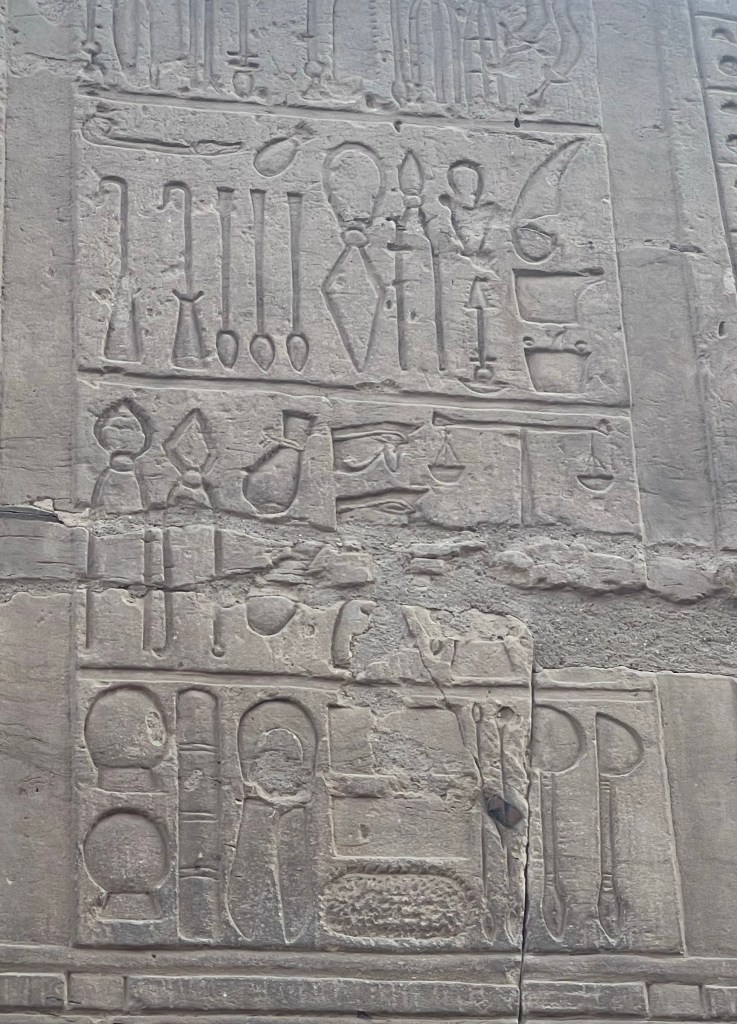
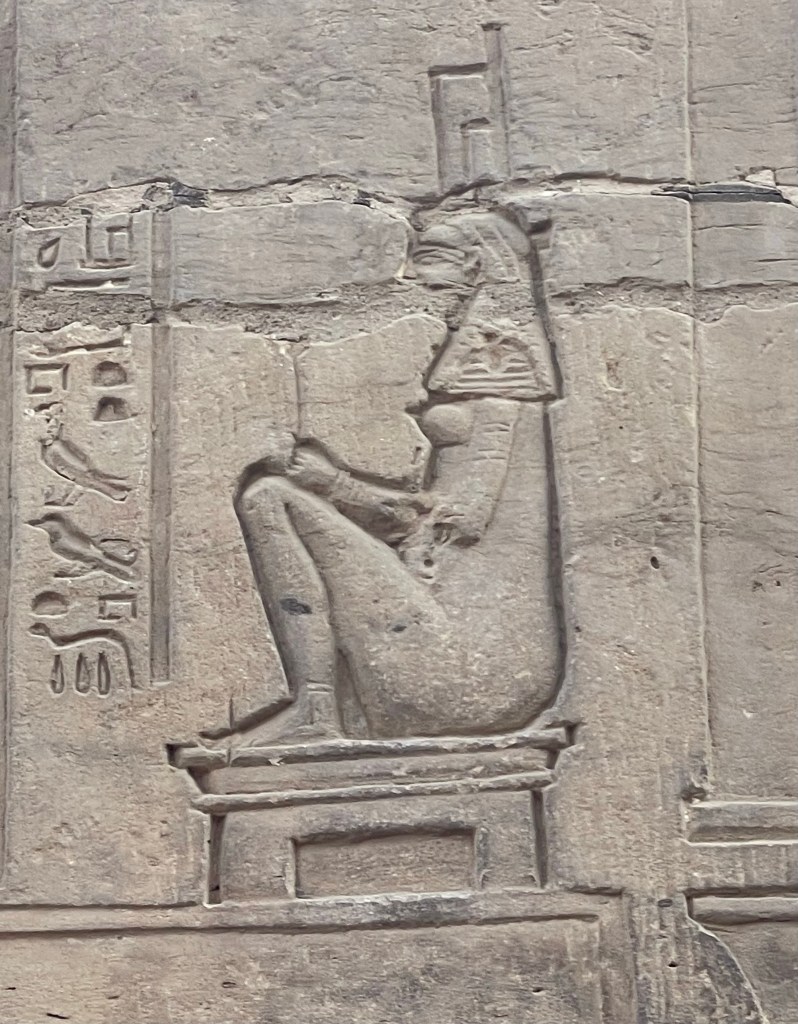
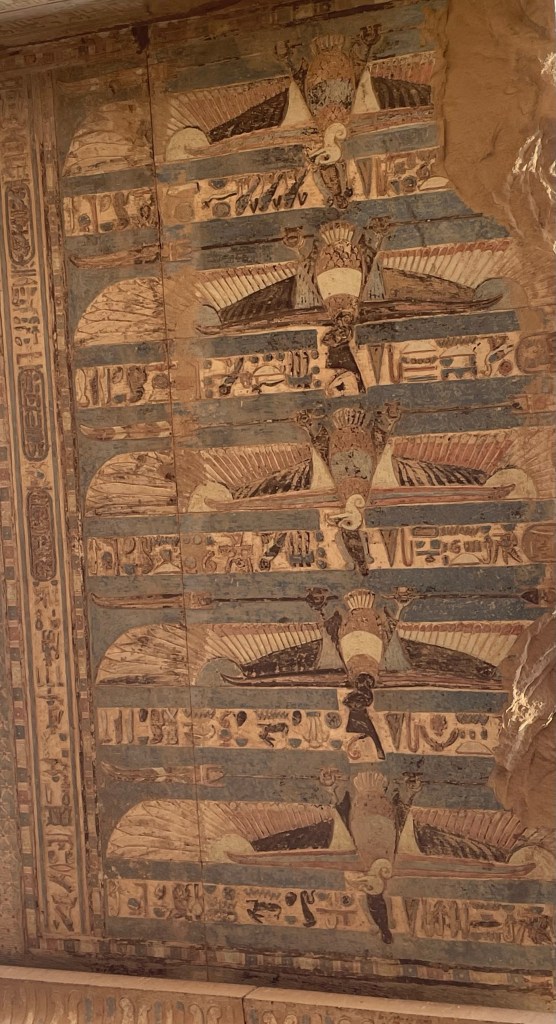
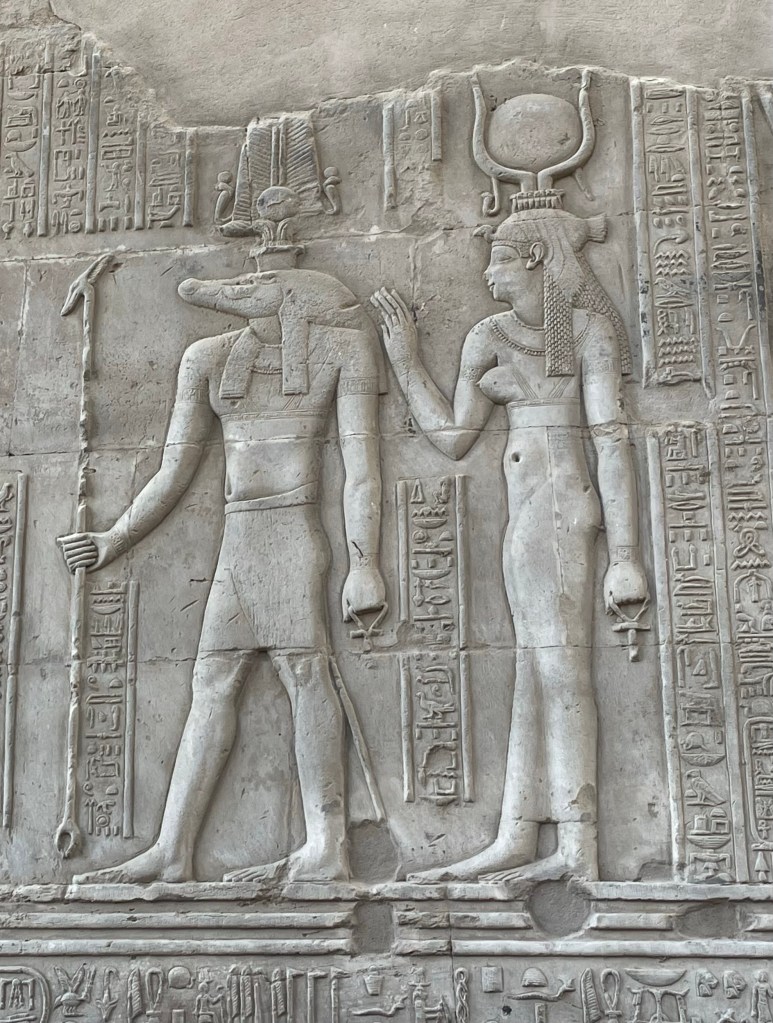
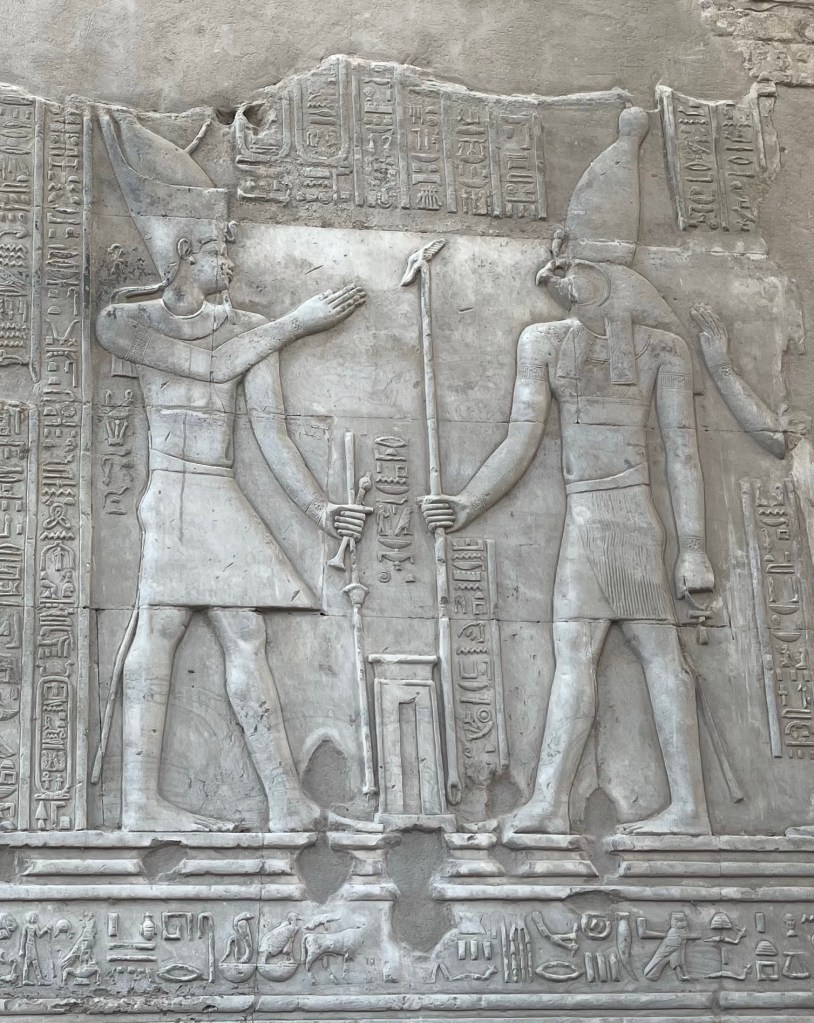
Goddess Hathour on the left, and Horus on the right.This unique scene was most likely carved between the reigns of Roman emperors, Antonius Pius, and Macrinus (138-218 CE). . The depicted medical and surgical instruments include scapels, hooks, forceps, scales, a sponge and various vessels.Isis sitting on birthing stoolColorful ceiling Hathour on left, Atoum in the middle. Unfortunately I don’t know. The name of the god on the right. Since the temple was built during Greek time, you can see the influence on the sculptures compared to older Egyptian temples.Sobek and HathourAtoum and Horus
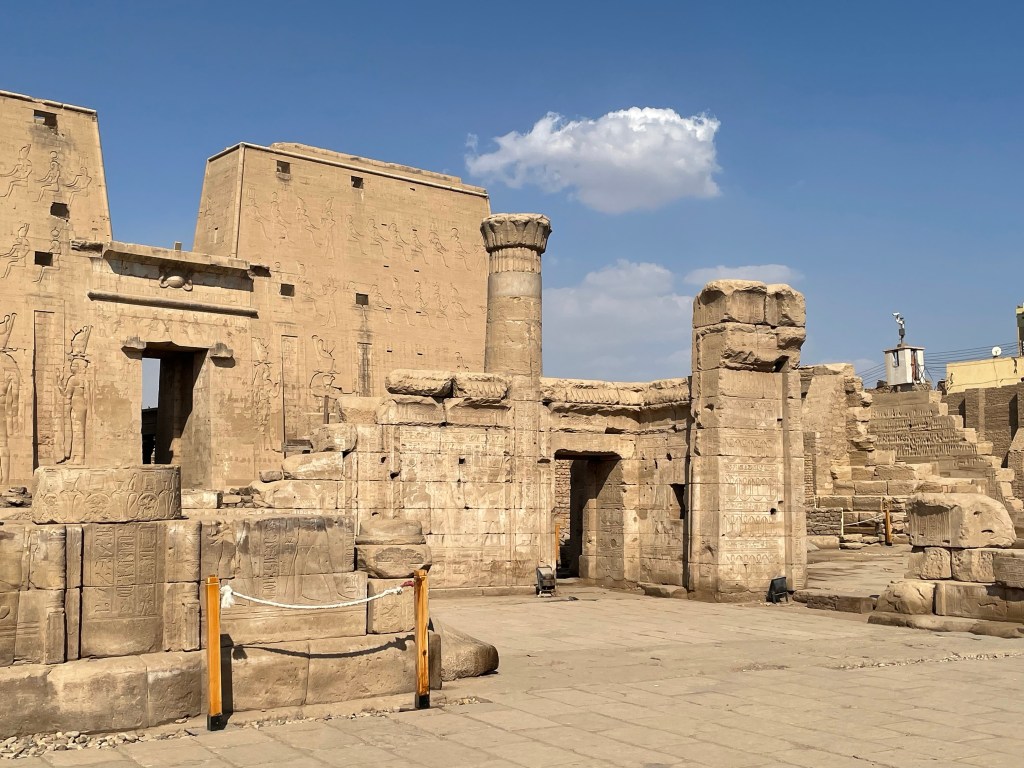
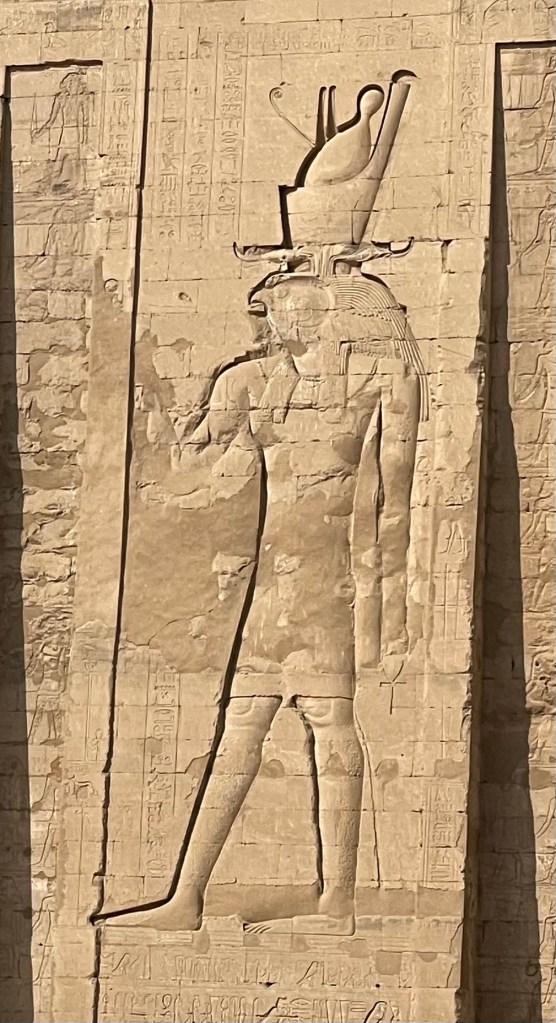
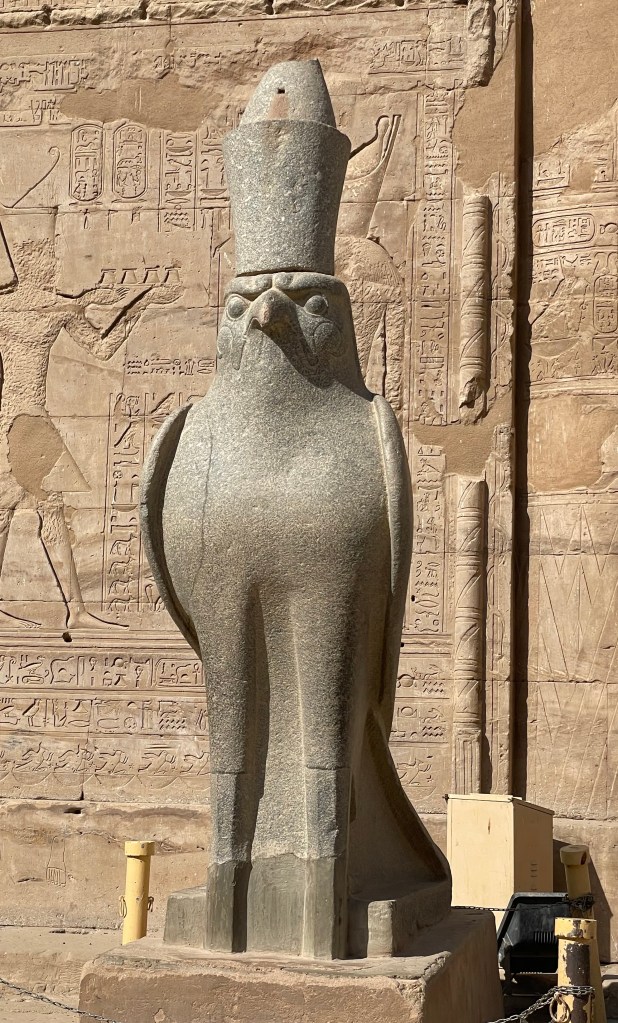
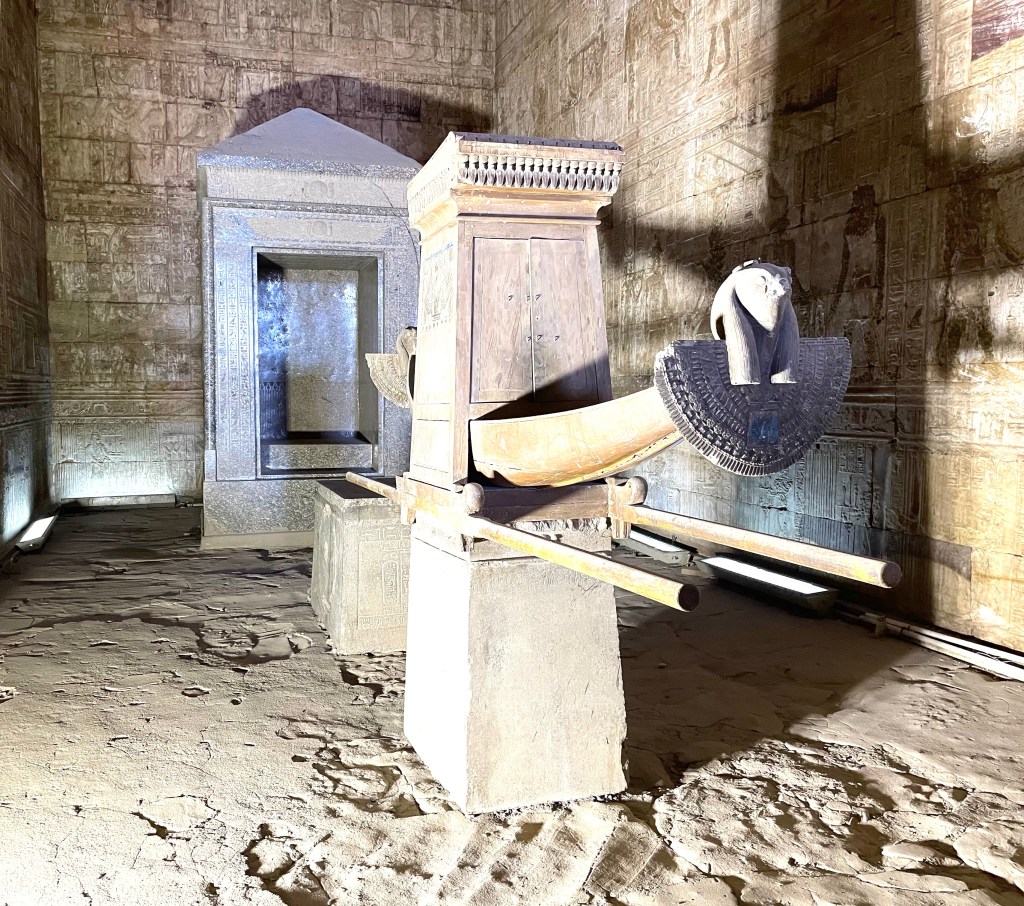
Dedicated to falcon god, Horus, the temple of Edfu, another prominent Ptolemic Temple, is one of the largest and best preserved temples in all of Egypt. The inscription on the walls of the temple have provided meaningful inside to the language and religion of the Helenistic period of Egypt.
God Horus God Horus as a hawkThe journey to the afterlife is made in a boat. You’re supposed to recite a specified set of prayers. If you make any mistake in this recitation, you have to start all over from the beginning.Travelers to the afterlife, their faces have been marred by Christians. This unfortunately has occurred in many Egyptian temples.



 RobbieLambertsTravels