There are a few details that I left out of yesterday‘s post. One is that a number of the speakers were very clear that Israel will invade Lebanon this summer. They also reported that there’s been an update on the number of deaths in Gaza. There are many more Hamas deaths in the count. Maybe as much as 50%. Whereas the reports coming out of Gaza say that there are over 50% children and women. When I was helping prepare dinner last night I had a delightful talk with another volunteer who was Israeli. She appeared to be orthodox. She developed eczema after Oct 7. There has been a 60% increase in Israel of the disease since last October. I asked her what she thought was going to come of all this. Her reply was that she hoped that all people would understand what God wants of us, which is peace. Both at the music festival and while serving dinner, I heard several loud booms. Since nobody around me seemed to be concerned, I didn’t worry. I later found out that they were Israeli bombardments of Gaza. I was within kilometers of the Gaza border. That really brought home to me that I really was in a war zone.
Now for activities on day two.
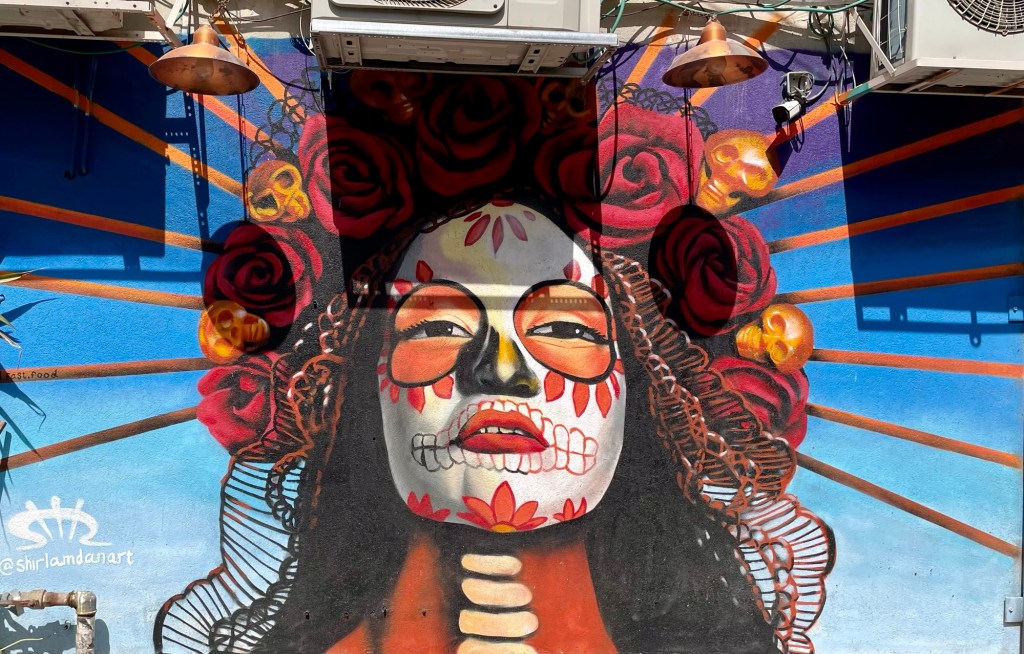
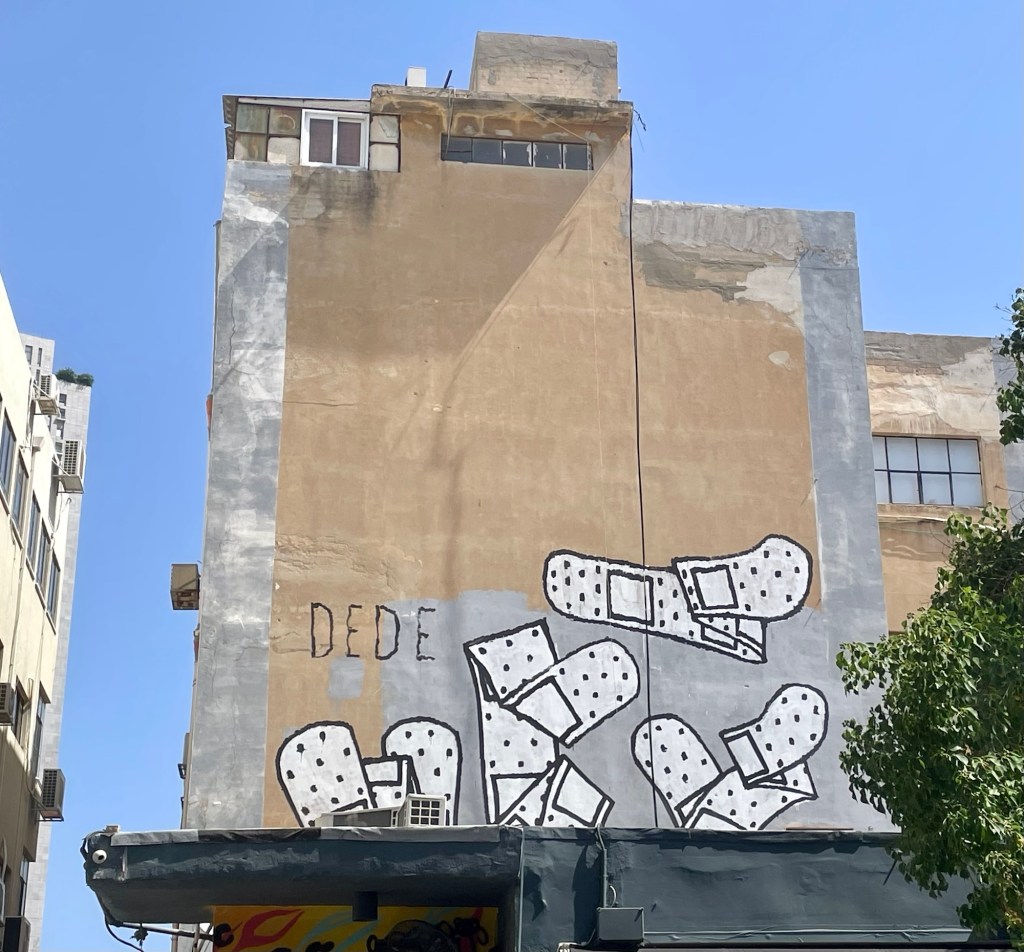
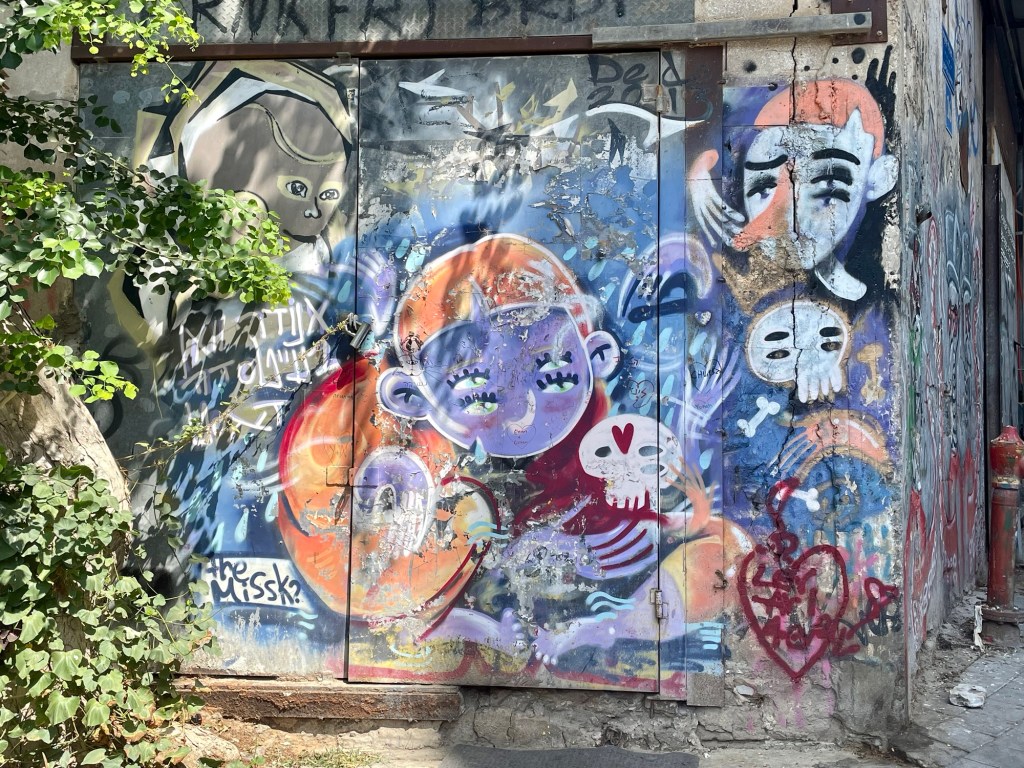
Florentin was initially populated primarily by poor Sephardic Jewish immigrants from North Africa, Bulgaria, Turkey, Greece, and Bukhara. As with much of south Tel Aviv, for many decades it suffered from urban decay and poverty. By the 1960s, the area had declined from a working-class area to a slum, as the original residents moved out. However, since the 1990s and 2000s, the area has attracted many younger residents and artists who were first attracted by its lower rents, and the neighborhood is now also associated with a bohemian lifestyle. Florentin now has numerous artists’ workshops, cafes, restaurants, markets, and graffiti tours. The area is also an industrial zone and a garment district, where both Jewish and Arab wholesalers buy and sell clothing and furniture. On our previous tour of Israel I visited this area. This time we were primarily looking at graffiti after October 7. Here are the pictures I took.
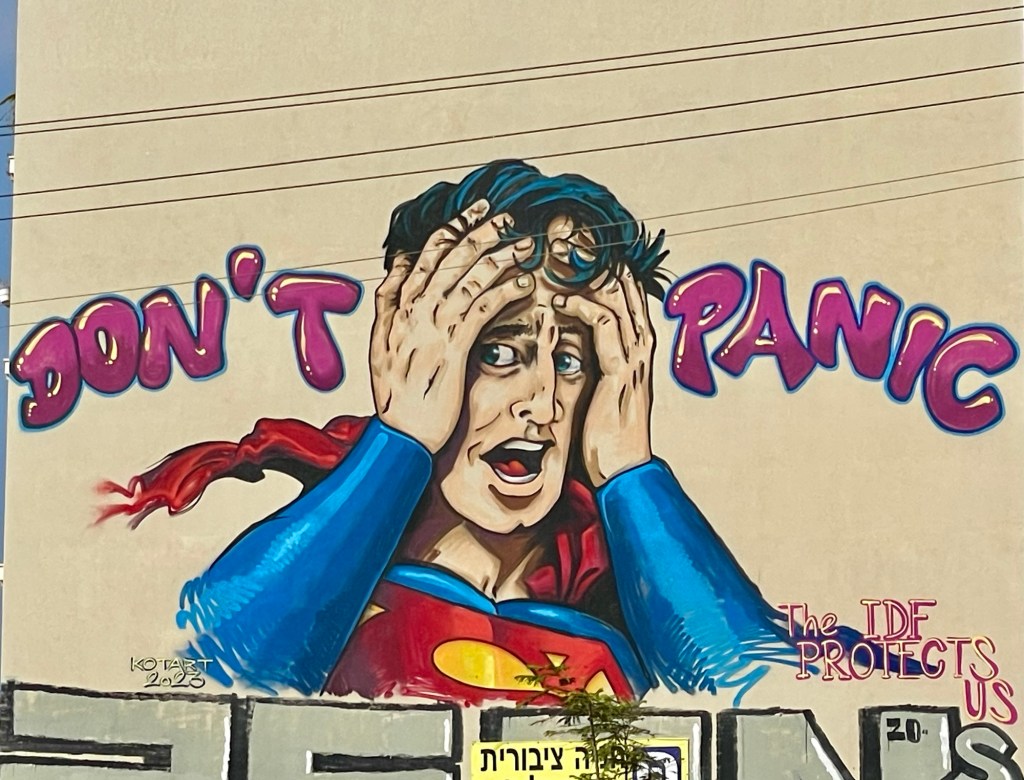
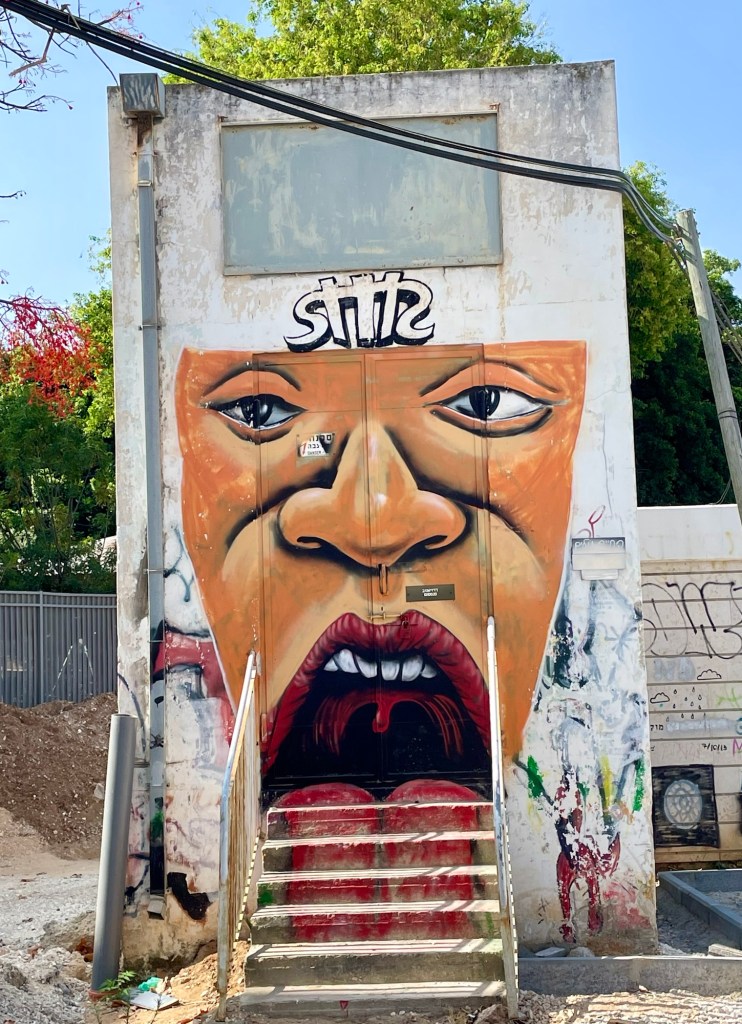
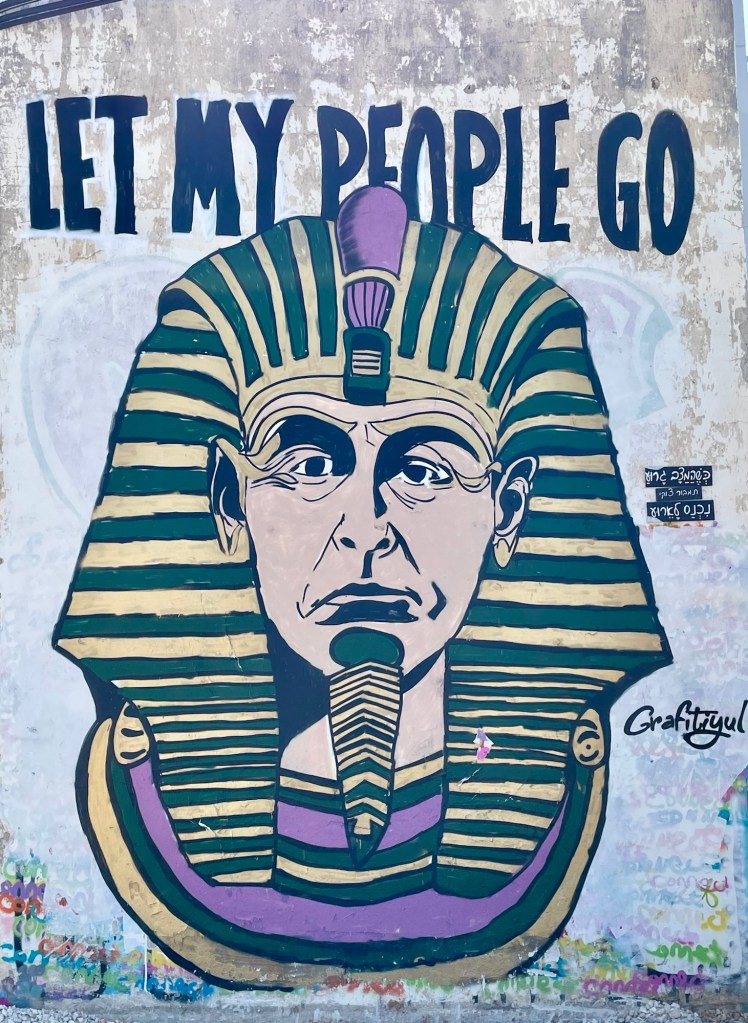
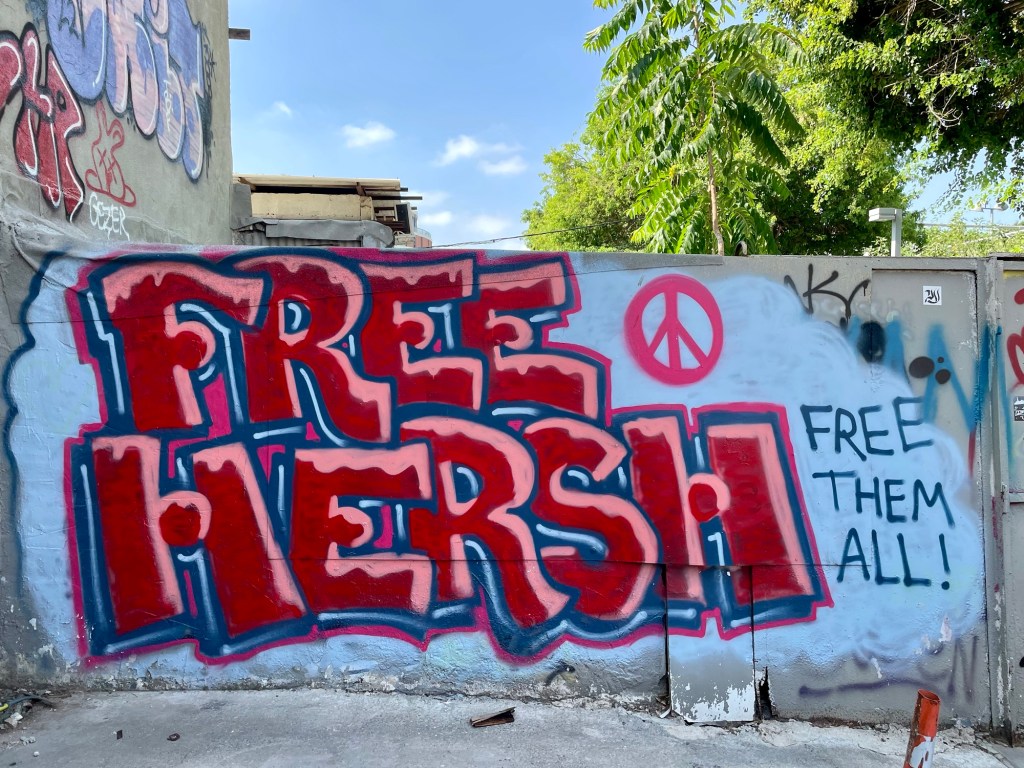
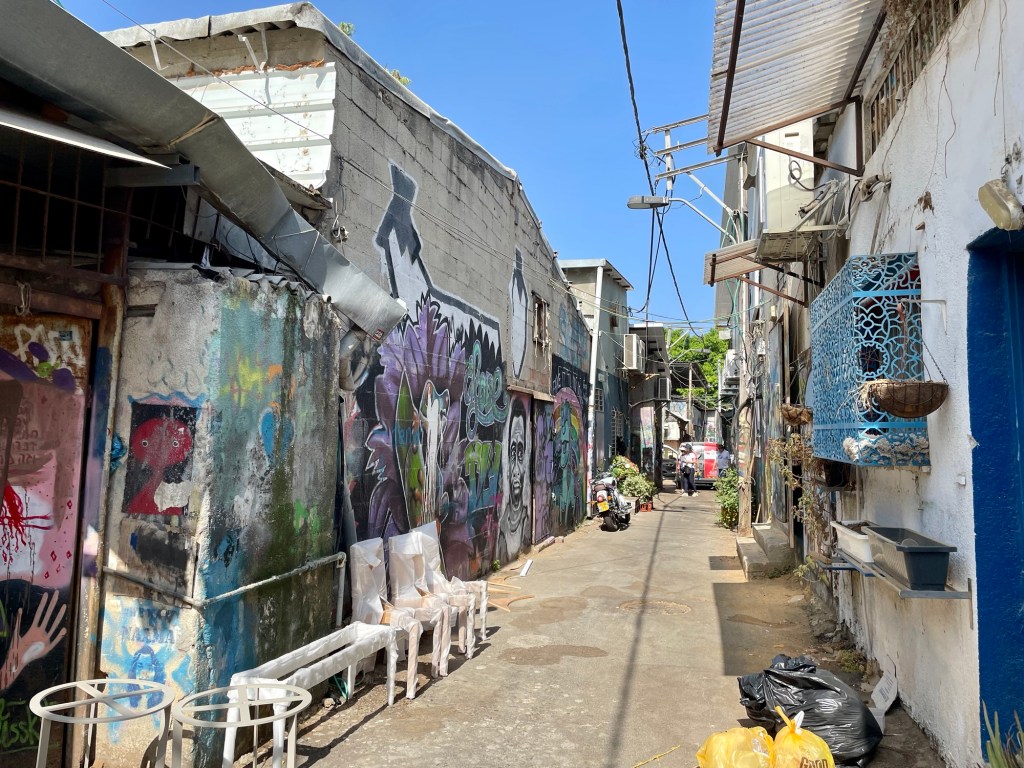
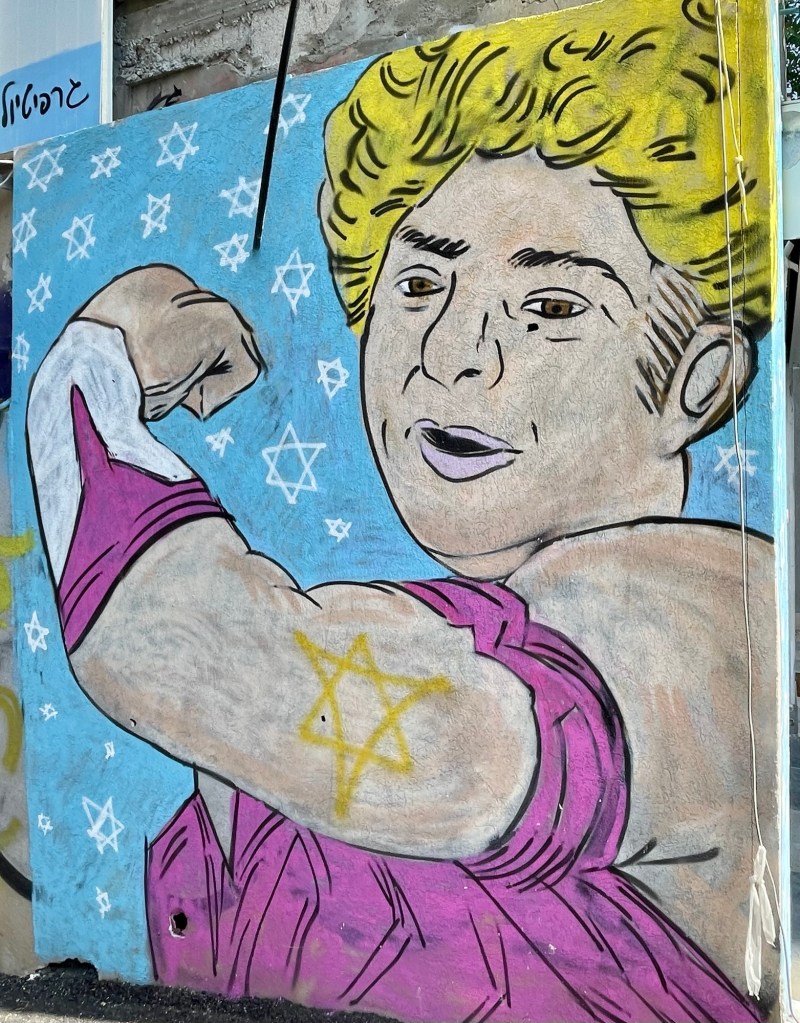
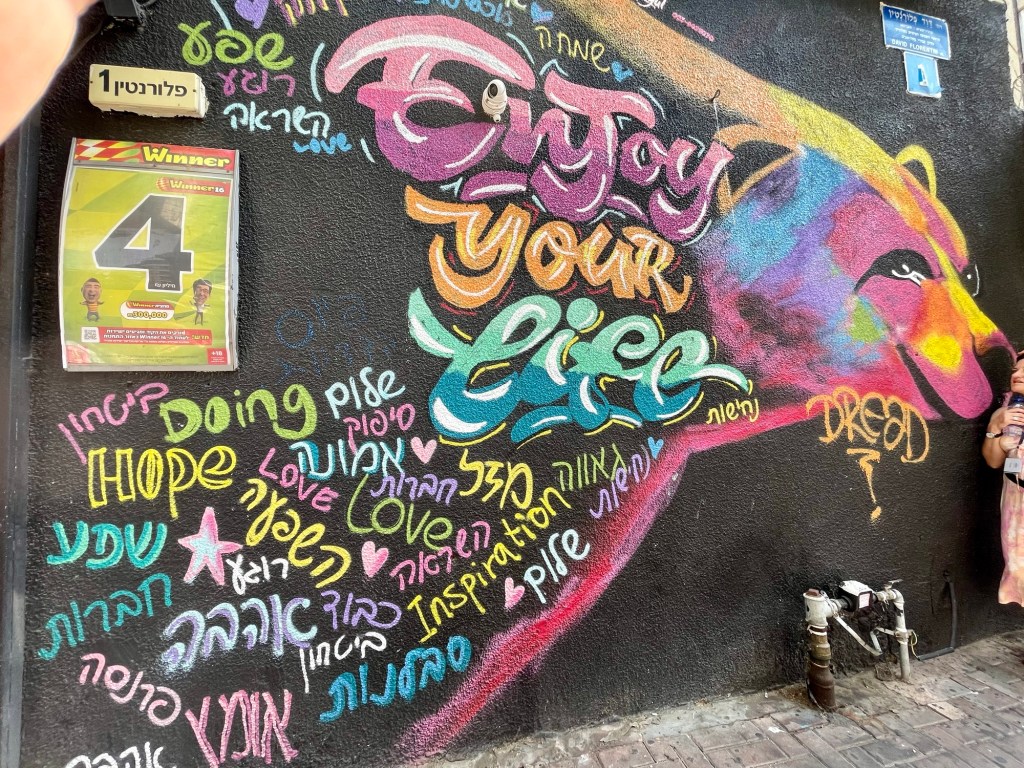
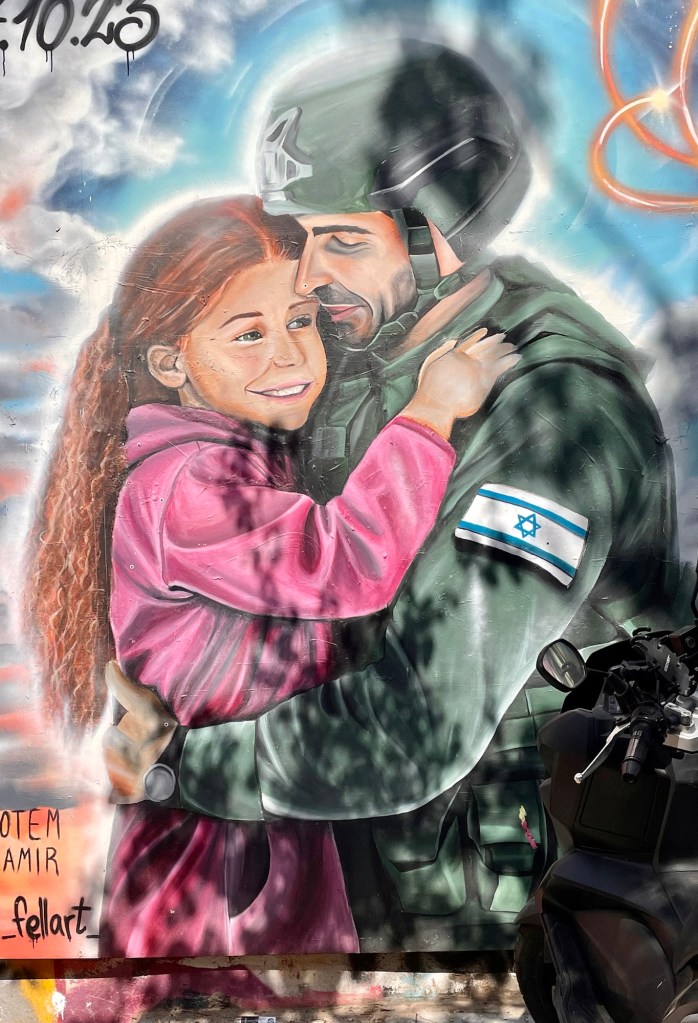


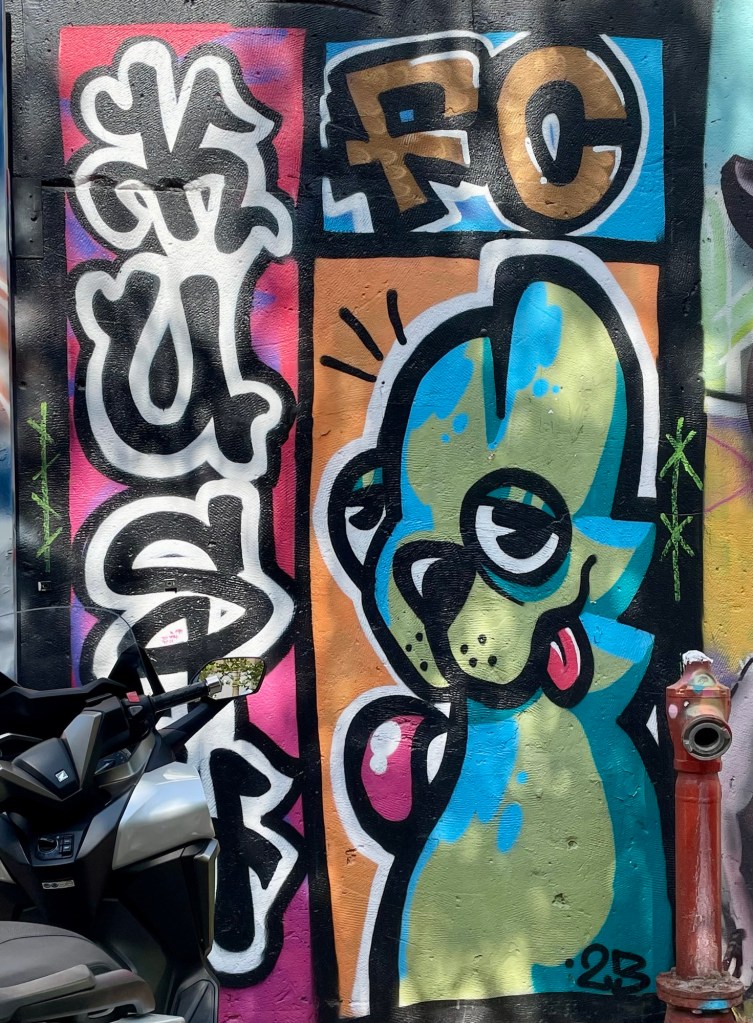

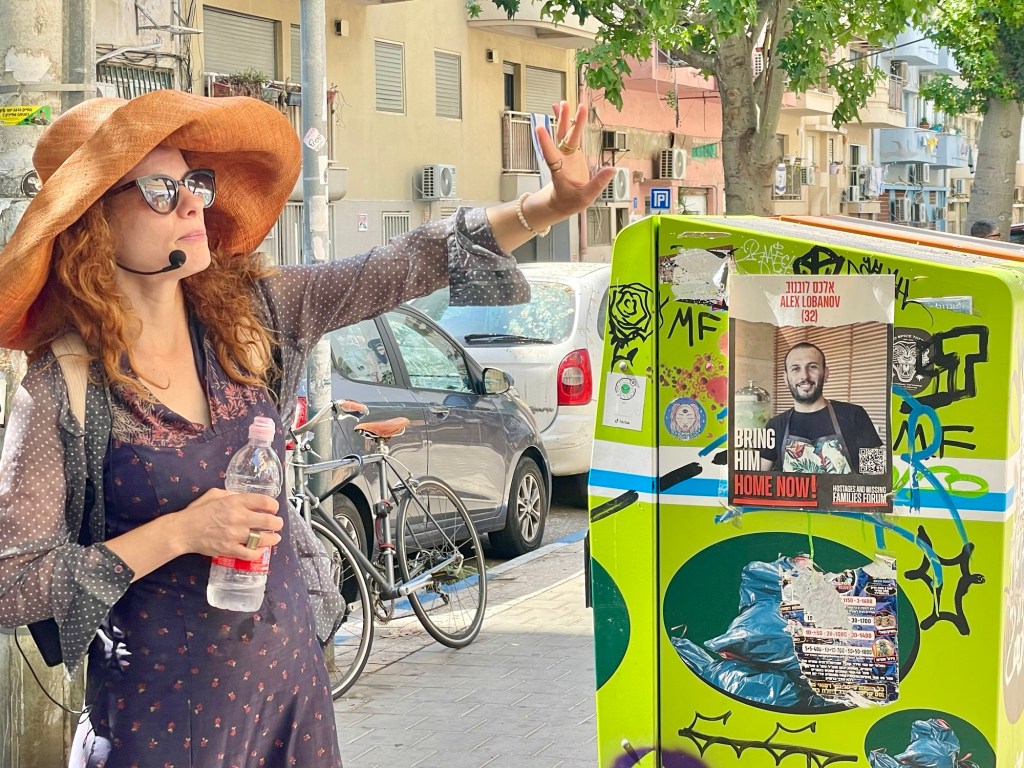

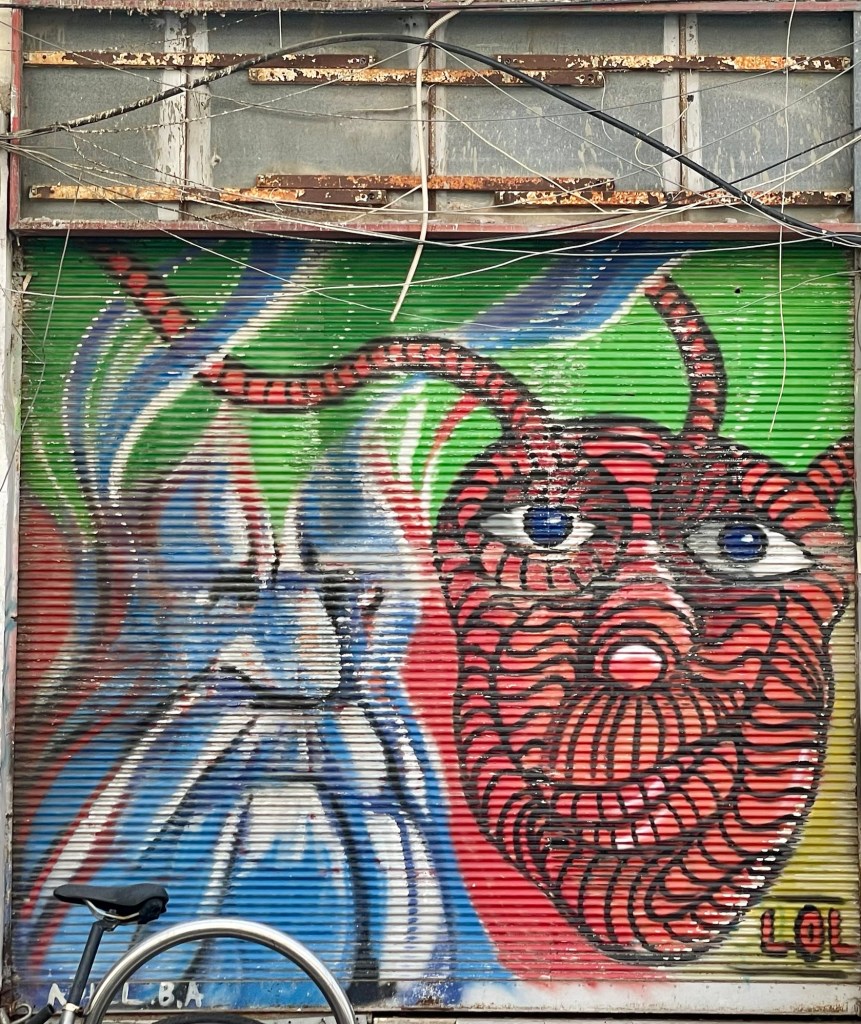

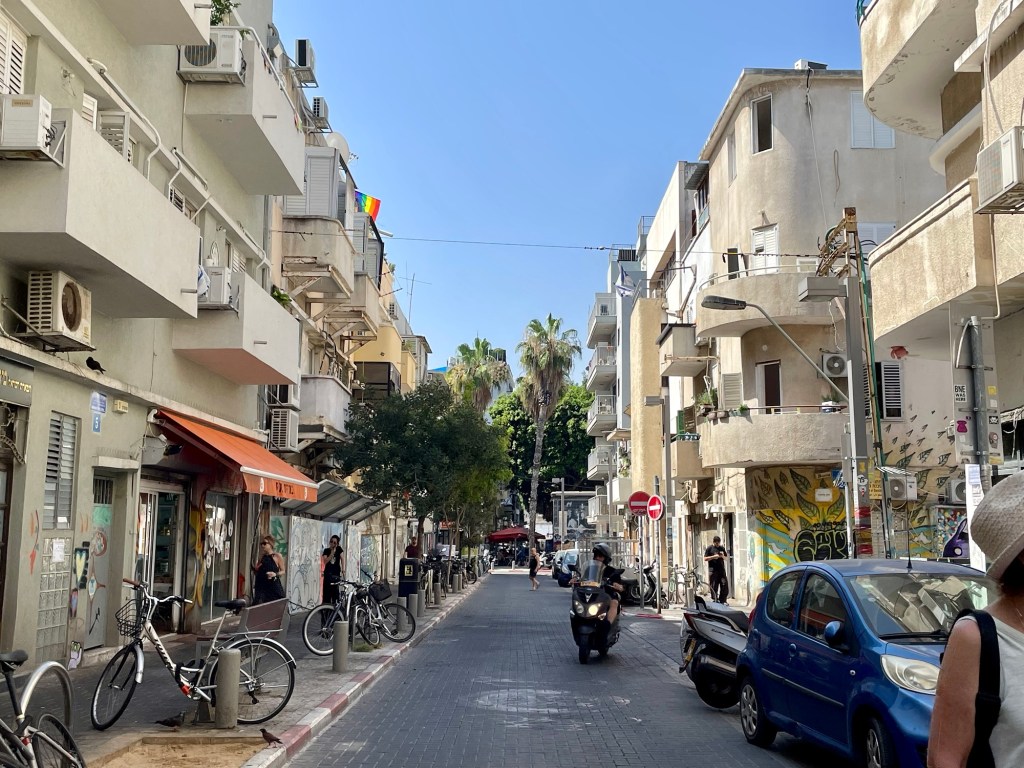

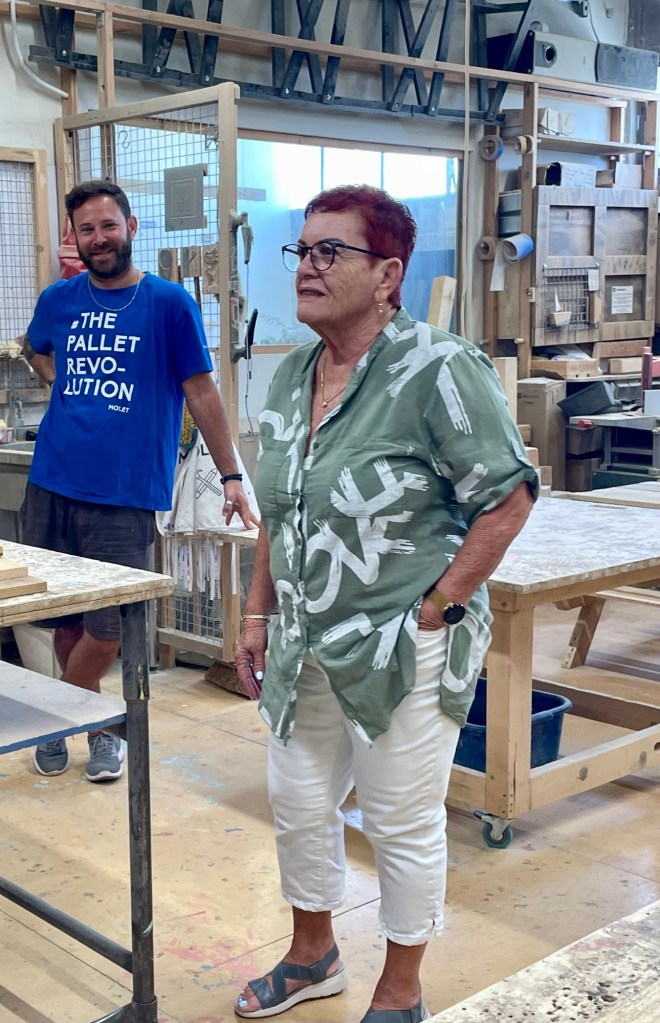
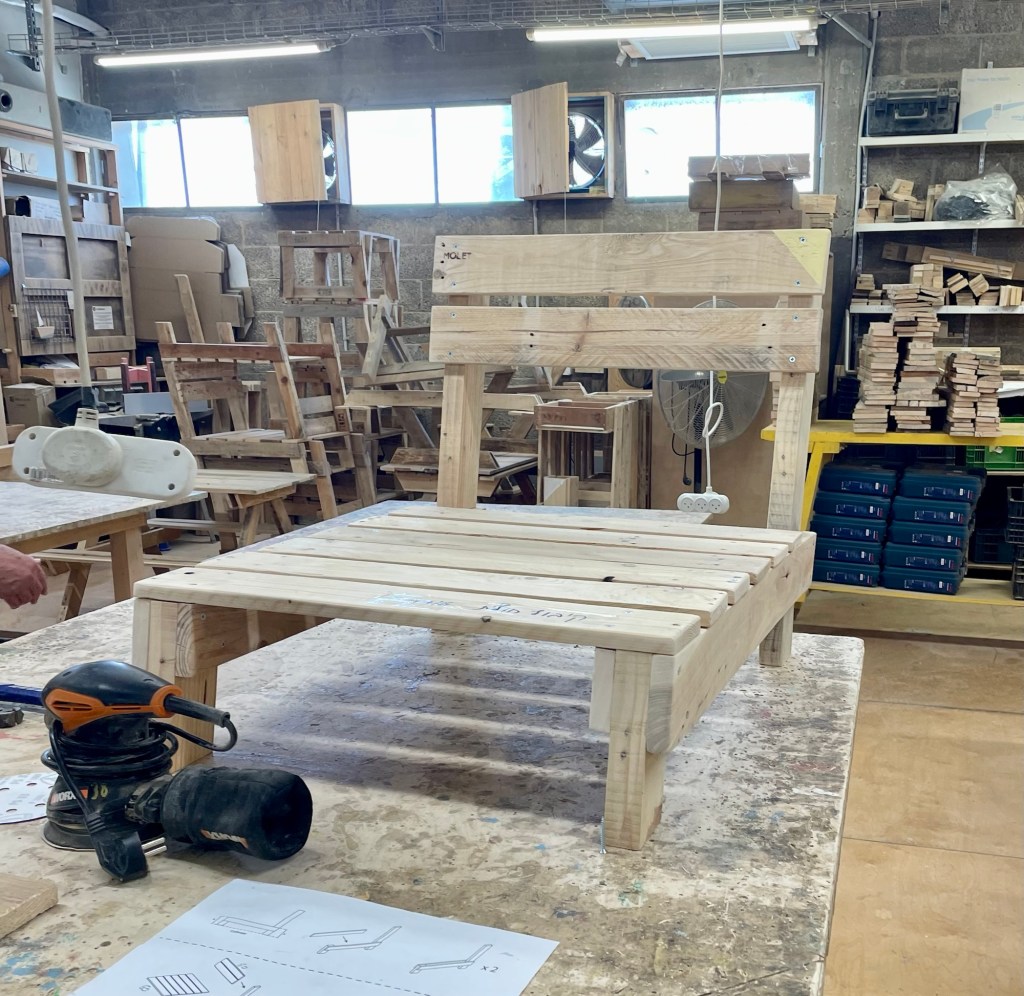
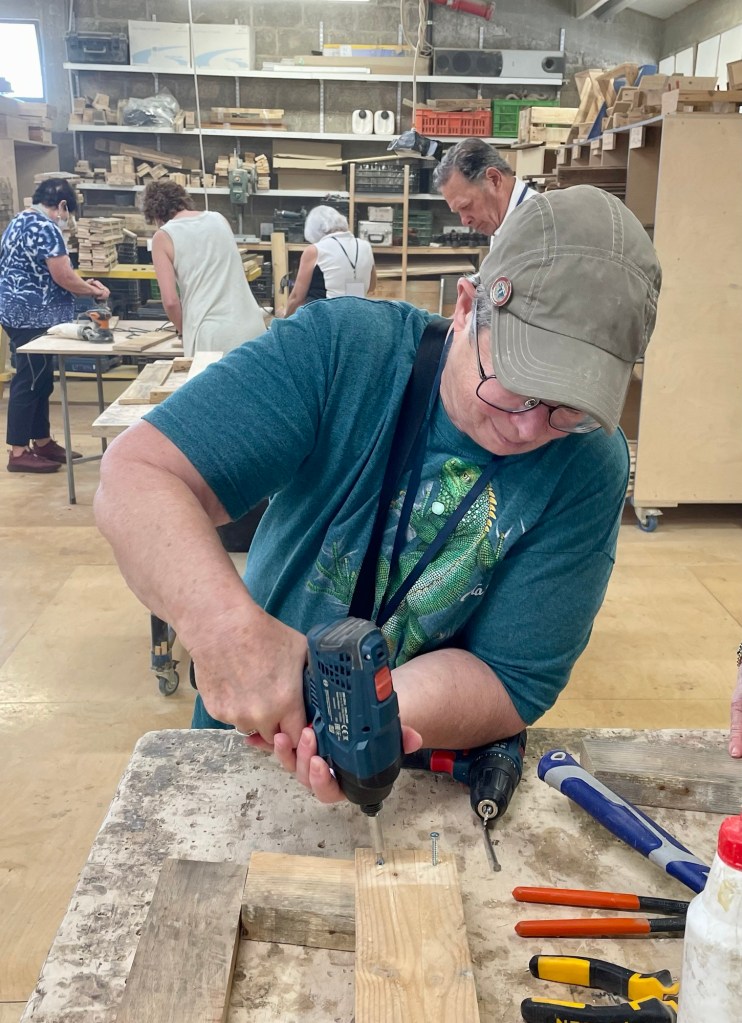
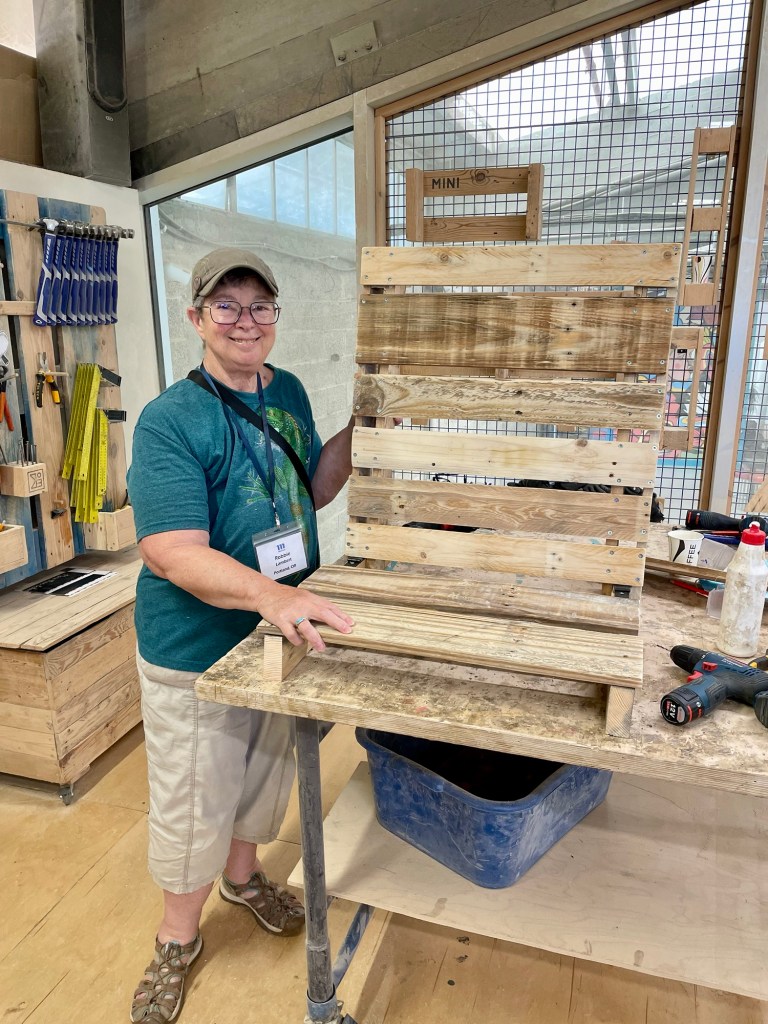
After seeing the graffiti, we went to Molat House, which is a group of creative professionals that are currently building furniture for evacuees. Before actually building some of the furniture, we got to hear from another survivor of October 7. Unfortunately, I did not get her name. She is from Kibbutz Kisufim, founded in 1951 mainly by people from NY who had to learn how to be farmers. They always had trouble with Gazans stealing, laying land mines. The Kibbutz was attacked on Oct. 7. 127 people were killed. She stayed in her safe room for over 24 hours before being rescued. She was then evacuated. She was only able to grab a toothbrush, her passport, some underwear and money. She had the clothes on her back. When the bus was leaving kibbutz, it was shot at. She has been living as an evacuee for 8 months. She returned once to see that her home was trashed. She will be resettled next month in another kibbutz and doesn’t feel safe to go back to her home.
Now from making furniture. 


Our next stop was to join members of Kibbutz Mishmar Ha’ Emek and evacuees from Kibbutz Machat Oz. We were met by international journalist and Jewish educator, Lydia Aisenberg. Kibbutz Mishimar HaEmek in Jazreel valley settled by Socialist Zionists is over 104 years old and was originally swamp land. Its major industry is the international company Tama which is a world leader in the manufacture of crop baling products; combining farming experience, with cutting-edge agricultural technology. The kibbutz has 650 members, 1200 residents. The area around kibbutz was critical during 1948 because it controlled a major East-West route which actually dates back to biblical times. The Israeli forces at that time were actually fighting Druze. After barely being defeated, the Druze decided to join Israeli forces to fight the other Arabs because it was obvious to them that Israel was going to win the war.
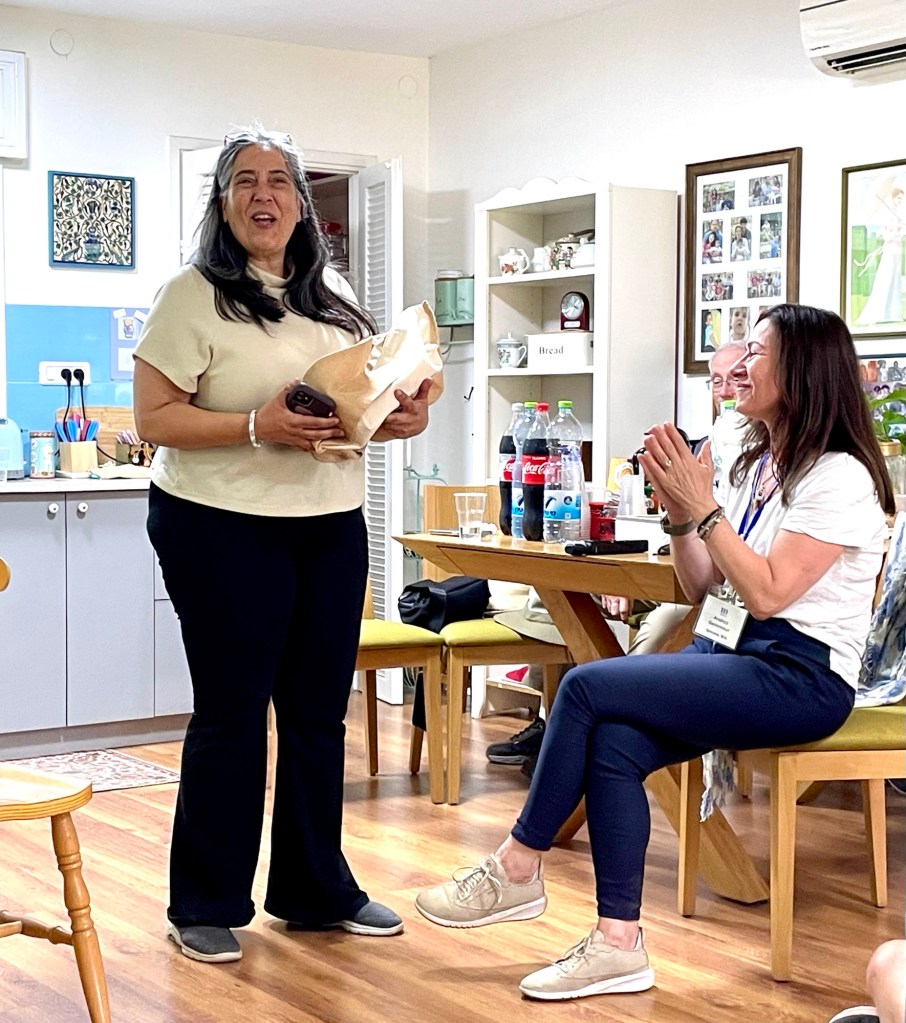
Kibbutz Nachat Oz is in the Gaza envelope. 450 evacuees were moved to Kibbutz Mishmar Ha’Emek on Oct. 8. To receive the evacuates, 120 members of Mishmar Ha’Emek spent the night cleaning up the high school dormitory and getting furniture and supplies. When the evacuates arrived, they were ready for them. Two evacuates told us about their experiences. A woman, who is in charge of the children now, spent over 20 hours in a safe room with her special-needs child. She described the volunteers as a nation of lions. She explained that the children would not talk to counselors because they couldn’t understand how the counselors could begin to understand what they went through. They did talk to their own teachers. Everyone of the surviving children witnessed atrocities. Children were left alone in a safe room when parents went out to fight. A 13 year old boy was left alone in the safe room while his mother stood at the door to the home with a knife. He feels such guilt that she was defending him instead of he defending her. Children can’t understand how one can go on living after such an experience. The speaker described the great strides they’ve been making with the children. There have been a lot of volunteer support and organization contributed sport bikes to all the middle school and highschoolers. Taking part in sports, listening to music and doing a lot of water activities seems to really help. They actually took a group of the high school kids to Greece for a week as a bonding experience. The kids made great strides during that time.
I wish I could remember and have the time to relate everything that I heard. I just remember certain stories. One of the women from the kibbutz went out every day at 6 o’clock to run and would take pictures. Somehow someone from Gaza contacted her, appearing very friendly, and wanted to exchange pictures with her . He sent her some, so she sent some back. They kept this up for sometime. On October 7 she gets a call from this guy laughing at her. It was all a set up. They used her pictures to plan the attack. Today she is a complete basket case. I don’t know how you can ever recover from something like that. So much guilt.
The other evacuate, a father and grandfather, explained that both his son and daughter and their families lived in the kibbutz. During the attack, he had no way of determining whether they were safe. It was an agonizing number of hours before soldiers turned up to secure the kibbutz. In another house, a man grabbed his son’s AK 15 and ran up to the balcony to shoot at the terrorists.  He was not in any uniform so he was mistakenly shot and killed by the IDF. His wife discovered him when she crawled up to the balcony to check in on him. I heard other stories, but these are the ones that stick in my mind. I just don’t know how people can get over things like this.
There is some government support but most support comes from civil society. The plan to move a distressed kibbutz to another kibbutz was an established government emergency plan. Bigger kibbutzim went to hotels. We gave the kibbutz 4 iPads for the children.
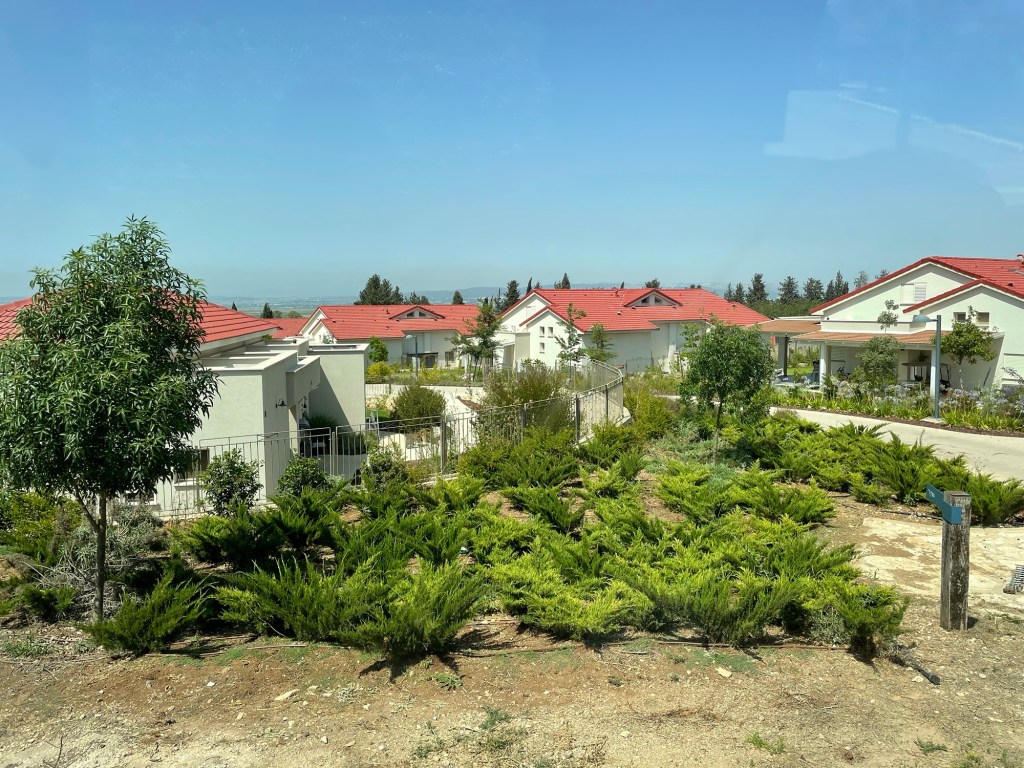
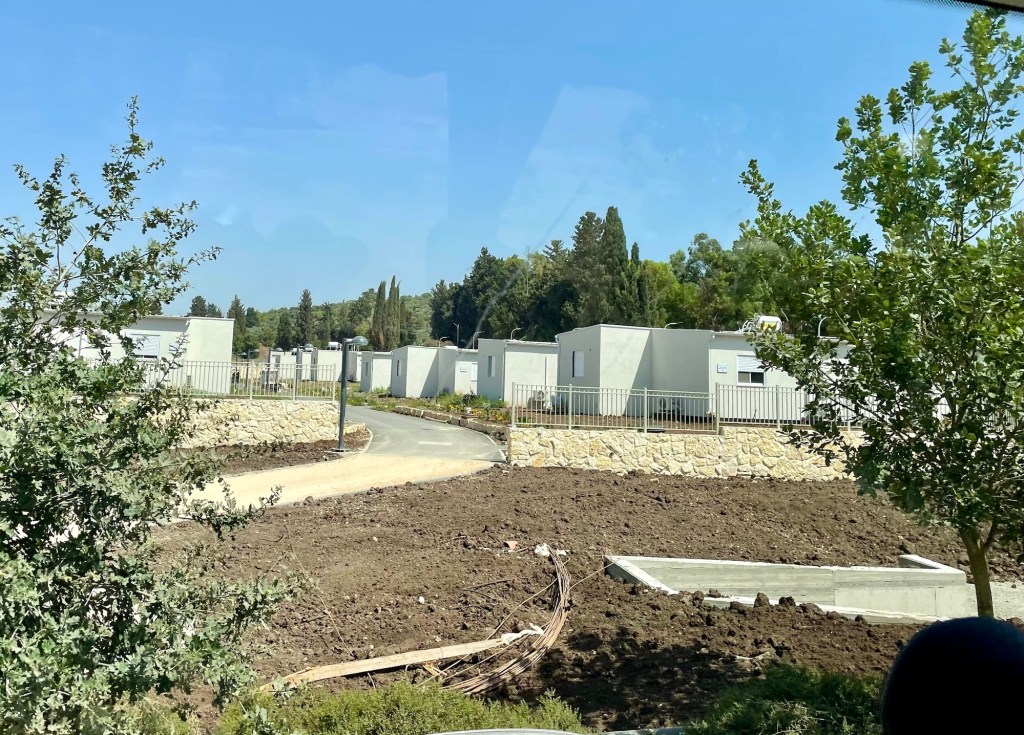
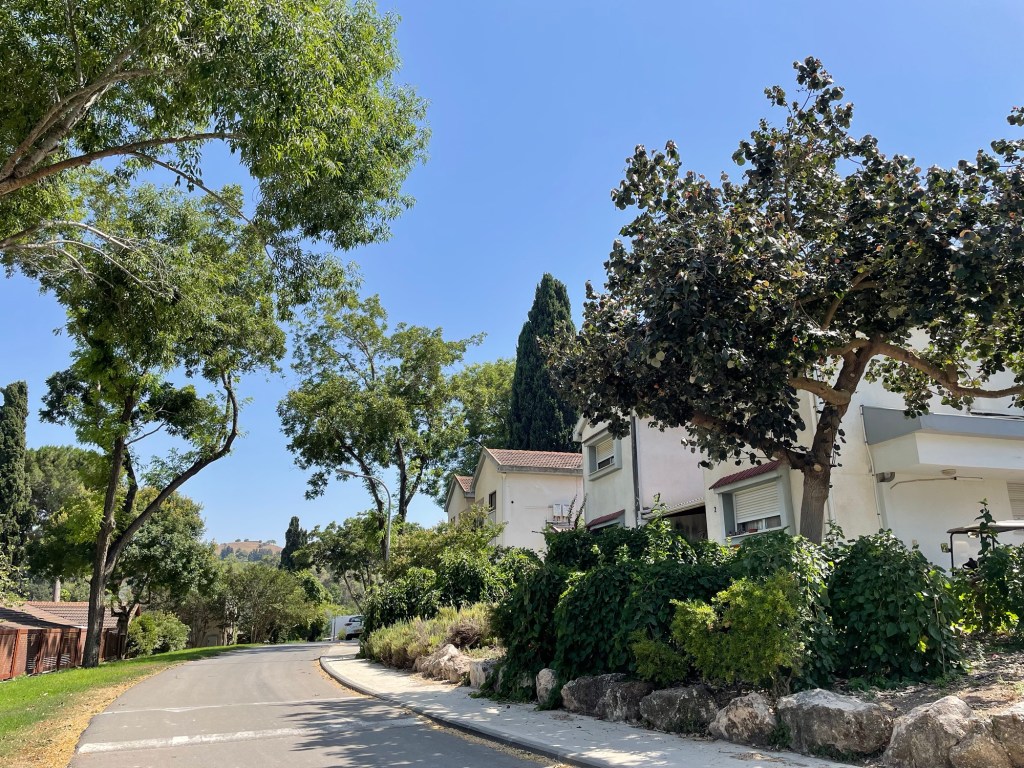
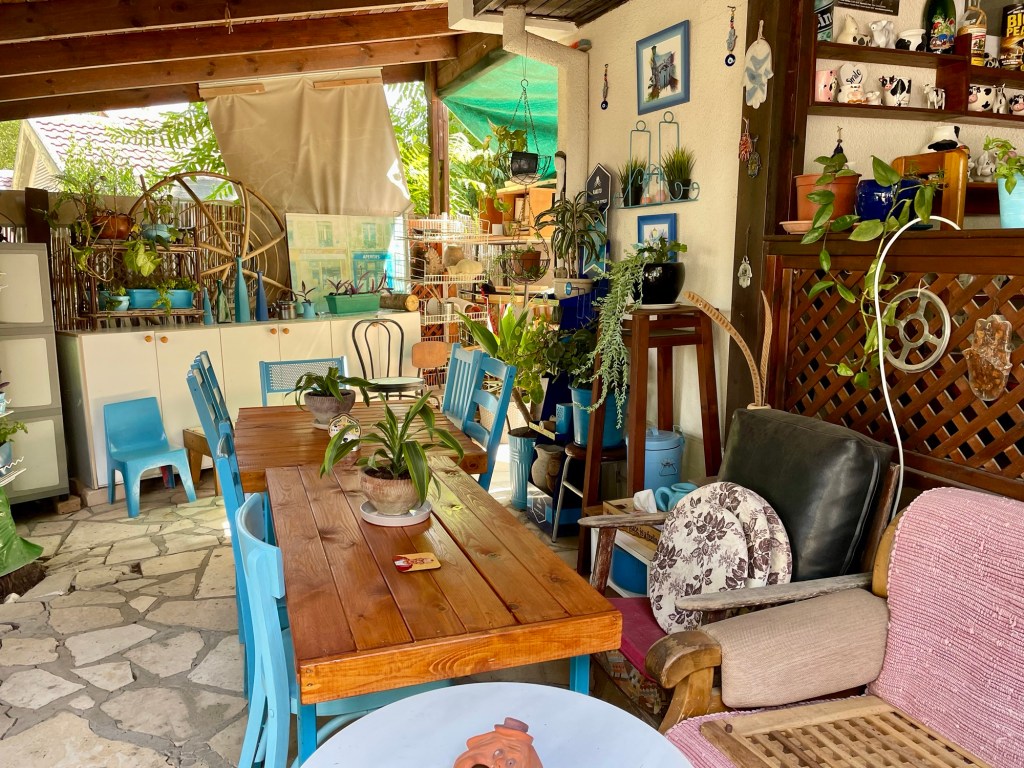
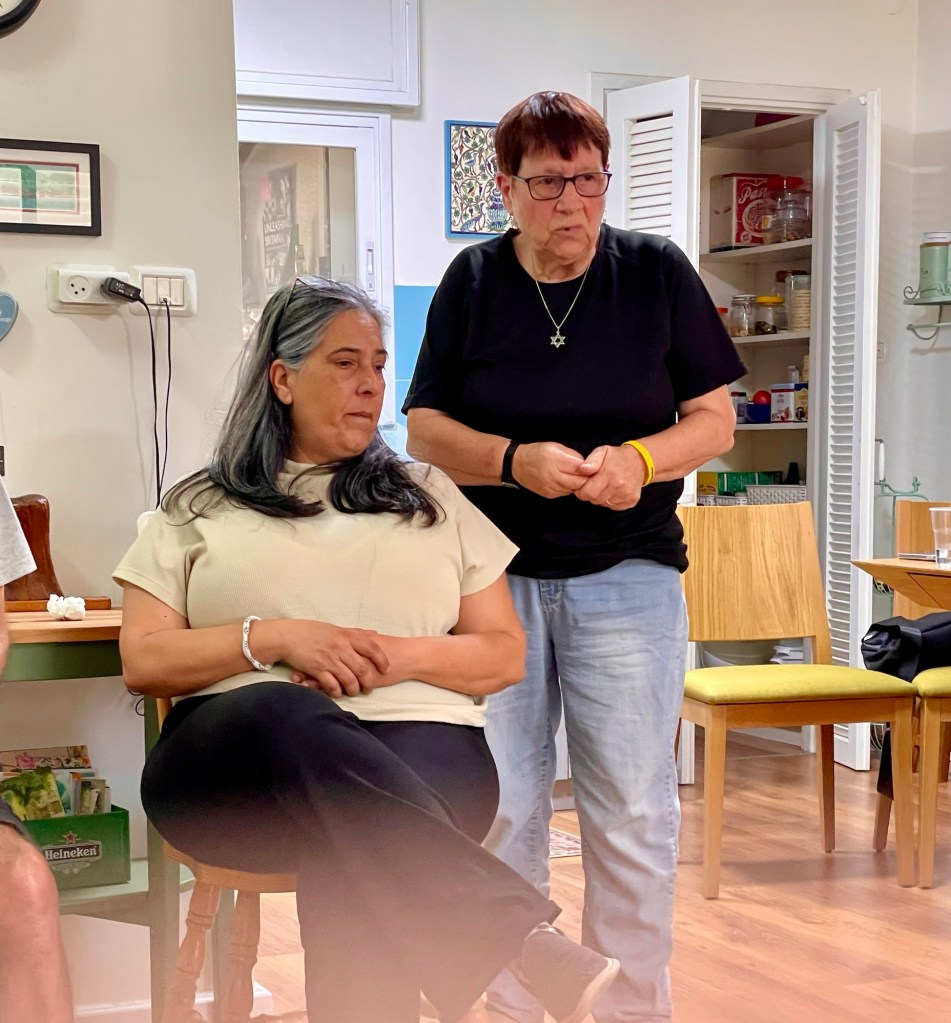
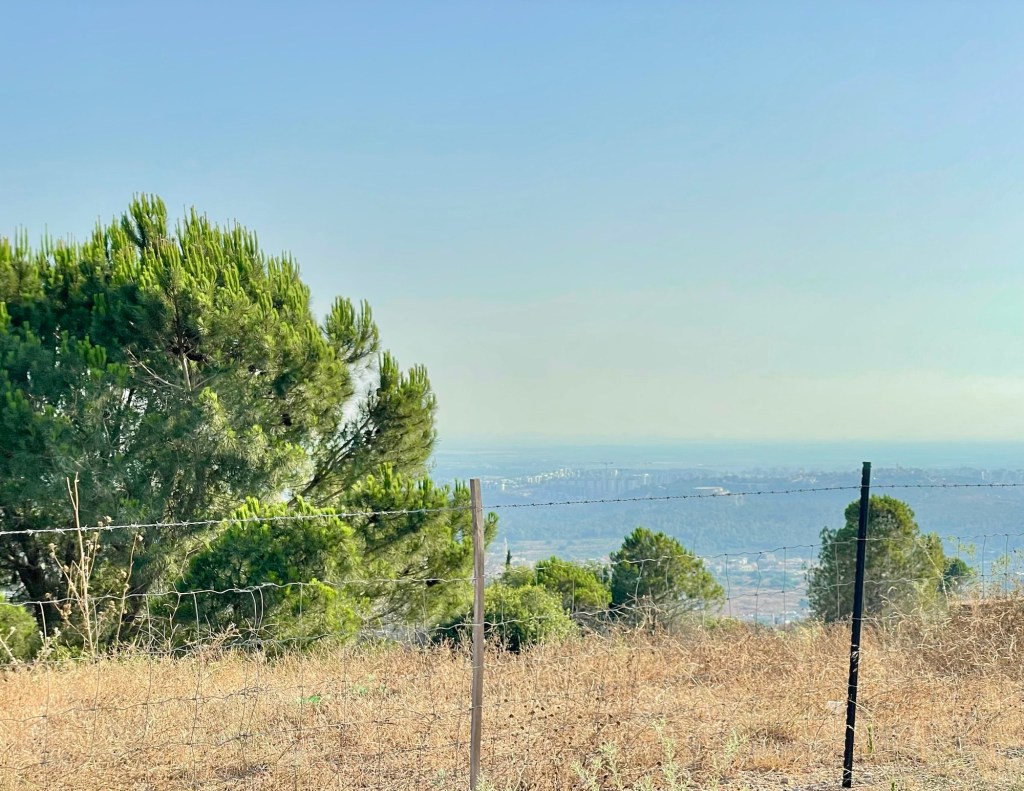
Lydia then took us to an area in the Amir mountain rage offering breathtaking views of the divided Arab village of Barta’a. In 1949 when they drew up the line dividing Israel and Jordan, they didn’t bother to actually look at the reality on the ground. Instead, they relied on contours and wound up drawing the green line right through the middle of an Arab village. This means that some of the residents became Israelis and others got Jordanian citizenship. There were even some men who had two wives where one wife lived on one side of the green line and the other wife and her children lived on the other side of the green line. To make things more complicated, when Israel built the wall, they didn’t follow the green line. There are places where the wall is built on the West Bank side of the green line. This creates a no man’s land where people living there are not Israeli, but they do not have any services that are provided by the Palestinian authority.



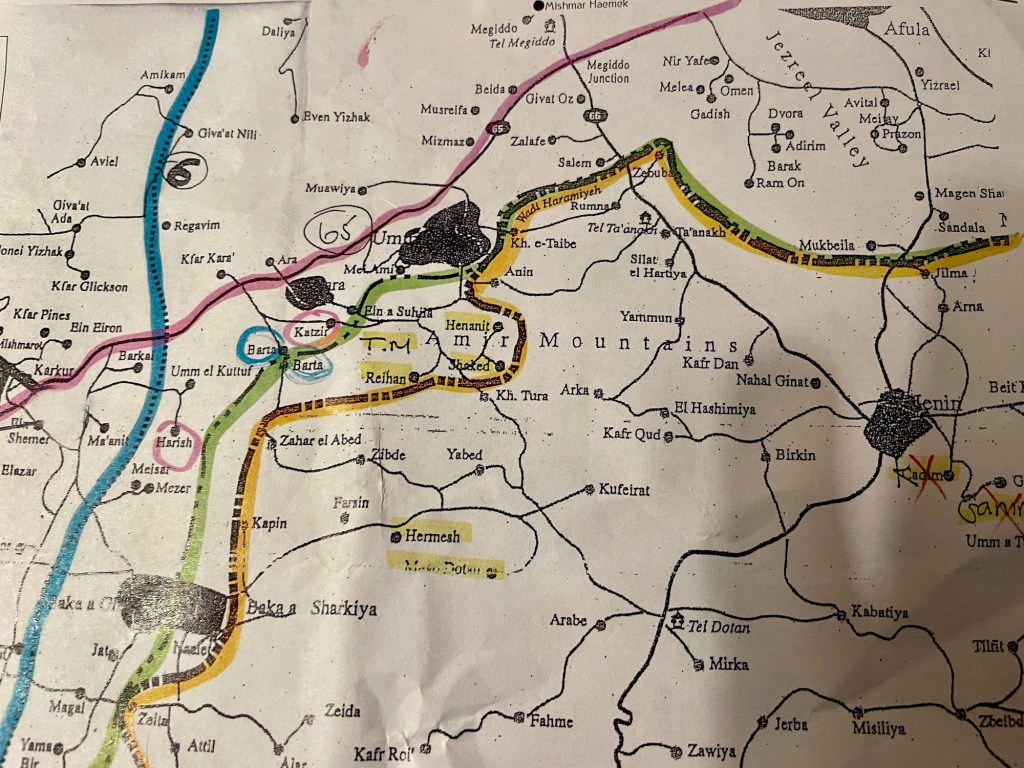
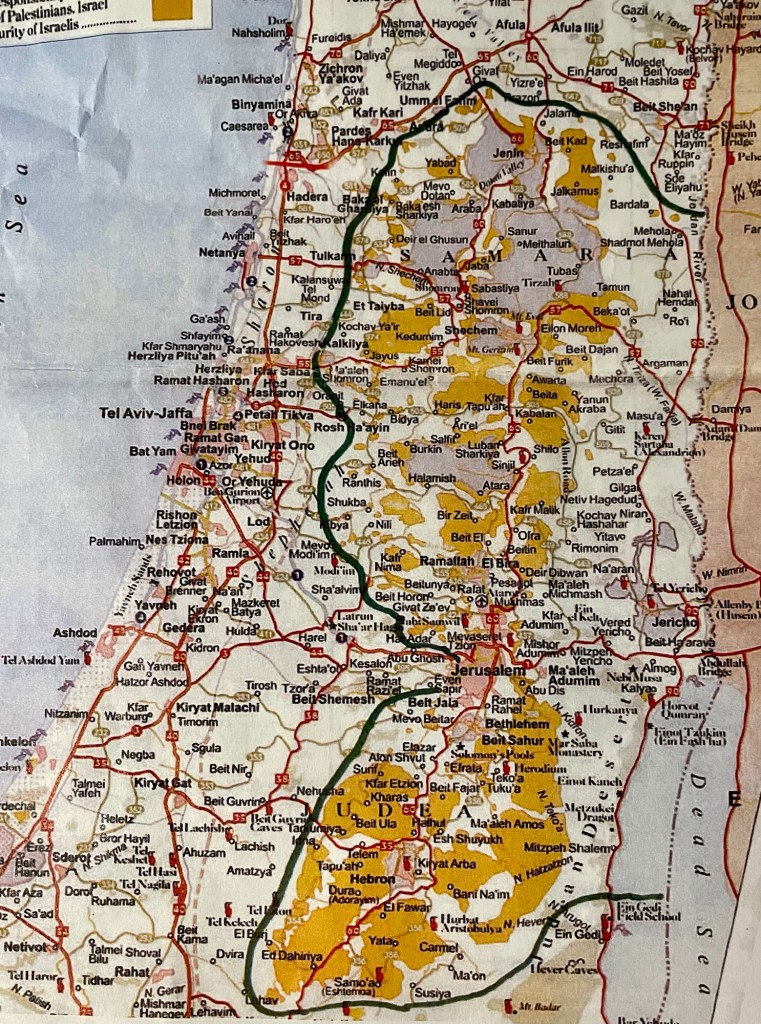
When seeing these two maps, it is really hard to envision a two state solution. Even though in my heart, I believe it’s the only way that there ever is going to be peace, I just can’t see a way of getting there. What a horrible way to end this blog today. However when we finally made it to the hotel in Jerusalem at 8 o’clock, I was able to go out and find a gelato stand. So I had ice cream for dinner. That’s always a good thing.
 RobbieLambertsTravels
This will probably be the trip you will remember the most. It is clearly having a profound impact on you.
LikeLiked by 1 person
This is fascinating. I appreciate your telling the story of what is happening. The photos are great. Please stay safe. 🩷
LikeLiked by 1 person