I slept in till 9:30 this morning. I have been having trouble sleeping and last night I slept like a baby. I am now ready for a whole set of new adventures. I chose not to go to services this morning. I am enjoying a quiet time by myself.
Yesterday, I didn’t explain why the farming community needs help. Most of the workers in agriculture are either Palestinians or people from Thailand. Because of the war, Israel is not allowing Palestinians in and most of the people from Thailand have left. Not allowing Palestinians into work is devastating the West Bank economy.
Today’s blog is going to be mostly verbal. We had a number of study sessions and I learned quite a bit. I would like to share this knowledge with you. First, since I got to breakfast on the late side, I ate by myself and enjoyed watching all the people. The orthodox women wear scarves because they’re supposed to cover their hair. It is beautiful how they tie these gorgeous scarves in all different ways around their head. I wish I can get some pictures to show you, but I do not like taking pictures of people without their permission. I’ve also been seeing quite a number of families in the hotel, mostly orthodox. I learned during lunch that these are refugees being put up in the hotel.
After lunch, we studied part of the Torah portion for the week. The discussion focused on people who tend to look at the past with present day lenses. I think this is what happening when people are calling Israelis colonists. The people that came to Israel were not colonists. They came as ordinary people. Also there were Jews living here for thousands of years. Britain, who conquered the land during World War I and stayed until after World War II, were colonists. Israel has a strong army now but that is not the way it was in the beginning. Jews came here to escape antisemitism before WW II, the holocaust after WW II, being kicked out of Arab countries during the 1950s, being rescued from Ethiopia and Yemen, and escaping a communist dictatorship in Russia after the collapse of the Soviet Union. Before the war of independence in 1948, Jews bought the land here from the Arabs living here. The state of Israel along with the Palestinian state was created by the UN. The Arabs refused to recognize this and invaded the Israel state. Israelis did not conquer the land. Any land that Israel has conquered, was acquired in wars started by Arab nations. I think this is probably one of the major things that I have figured out on this trip. I have been looking for a way to counter the claim that Israelis are colonists. I think this is a really good answer.
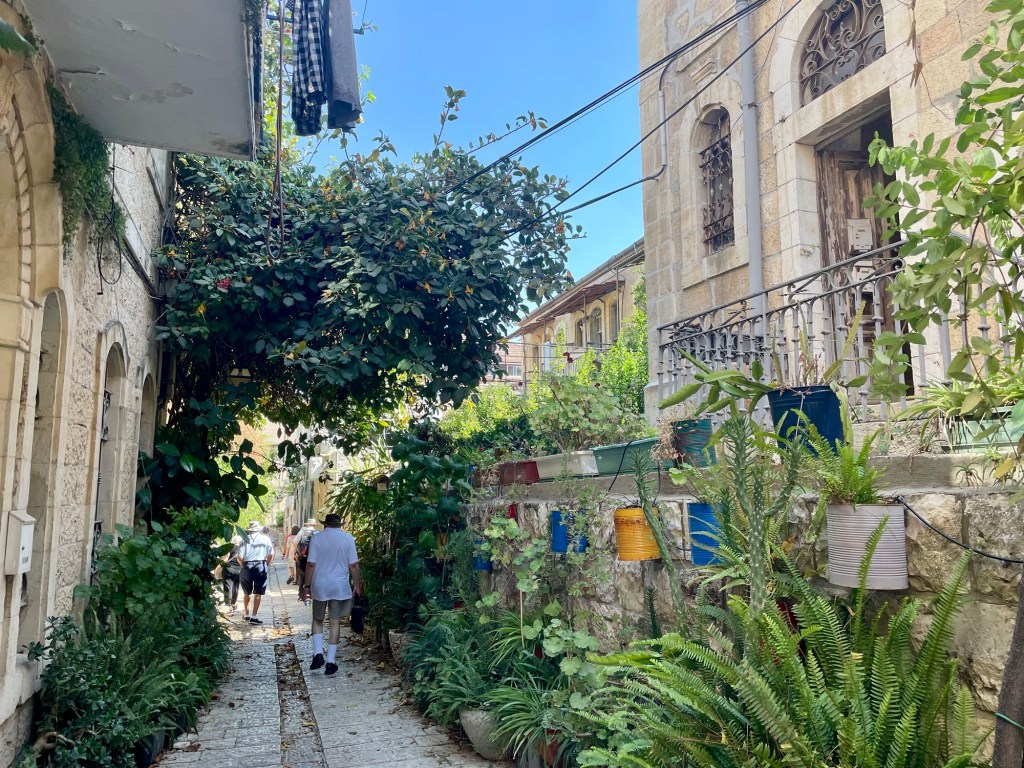
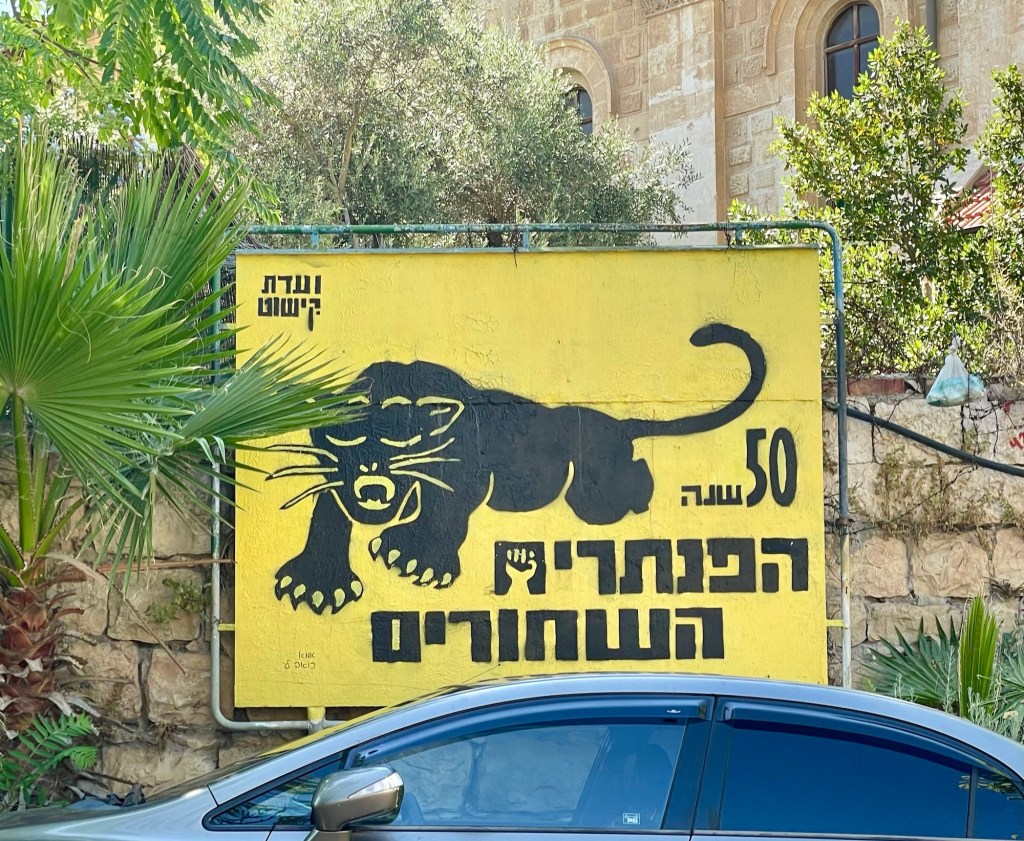
After our discussion, we took a walk to the Musrara neighborhood which dates back to the nineteenth century when wealthy Arabs built homes in the area. It became populated with Jewish people in 1948 after the state of Israel was declared. The UN voted on the mandate in November 1947 and Israel was established in May 1948. There was a Civil war between Arab and Jewish residents from 11/47 to 5/48 Then 5 Arab countries attacked. The British stopped Jewish immigration before 5/48. First Jews let in after 5/48 were Holocaust survivors and they actually received training as soldiers before they were allowed in. The average age of survivors was 15-40. From 1948 to 1960 Israel tripled its population, 1/2 million from Arab countries and 50% holocaust survivors. Since the Arabs left the Musrara neighborhood because of the war, it was primarily populated by Mizrahi after 1948. They were impoverished and living at that time right on the border with Jordan. Holocaust survivors did better and settled in different areas because they had a common culture and language with current residents of Israel. This discrepancy between the living conditions of the Mizrahi and Ashkenazi became a real problem for Israeli society. In 1951 it led to riots in Haifa. After 1967, the Musrara neighborhood began to gentrify. Israel built new housing for the current Mizrahi residents in a different neighborhood. Their property was then bought up and developed. Since the neighborhood was close to the old city which was now in Israeli hands, the property was really valuable. The Mizrahi realized they had been screwed. Then 120000 Russian Jews came in the early 1970s. They were given housing, money and help learning Hebrew. The Mizrahi had not. The Mizrahi formed the Israeli Black Panthers movement to protest and there were massive demonstrations. This was a historic event in which Jewish immigrants of Mizrahi origins, most prominently Moroccans, participated in mass public protests to draw attention to ignorance on the part of the Ashkenazi-dominated political establishment of their acute social and economic distress as new immigrants in the country. The government investigated and realized there was discrimination and vowed to do something. Then came the 1973 Yom Kippur war which resulted in Israel having financial difficulty and so nothing was done to rectify the problem. Since then there has been massive intermarriage between Mizrahi and Ashkenazi. Also, Mizrahi culture has been integrated into Israeli culture, especially in music so the situation is resolving itself. Unfortunately, there have been similar issues with integrating the Ethiopian and Yemenite Jews into Israeli culture. Here are some street scenes from the Musrara neighborhood.
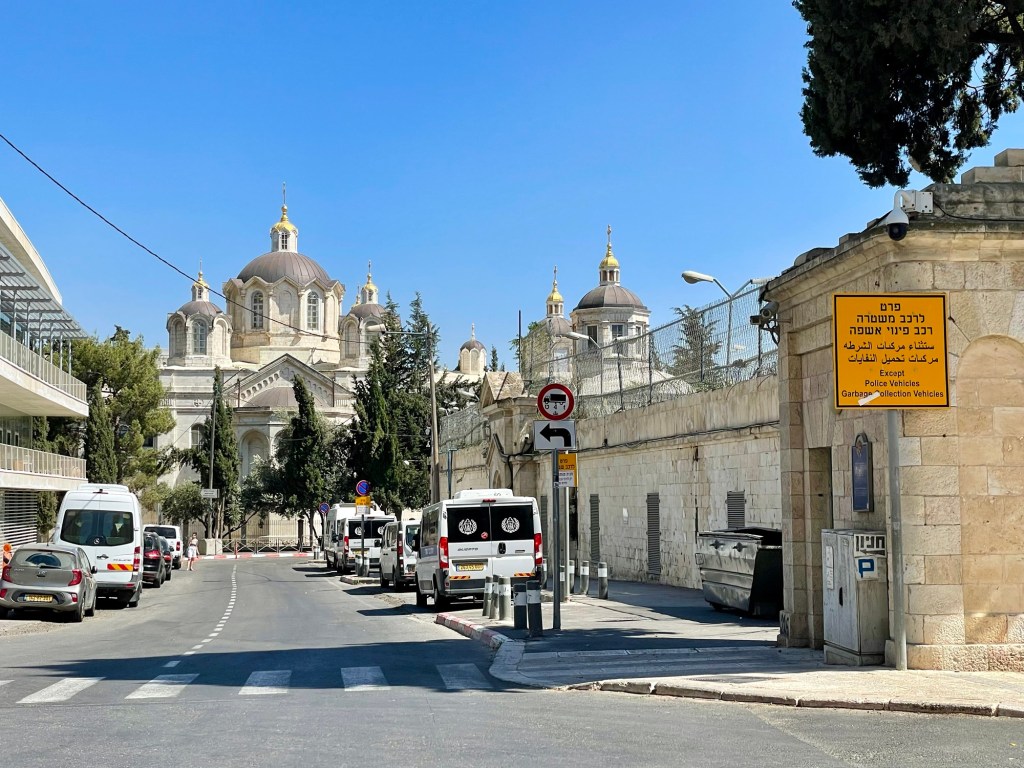
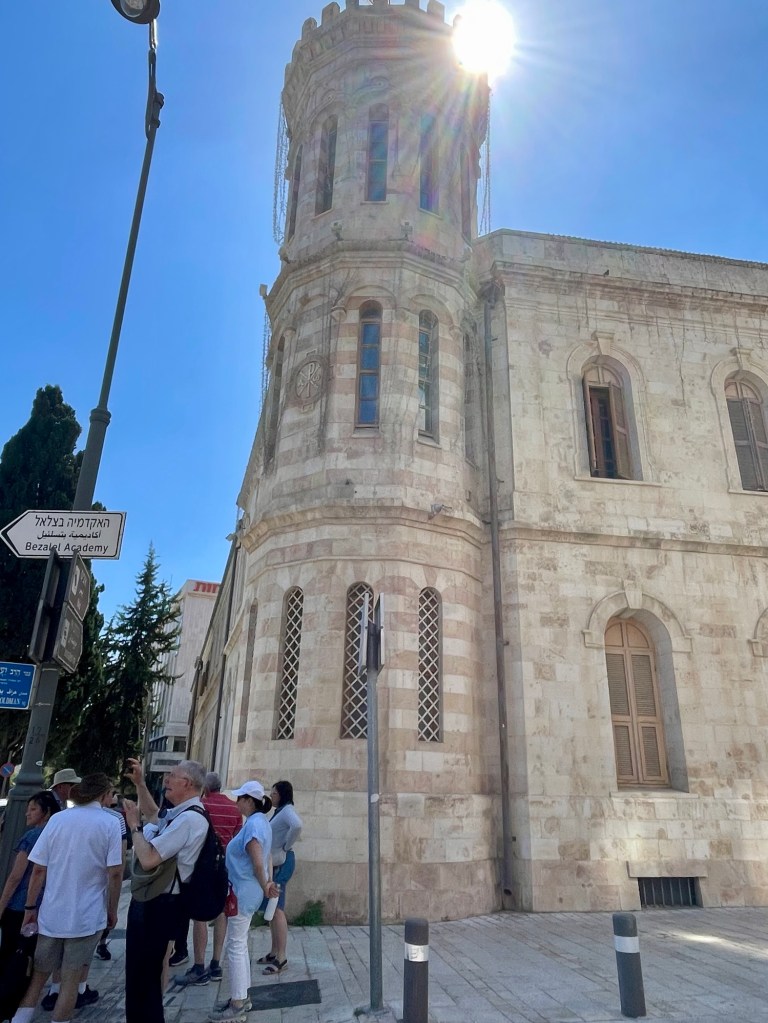

Some more pictures from the neighborhood.
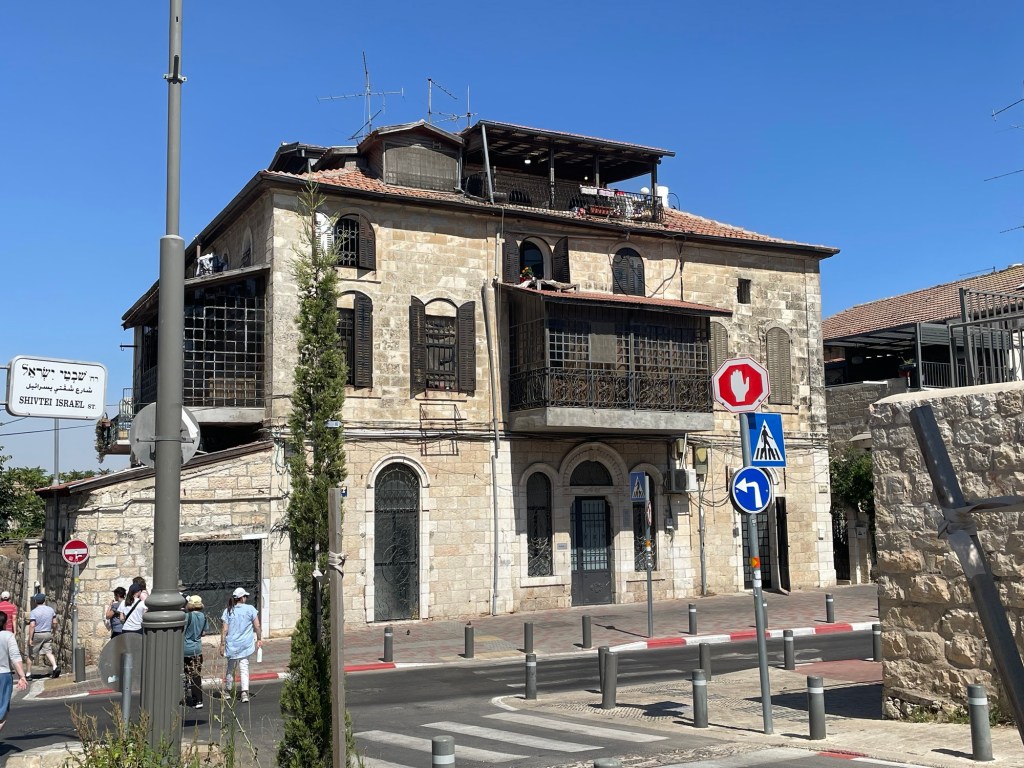

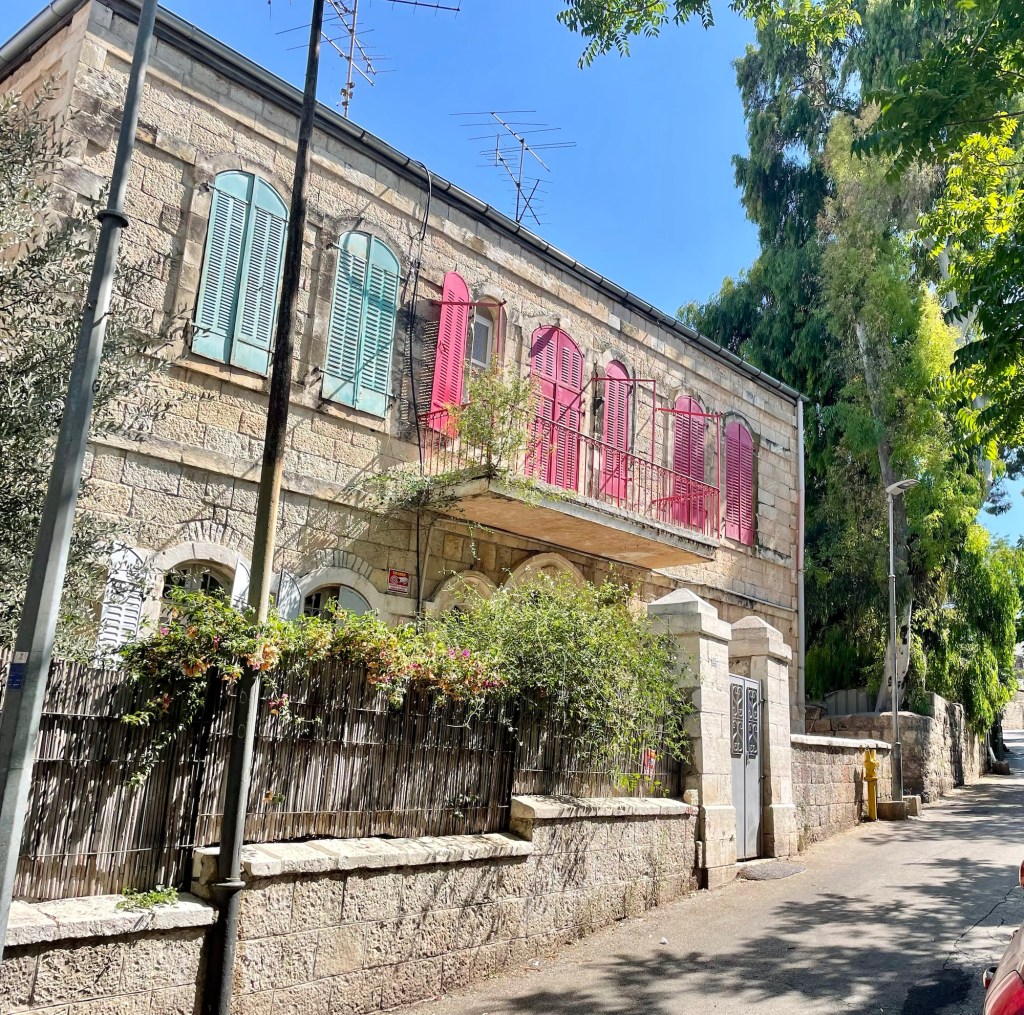


The final activity for the day was a learning session about how Israelis in general are reacting to the current situation. First reaction was that together we will win. There was an unbelievable effort within the civil society to help the evacuates and soldiers and basically everybody in the community. Now the feeling is that we are not together and we will not win. Israelis feel that there has been a monumental failure in the government and its institutions, especially unfortunately in the IDF. When the state of Israel was created, the idea was that this would be a safe place for Jews. After the event of October 7, people do not feel that anymore. However, after visiting and listening to many people the past few days. I feel there’s an unbelievable resiliency here. During our discussion, we read a poem by Rabbi Obed Mazor. The poem basically says that two things can exist at the same time contrary to what Kohelet (Ecclesiastics) says. Ecclesiastics chapter 3 states that there is a time for one activity and there is another time for another activity. I took a picture of the poem to share with you.

I think this is a good spot to end this blog for the day. Tomorrow we do some more volunteer activities and of course more learning. We are also going to go into the old city.
 RobbieLambertsTravels