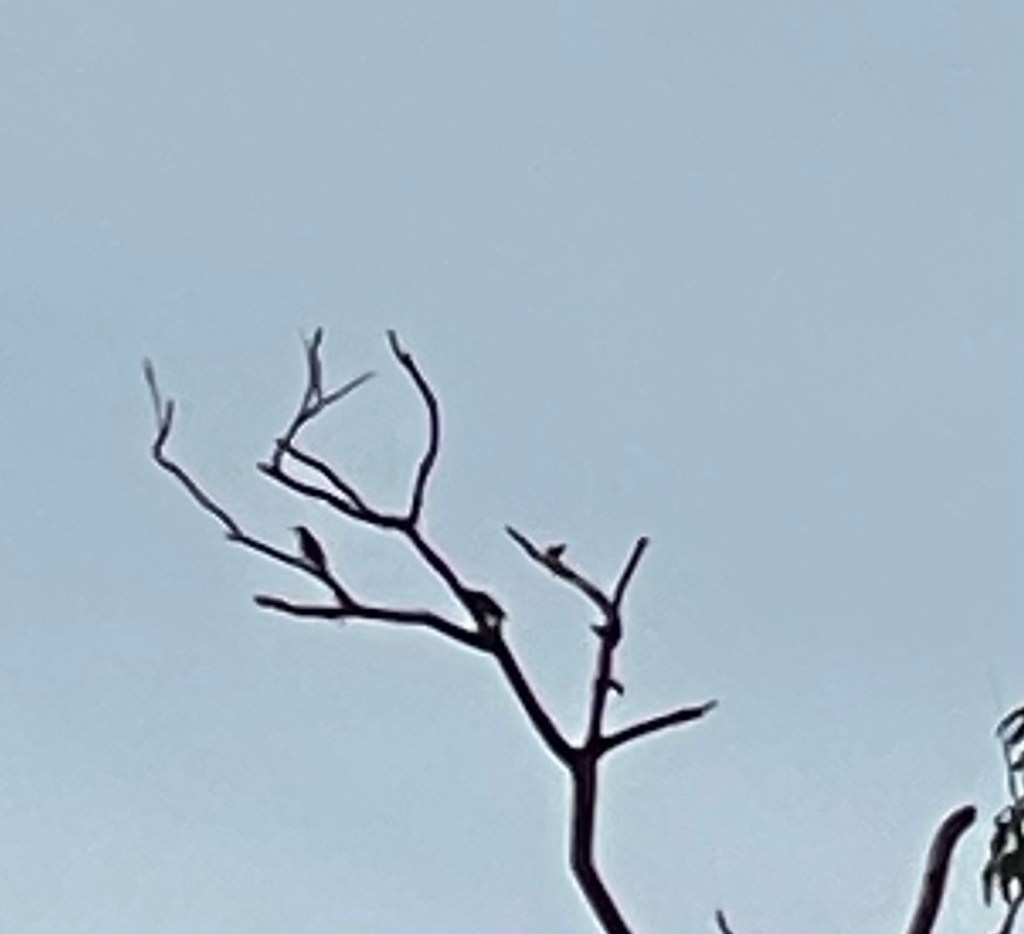
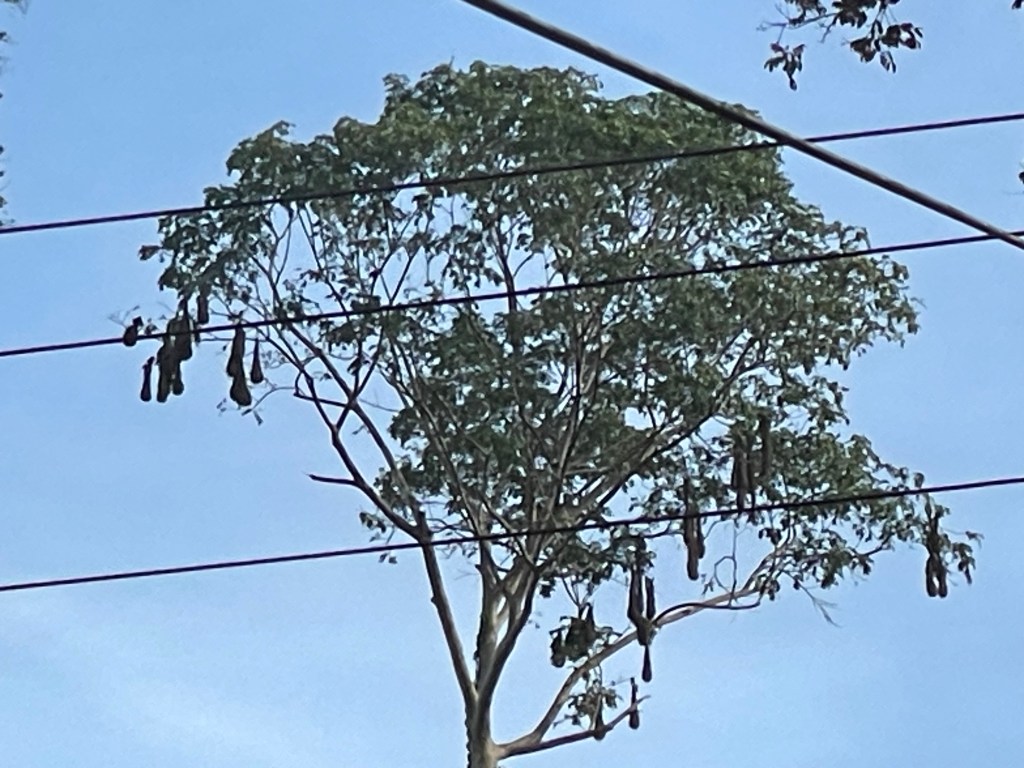
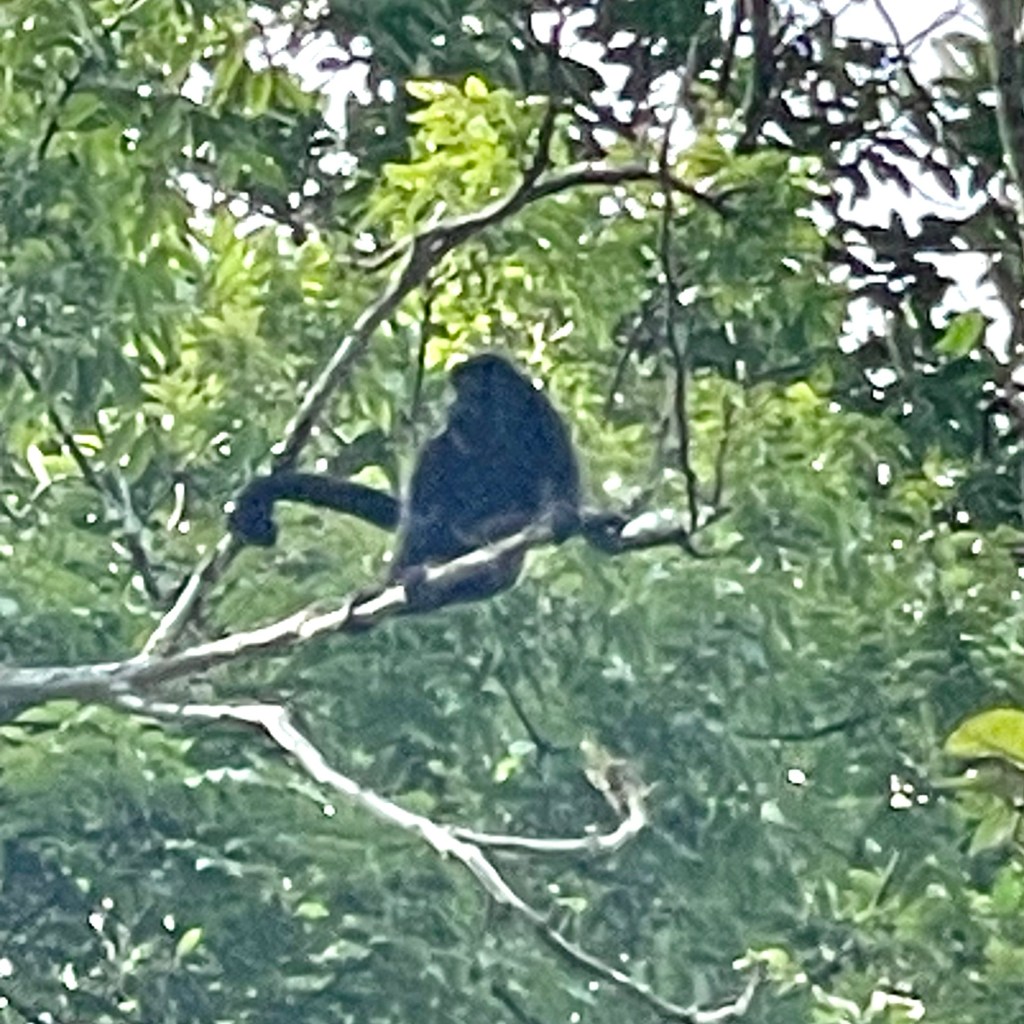
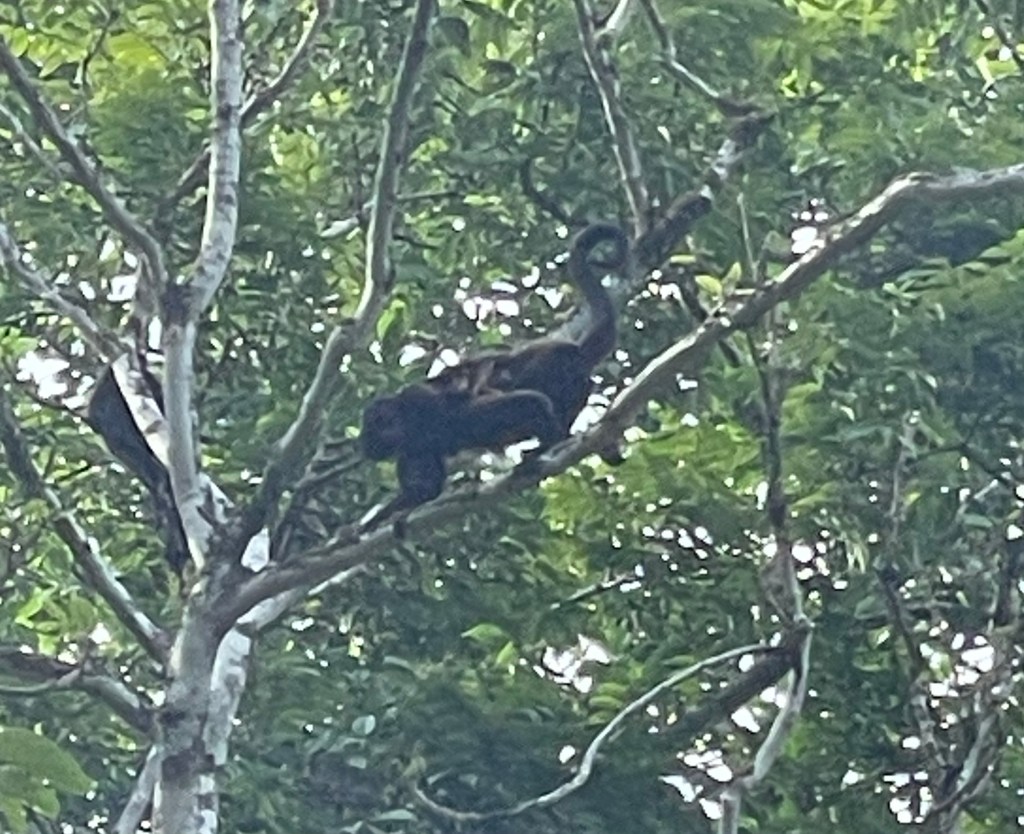
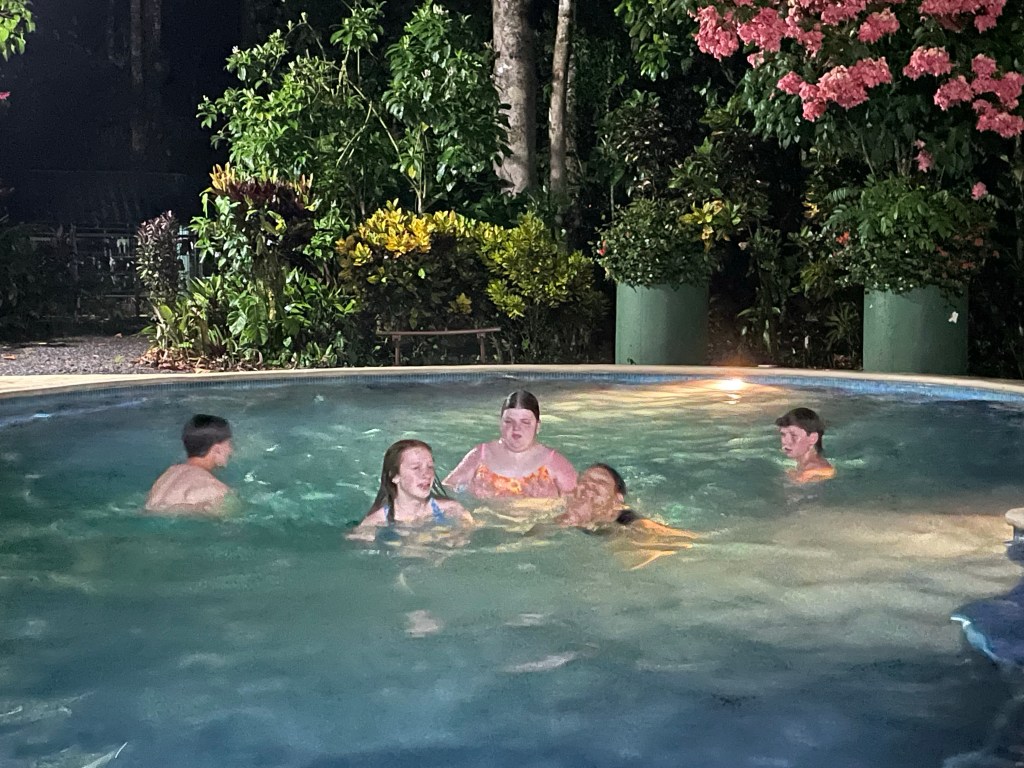
Today was a very exciting day. I have thoroughly enjoyed all my road scholar trips. They have been exceptional but this one beats them all. The activities today were an early morning, before breakfast, bird watching trip, white water rafting after breakfast, and visiting a cacao plantation after lunch. The kids also had to go swimming after dinner. The birdwatching trip turned out to be a monkey watching trip. It was really fun watching them jump around in the tree tops.
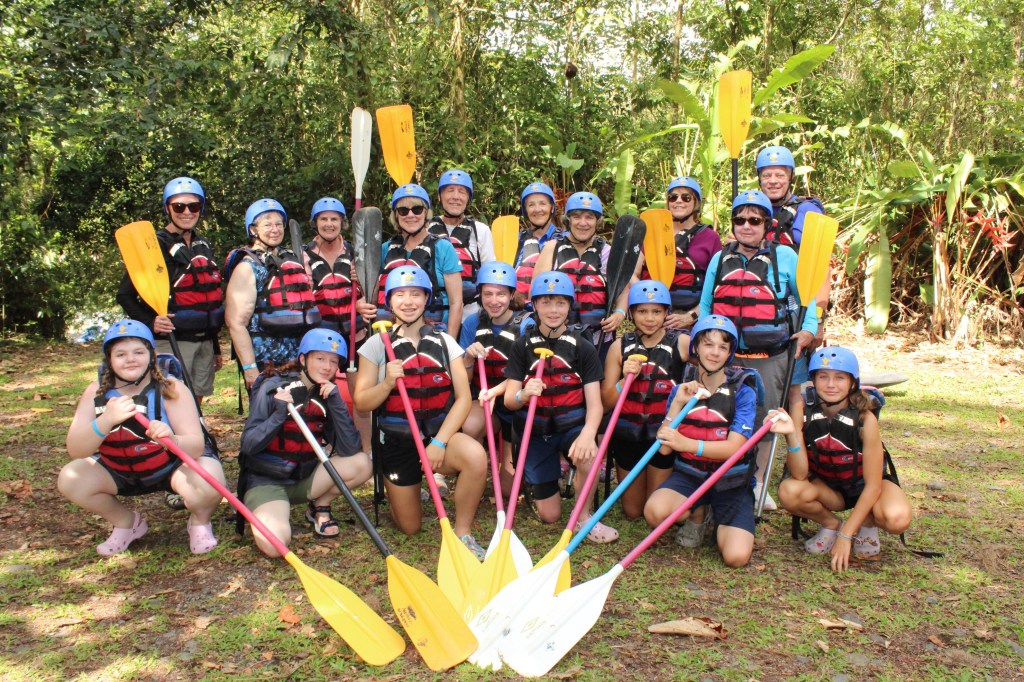
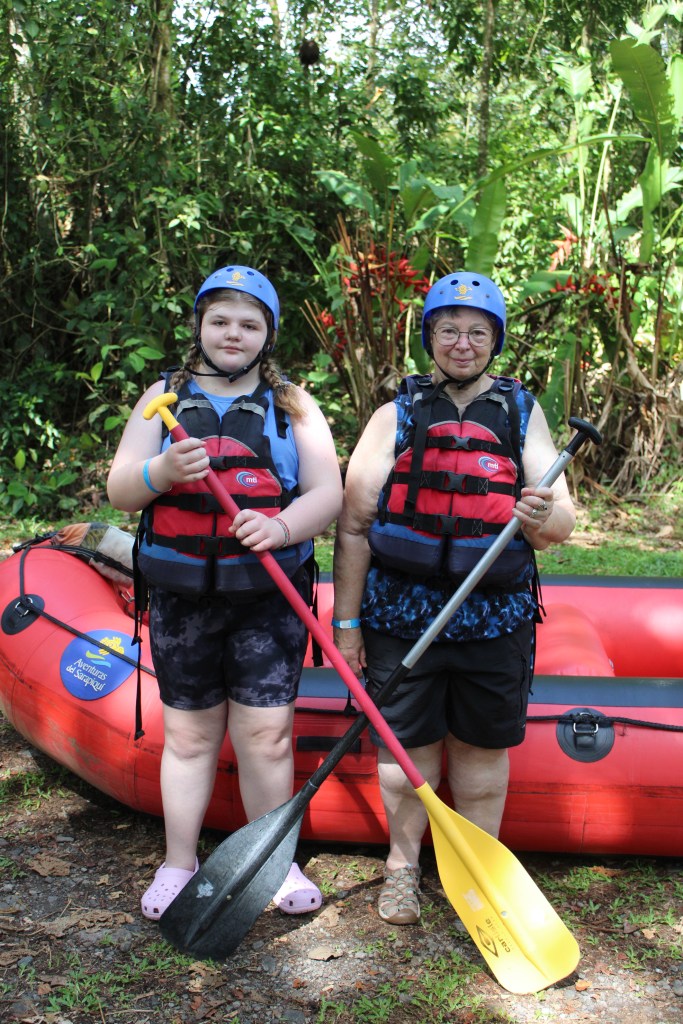
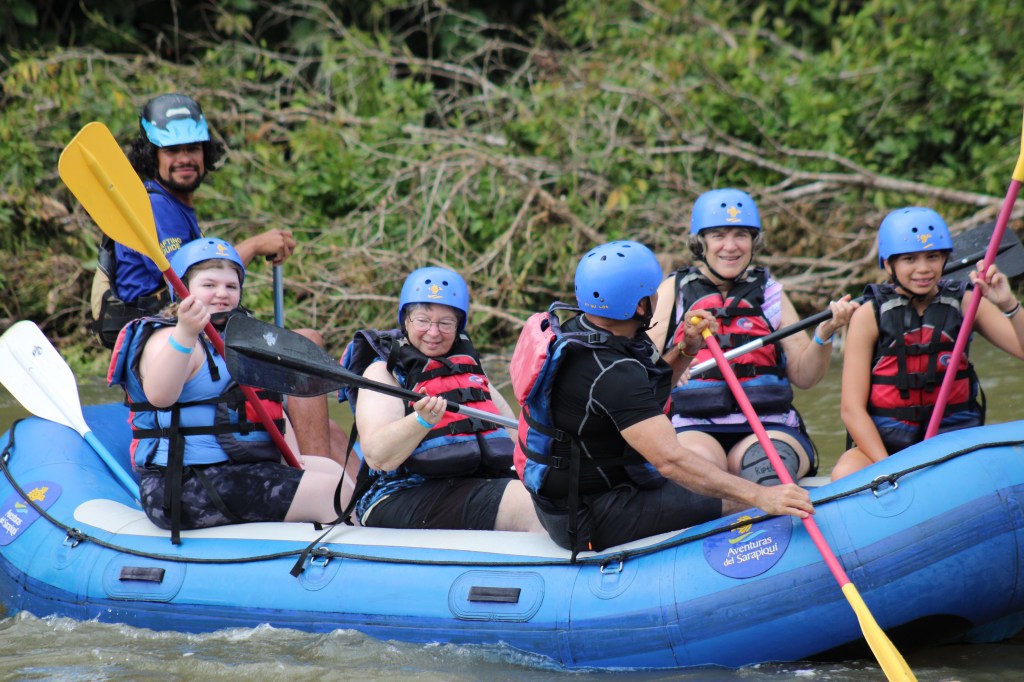
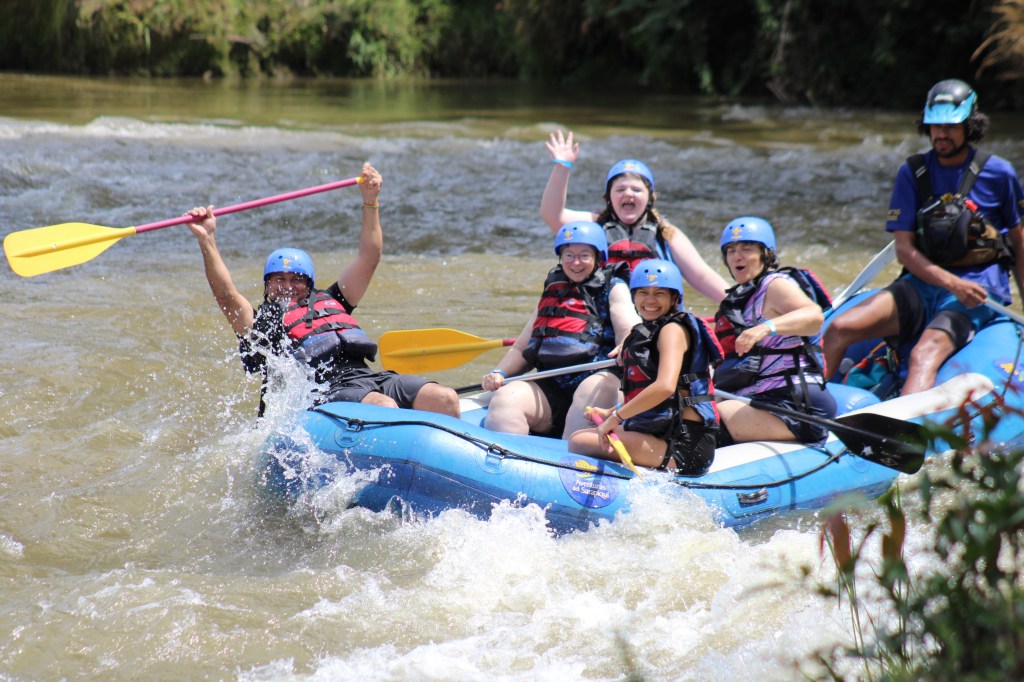
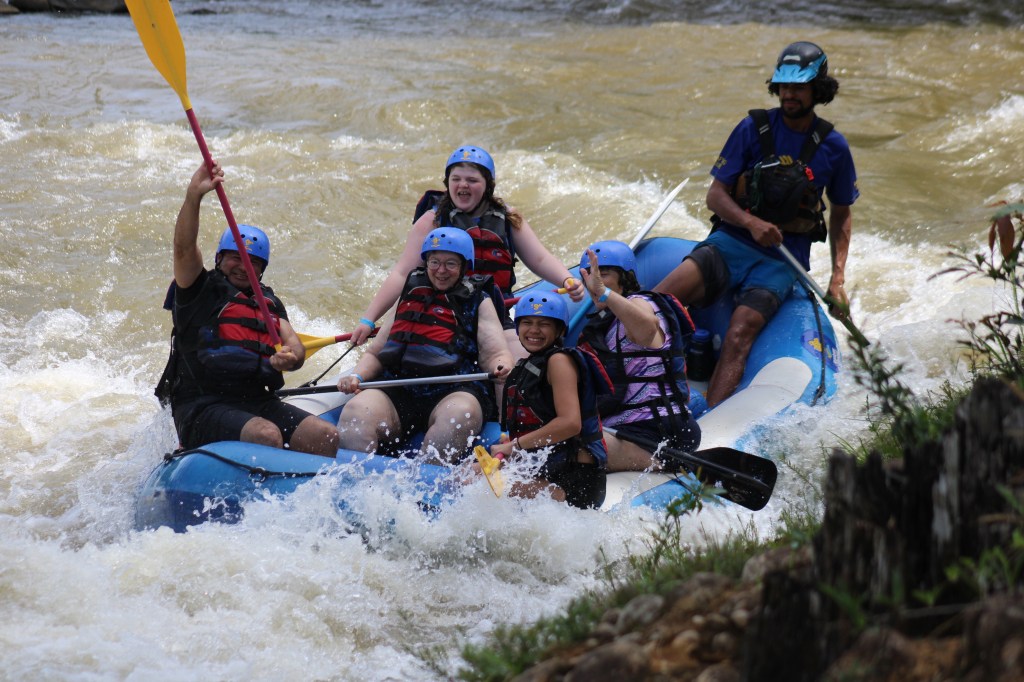
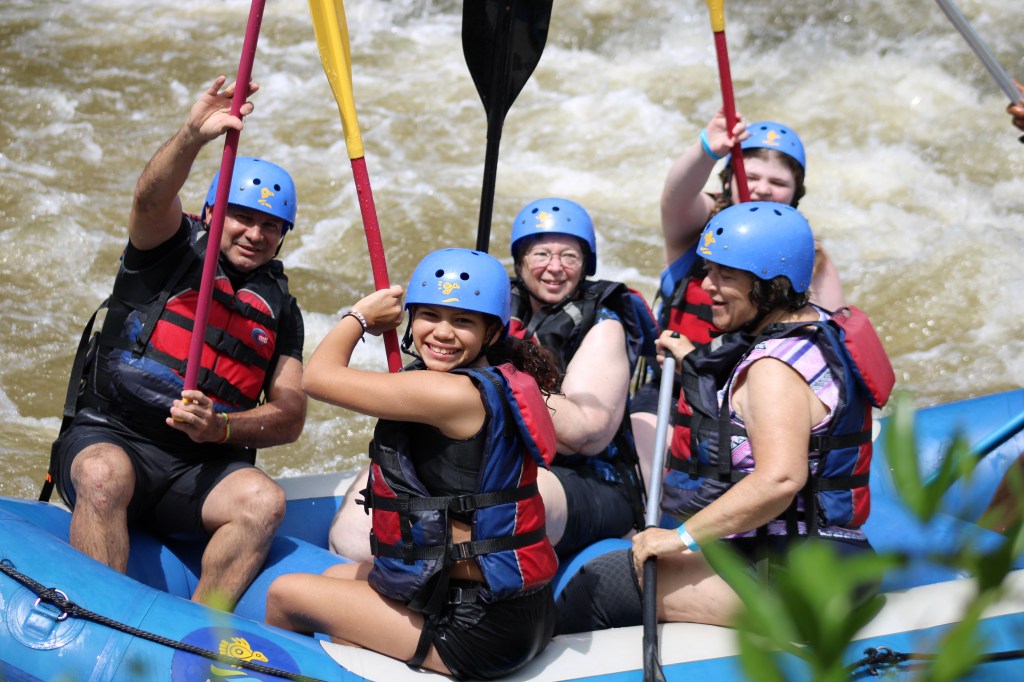
White water rafting was delightful. It is something that I used to do quite a bit and so I thoroughly enjoyed this chance to do it again. The highest rated rapid we did was a 2+. At my age this was perfectly fine though I have guided rafts on class three and four rated rapids when I was a lot younger. We did stop at one point to go up to a ledge and jump into the river. Most of the kids and only two adults me included took this challenge on. During calmer spots we were able to jump into the river and swim along the rafts. We also made one stopped to eat the most delicious pineapple I’ve ever had. Here are the rafting pictures. They were taken by a commercial company.
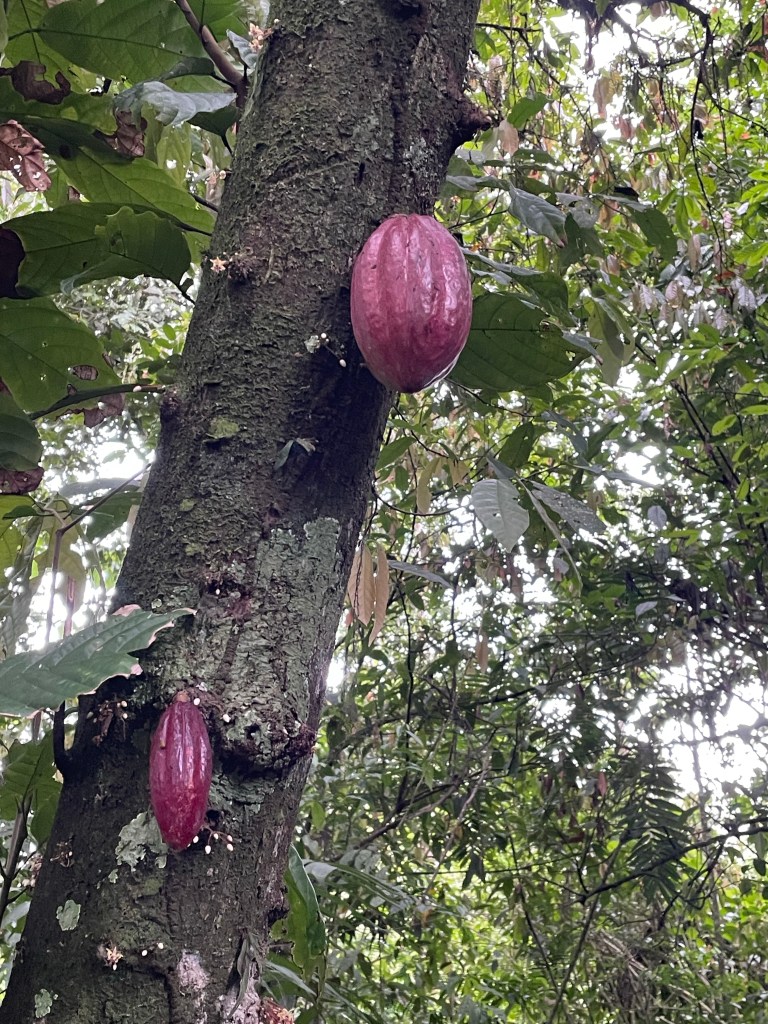
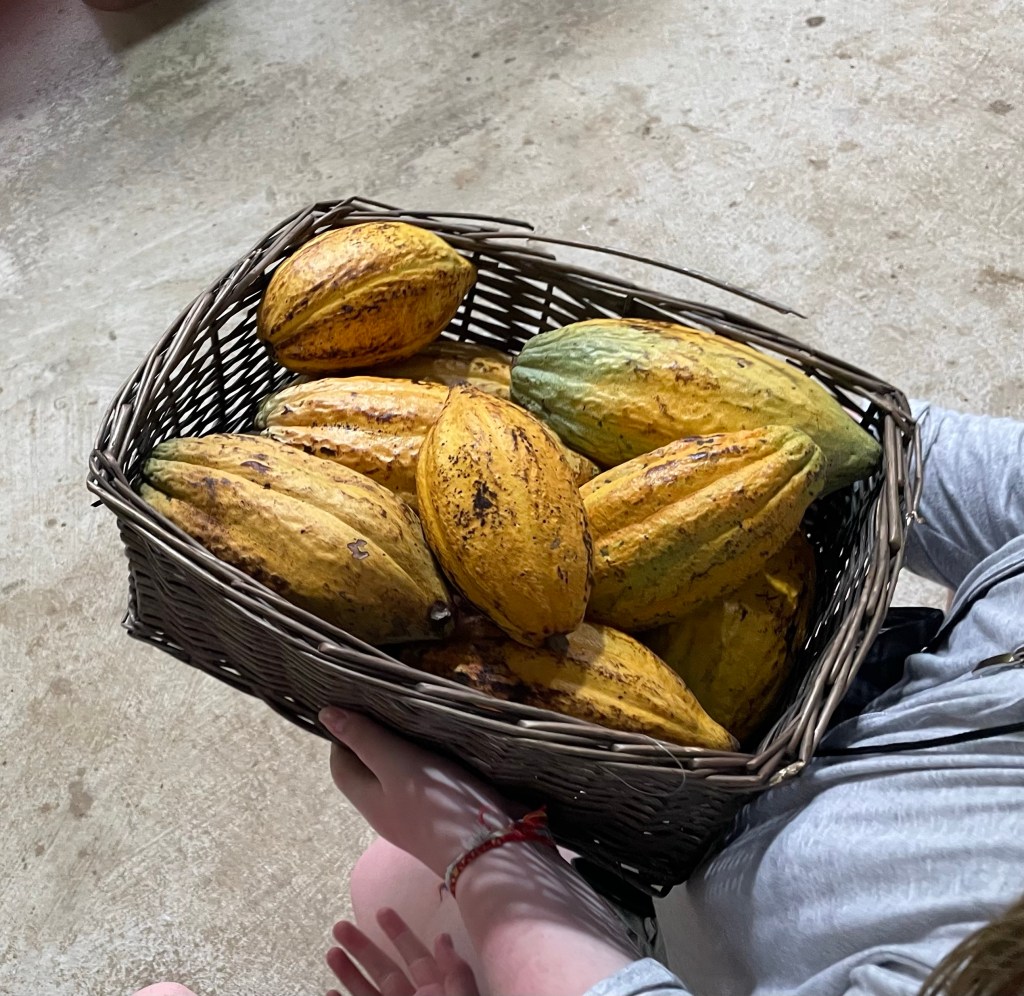
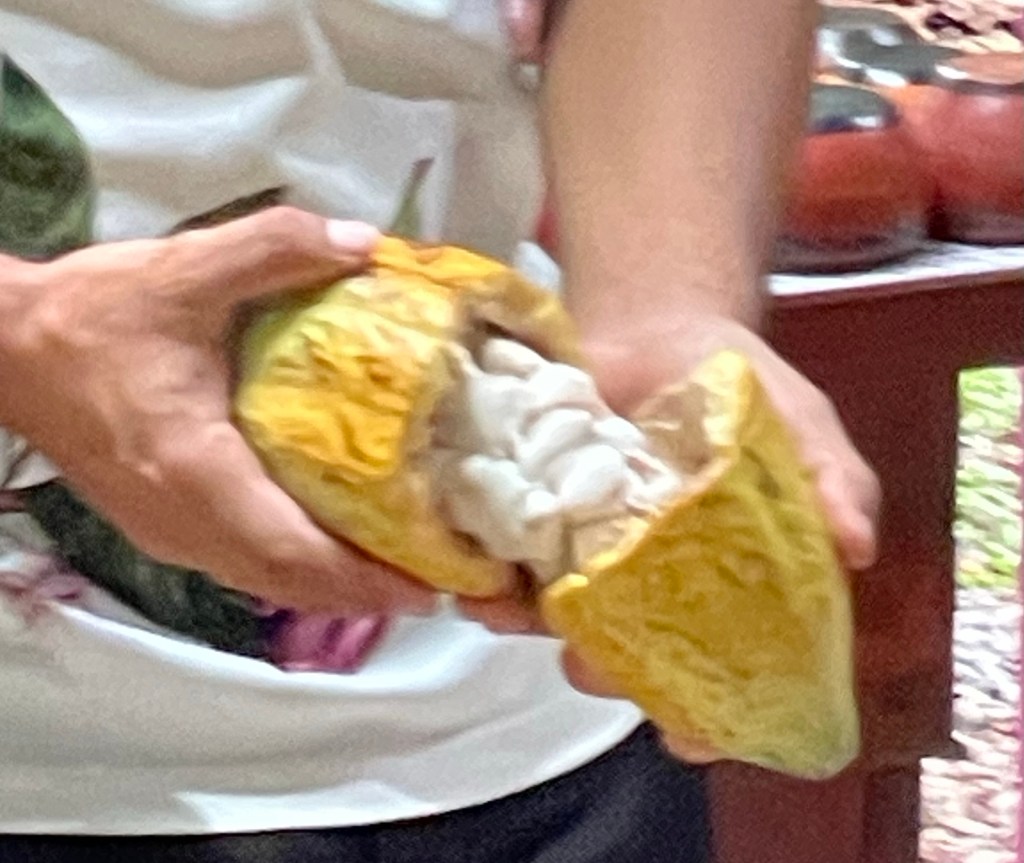
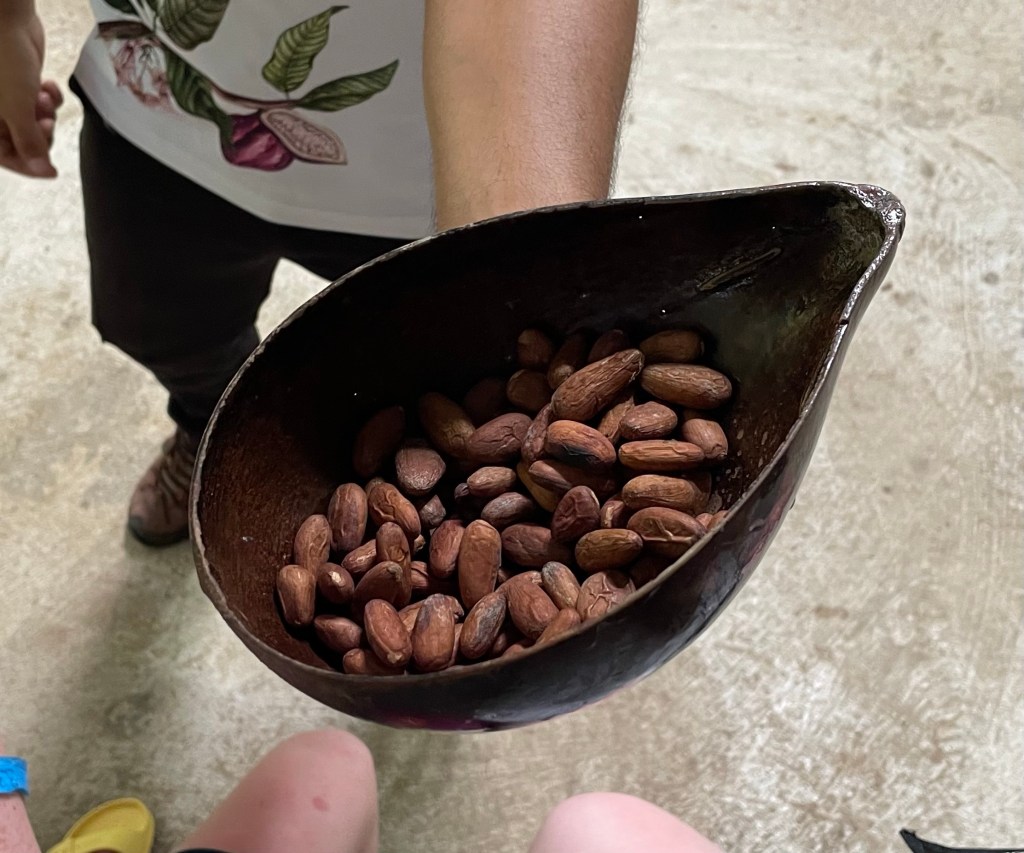
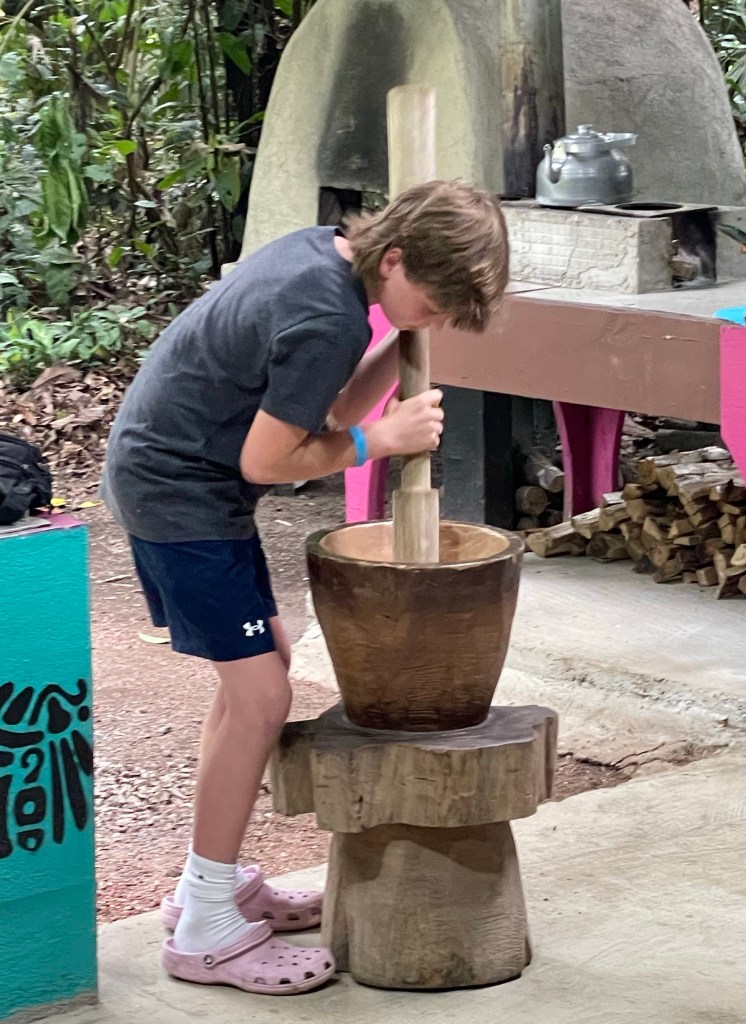
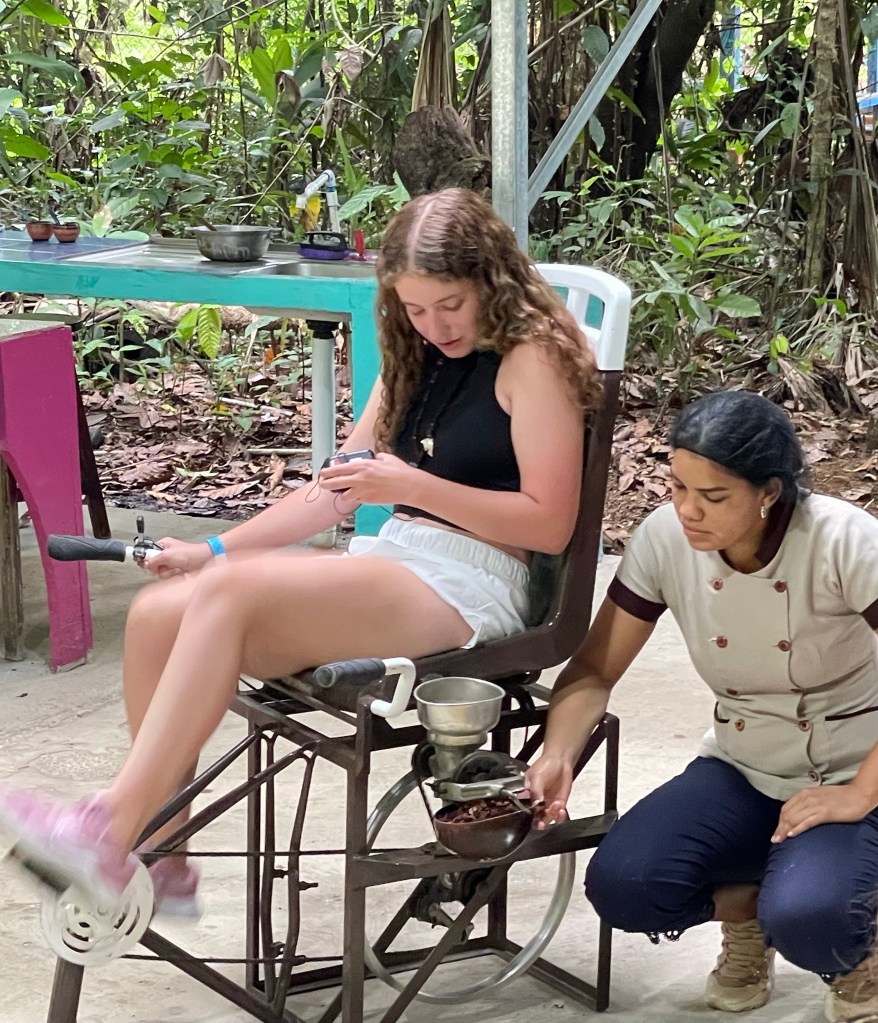
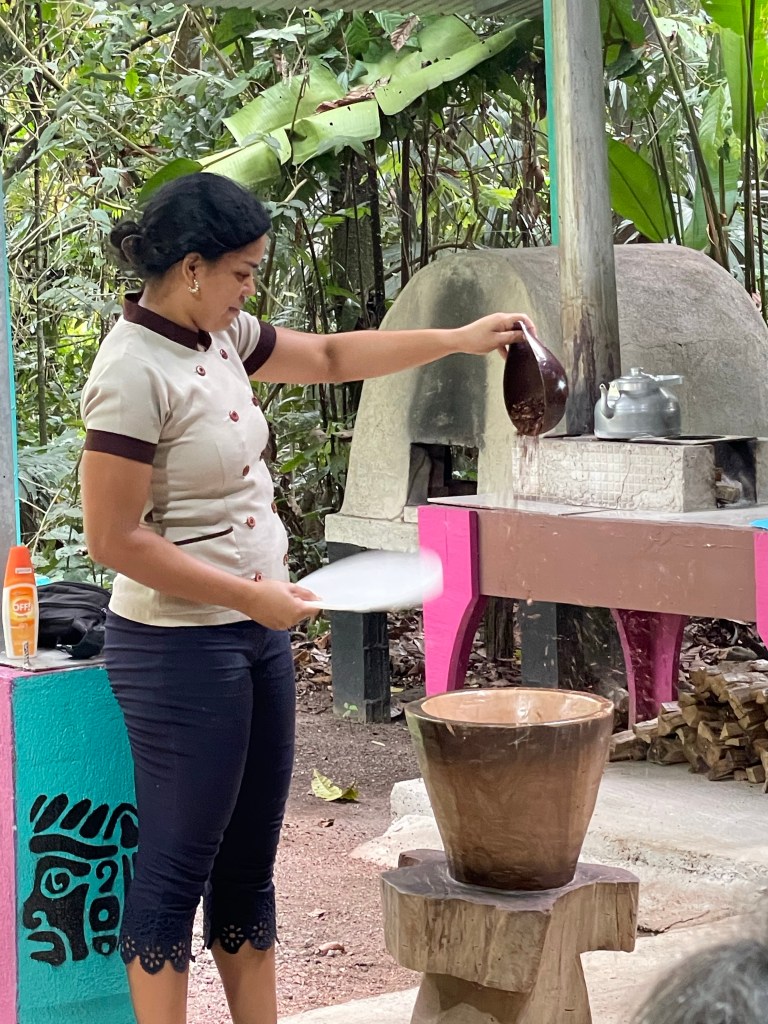
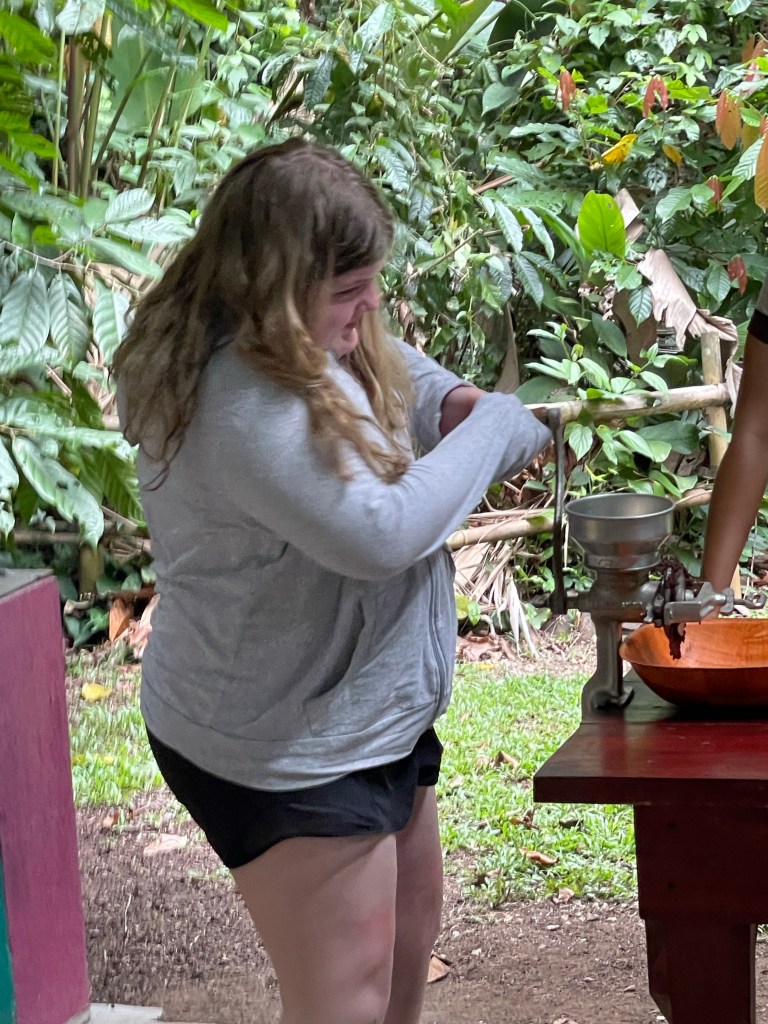
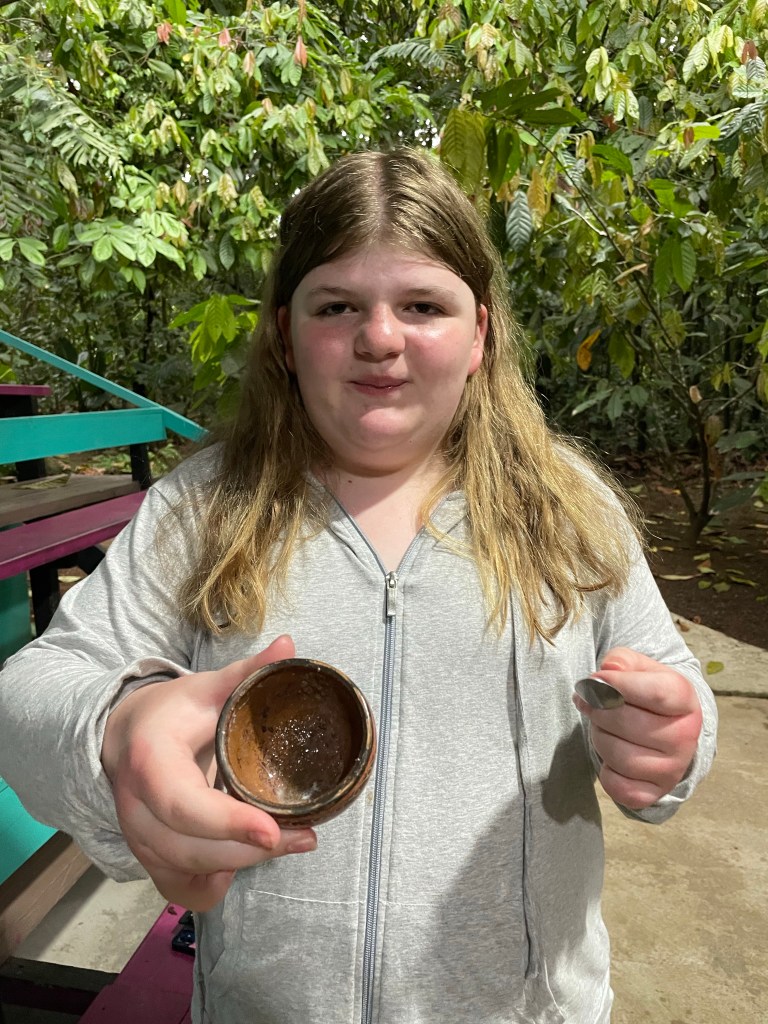
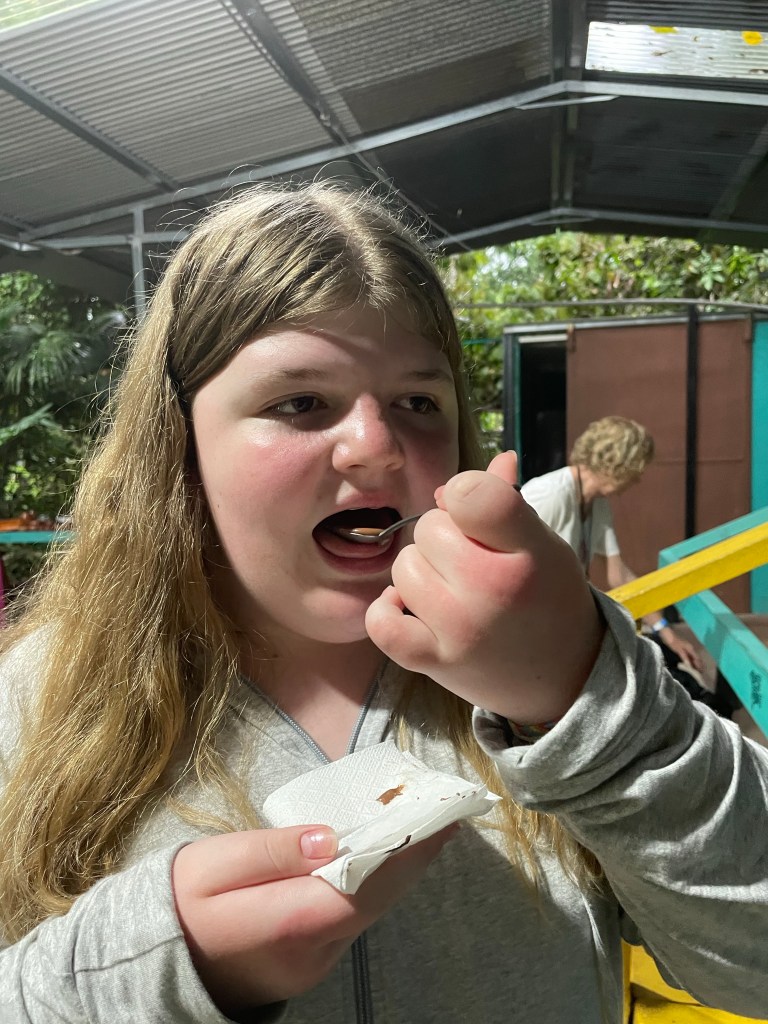
Our next adventure was a visit to a cacao plantation. The plantation was started by a group of people that wanted to demonstrate that you could raise cacao and still be environmentally friendly. They have not cleared the jungle on their land and harvest the cacao naturally growing on the land. They teach their processes to other growers and try to help out the local community as much as possible. We were given a very detailed lecture on how cacao is process into chocolate. We were also explain the difference between most chocolate that you can buy in the states compared to the chocolate that they made for us. Most commercially available chocolate is made with chocolate flavoring. The beans are not fermented as long as they should be. They also do not pay the growers a decent living. We were given a demonstration of the whole process of developing chocolate from the cacao bean. We got to taste the original bean and also taste the product during the different stages of development. All in all it was a fascinating and delish experience.
 RobbieLambertsTravels
Fantastic!
LikeLike
So how was the end product of the chocolate making experience? I don’t buy chocolate very often. Should I start to look for CostaRican chocolate? On another topic…It looks like you and Zoe are having the bonding experience of a lifetime!
LikeLike
We are doing great
LikeLike
The chocolate was amazing. This place doesn’t export their products. It is unclear whether chocolate just from Costa Rica would be made the way that this place makes their chocolate.
LikeLike
Sounds like a perfect trip! Rafting and chocolate 😊
LikeLike