Today’s adventure was a trip to Worms to see the Jewish quarter. It is just an hour ride from Frankfurt. Worms had a flourishing Jewish community between the 11th and 13th centuries and was a center of Jewish scholarship. Located in the Jewish quarter is the synagogue, the yeshiva, a Mikveh and a community house. The whole quarter has actually been reconstructed since it was destroyed by fire at least two times. The Jewish cemetery is located away from the quarter. Rashi, considered the greatest Talmudic scholar, studied and taught at the Yeshiva in Worms during the eleventh century. Rashi was cited often by the monk Nicholas, who had an influence on Luther’s translation of the Bible.
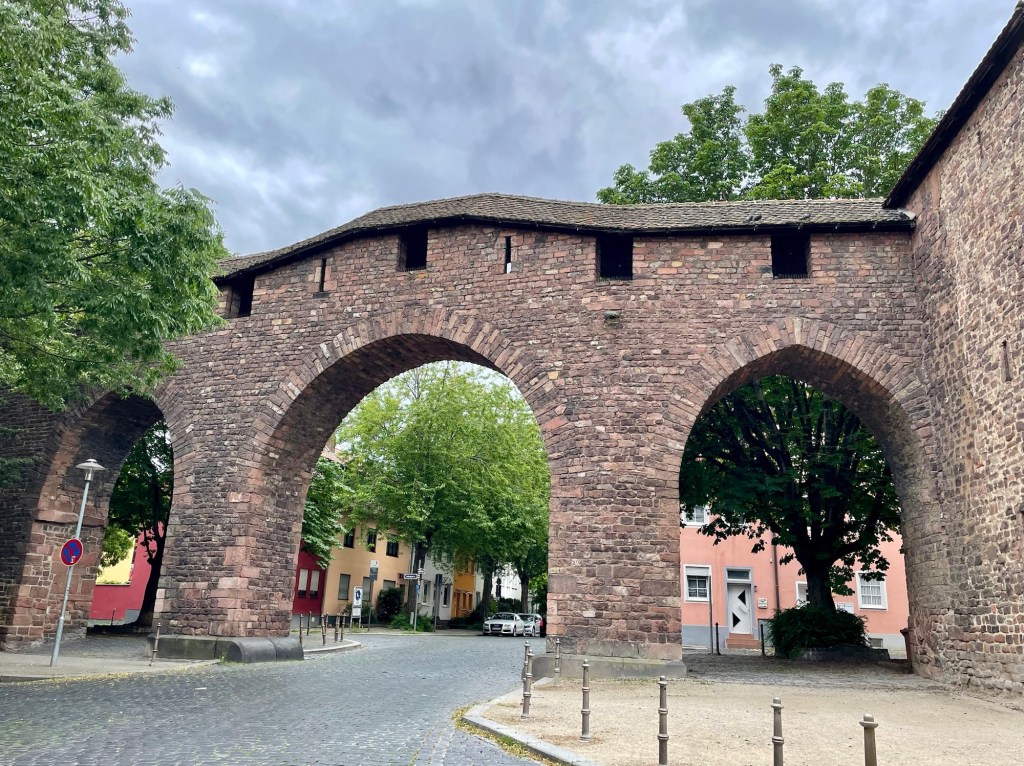
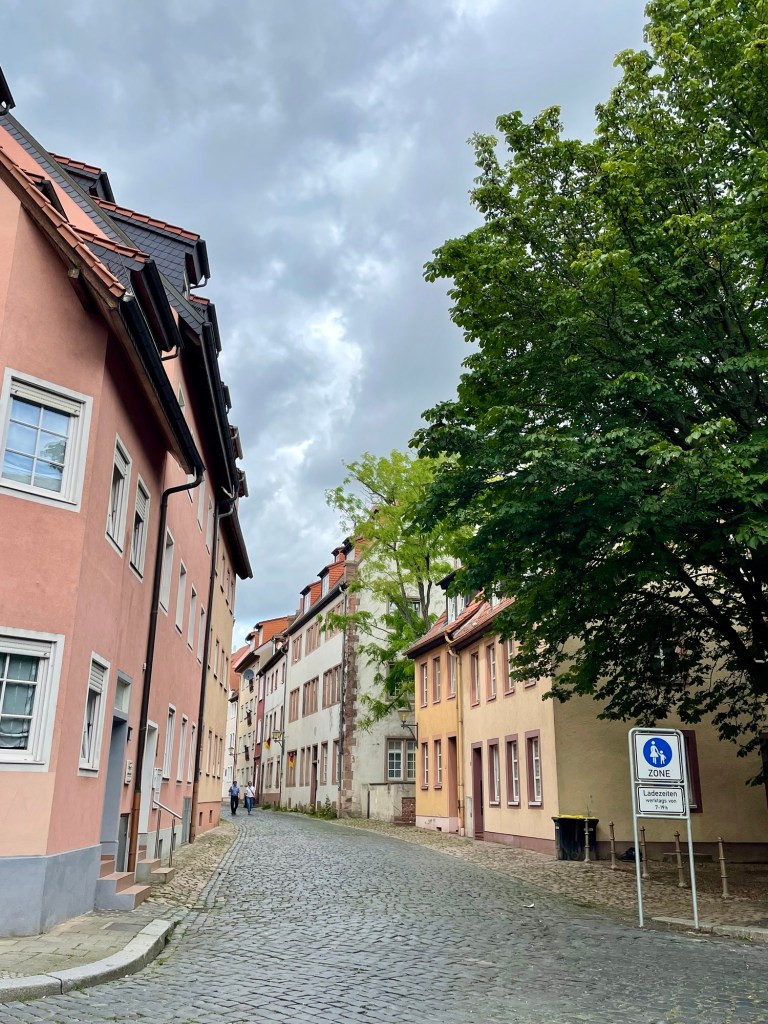
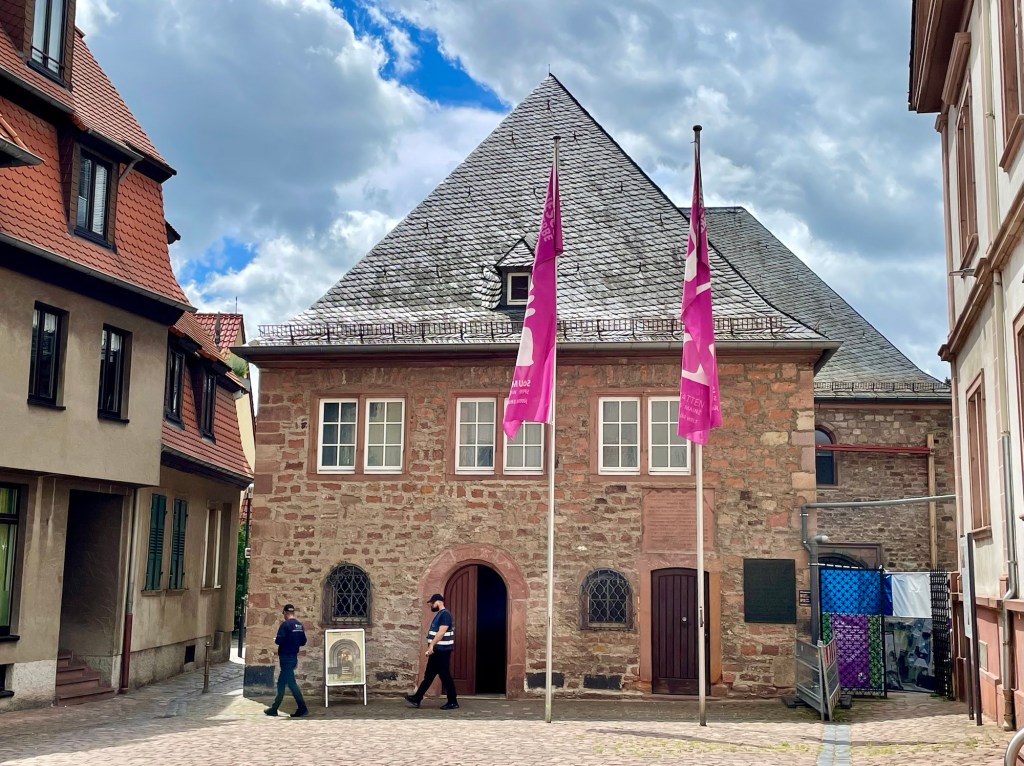
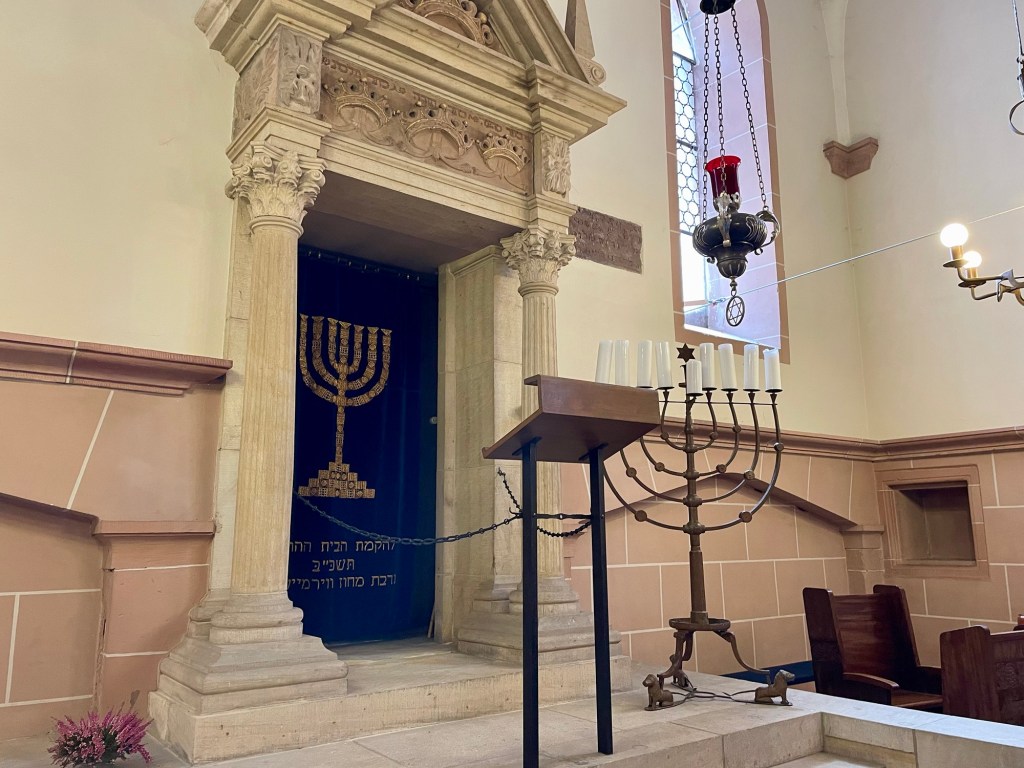
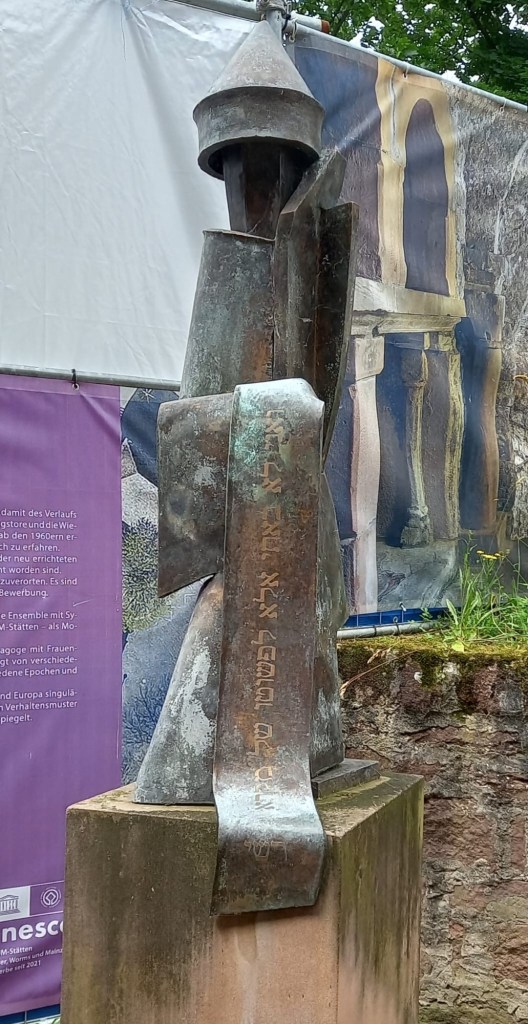
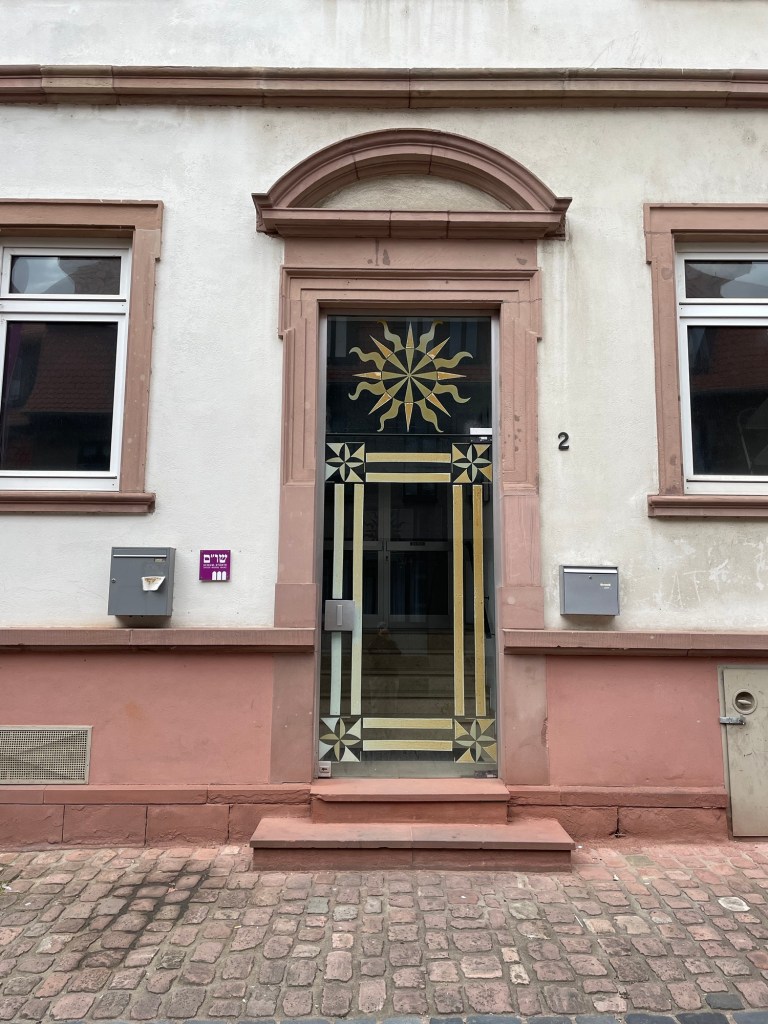
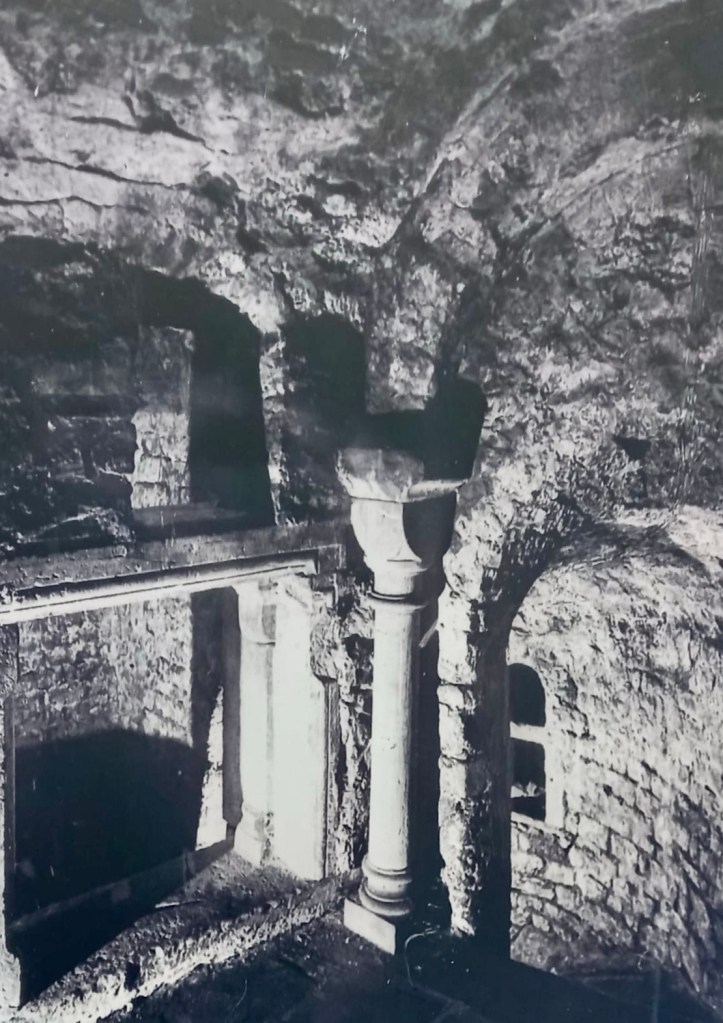
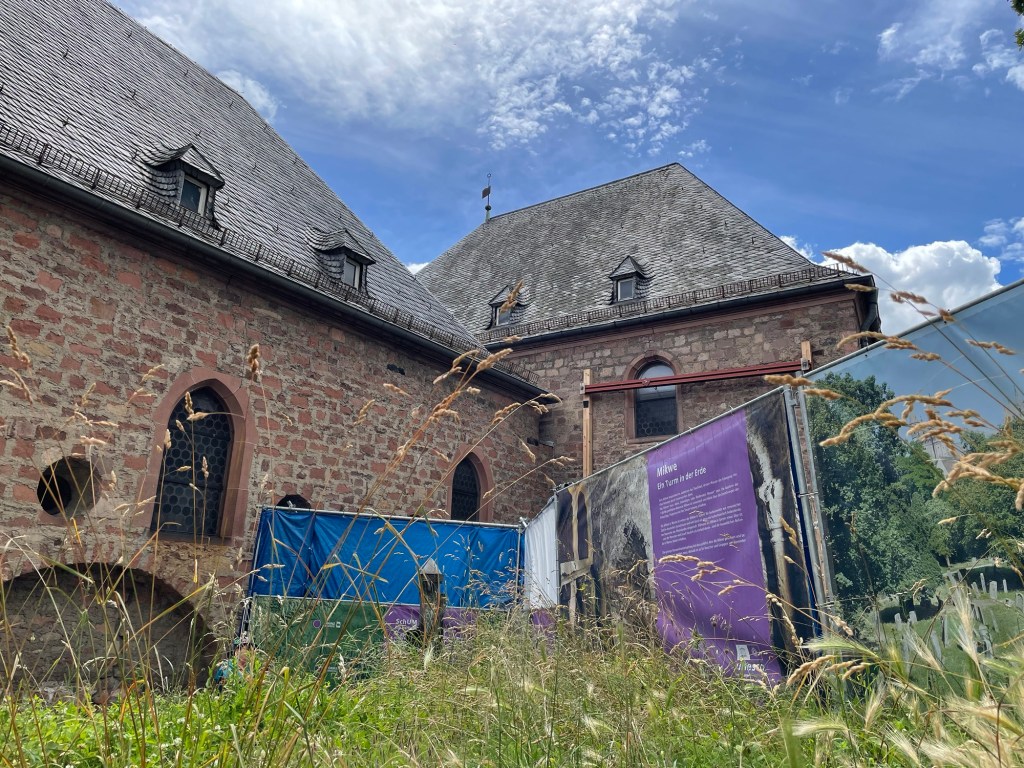
Entrance to the Jewish quarter which is now called the Rashi gate.Looking down Judengasse or Jewish laneThe synagogue. First built in 1034 CE. Inside the synagogue Statue of Rashi (modern interpretation)Entrance to community centerPicture of the Mikveh which was on display in the museum. The Mikveh was first built in 1185 CEThe left part of the synagogue was where the women prayed, and the right part is where the men prayed. The previous picture of the interior was from the men’s section.
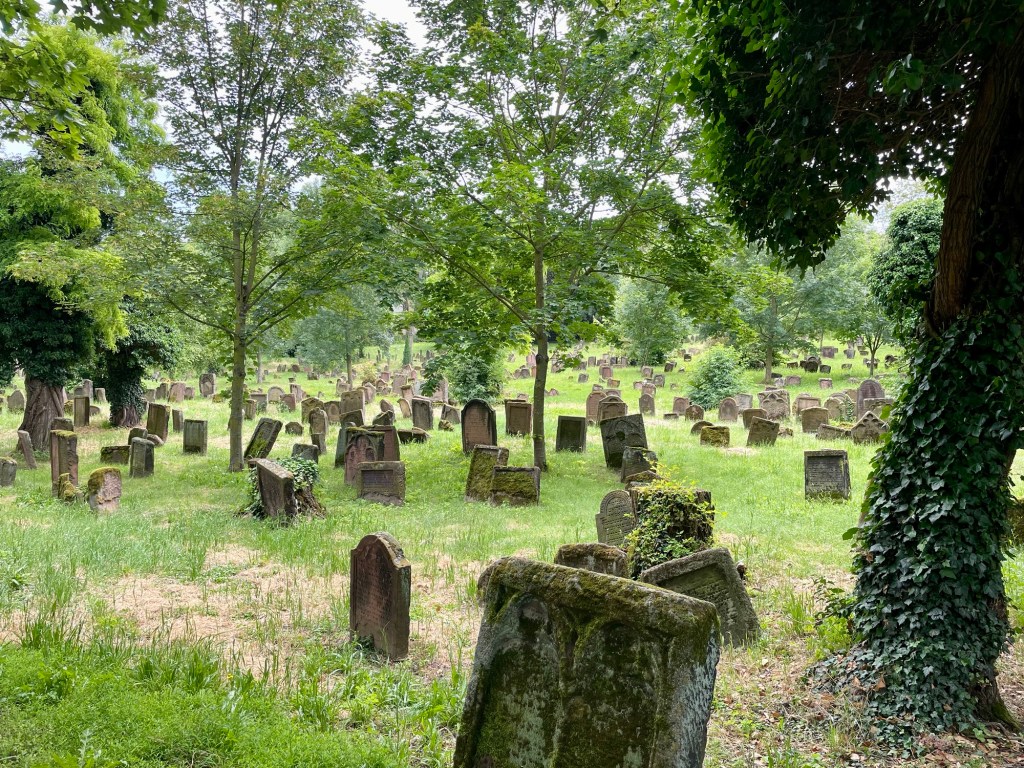
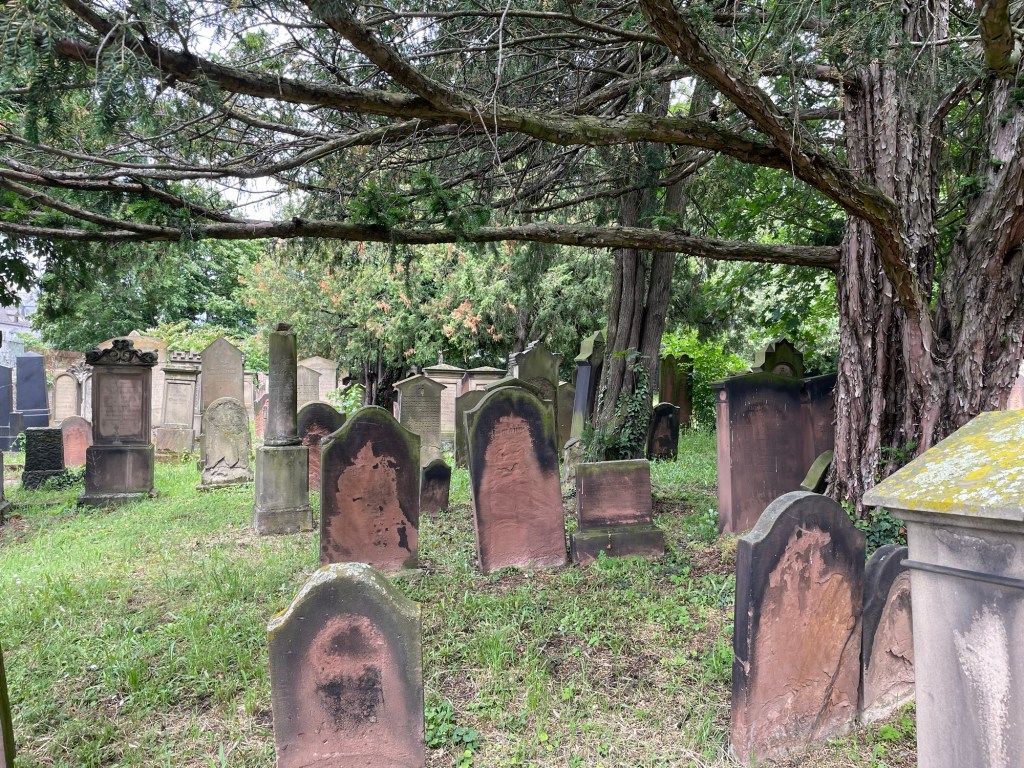
After seeing the buildings in the Synagogenplatz, we walked to the other side of town to visit the Jewish cemetery. The oldest tombstone dates back to 1058CE.
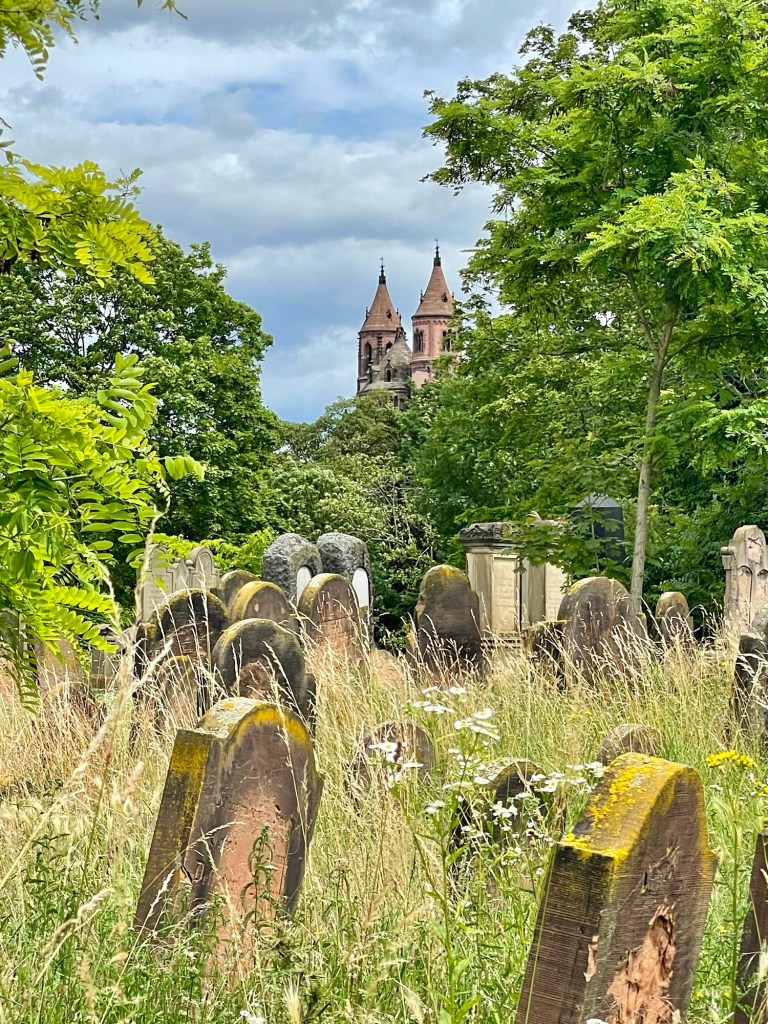
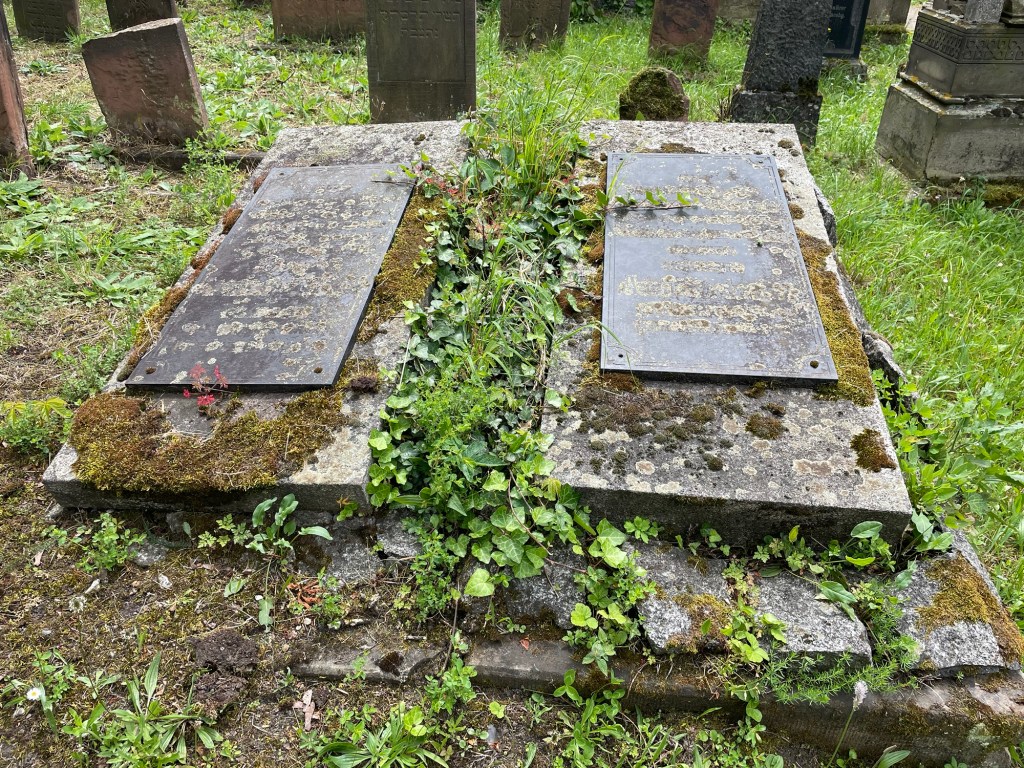
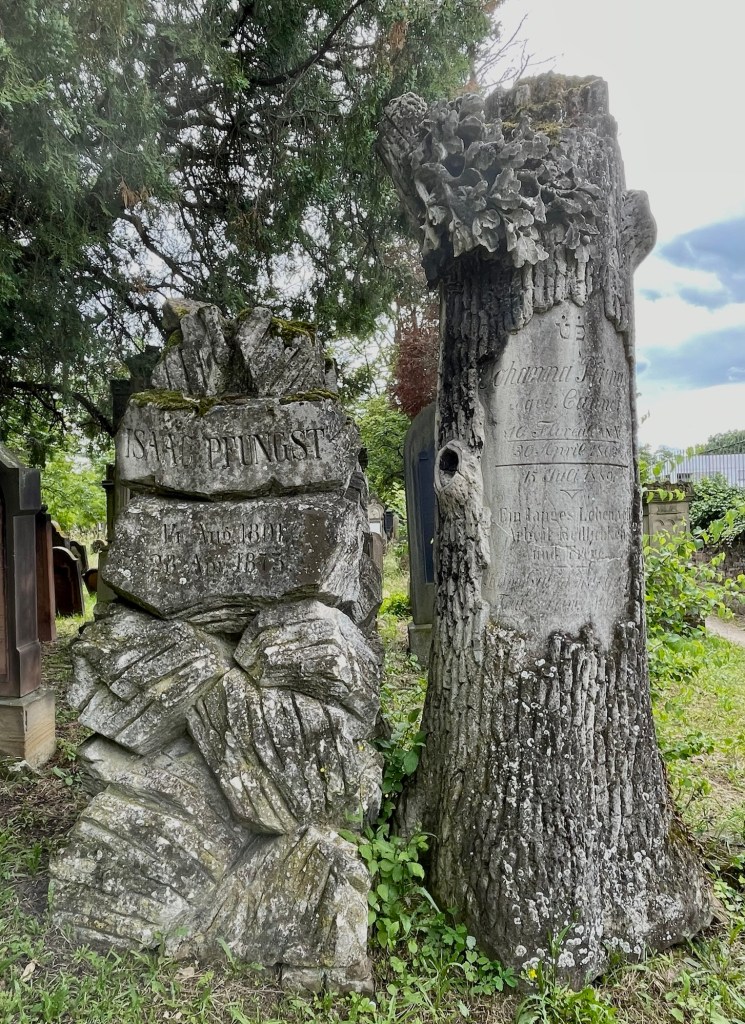
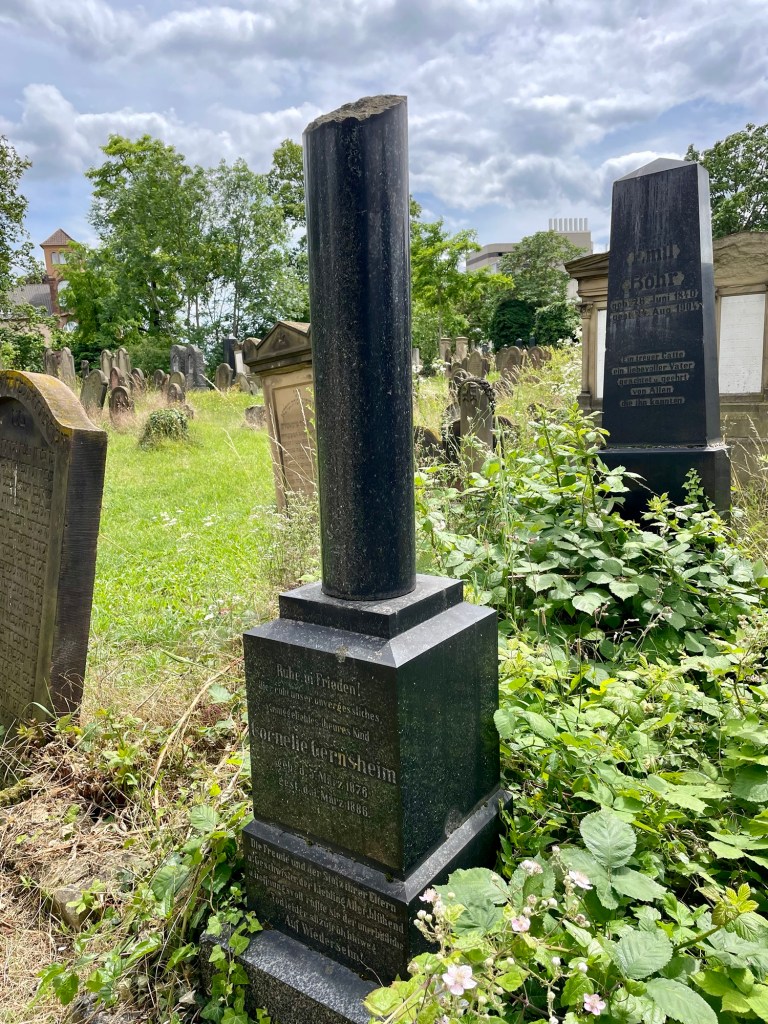
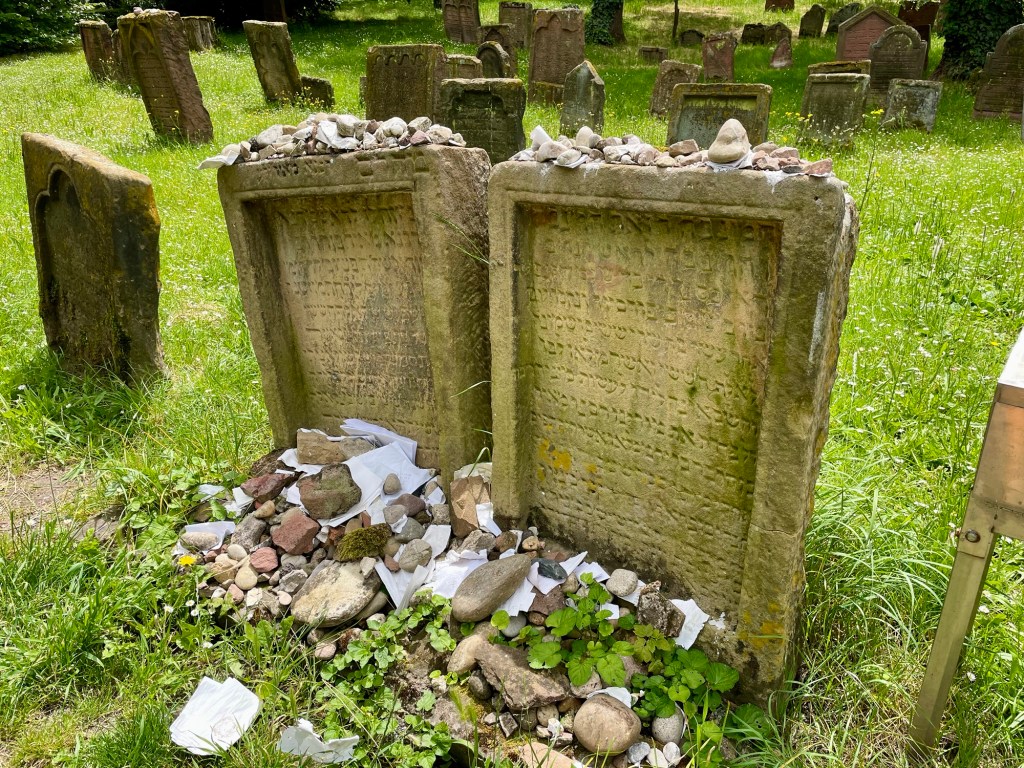
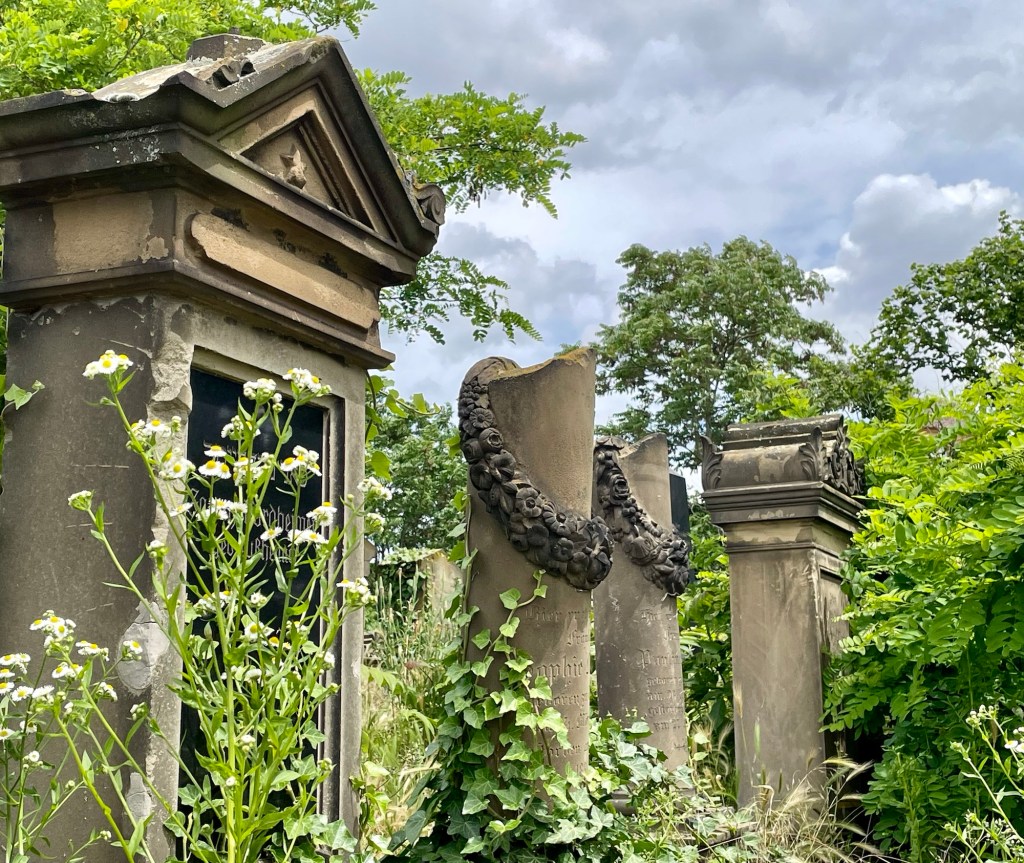
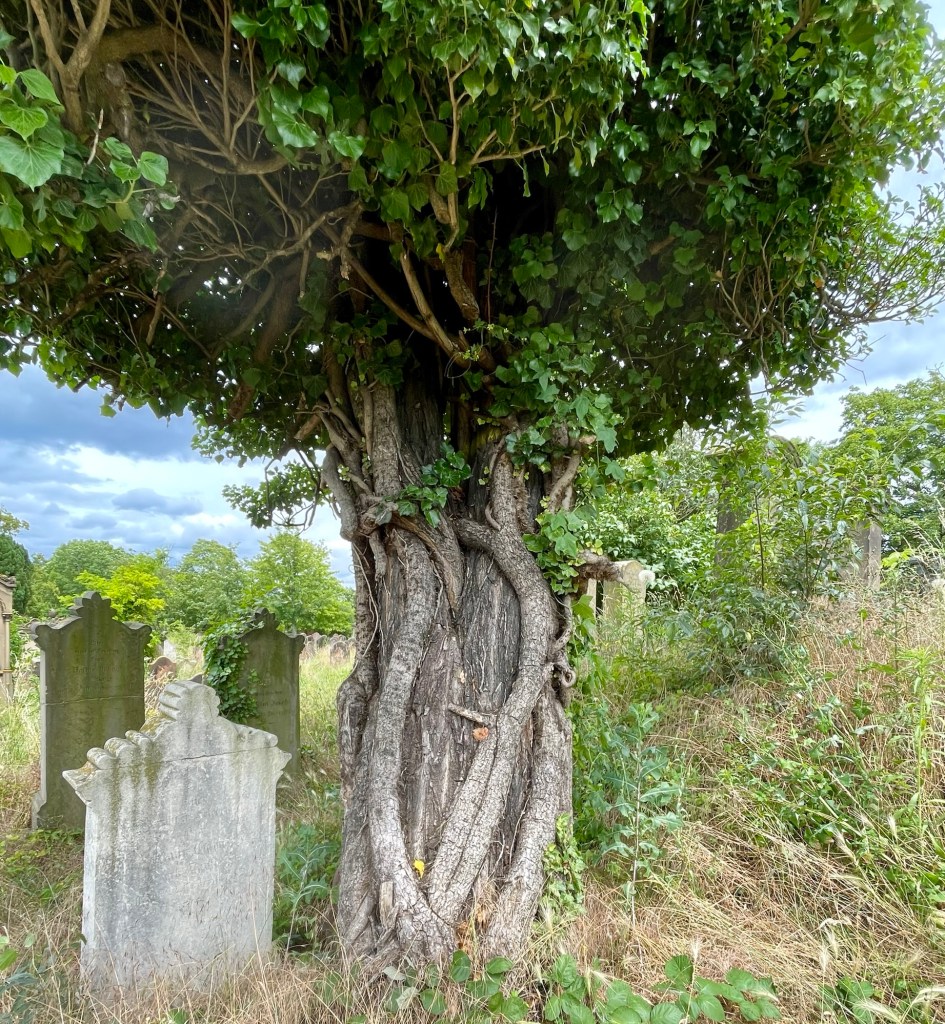
Jewish tombstones are not in neat rowsInteresting view of the spires of Dom St. Peter from the cemetery Sephardi tombstones are horizontal while Ashkenazi tombstones are verticalReally unusual tombstones A broken column which signifies an incomplete life are found at tombs of children. This young person was 10 years old.These are the graves of Rabbi Meir von Rothenberg (died 1293 CE in prison for trying to go to the Promised land) and Alexander ben Salomo (who paid his entire fortune to have Rabbi Meir’s body moved back to Worms). Both tombs are pilgrimage sites recognizable by the stones and petitions placed at the gravesites. The tradition of placing stones on a gravesite dates back to when graves had to be protected from animals. Today this gesture is a way of showing respect. The notes carry wishes that the petitioners hope to be fulfilled. A similar custom is followed at the Kotel (Western Wall) in Jerusalem.
The following pictures were also taken in the cemetery.
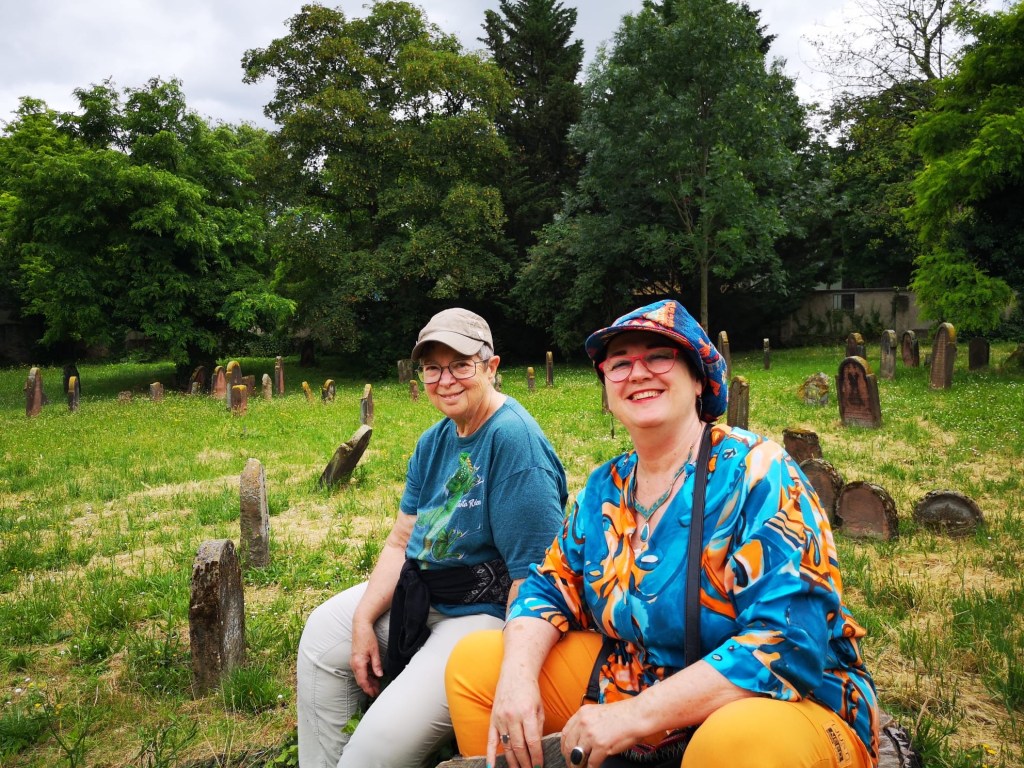
The two middle graves belong to children.Tamar and I in the cemetery
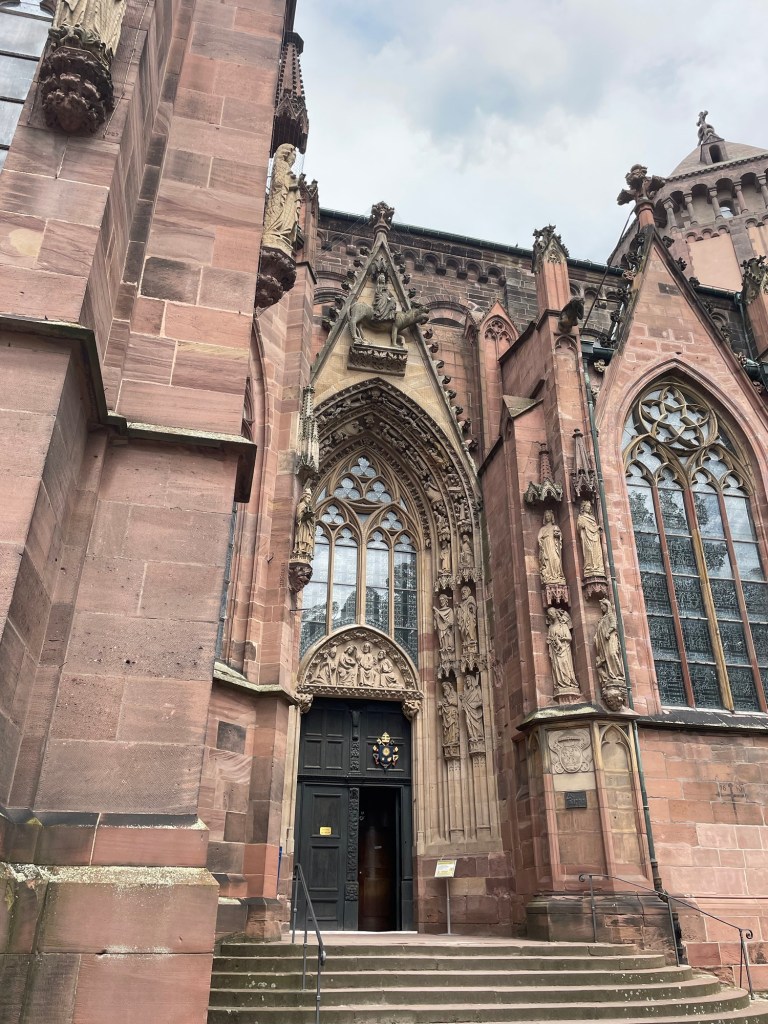
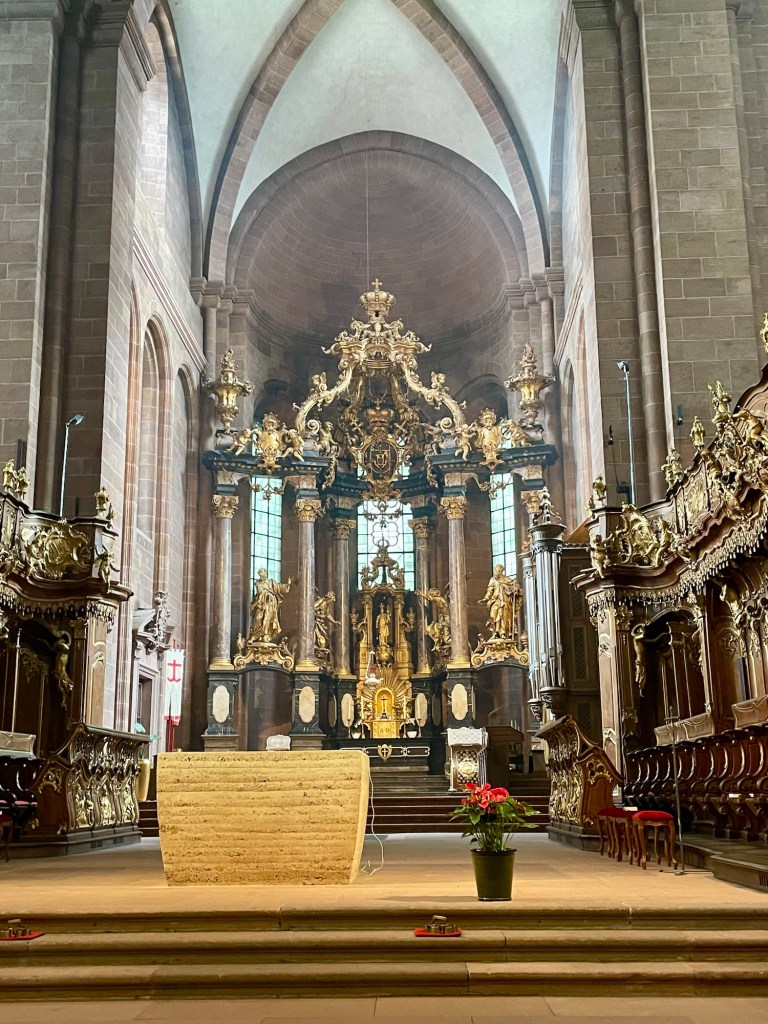
After visiting the cemetery, we made a quick stop at the cathedral.
Dom St. PeterInside the cathedral
After the cathedral, we stopped for lunch and then made our way to the Jewish museum. The museum is located possibly at the site of the yeshiva.
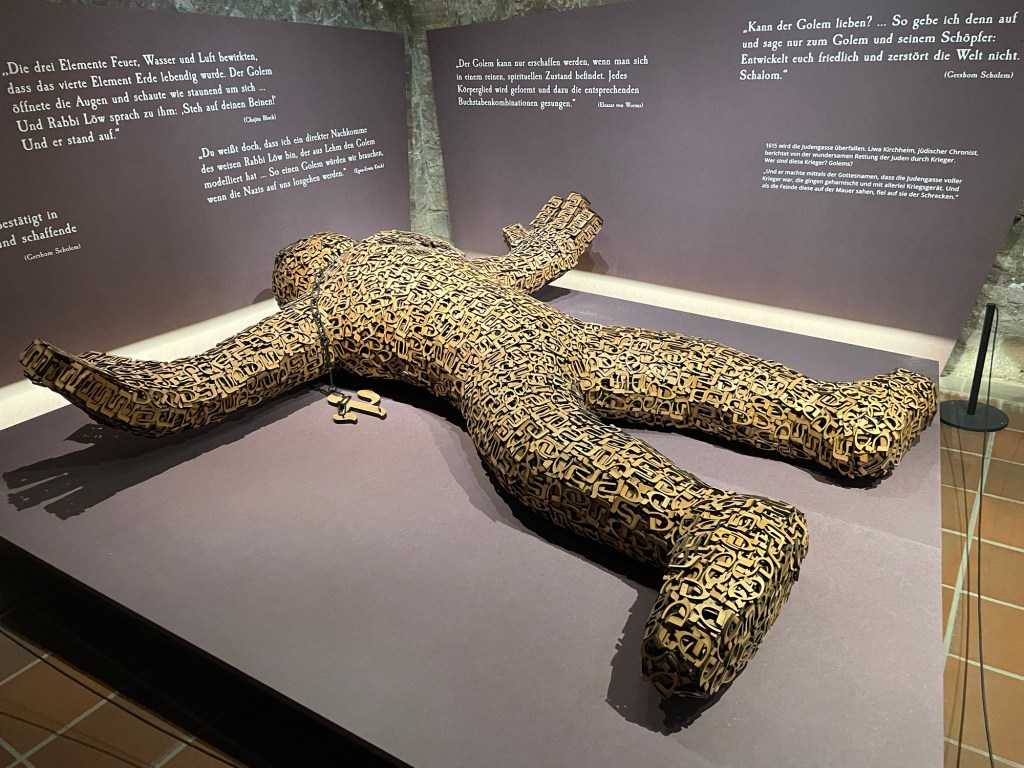
A sculpture of a golem from the museum. A golem is an animated, anthropomorphic being in Jewish folklore which is created entirely from inanimate matter, usually clay or mud.
Also, in the museum was a letter from King Henry IV to the people of Worms dated 1074 CE exempting them from paying taxes because of their exemplary work. This parchment is the oldest surviving document from the archives of Worms. 
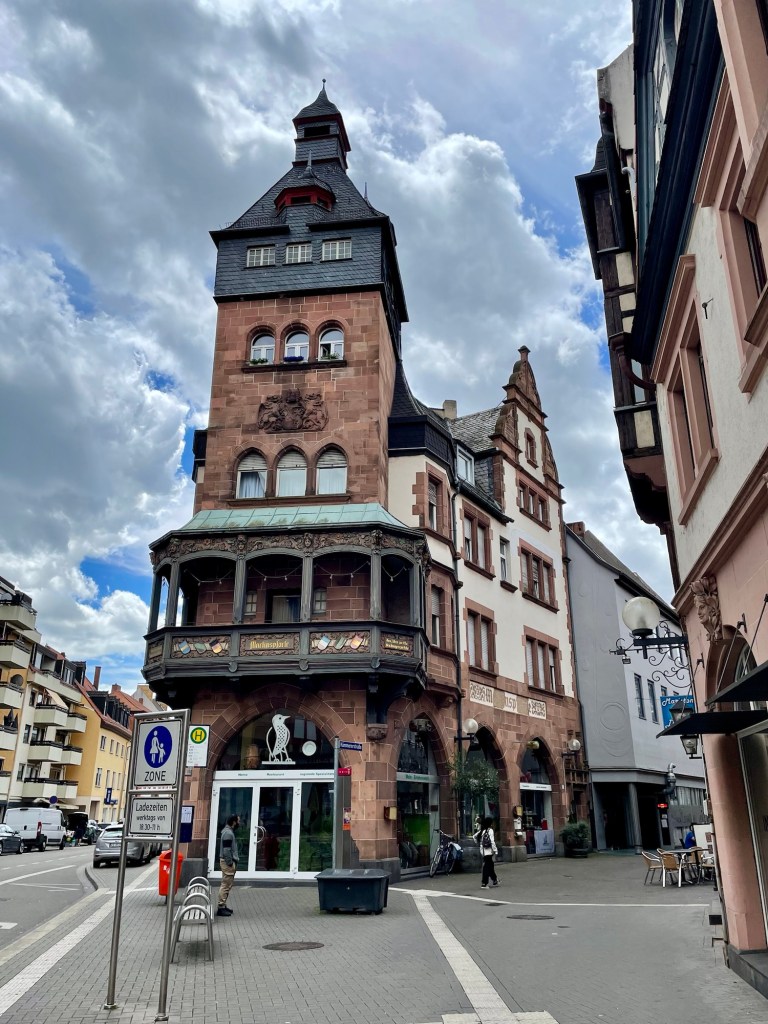
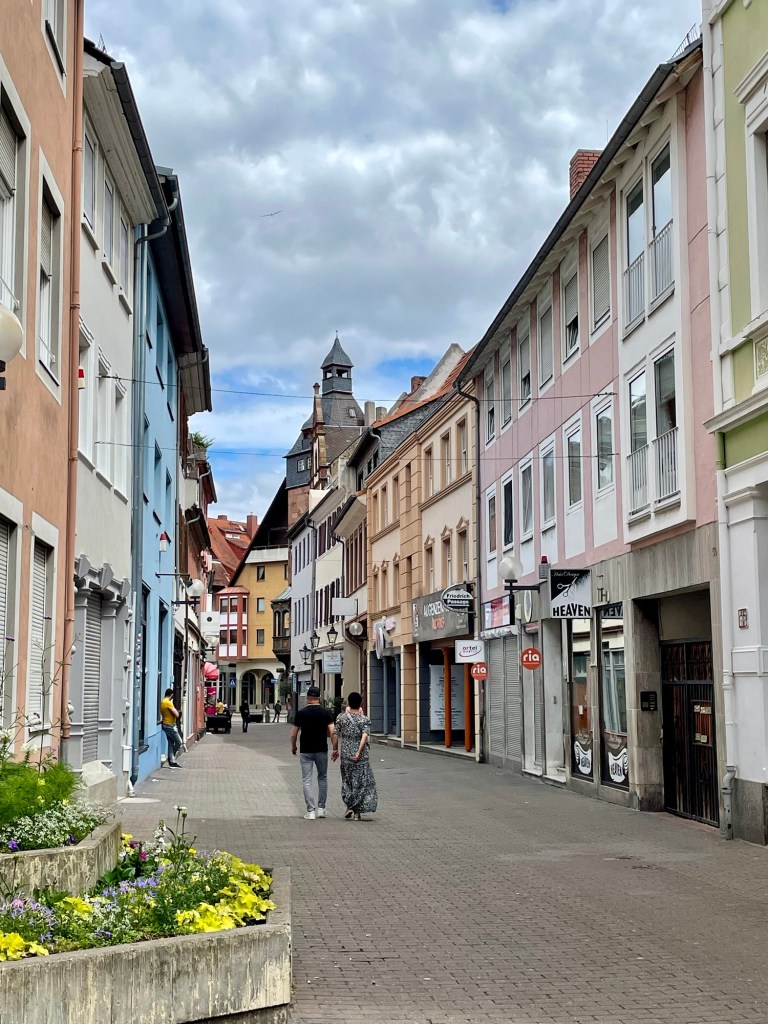
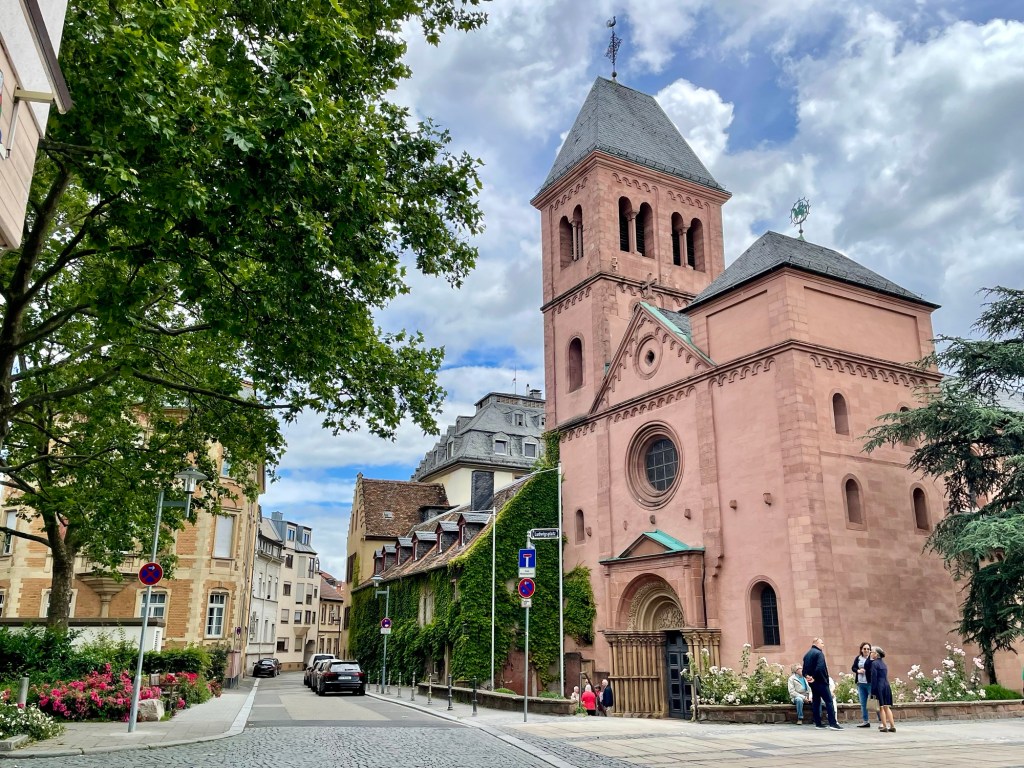
I really enjoyed spending the day in Worms. Here are some more pictures taken as we walked from the Jewish Quarter to the cemetery and back to the museum.
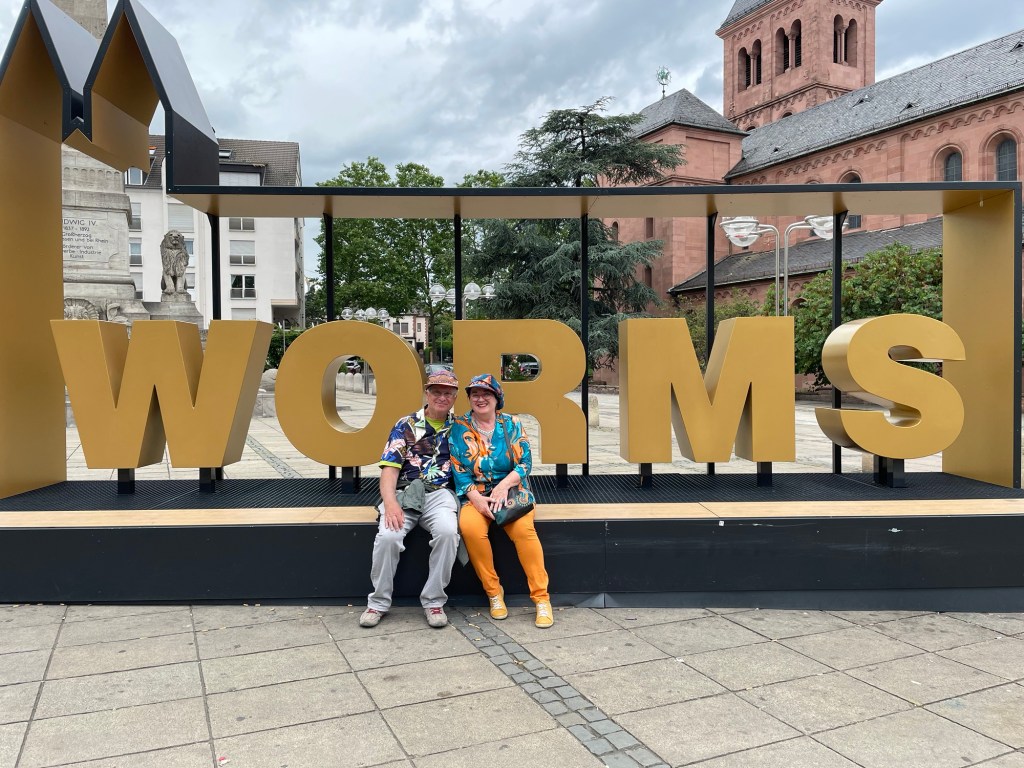
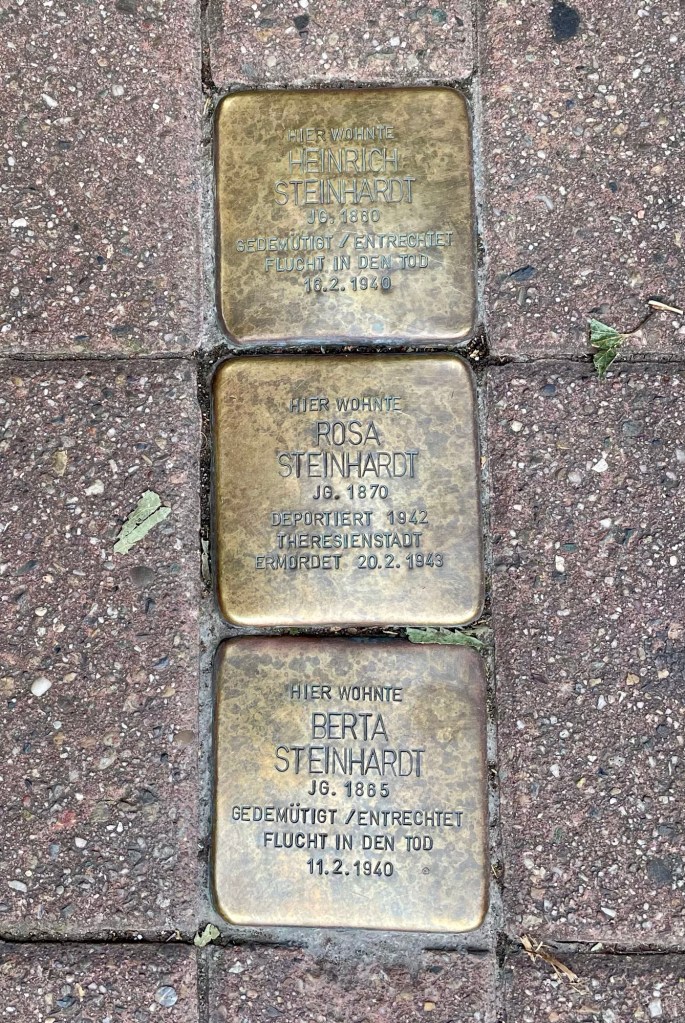
Rafi and TamarIn many places in Germany, you can find plackets honoring people who were lost in the holocaust. Here are three on the sidewalk in Worms.
I couldn’t resist. I hope that you are taking something for the worms and that they are not making you to uncomfortable. Seriously, I am glad that you are enjoying your time in Germany. Love ya.
 RobbieLambertsTravels
I couldn’t resist. I hope that you are taking something for the worms and that they are not making you to uncomfortable. Seriously, I am glad that you are enjoying your time in Germany. Love ya.
LikeLike
To make you feel happier about Worms, it is actually pronounced Varms in German so I didn’t have a problem.
LikeLike
Interesting day. Love the pictures!
LikeLike
What an amazing place! Your pics and commentary bring it to life, and I thank you for that, as probably everyone else does who reads your blog.
LikeLike
Sounds like a very cool day! The cemetary is beautiful.
LikeLike