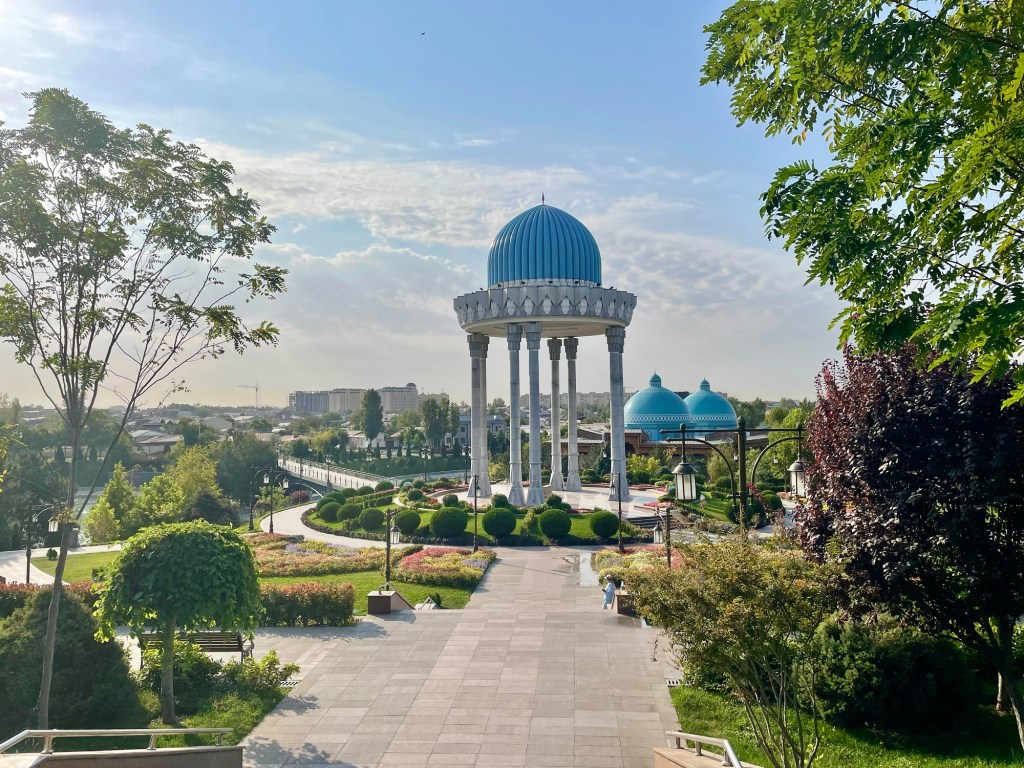
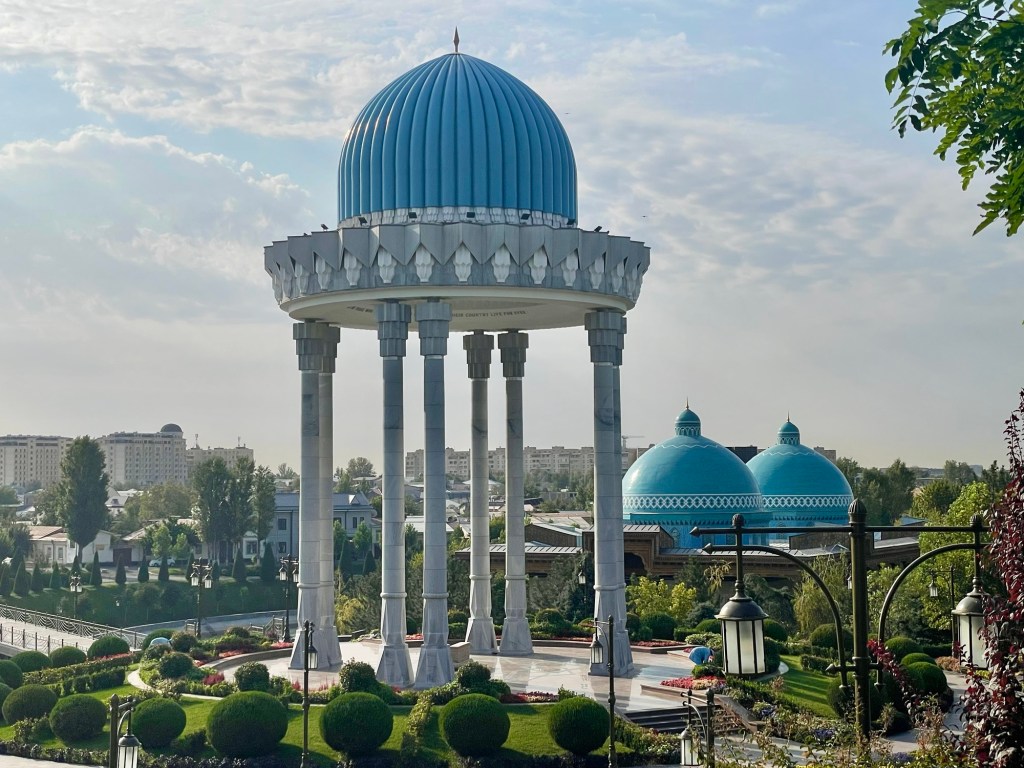
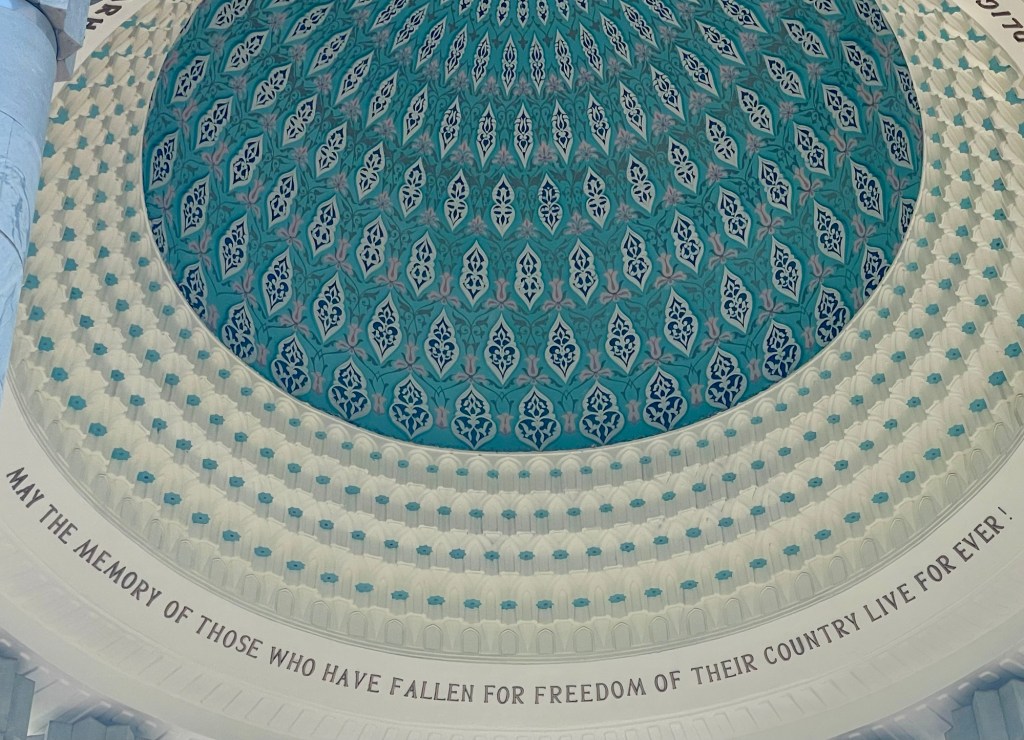
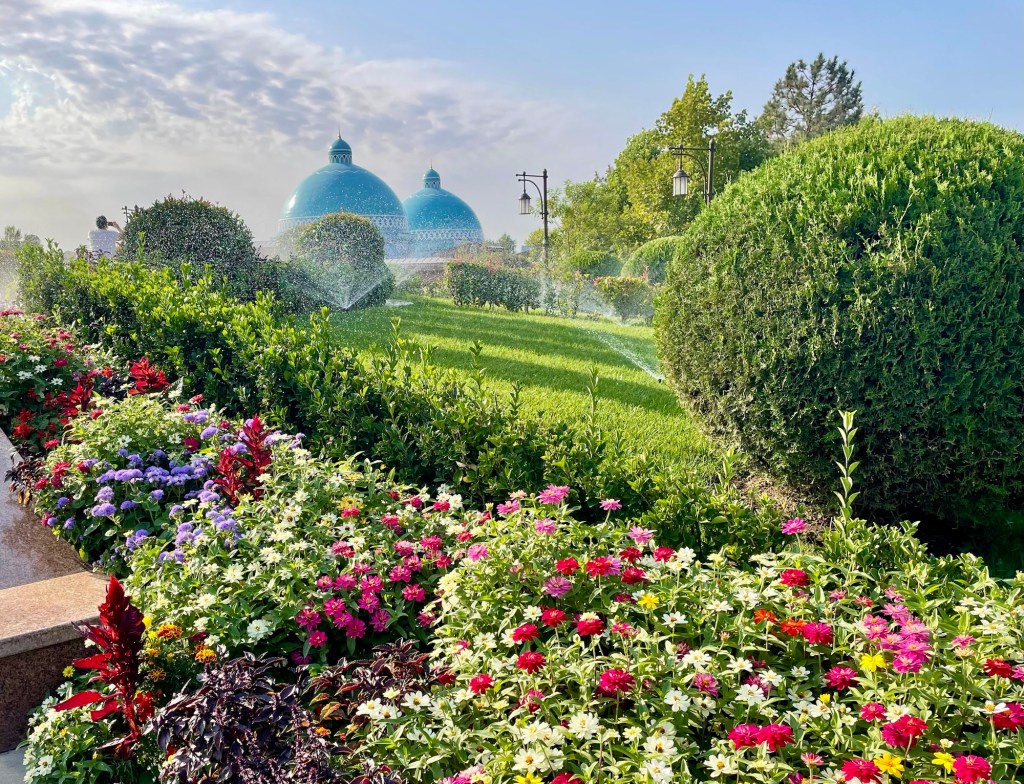
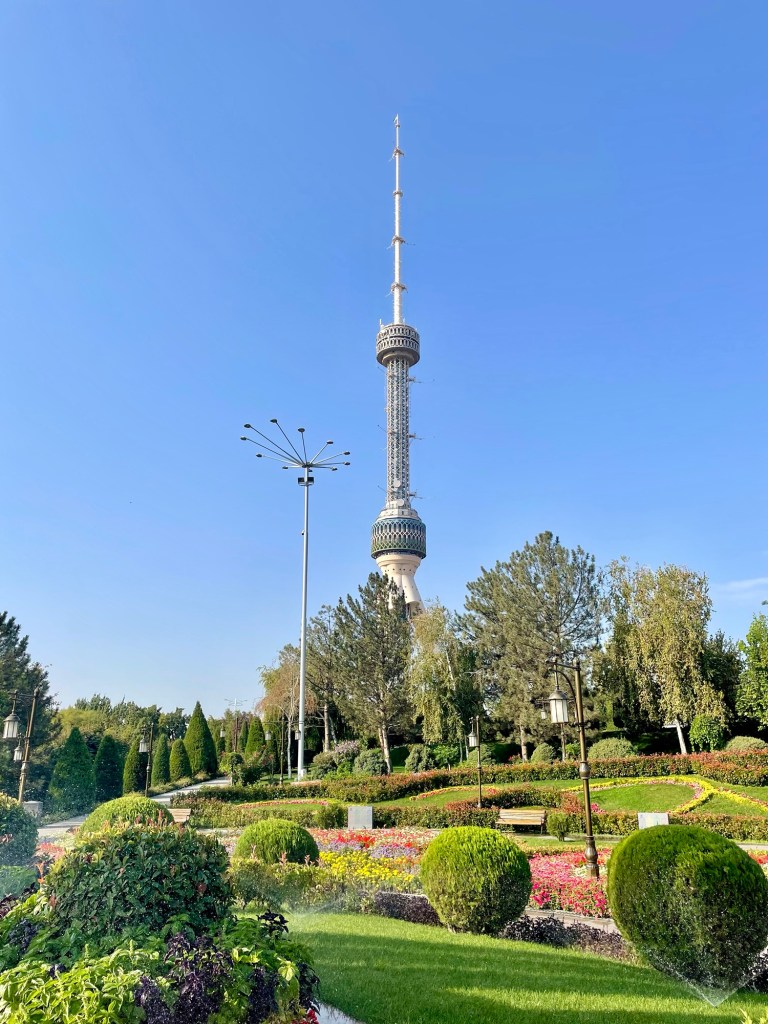
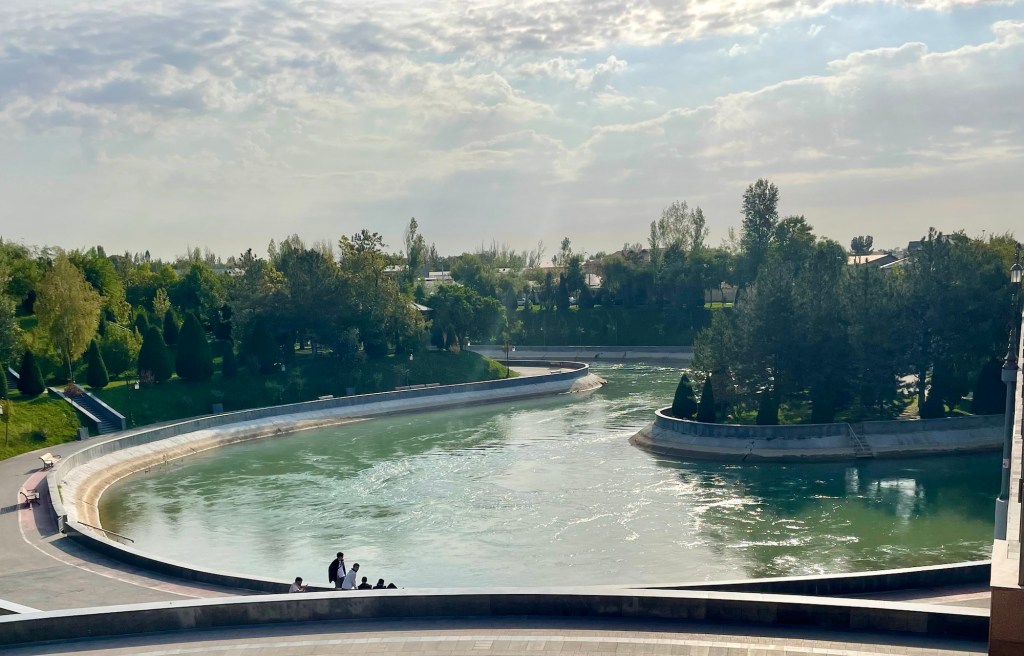
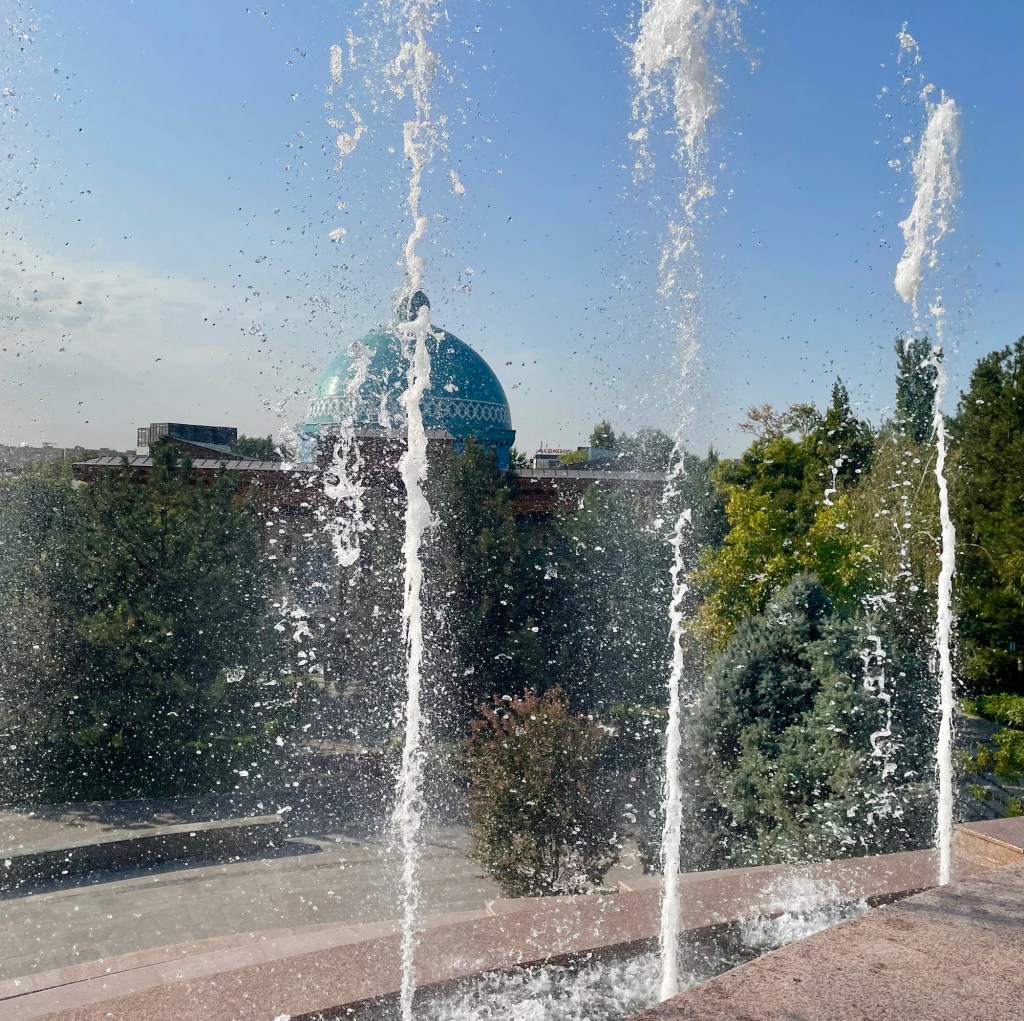
Tashkent is a very old city dating back to the second century BCE. Tashkent has 3 1/2 million people. It is a relatively modern city today that is quite clean and has very wide streets. Also a lot of traffic. I forgot to mention that central Asia has a lot of cars that have right hand driving wheels. This is because they’ve imported a lot of used cars from Japan and Japan like Britain drives on the left side of the road. Another interesting fact is Tashkent has a lot of basil growing all over the place, but they don’t use basil in cooking very much. One striking difference in Uzbekistan is that they use the Roman alphabet instead of the Cyrillic alphabet. This at least makes it easier to read things, but I still don’t know what I’m reading. Today in the park while I was waiting for our leader, I went over to talk to two young girls to ask them what they were eating. They were eating corndogs and they spoke English. They thought it was great to be able to talk to an American. Of course I enjoyed talking with them. Our first stop of the day was at the Shahid Memorial complex with its blue domed Rotonda. It is a memorial for the leaders, artist and poets who were shot in 1938 during Stalin’s purges.
We next visit the Tillya Sheikh mosque where the Uthman Quran, considered by Sunni Muslims to be the oldest Quran in the world, is safeguarded in the library. This Quran is written on deerskin 19 years after Mohammed‘s death. Unfortunately, they did not allow pictures. We did however walk around the site and see the Madrassah and Mosque.
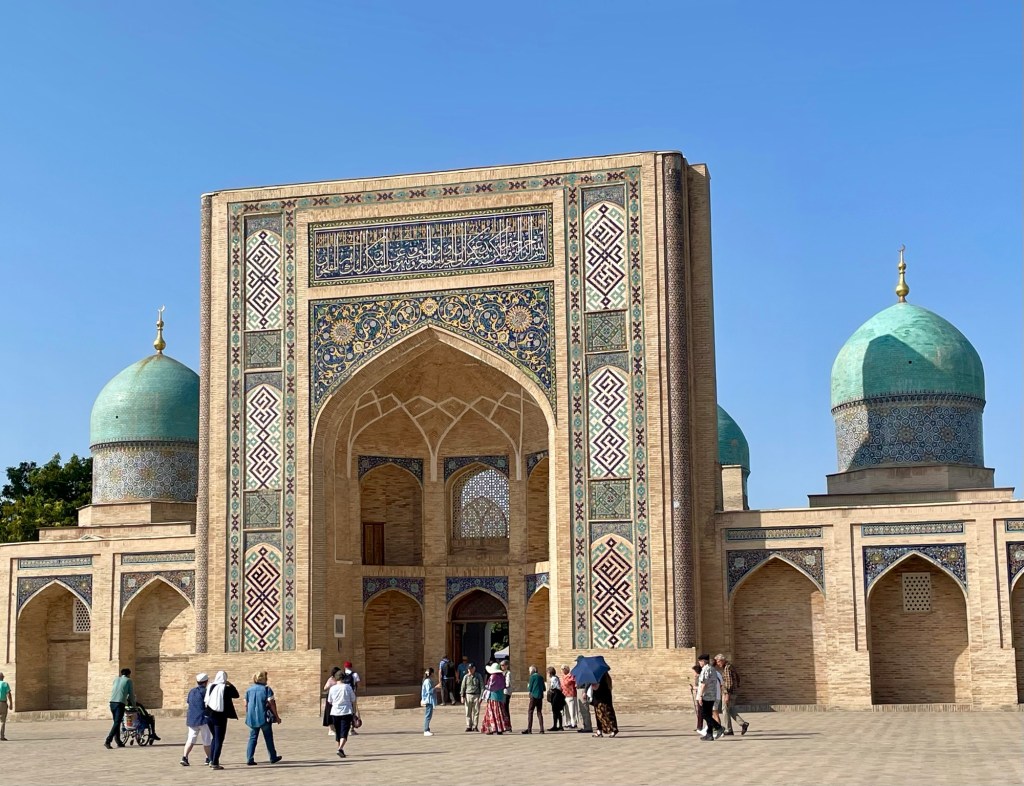

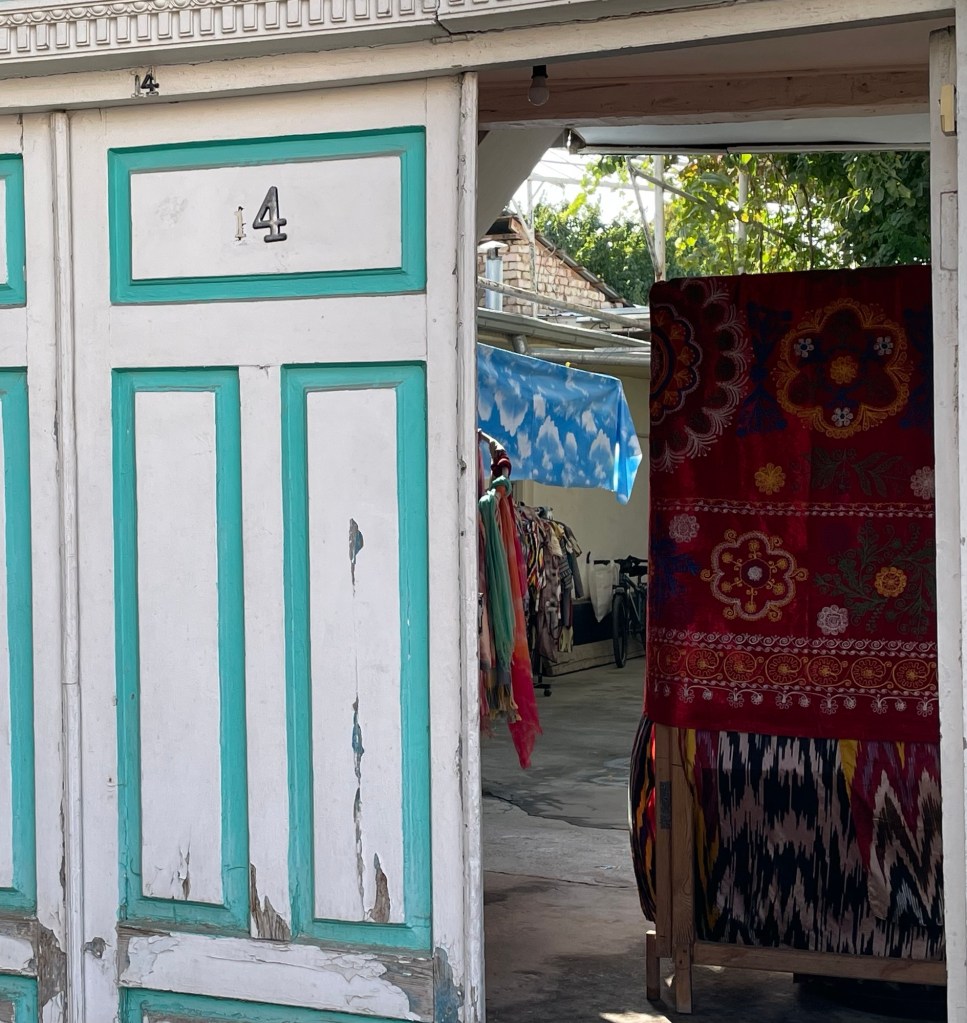
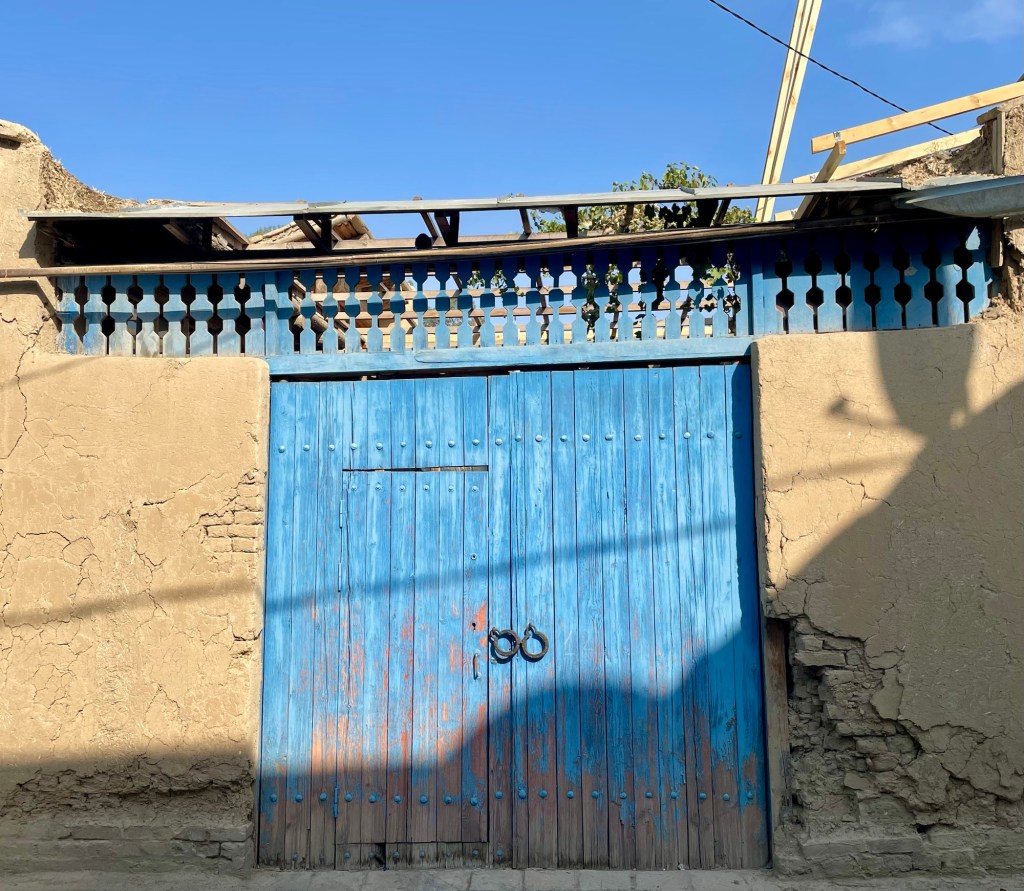
Near the site we walked down a local street to see what typical houses look like. Houses are pretty closed off from the street but have courtyards inside. So it’s really hard to get pictures as to how the houses look.
We then went to the Chorsu Bazaar where traders, and shoppers come in from outlying areas to buy and sell everything from spices and produce to woodwork and embroidery. Unfortunately, I left my cell phone in the bus so I don’t have any pictures. One thing I wish I had a picture of was a stack of lambs tongues. They were about 4 or 5 inches long.
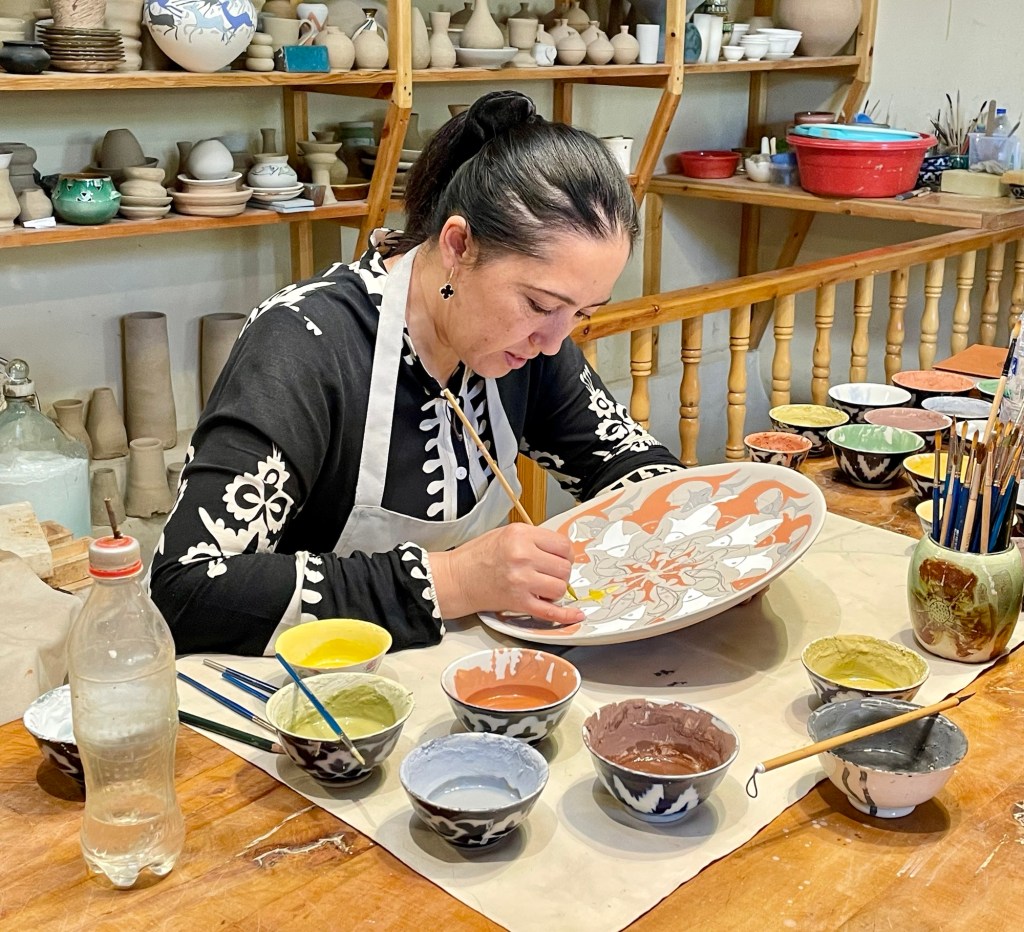
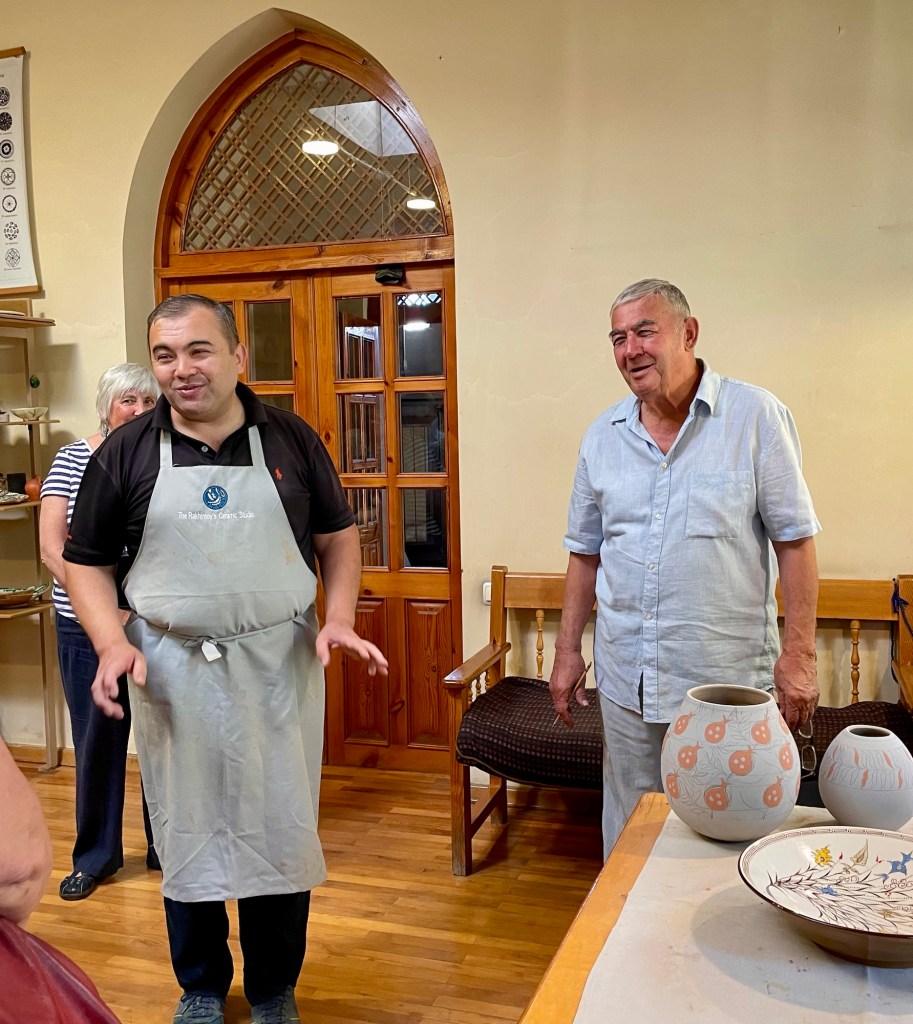
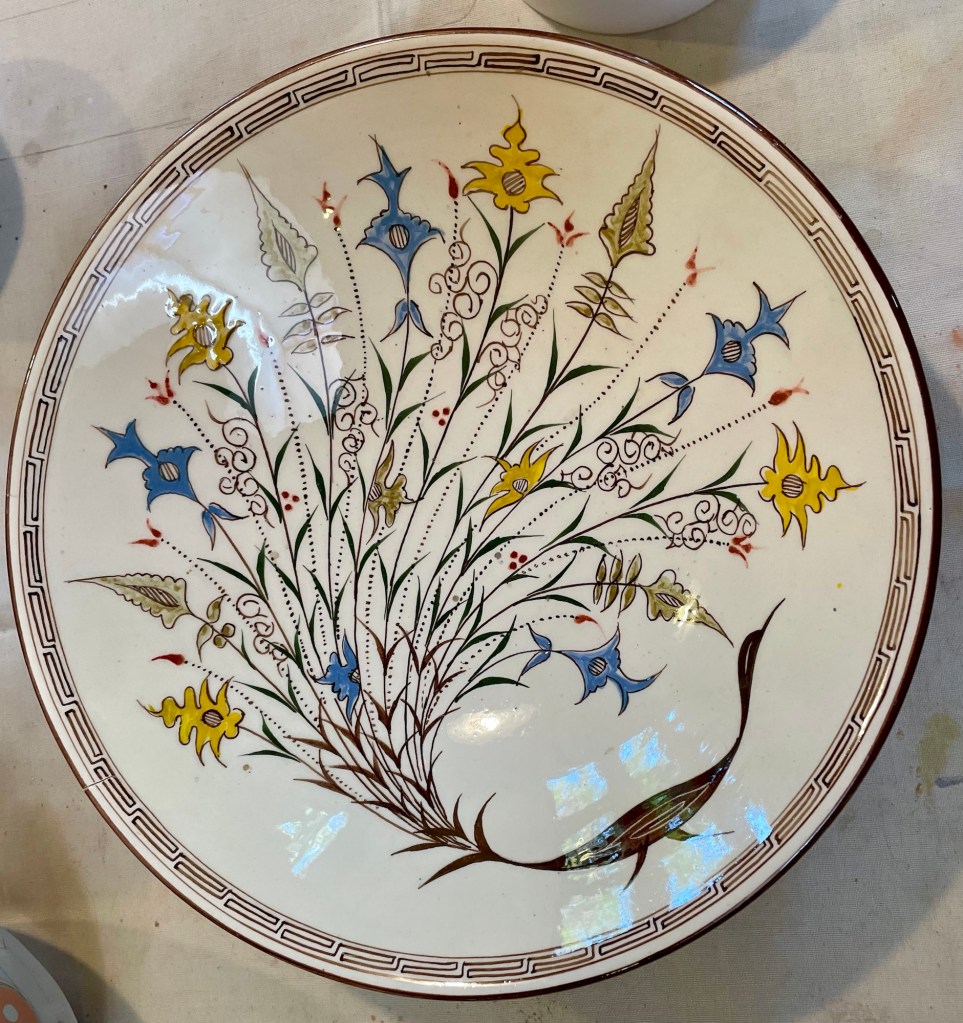
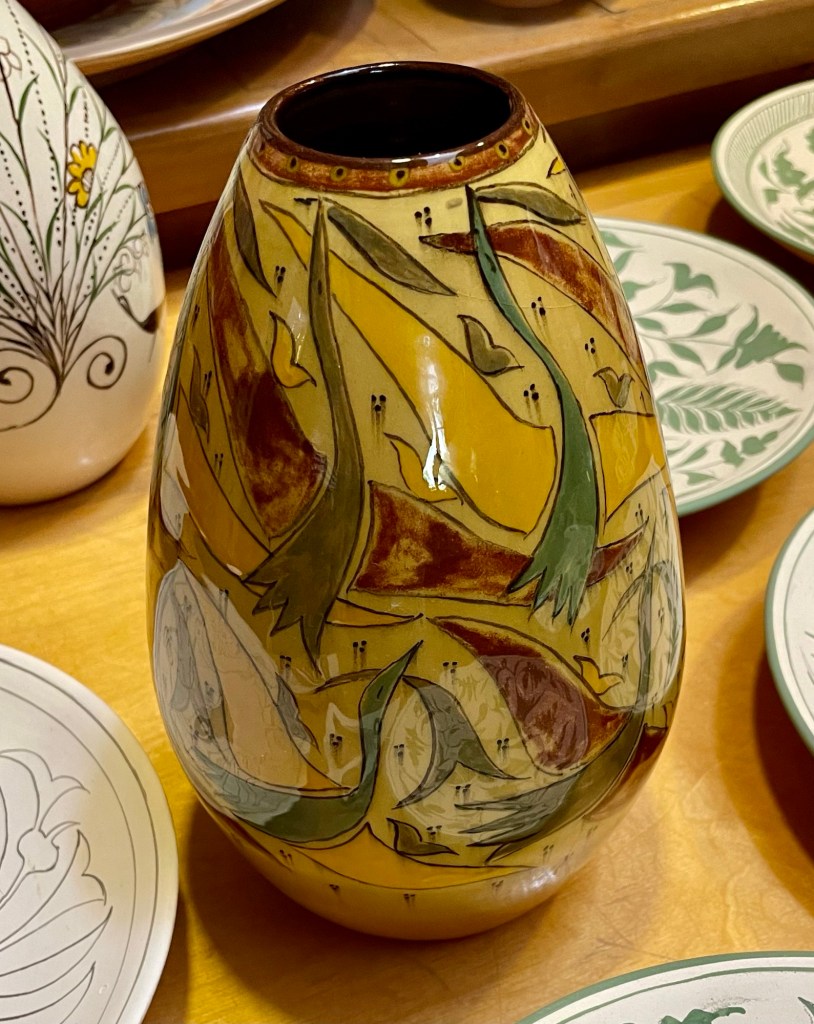
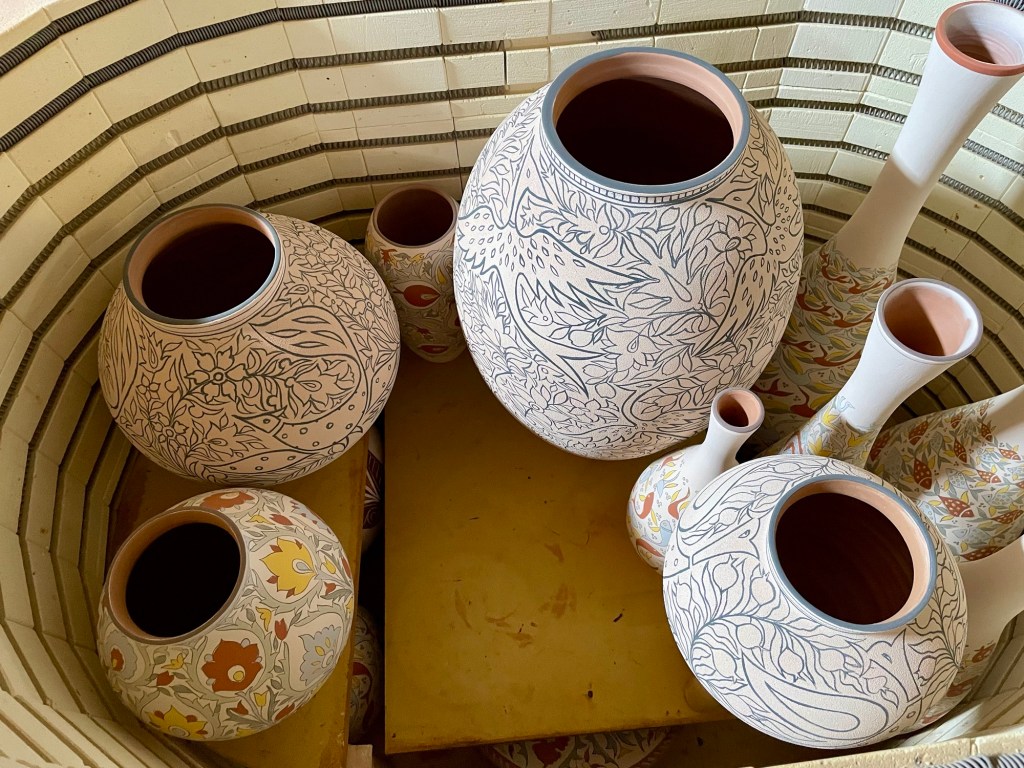
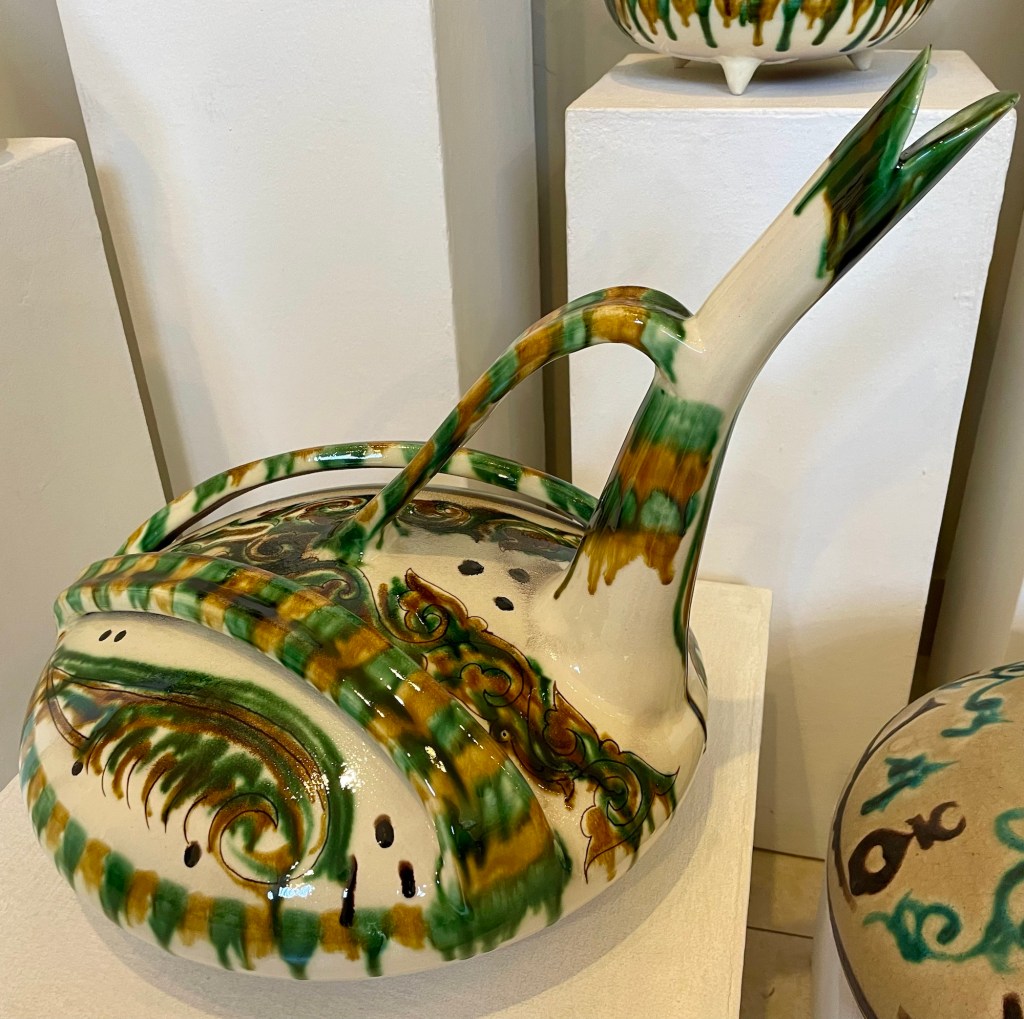
Next, we made a stop at a private studio of a sixth generation Uzbek ceramist, whose family has been making pottery since the 1790s and has kept alive the art of using natural dyes. The ceramist also teaches children from the ages of 5 to 12.
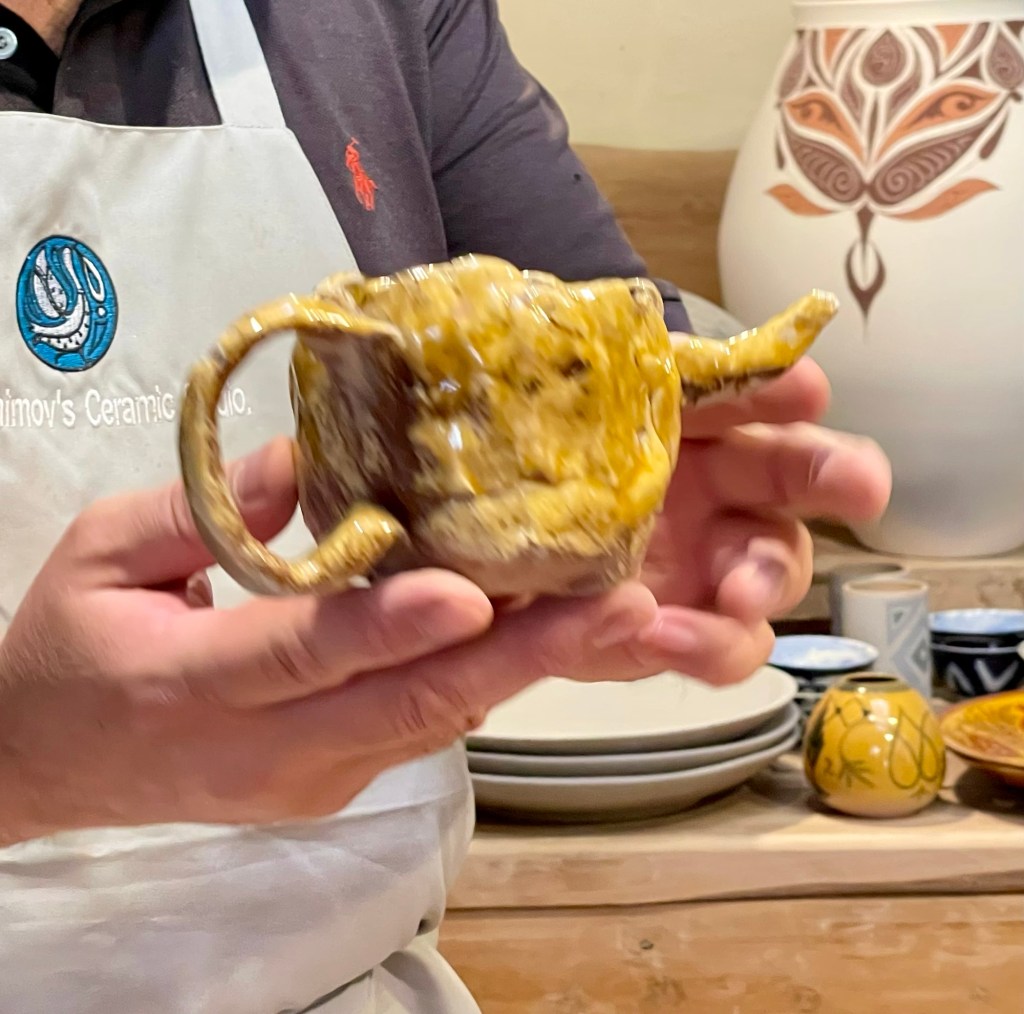
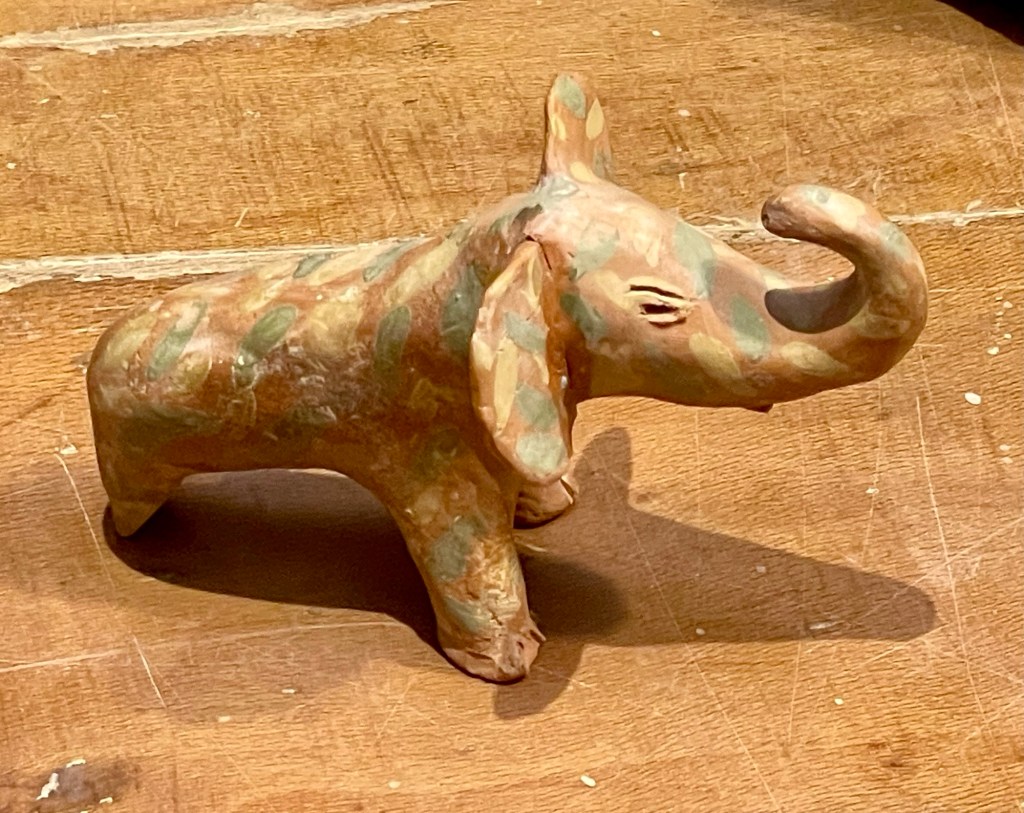
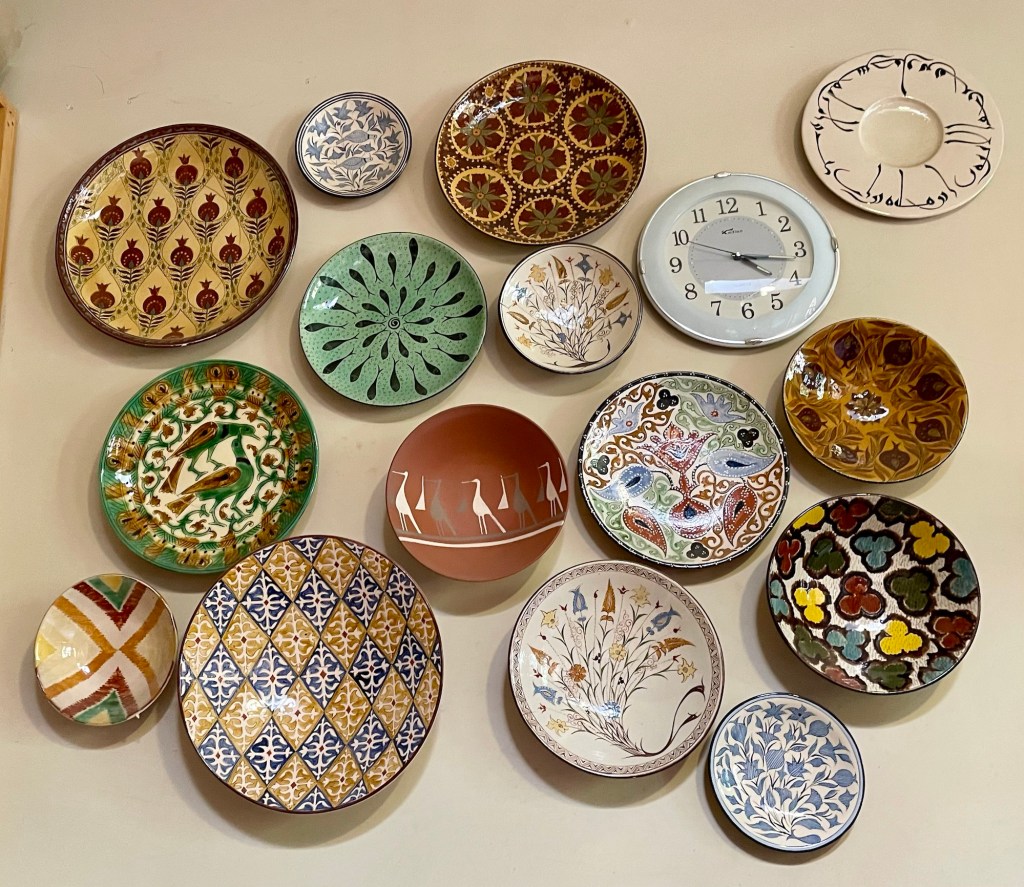
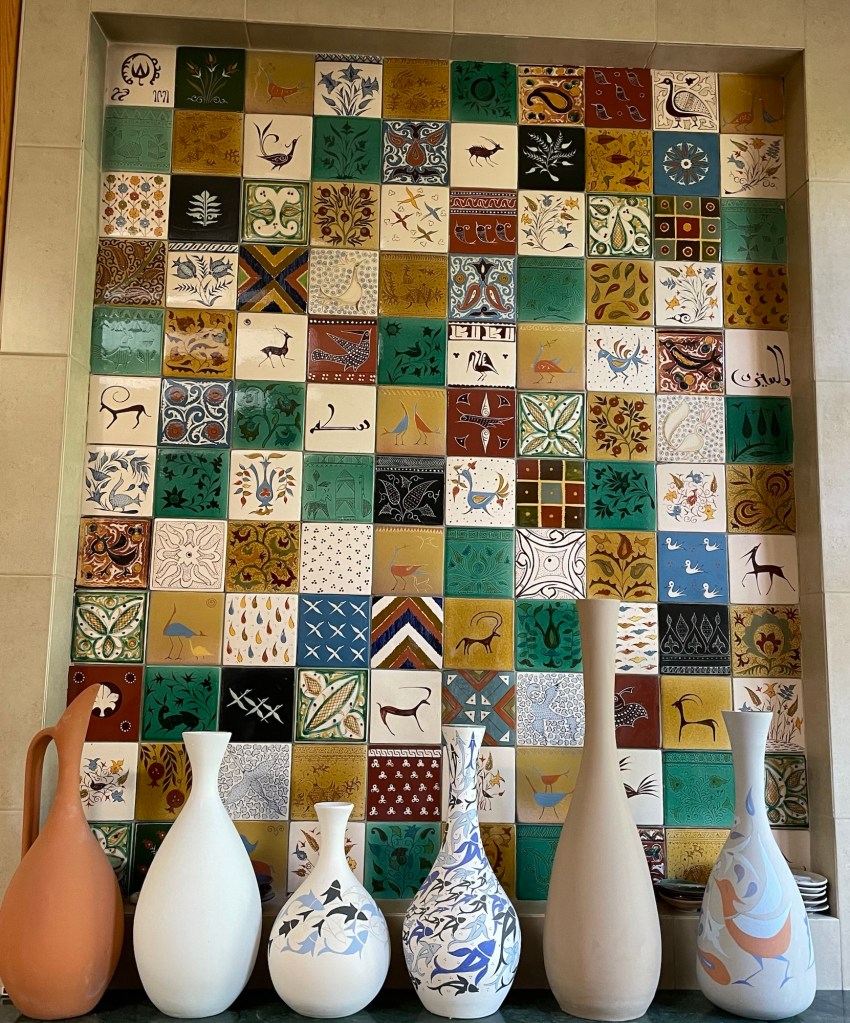
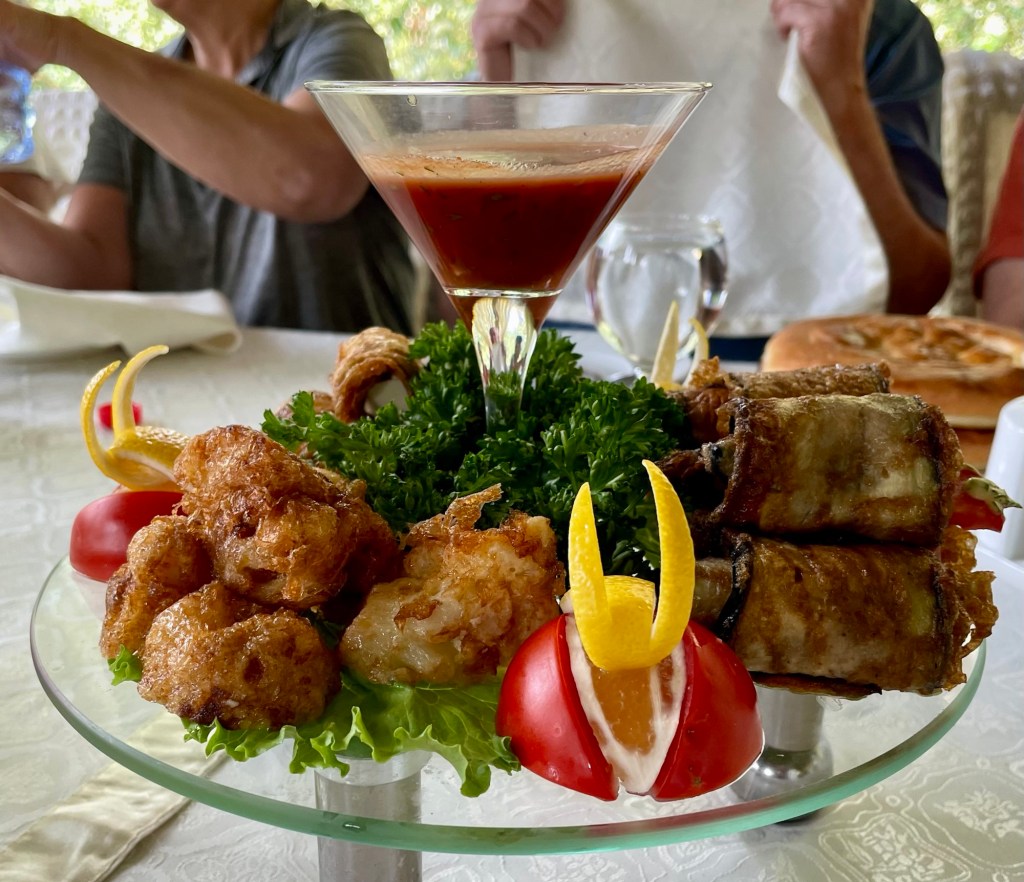
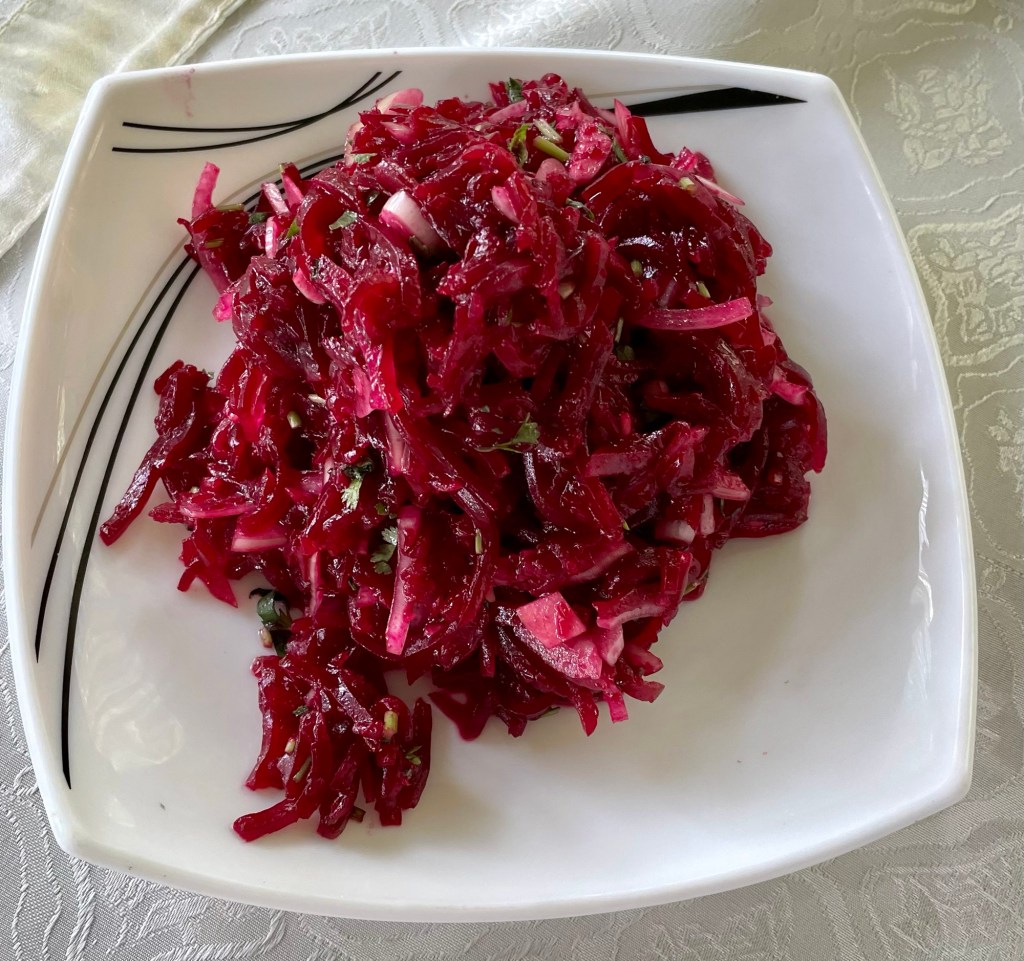
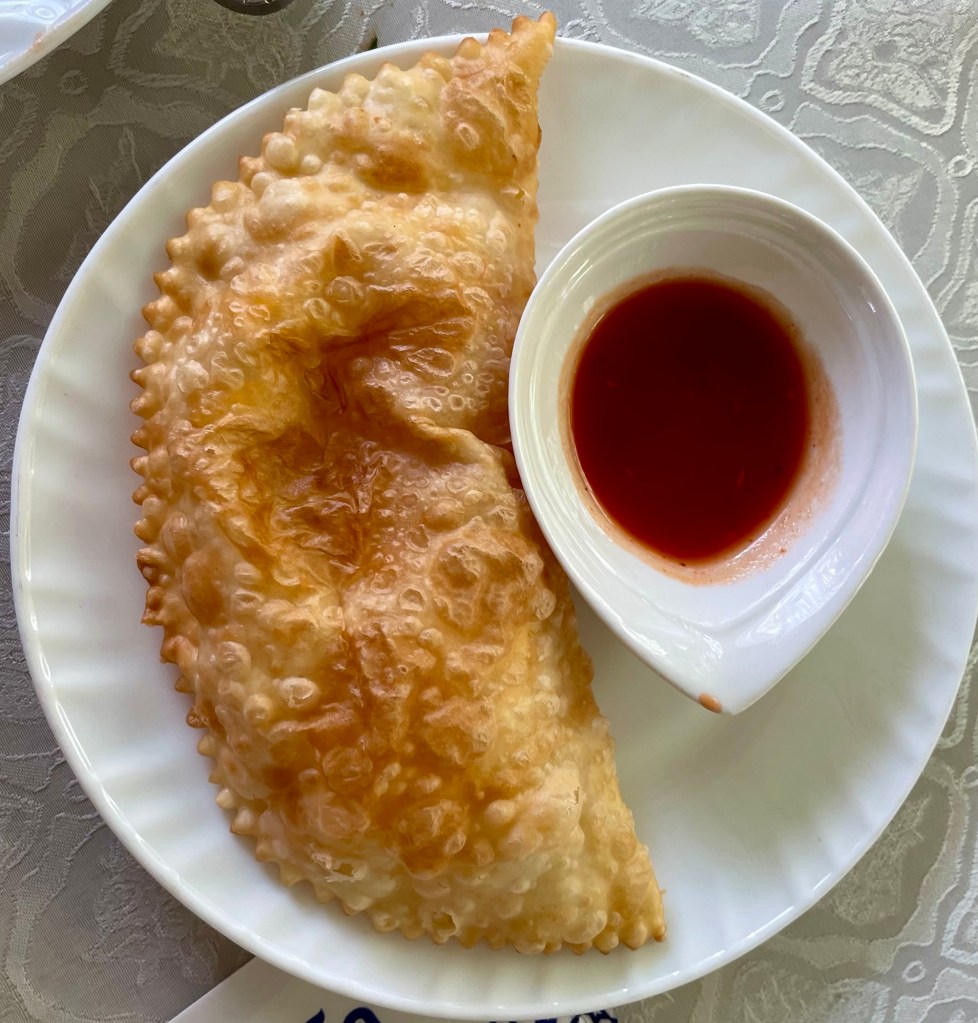
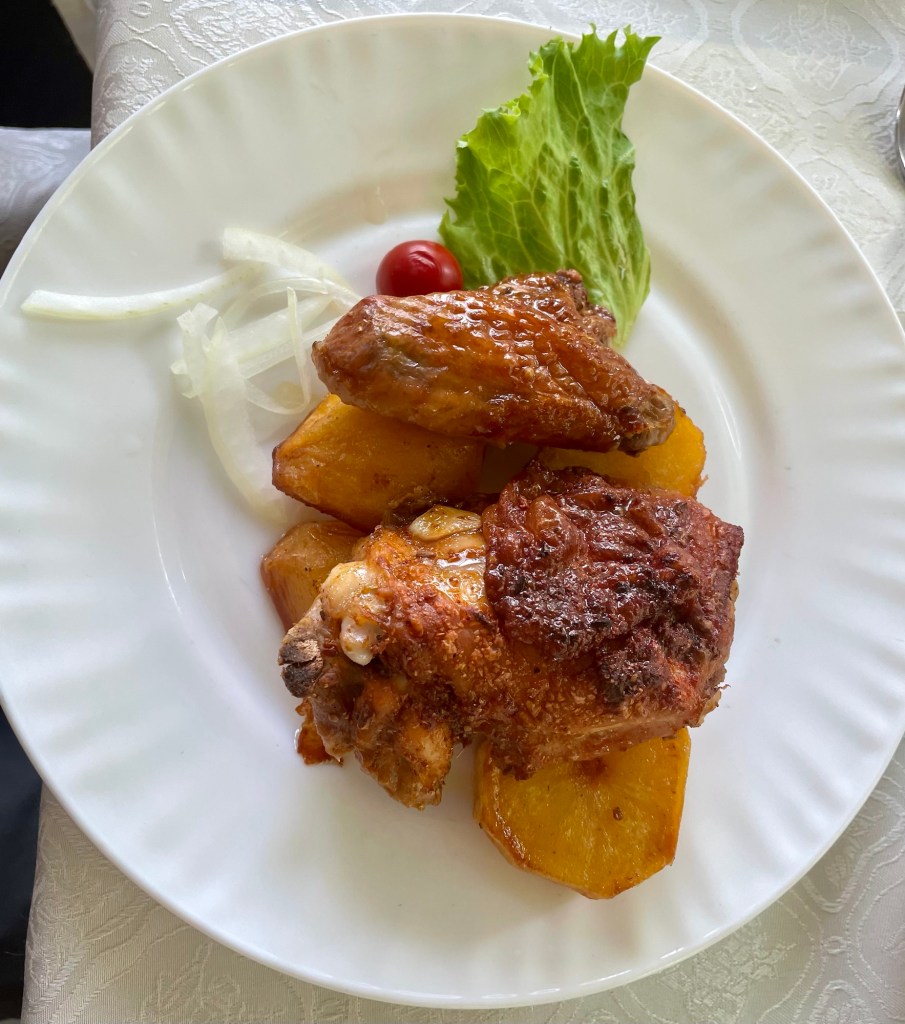
After this wonderful morning, it was time for lunch. This place had the greatest appetizers, eggplant rolls, fried cauliflower, beet salad, and samosas stuffed with cheese and tomatoes. The main course was chicken and potatoes. The chicken was definitely seasoned with cumin and paprika. The potatoes were very tasty. I am really impressed with the food I’ve been having here in central Asia. I wasn’t expecting much and boy am I surprised.
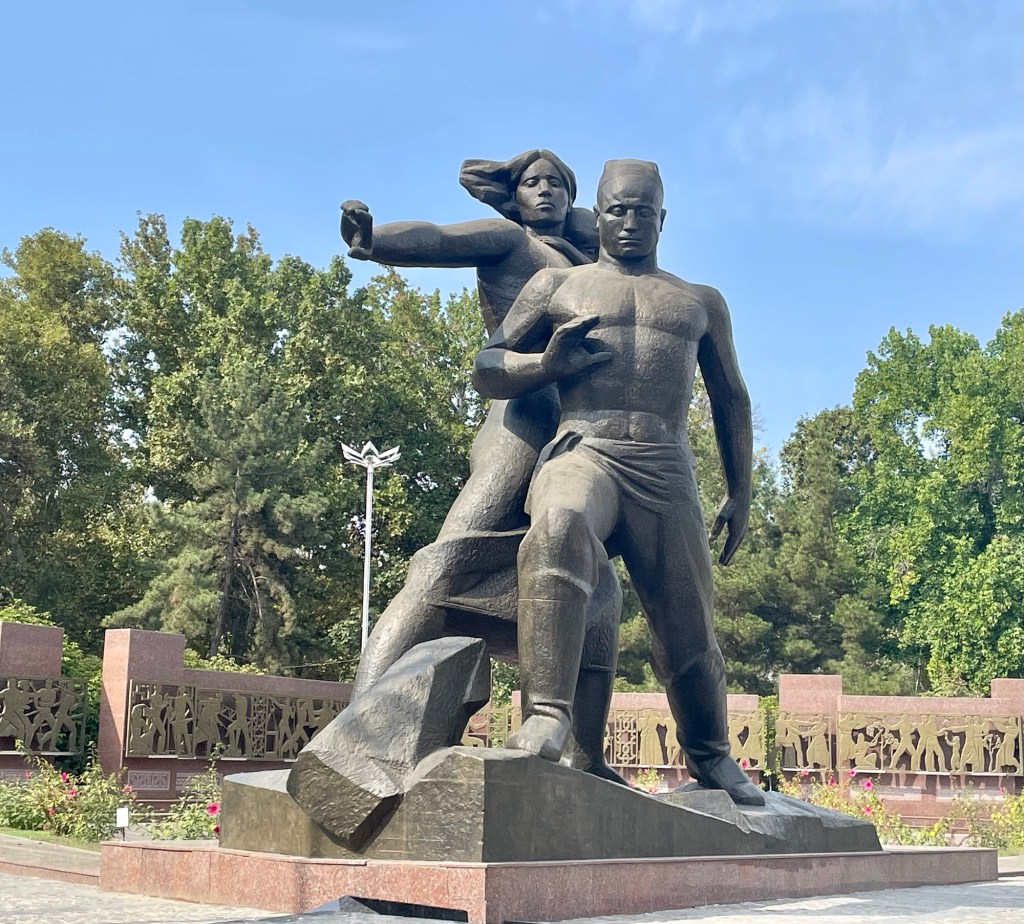
After lunch, we made a quick stop at a memorial commemorating the victims of an earthquake.
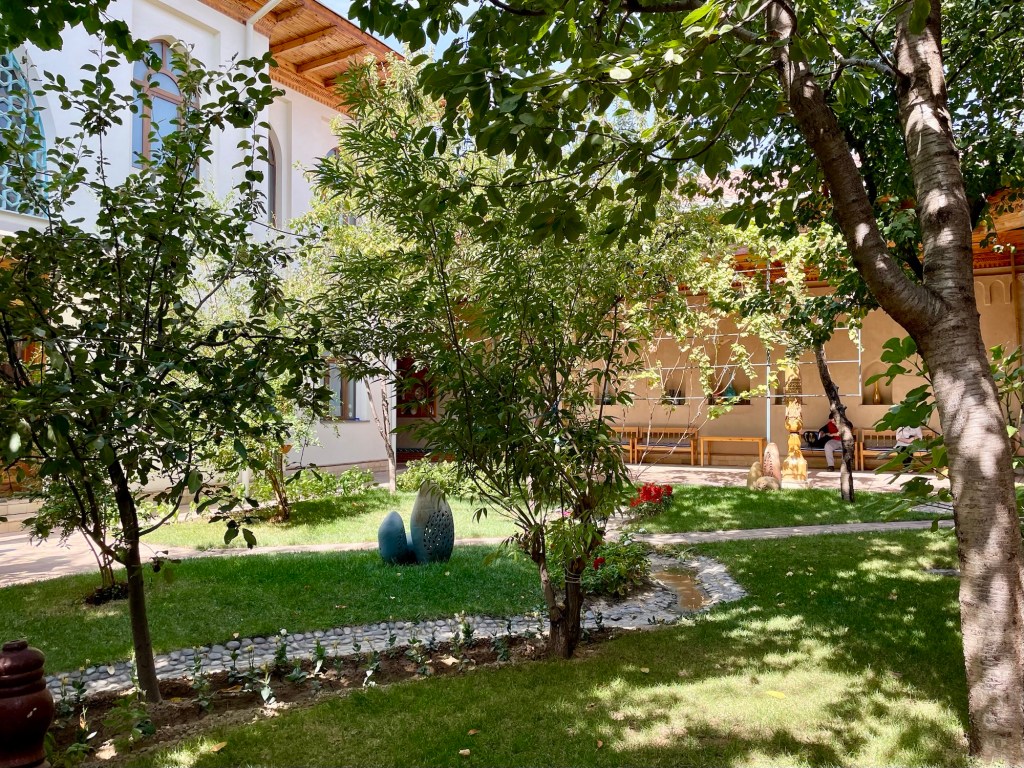
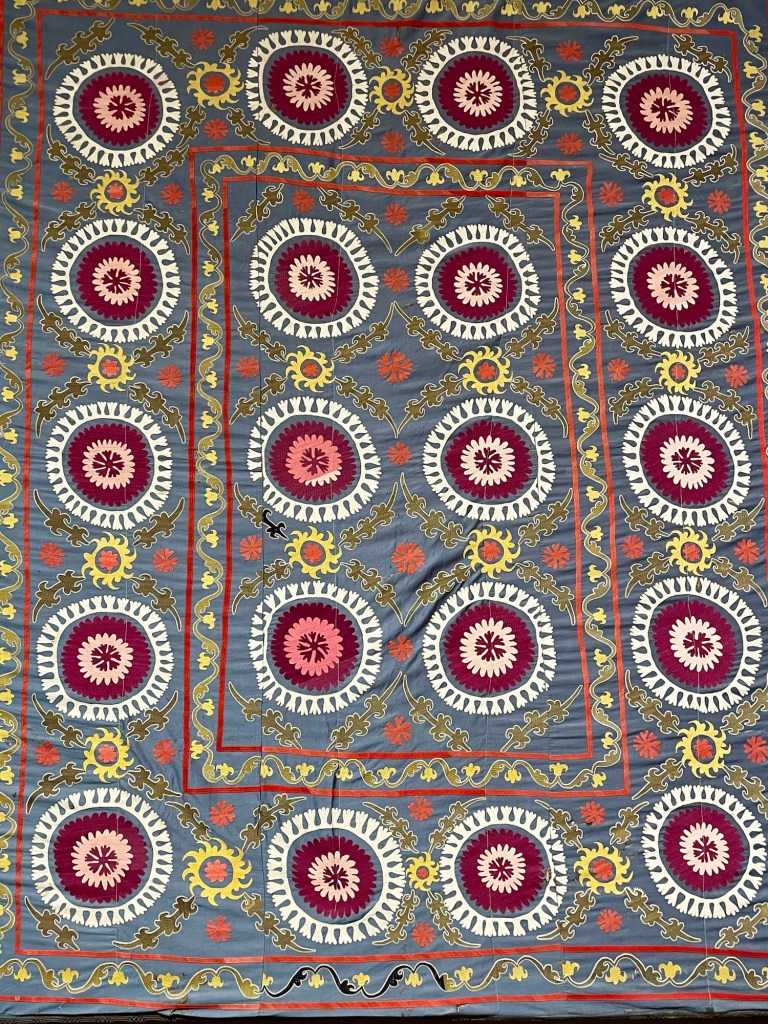
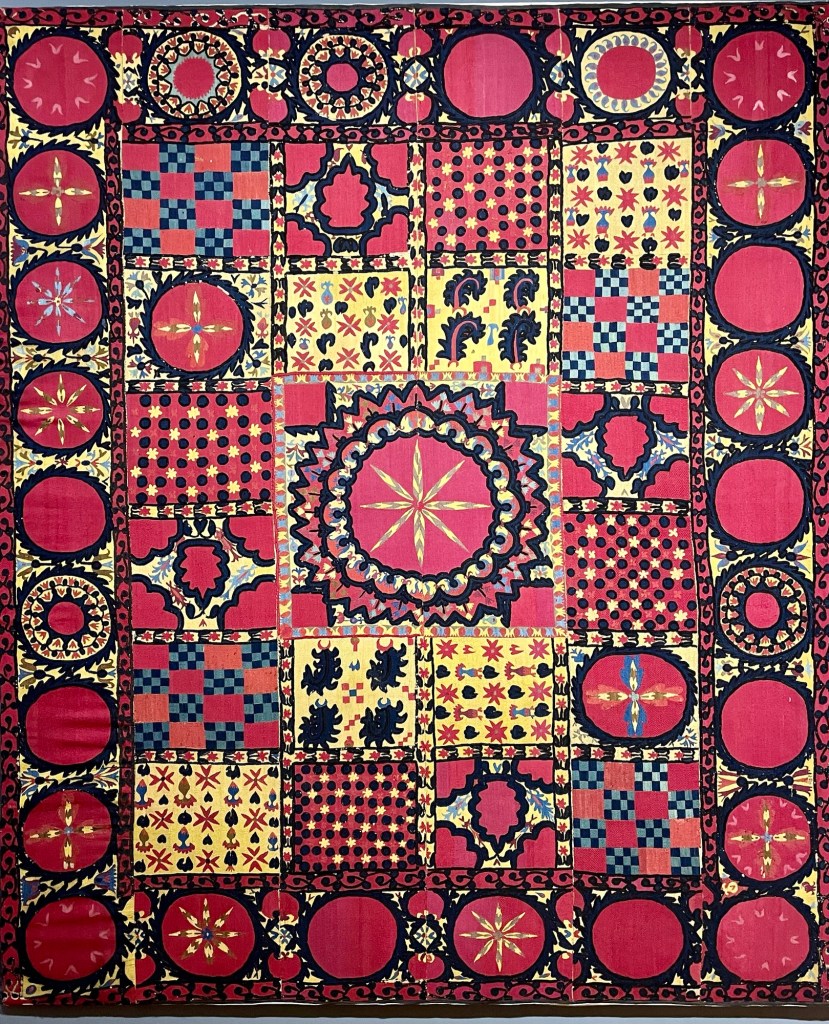
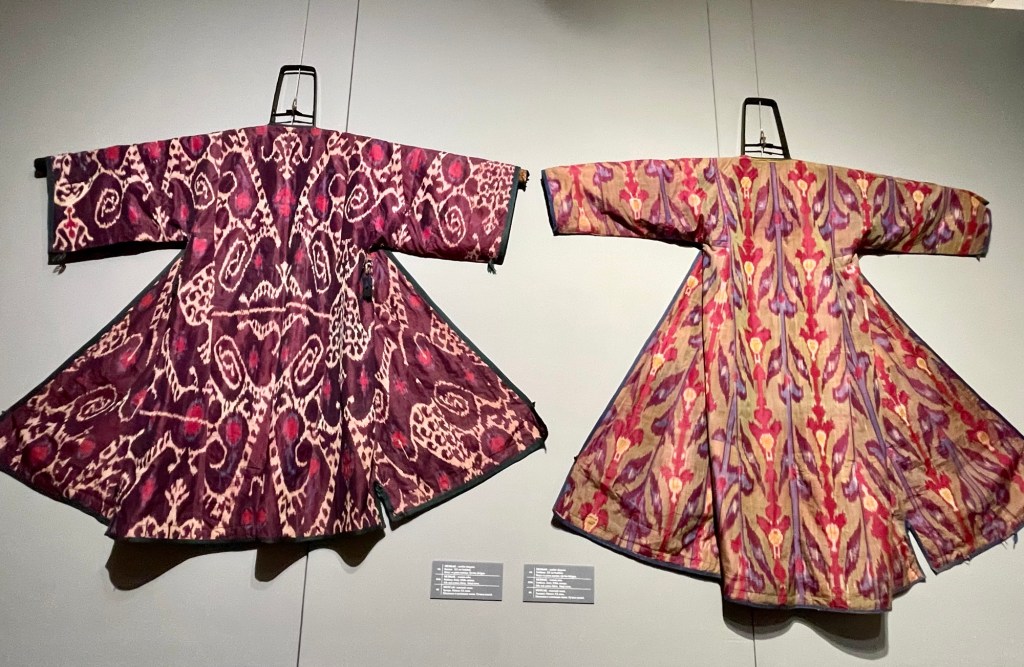
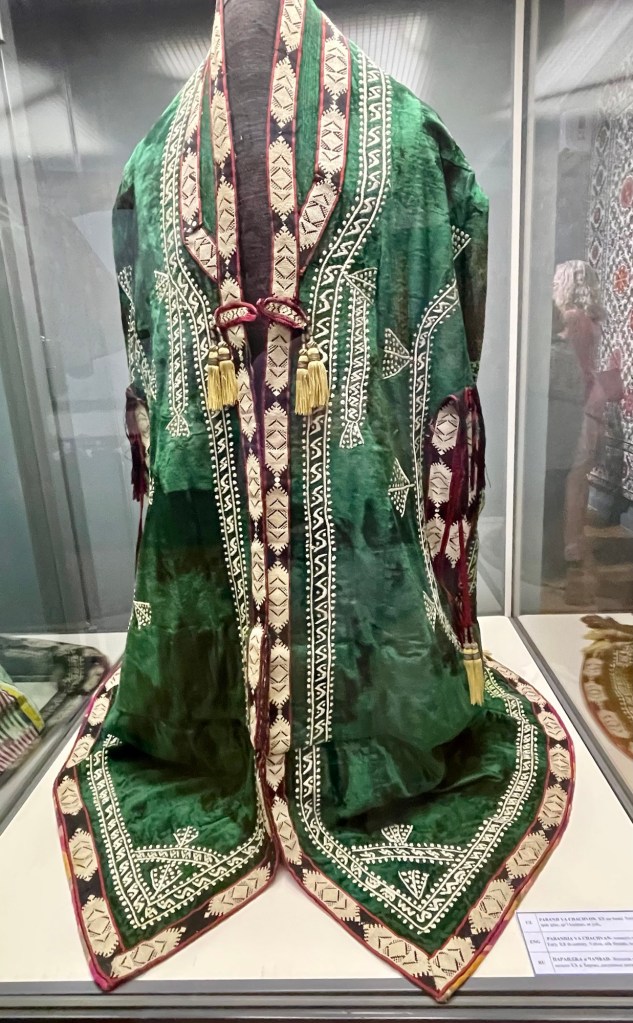
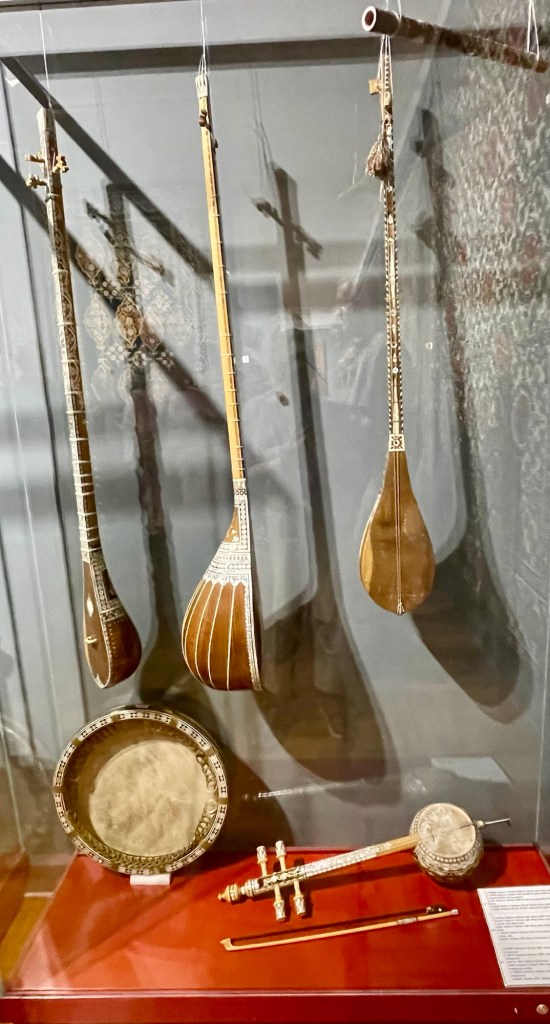
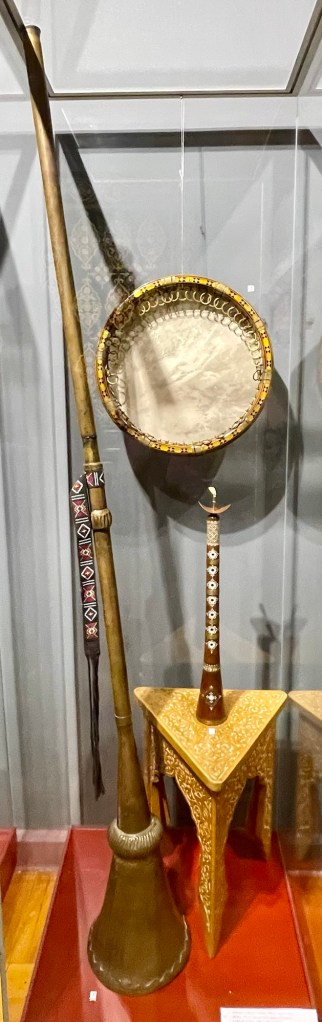
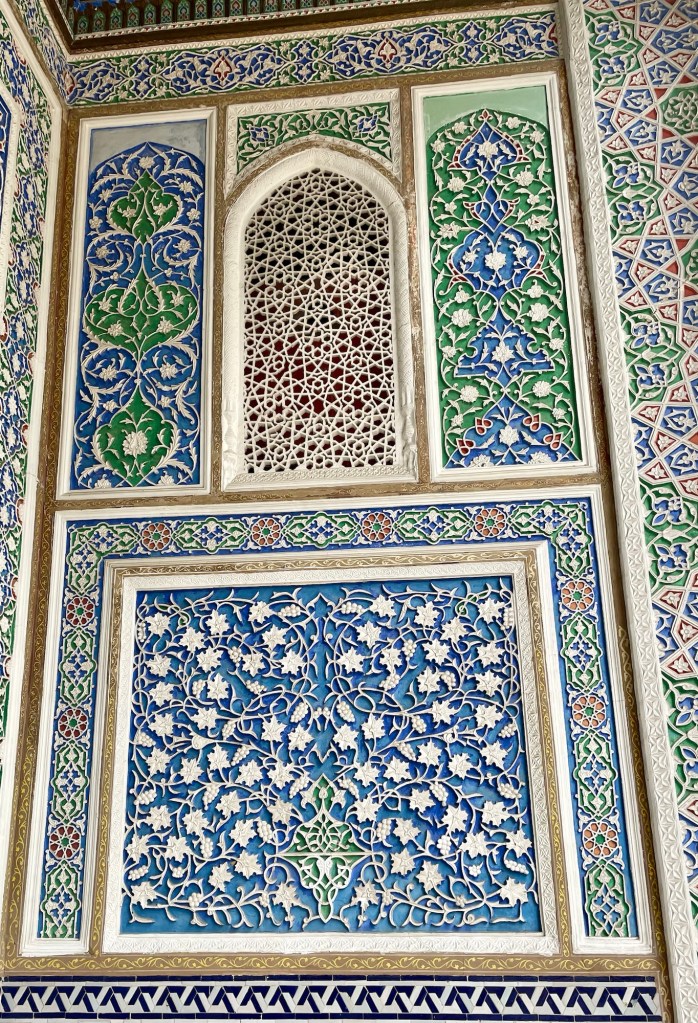
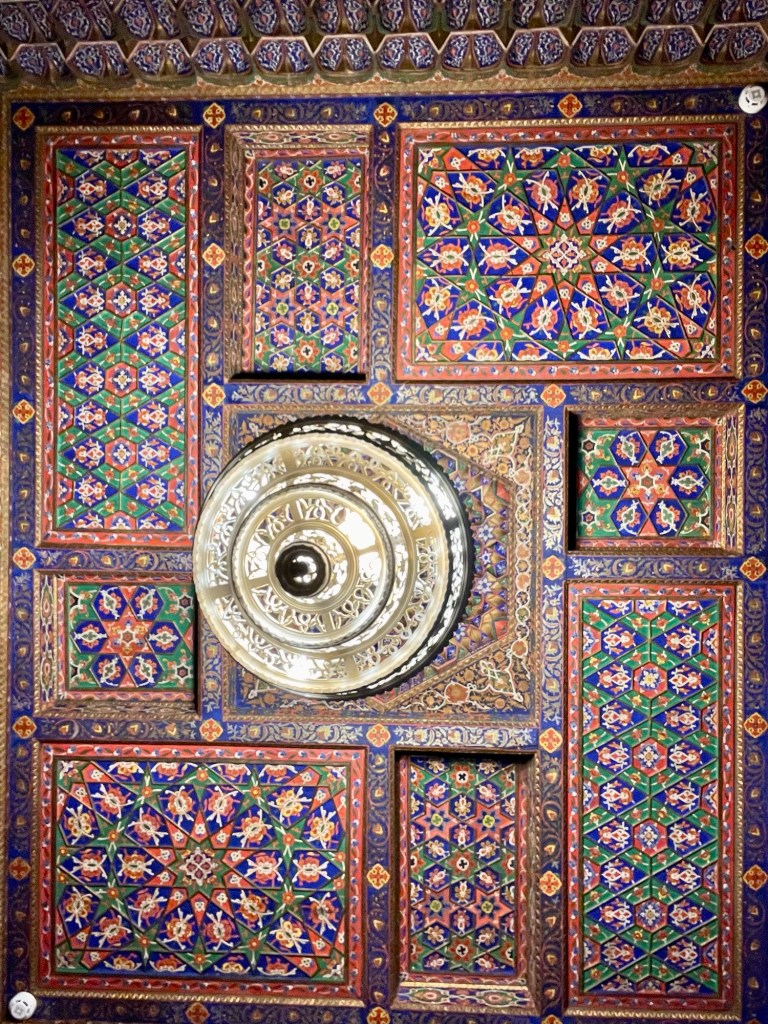
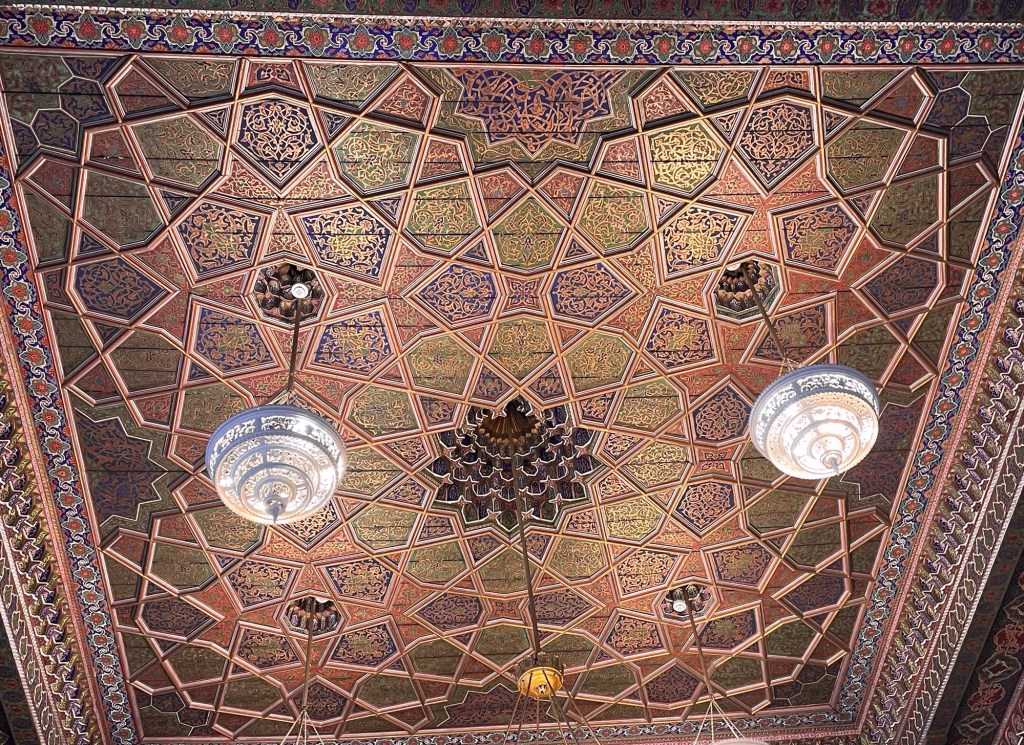
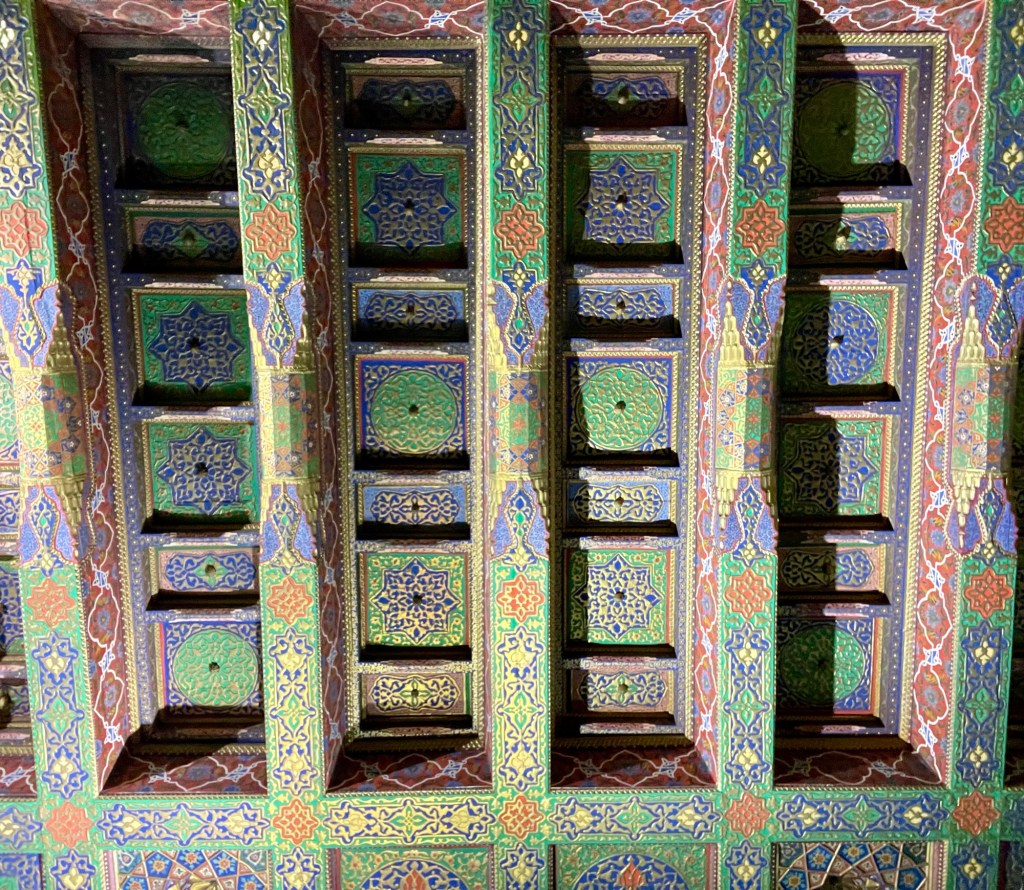
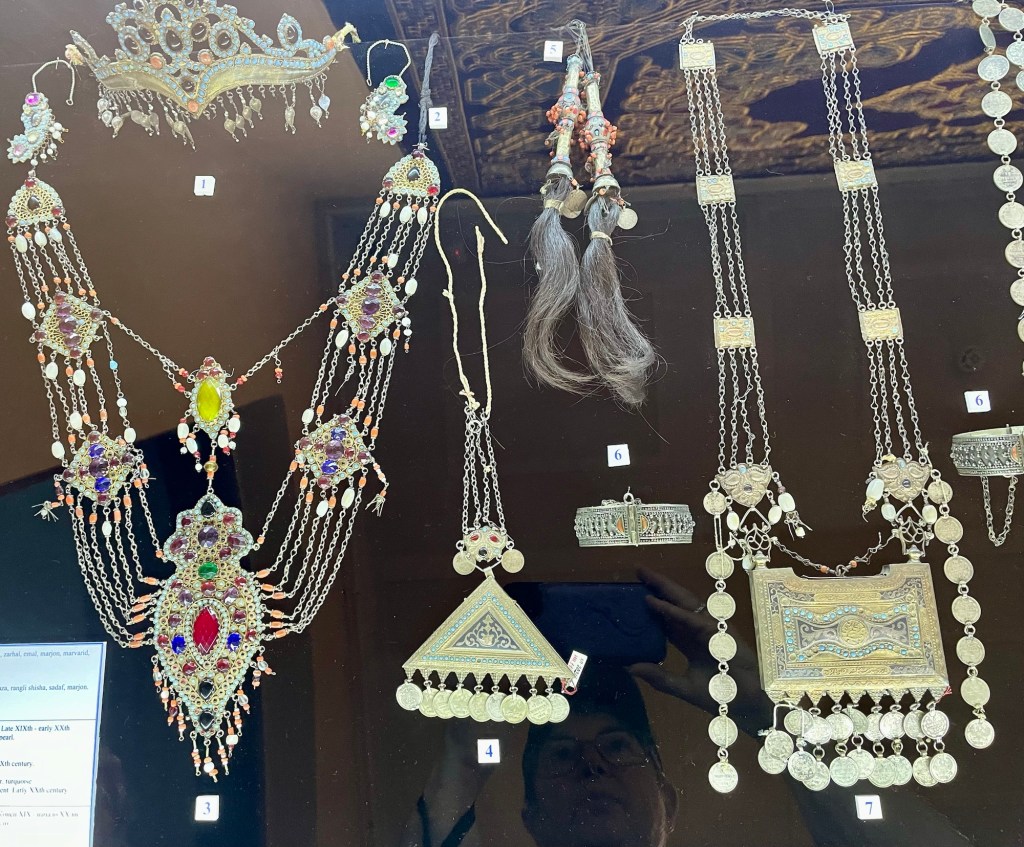
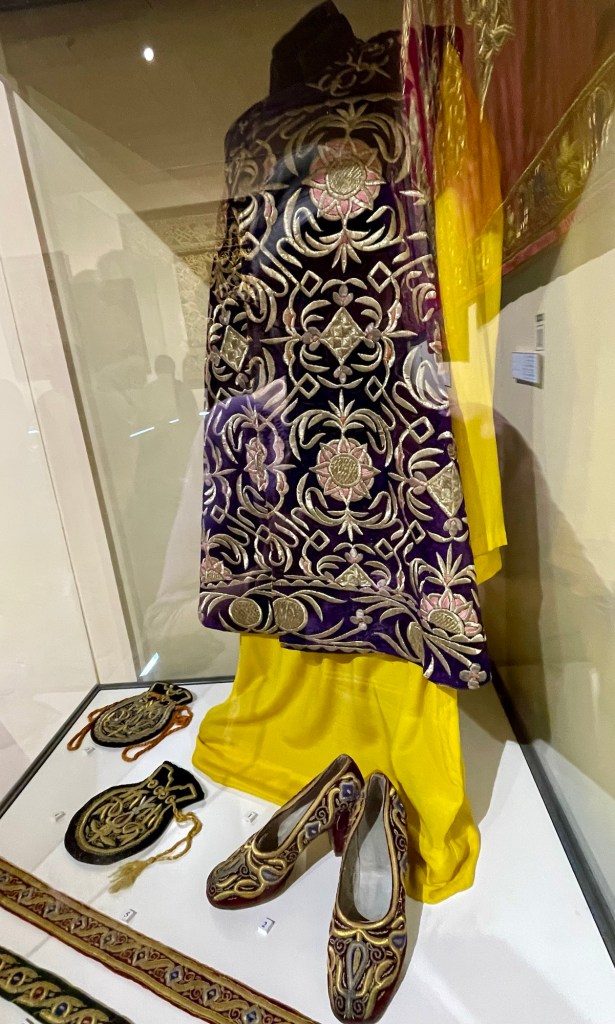
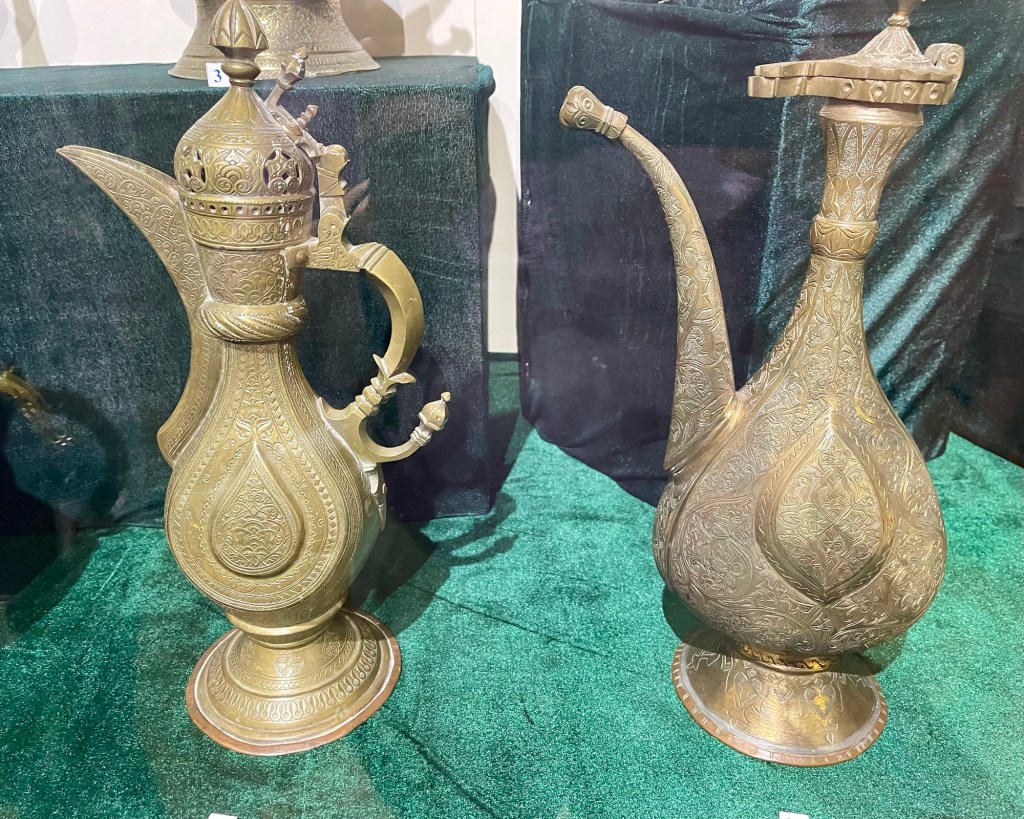
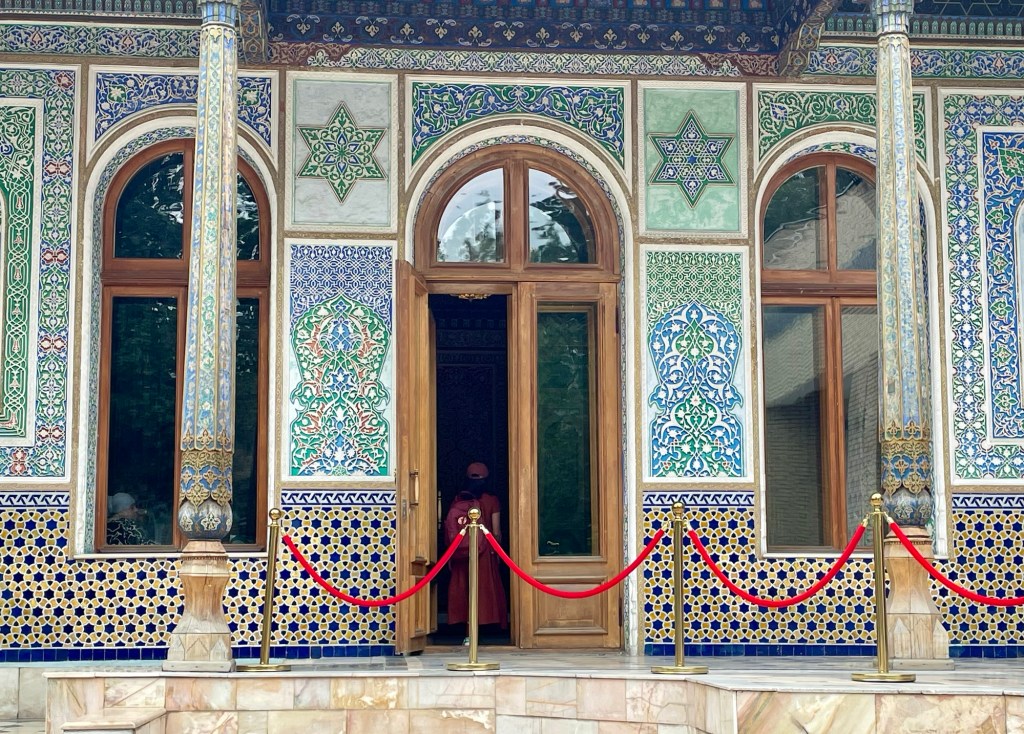
We then visited the applied arts museum, built by a wealthy czarist diplomat to Turkistan, Alexander Polovtsev, who admired Uzbek architecture. In 1898 he built this traditional mansion and invited artisans from Samarkand, Bukhara and Fergana to decorate the interior. Exhibits include the Uzbek embroidered wall coverings called suzani, ceramics, jewelry, rugs, and musical instruments. The house itself is also part of the exhibit.
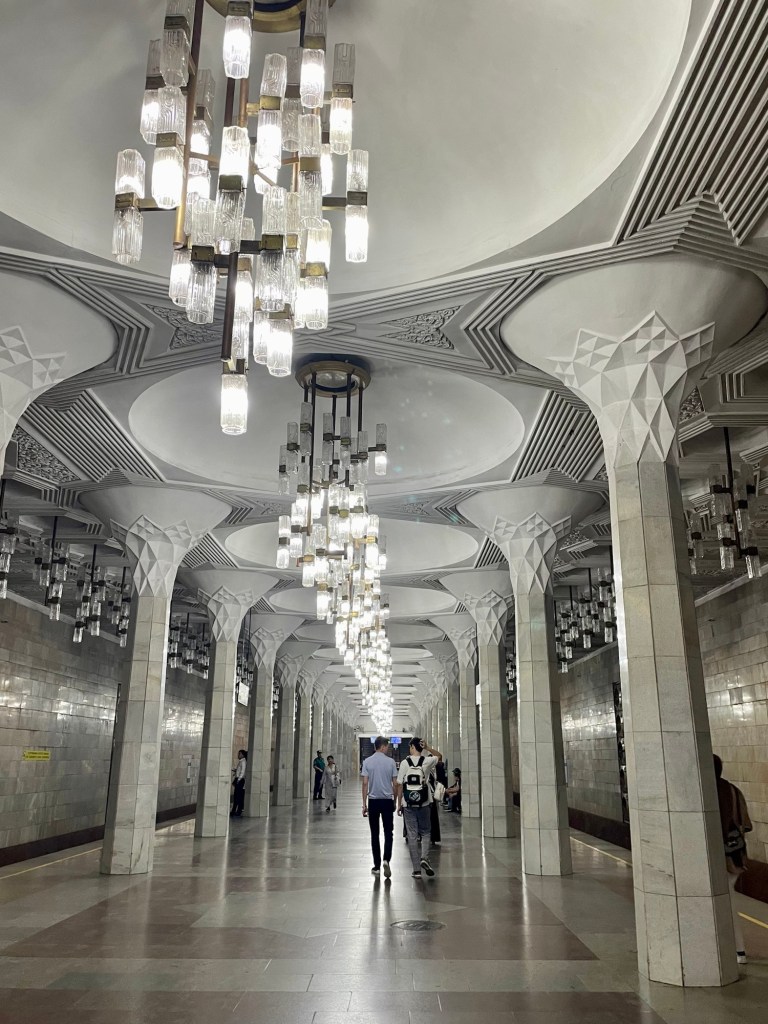
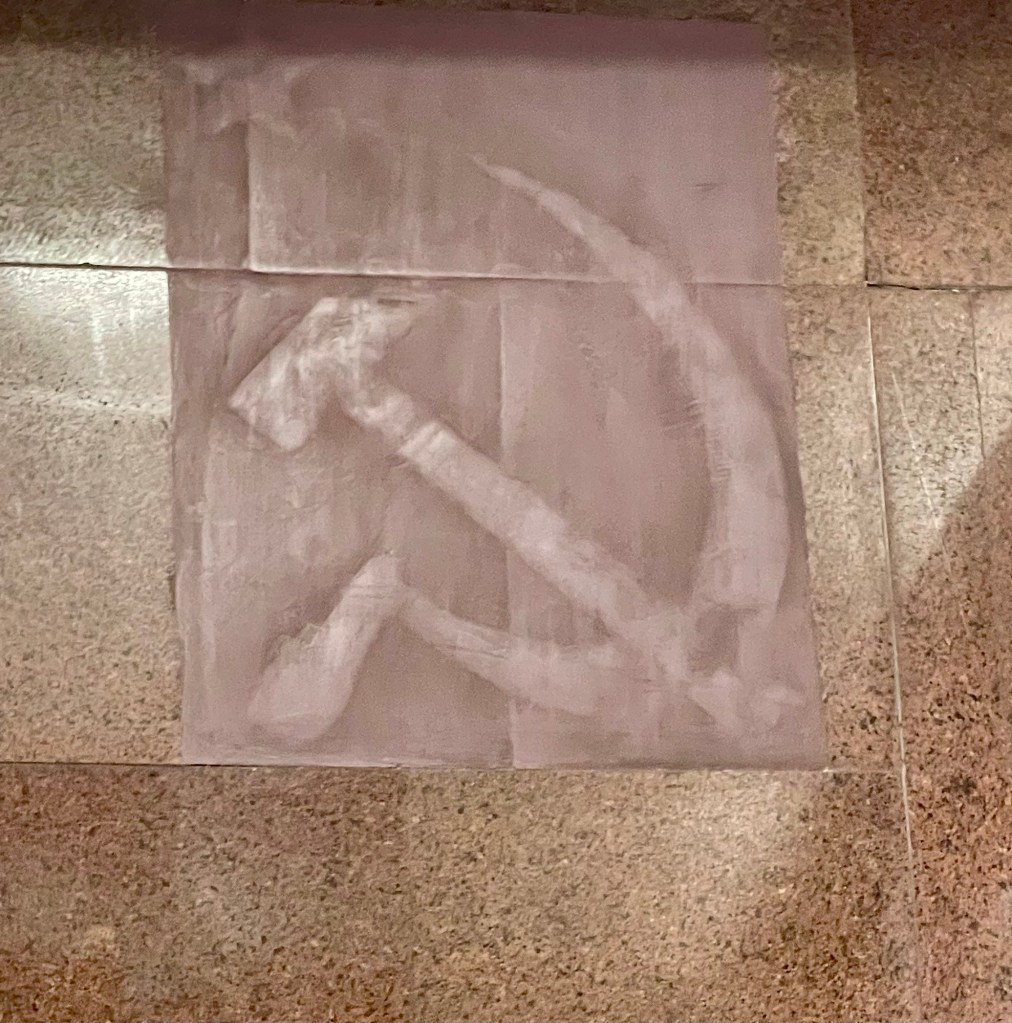
Our last activity of the day was to ride the metro, which was surprisingly clean.
 RobbieLambertsTravels
Your pictures and narration makes me feel like I am there with you. I am glad that you are having a good trip.
>
LikeLike