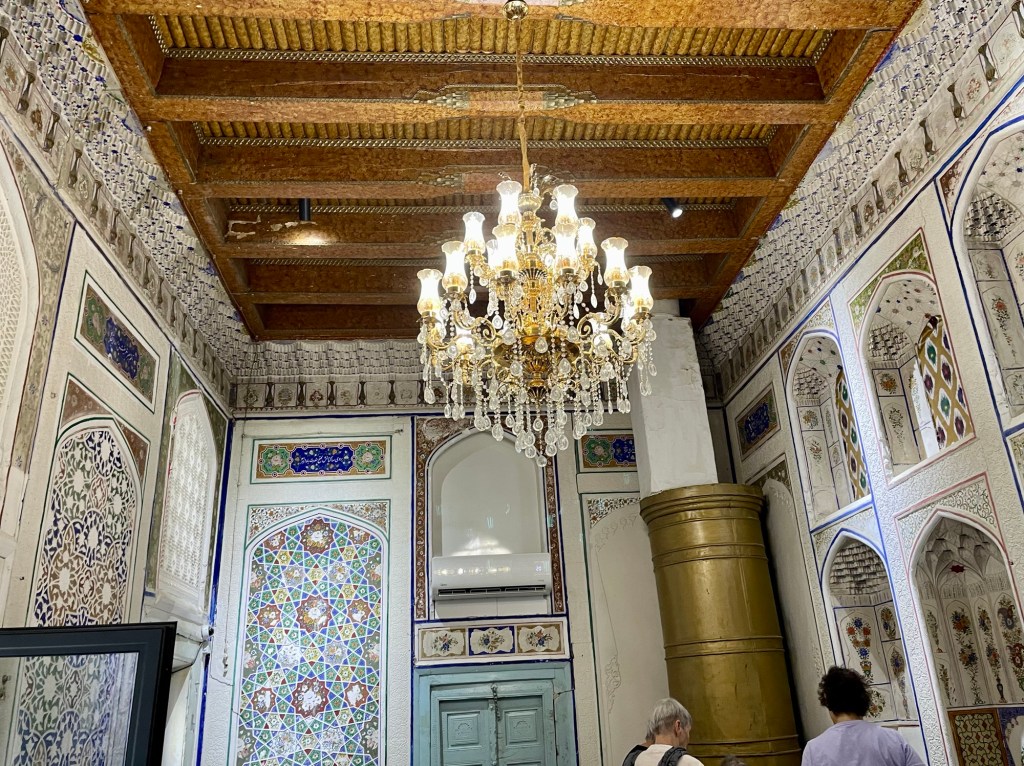
Today was incredibly full. Here is a picture of the room that we are having breakfast in. Remember that this hotel was a renovation of an old Jewish house.
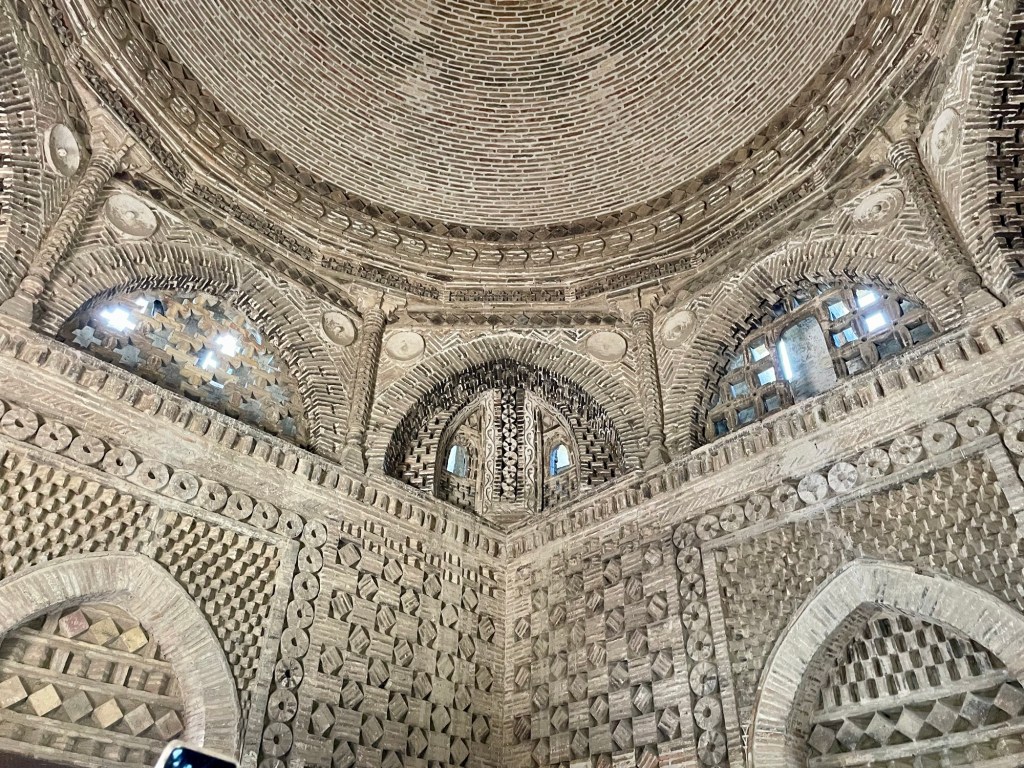
Our first stop was the Samani Mausoleum. Ismail Samani was the rule of the Samanid Empire during the end of the 9th century. He chose Bukhara as his capitol. His reign saw the emergence of the Samanids as a powerful force. He was the descendent of Saman Khuda who renounced Zoroastrianism and embraced Islam.

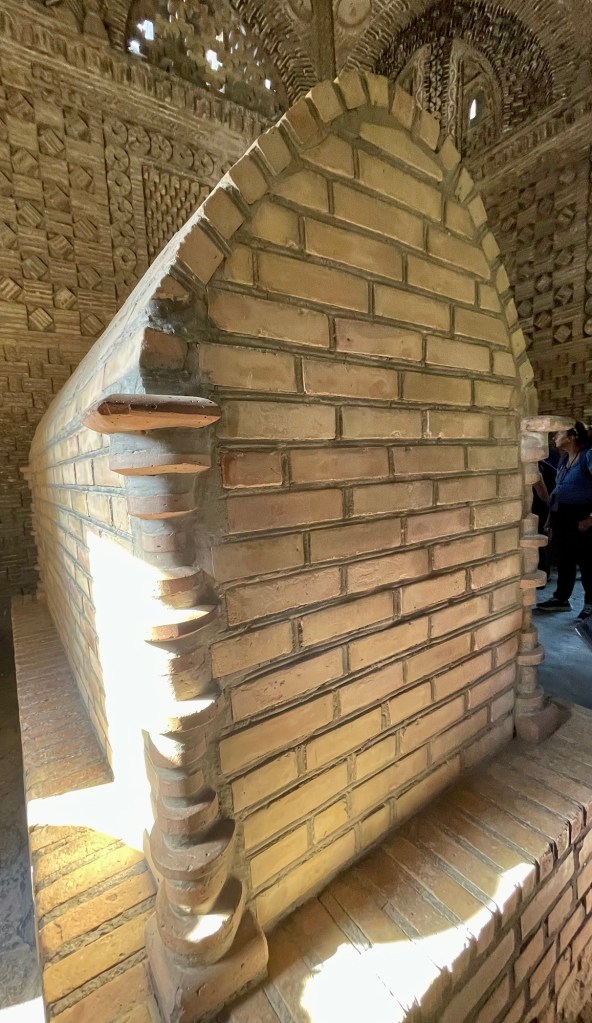
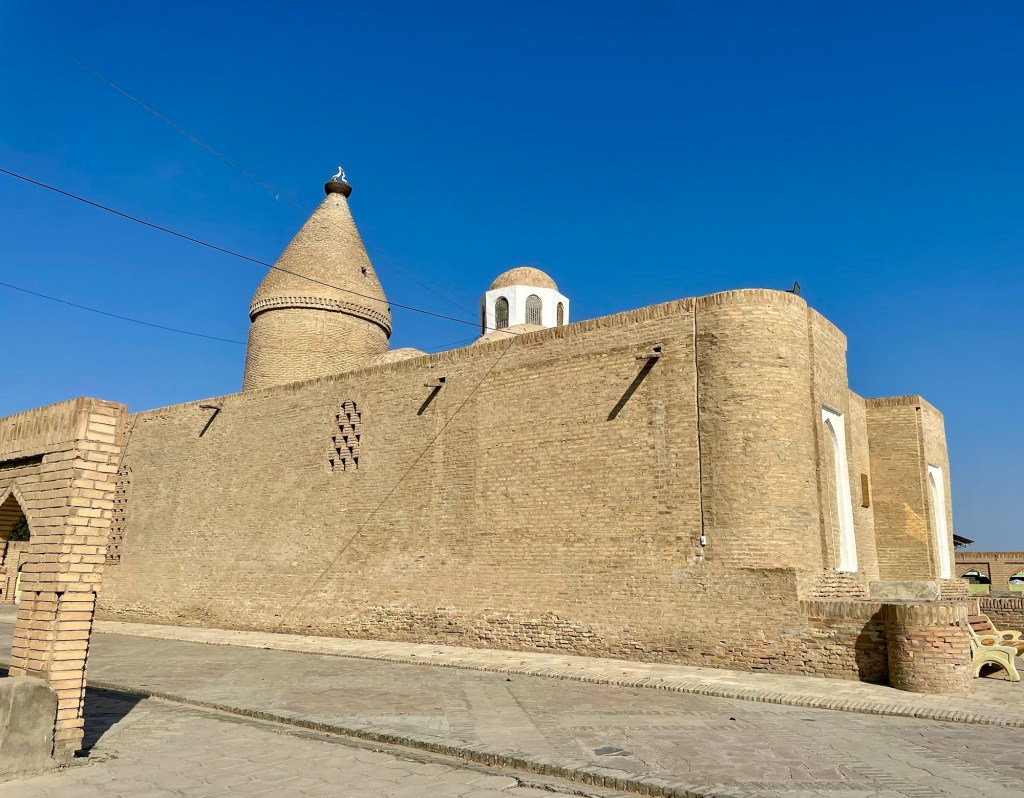
The book of Job is part of the Jewish Bible. Job is also considered a prophet in Islam. He is called Ayub. According to legend, Ayub was rich and trustworthy. To test him, Allah sent Satan who sent him misery, pain, and suffering. Despite all the hardships, Ayub does not lose his faith, hoping for the mercy of Allah. The first part of the mausoleum below was built in the 12th century over a spring that Ayub was supposed to have created by stepping on the spot on the order of archangel Gabriel.
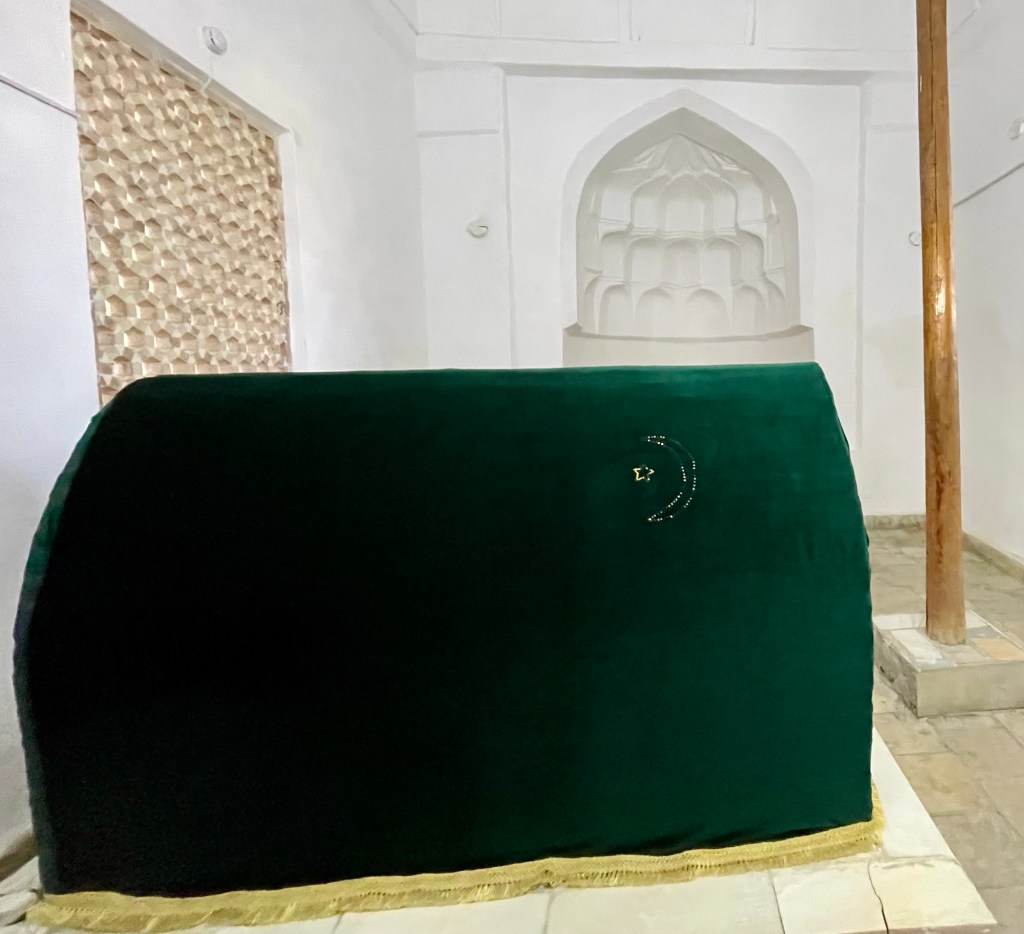
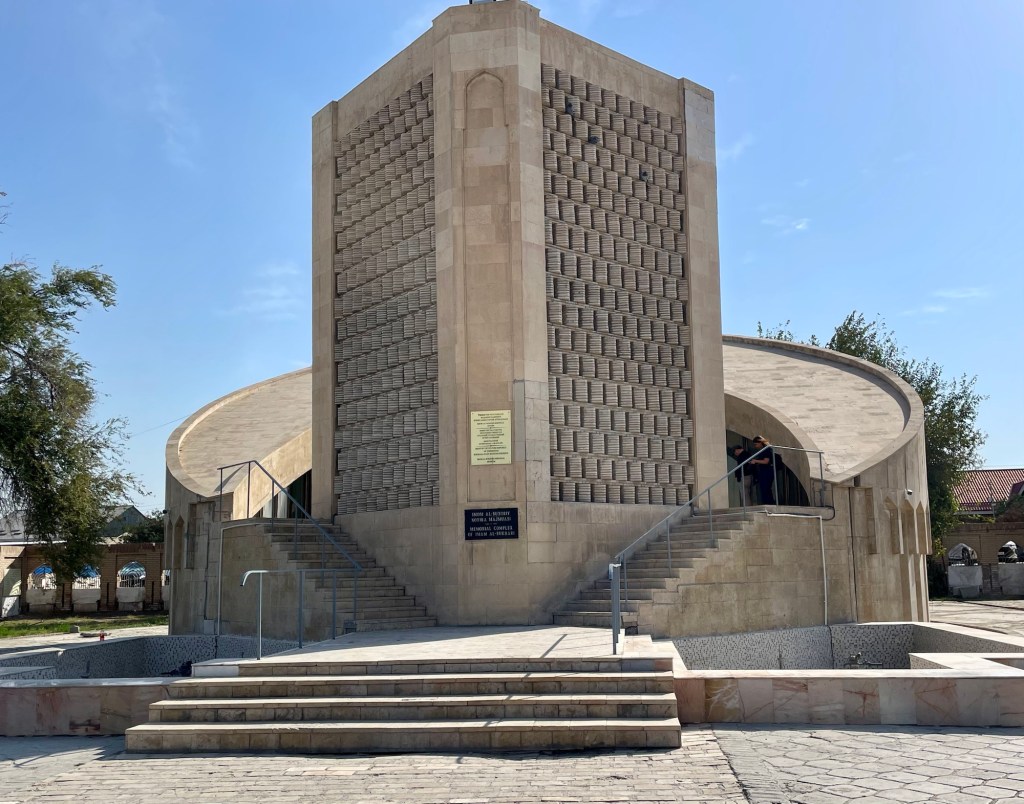
We next visited the memorial complex of Imam Al-Bukhari.
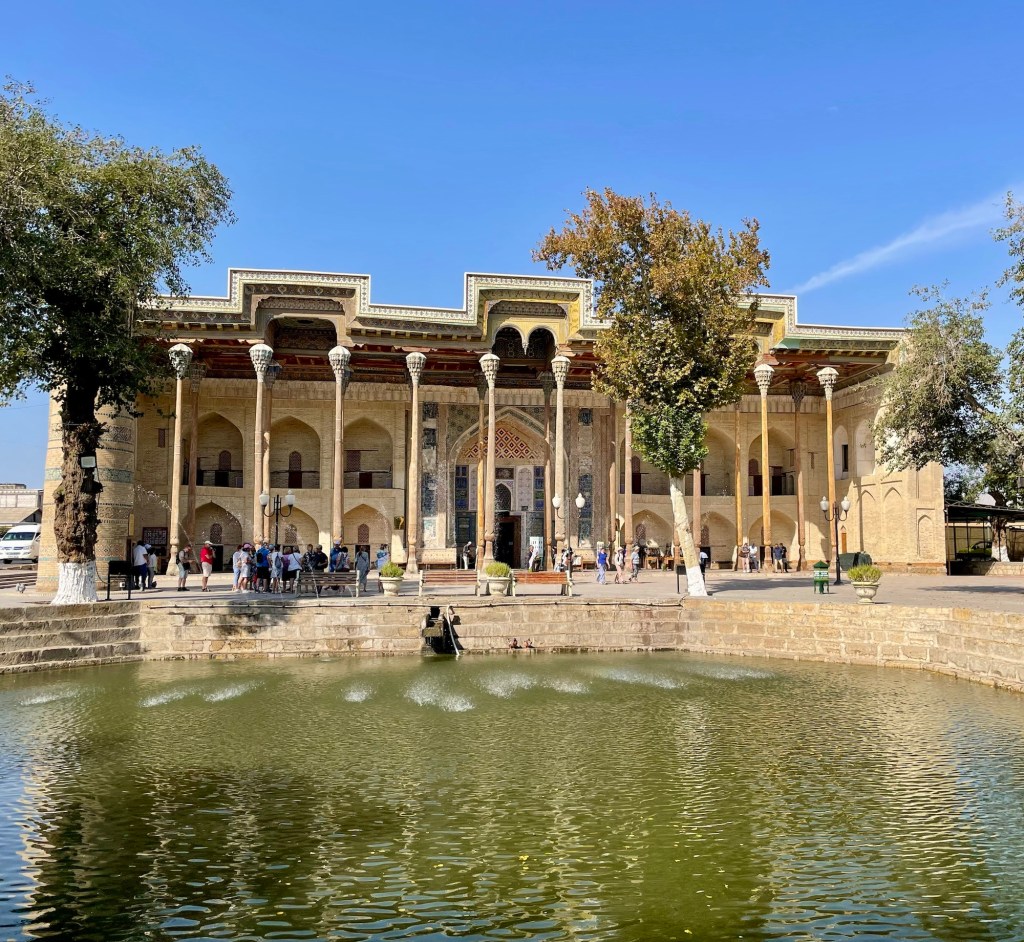
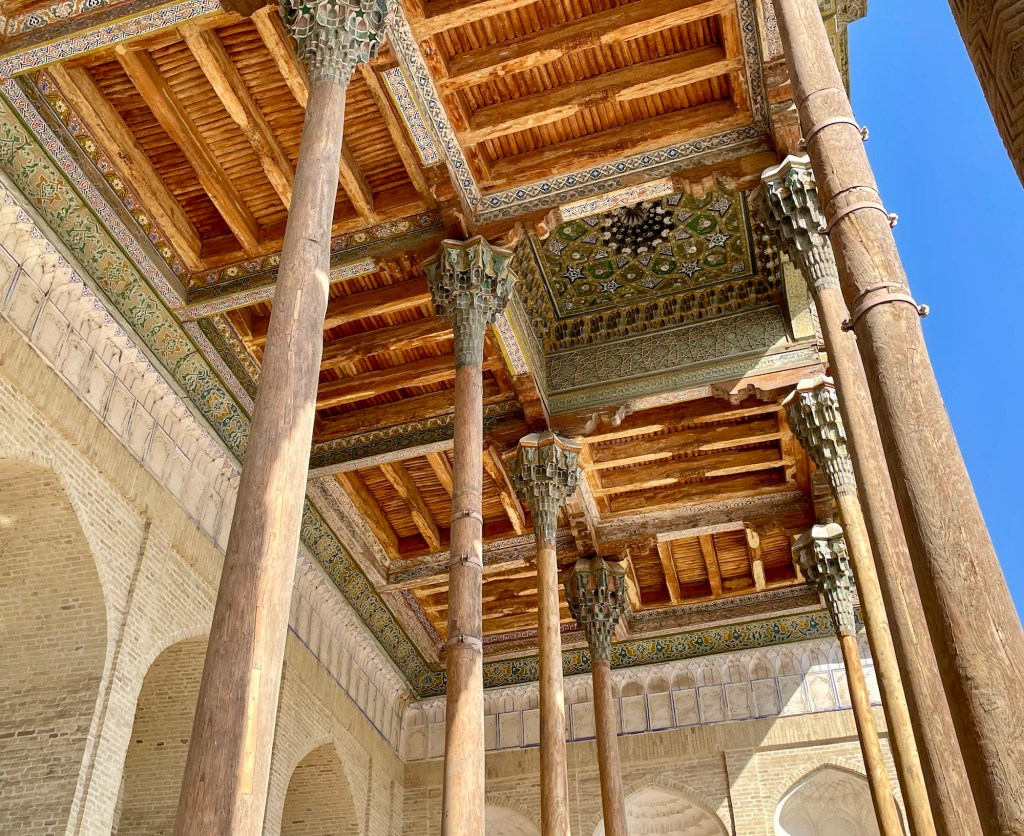
Next up was the Bolo Hauz mosque. This historic mosque was built in 1712. The thin columns made of painted wood were added to the frontal part of the entrance in 1917. There are 20 columns and these 20 are reflected in a pool.
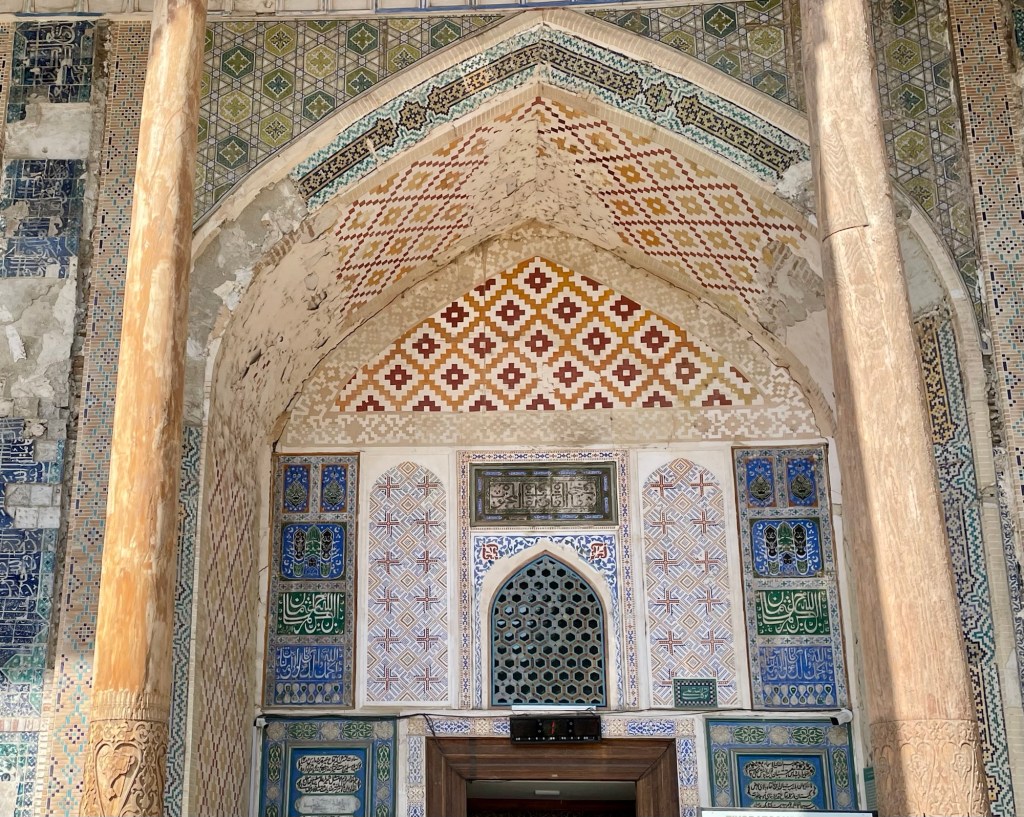
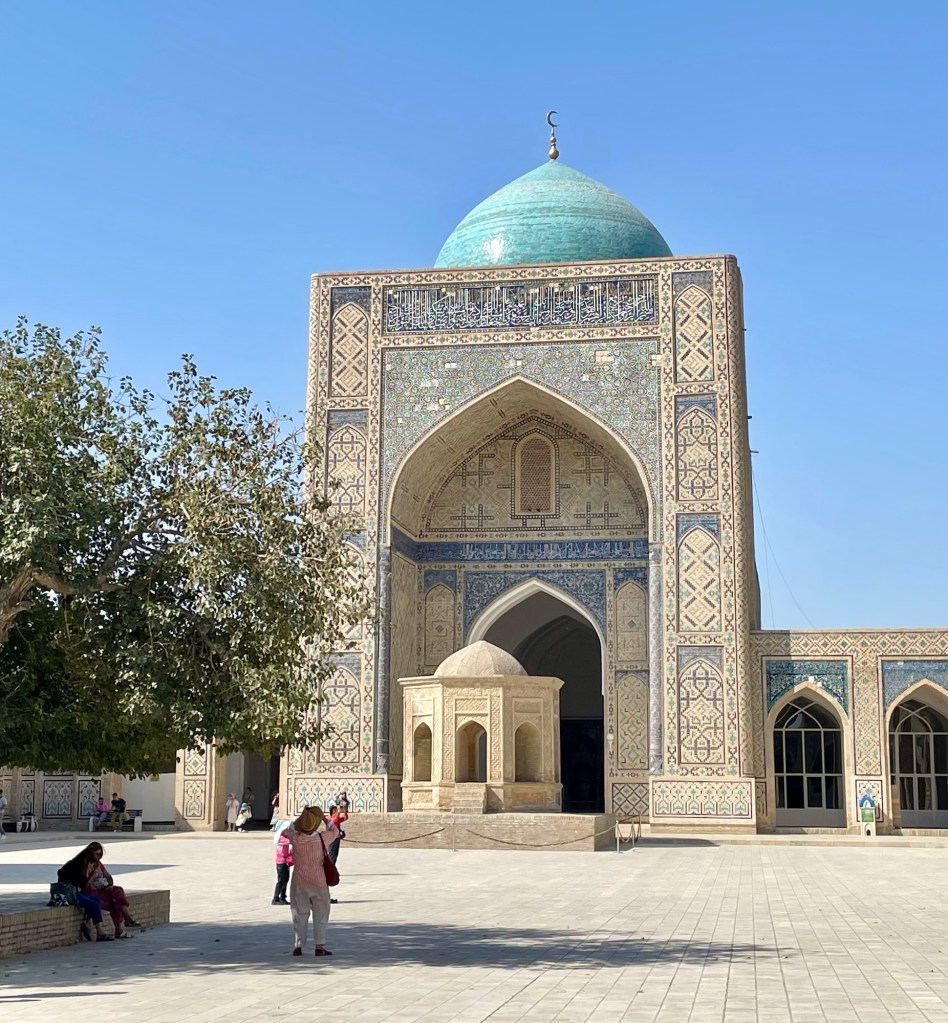
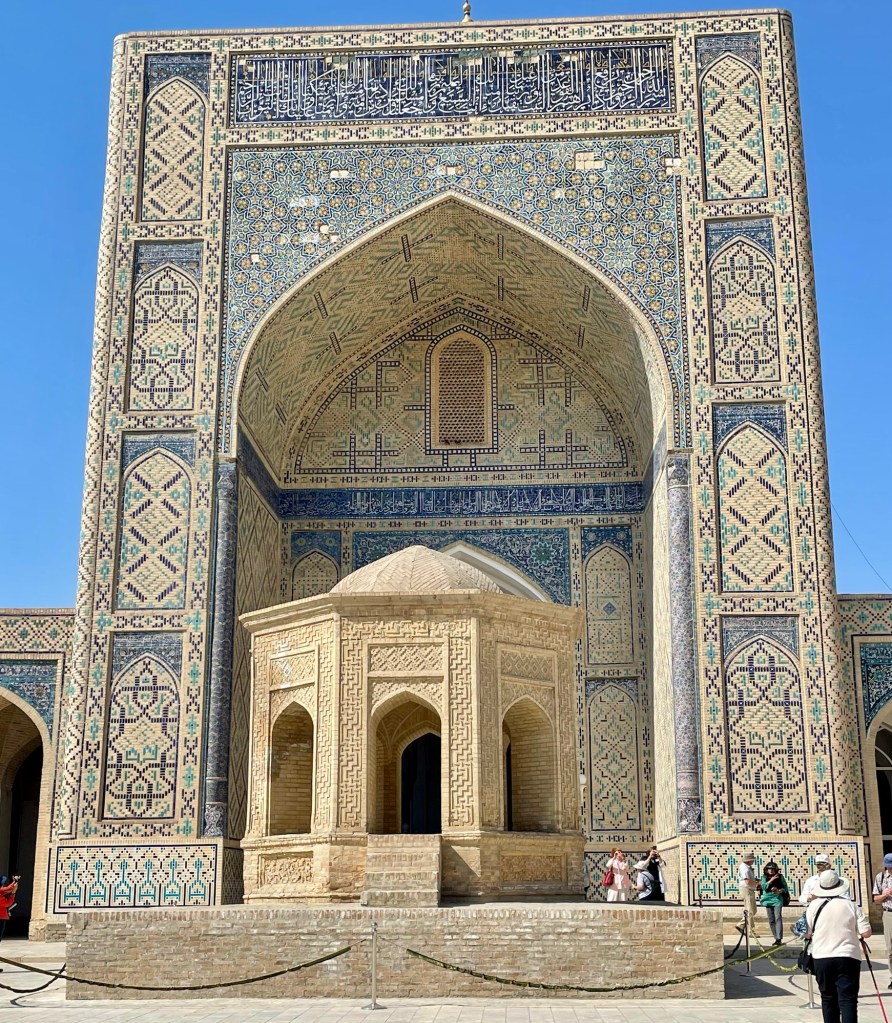
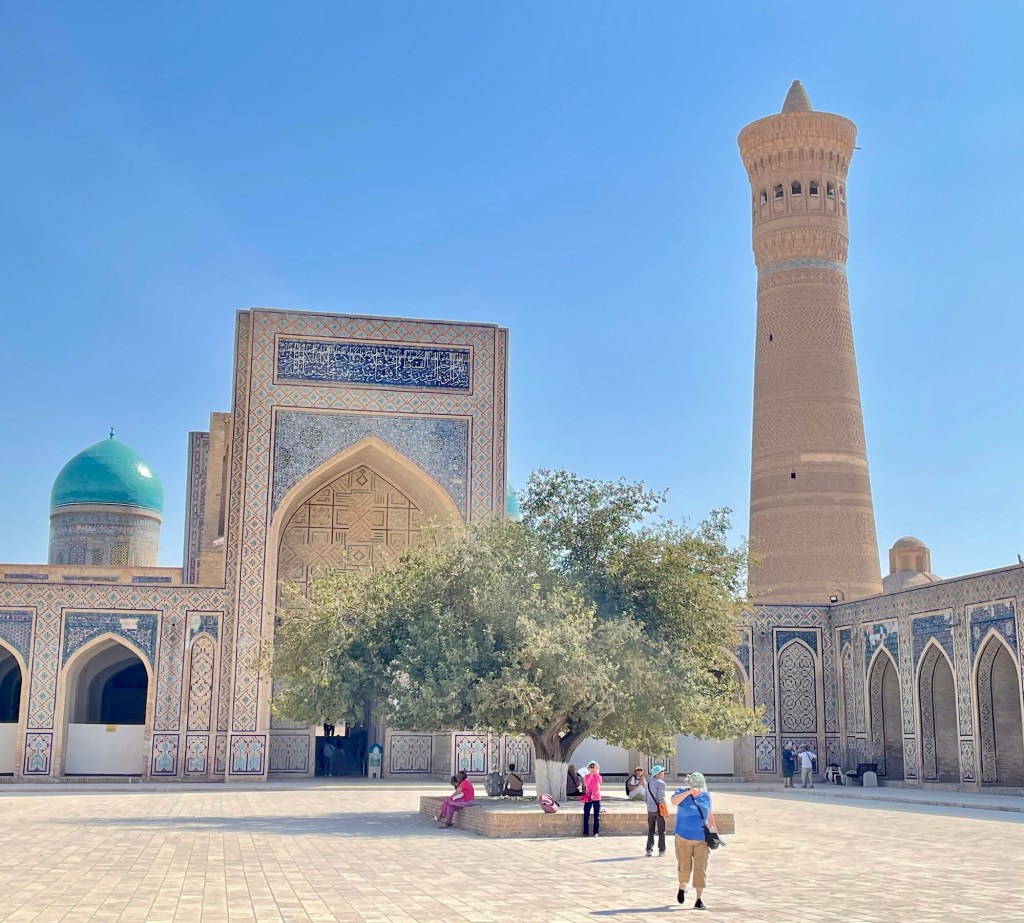
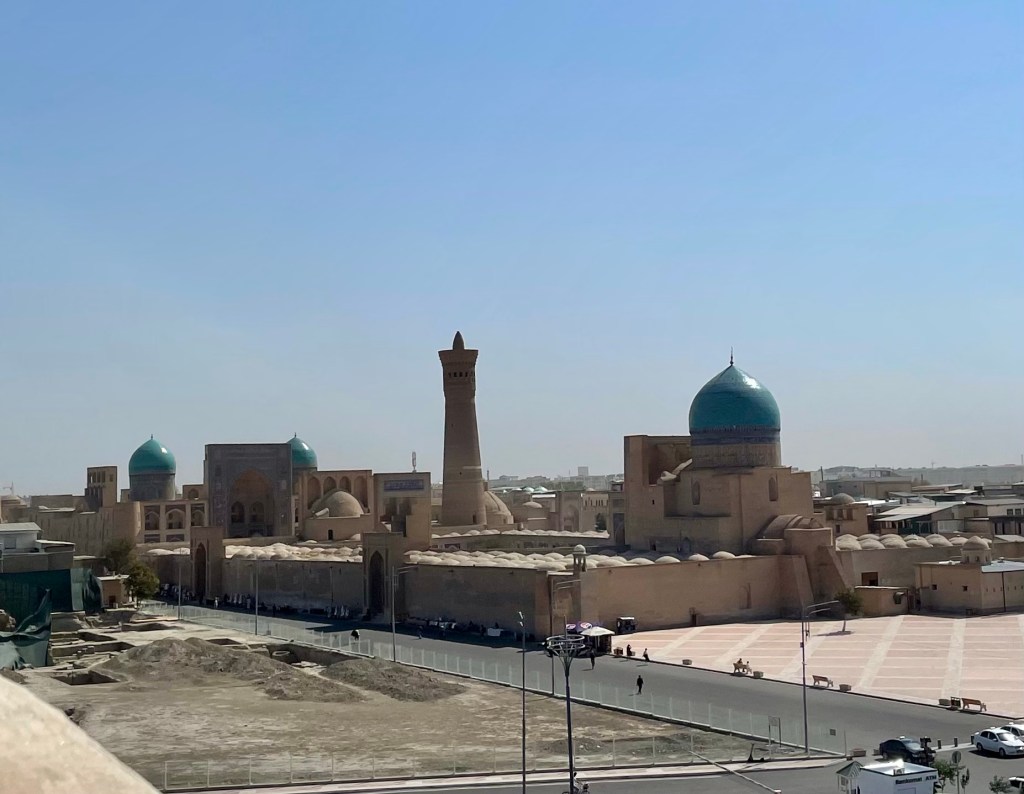
Next stop is the Kalon complex. Poi Kalon, also called the Bukhara Forum, includes the Kalon Mosque and Mineret, and the Mir-I-Arab madrasah, and surrounds an open Plaza teaming with merchants and local vendors.
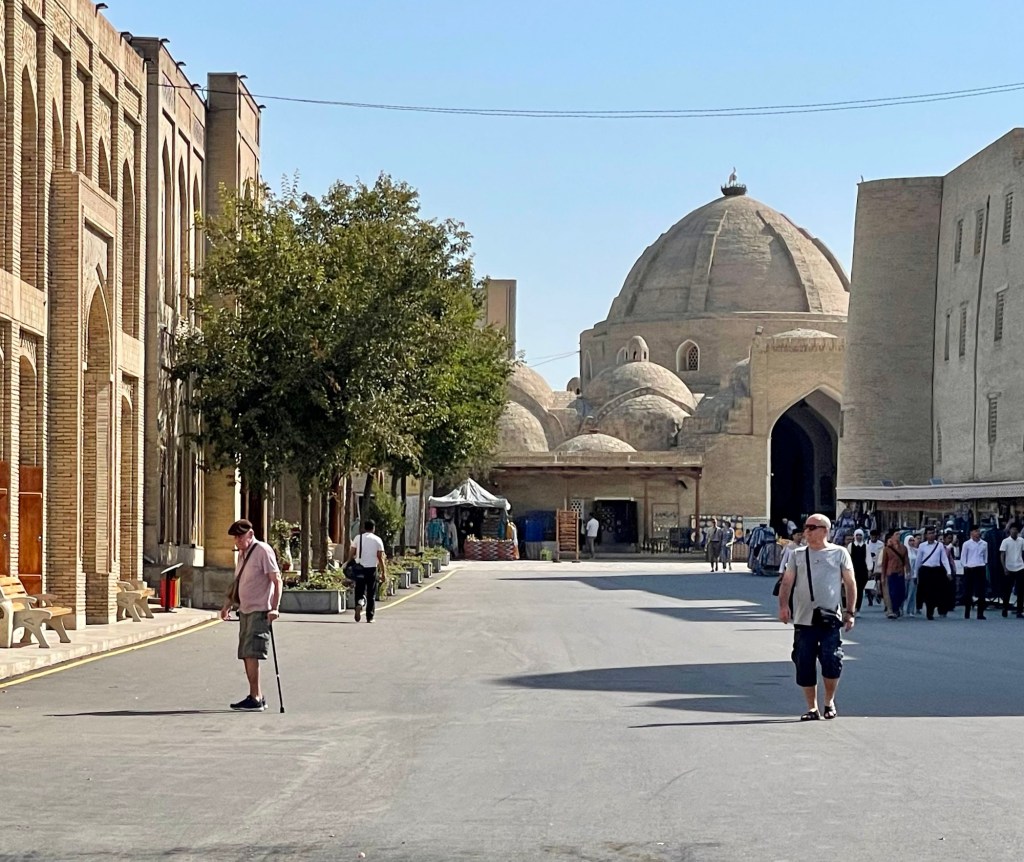
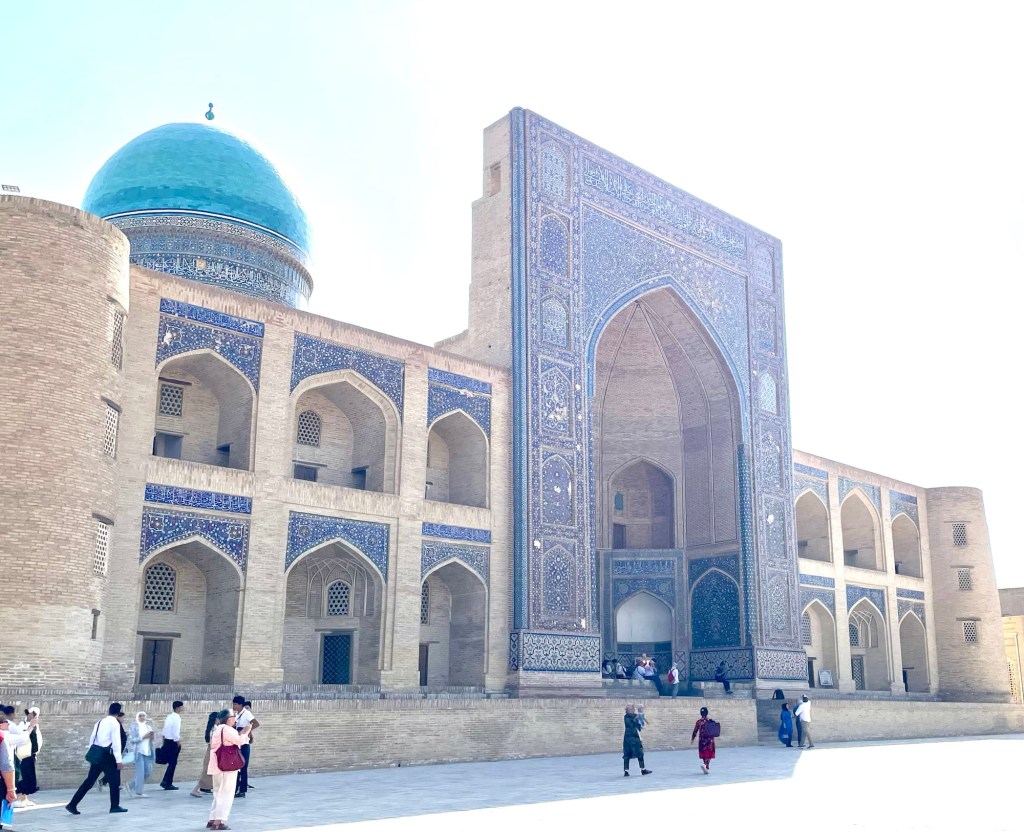
There are two big blue domes of the Mir-I-Arab madrasah (only one is visible in this picture) towering above the surrounding buildings in Kalon Complex. Along with the Kalon mosque and minaret, this religious educational establishment forms the whole Poi-Kalon that is the spiritual center of the city. Imans from Egypt, Libya and other places have studied here.
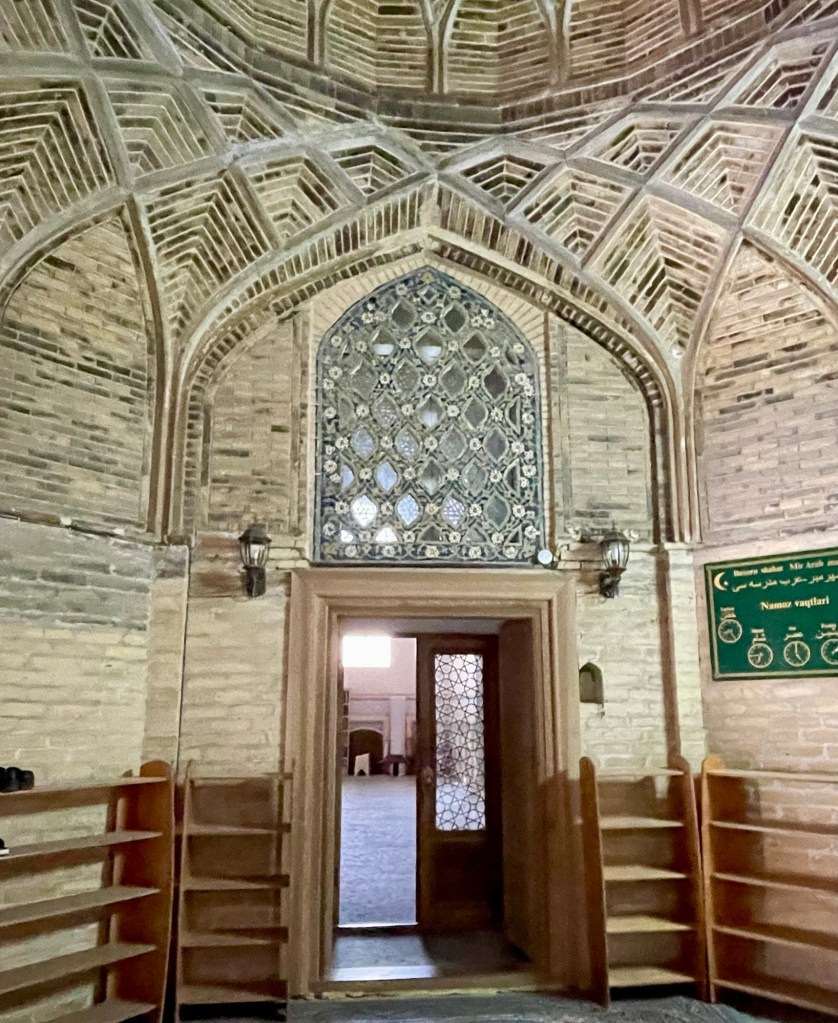
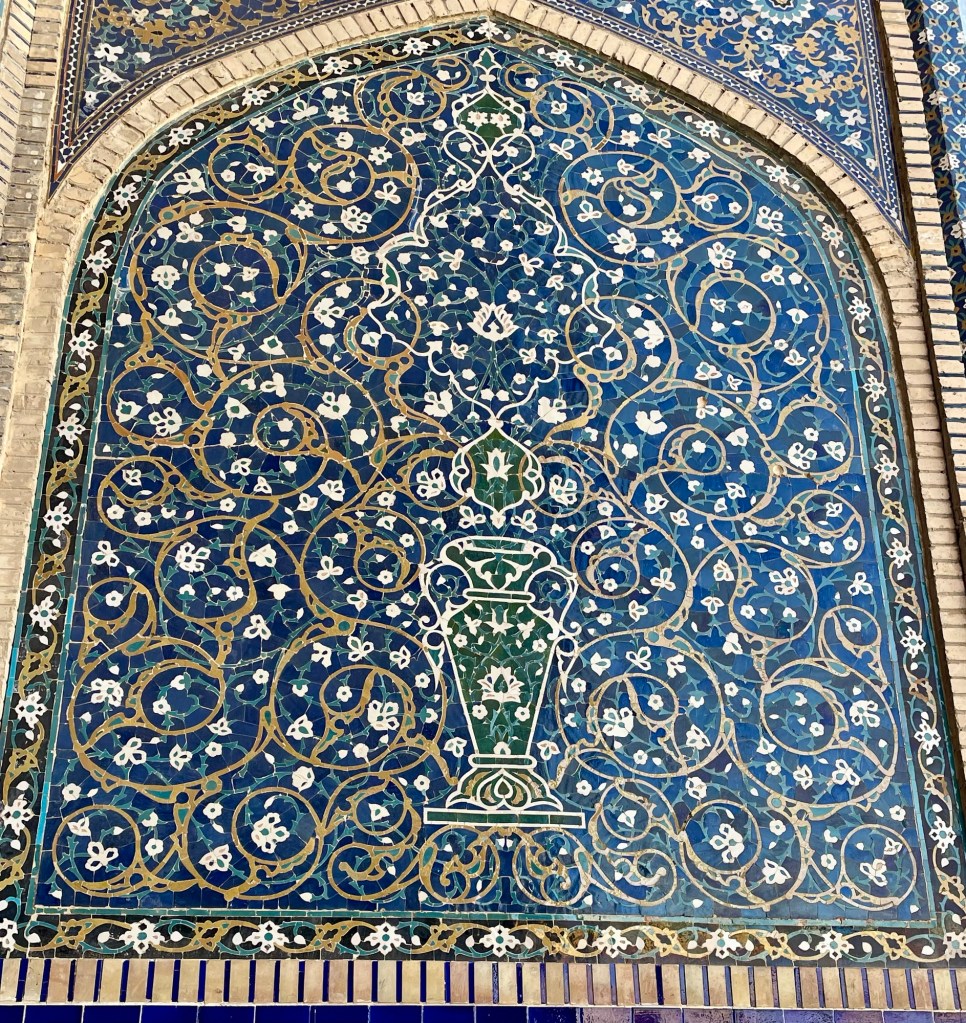
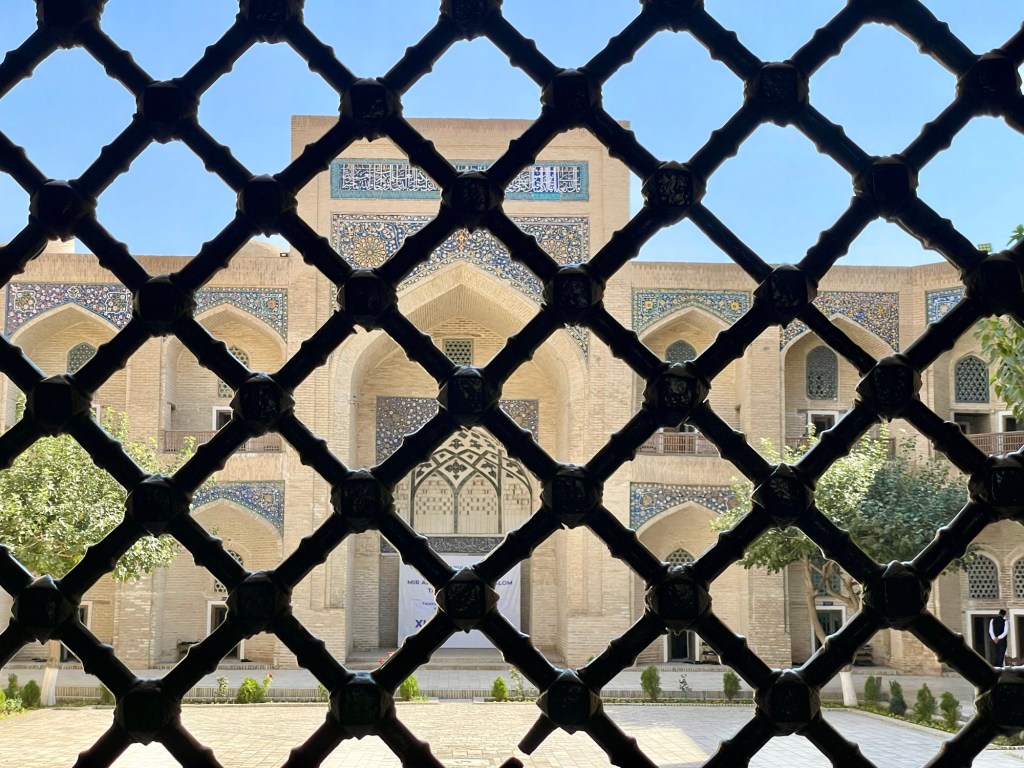
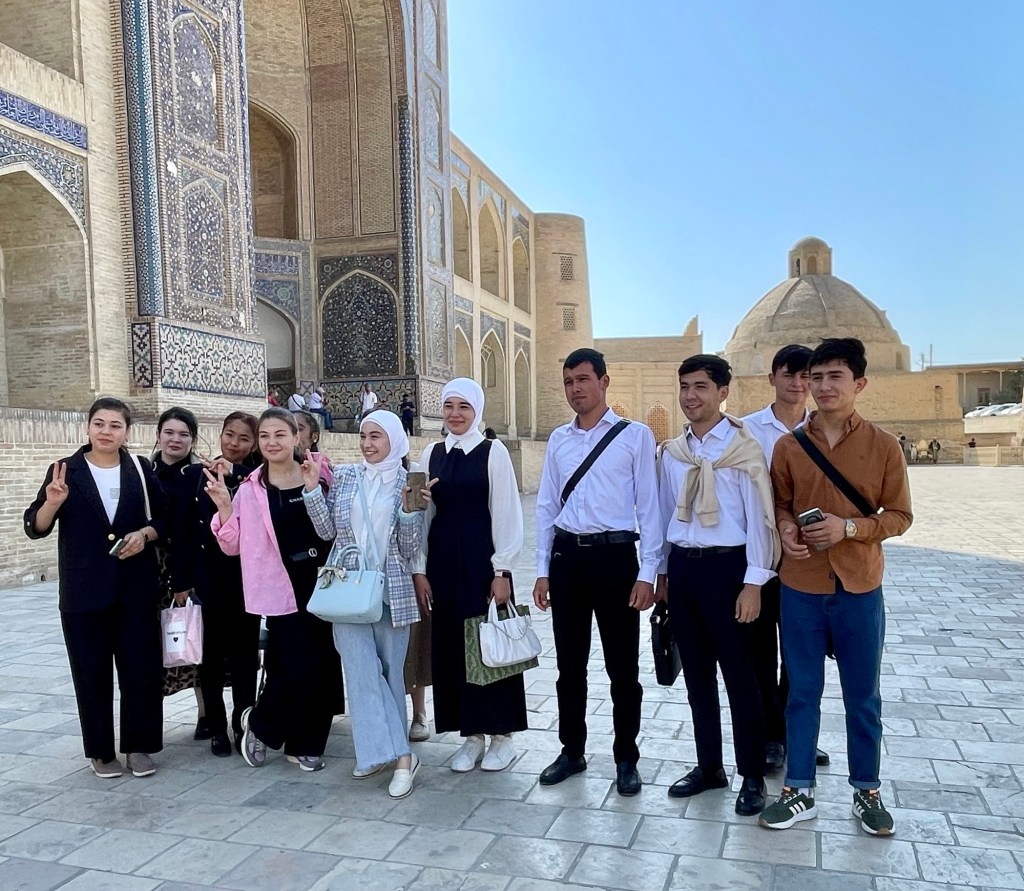
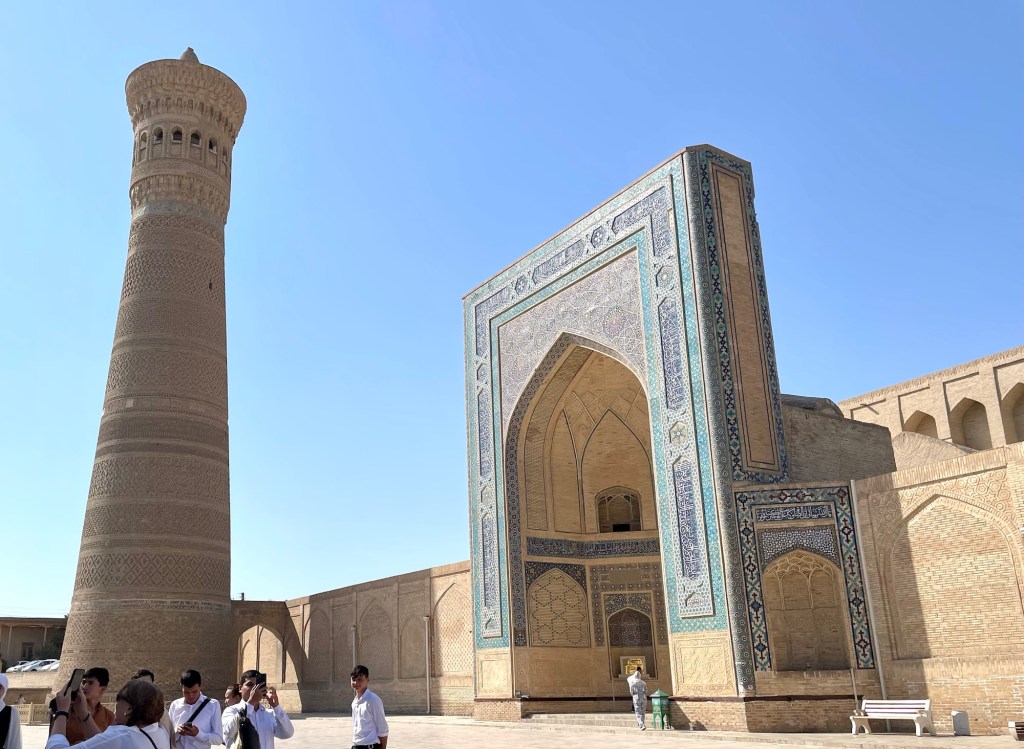
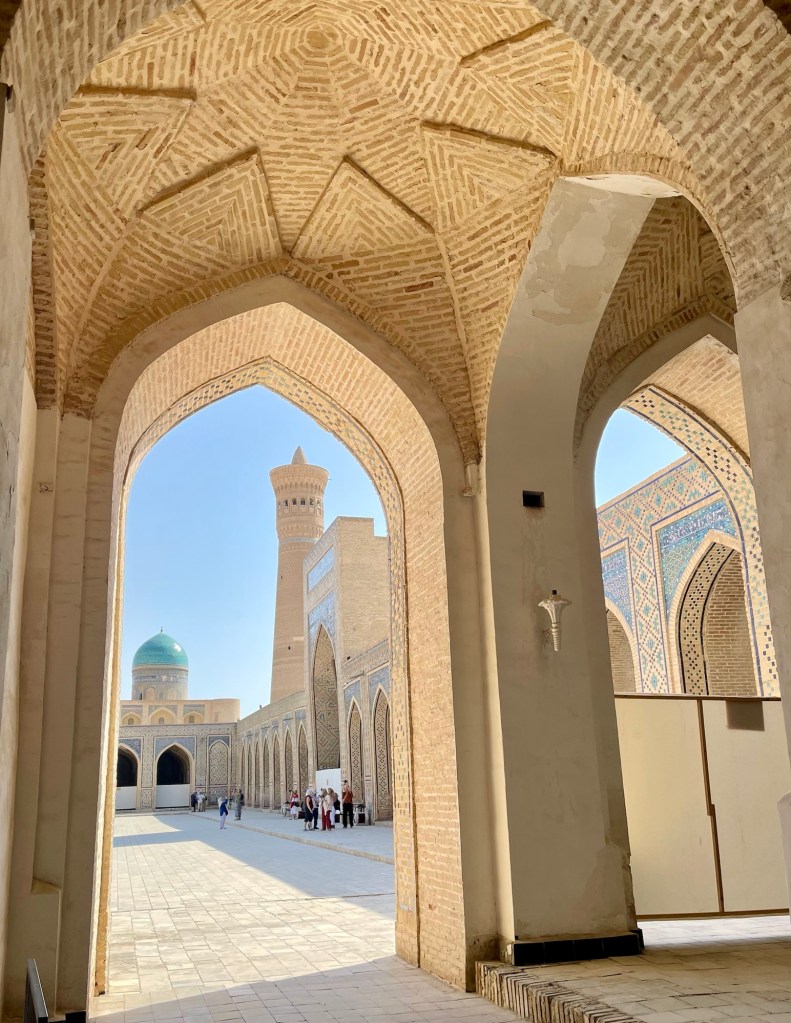
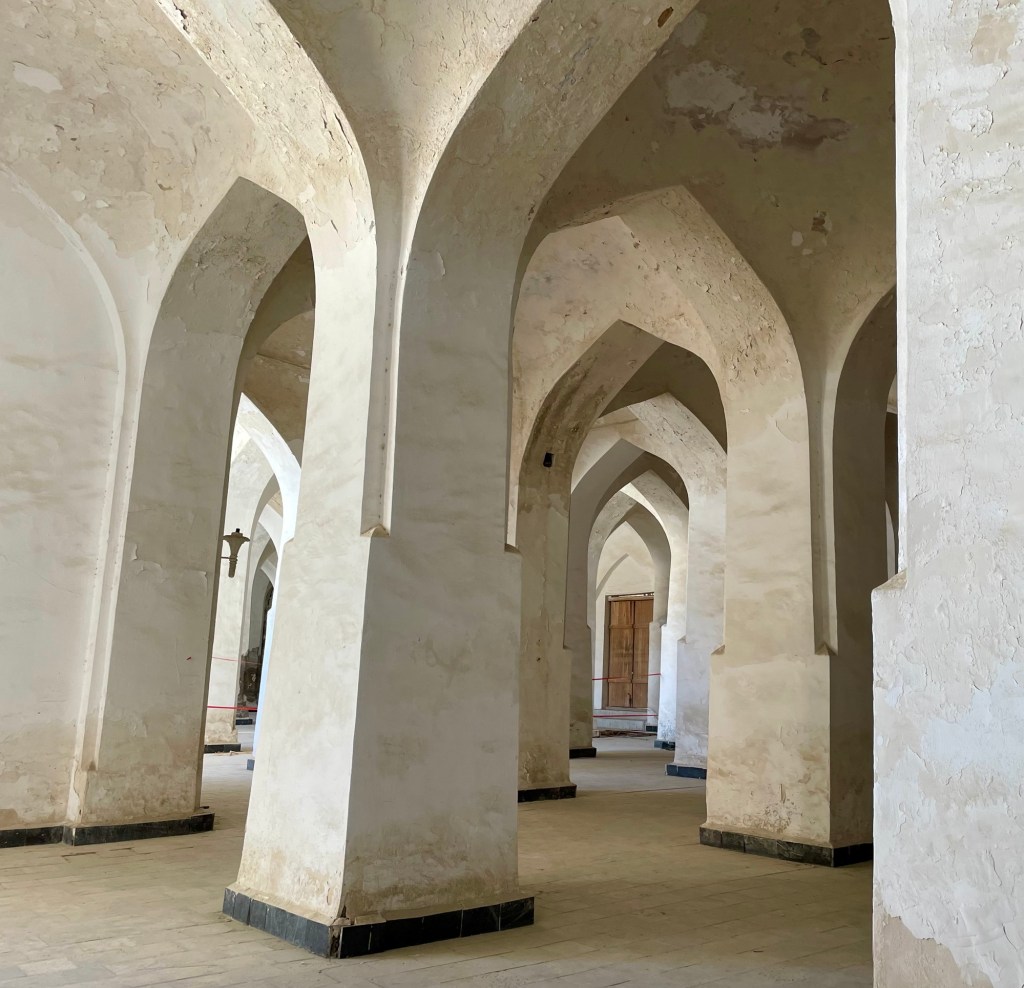
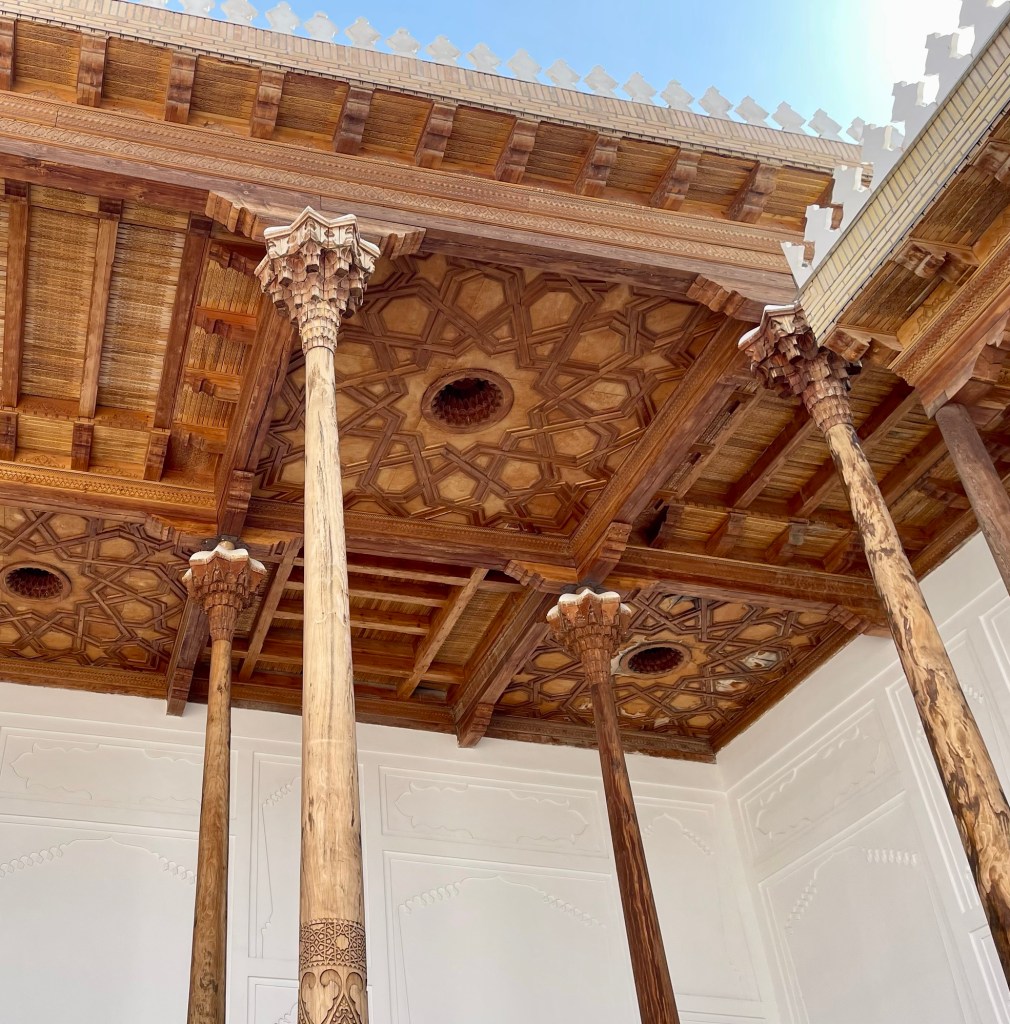
The Kalon Mosque is quite something. Here are some pictures of the interior including the courtyard and cool columns.
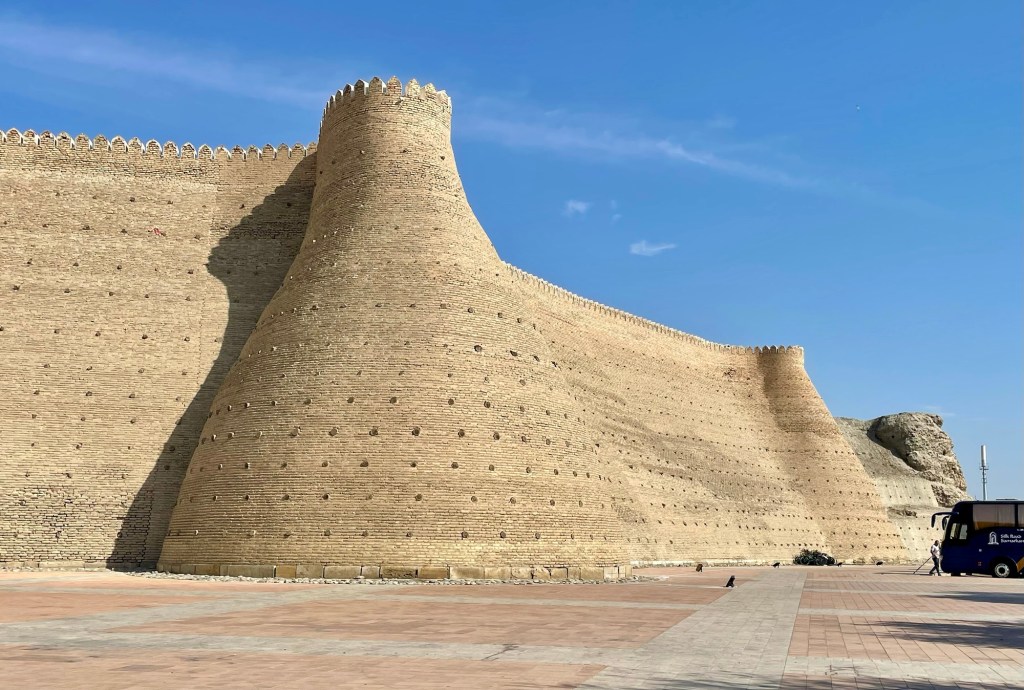
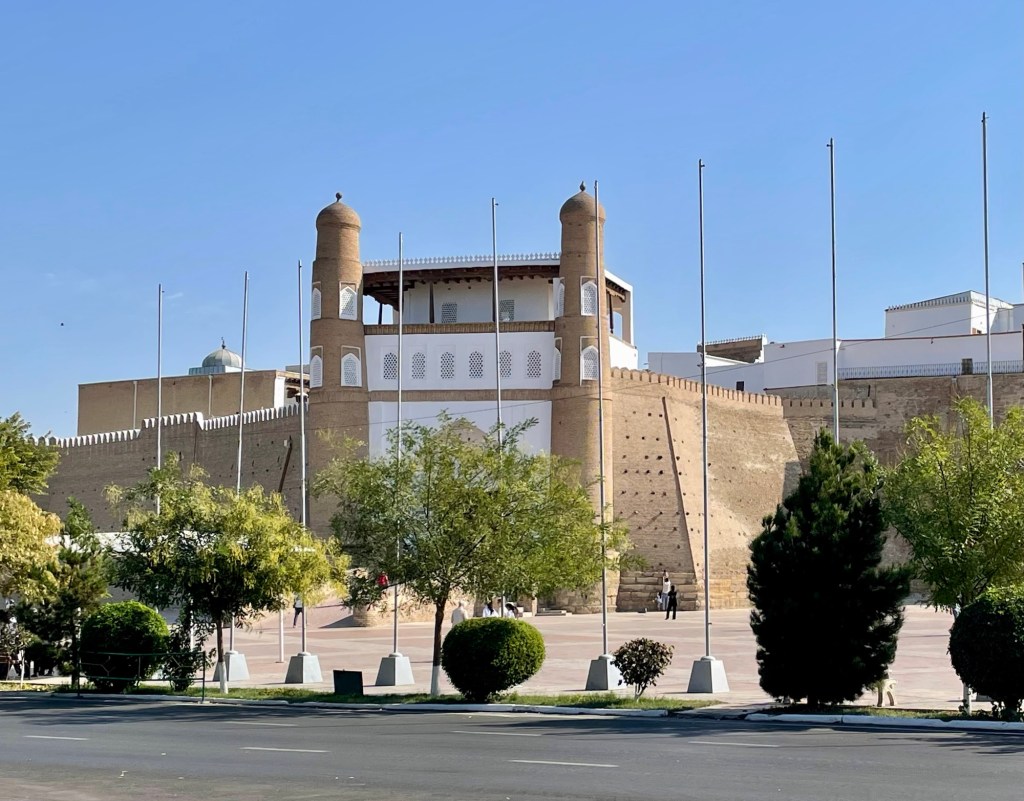
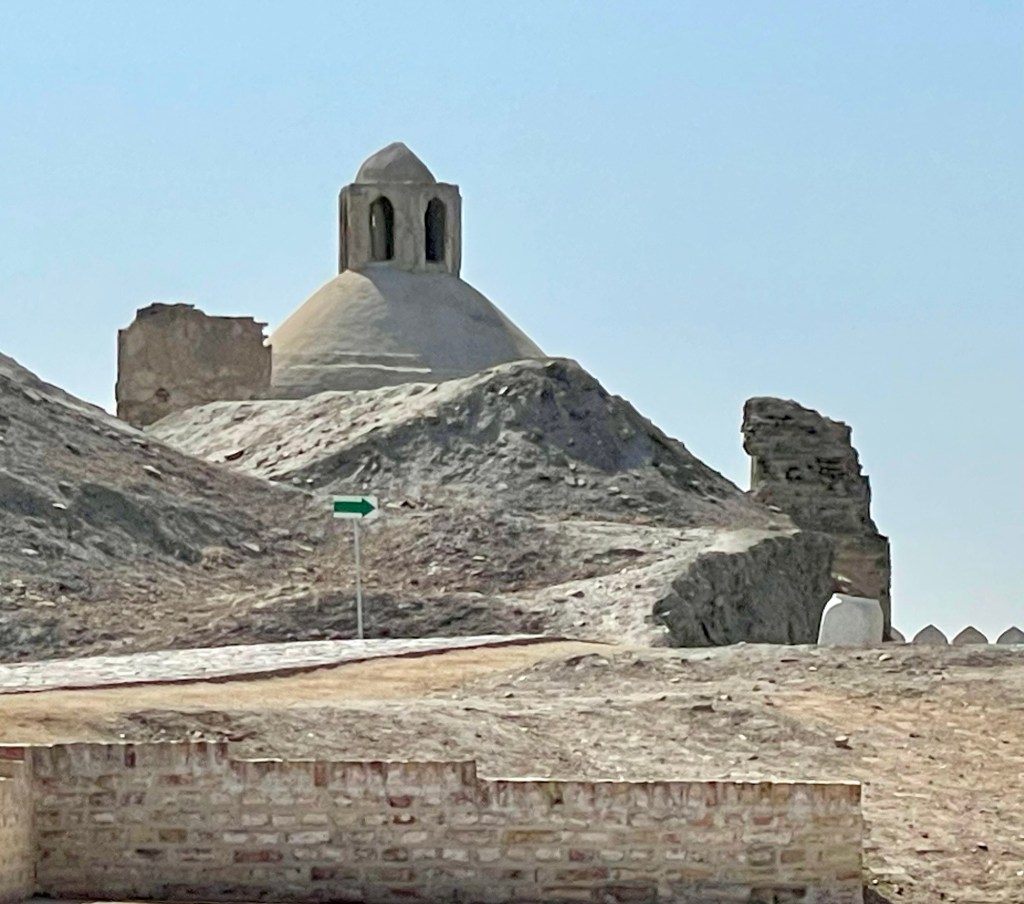
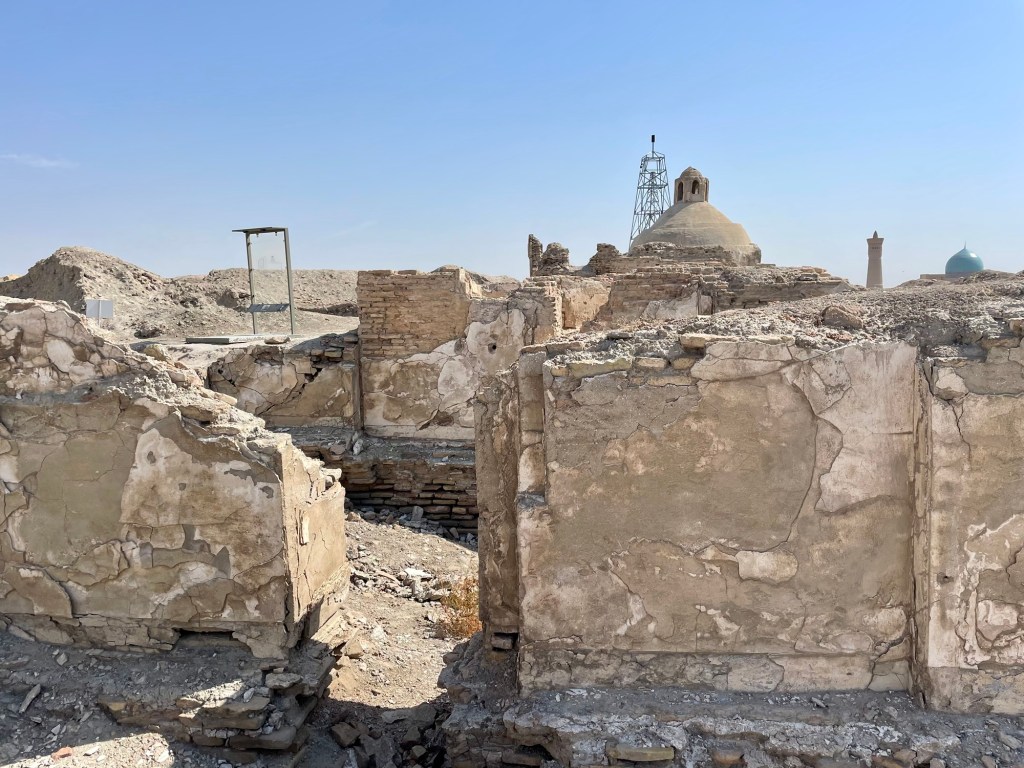
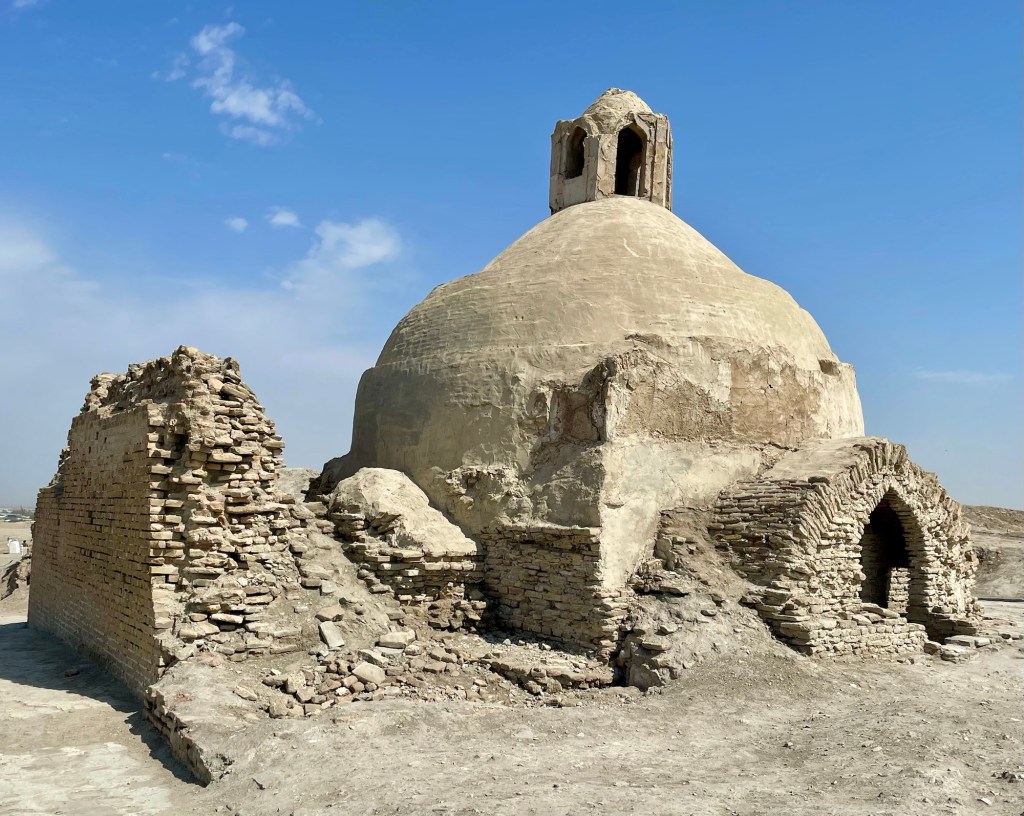
We continued onto the Ark Citadel, the original fortress of Bukhara that likely dates back two thousand years or more. The current structure has been built and rebuilt on the same site throughout its history and has preserved something of the form, purpose, and function of the first ark. Lile the medival castle complexes of Europe, the Bukhara Ark, until 1920, served the Emirs of Bukhara as a residence, audience hall and as protection from neighboring enemies.
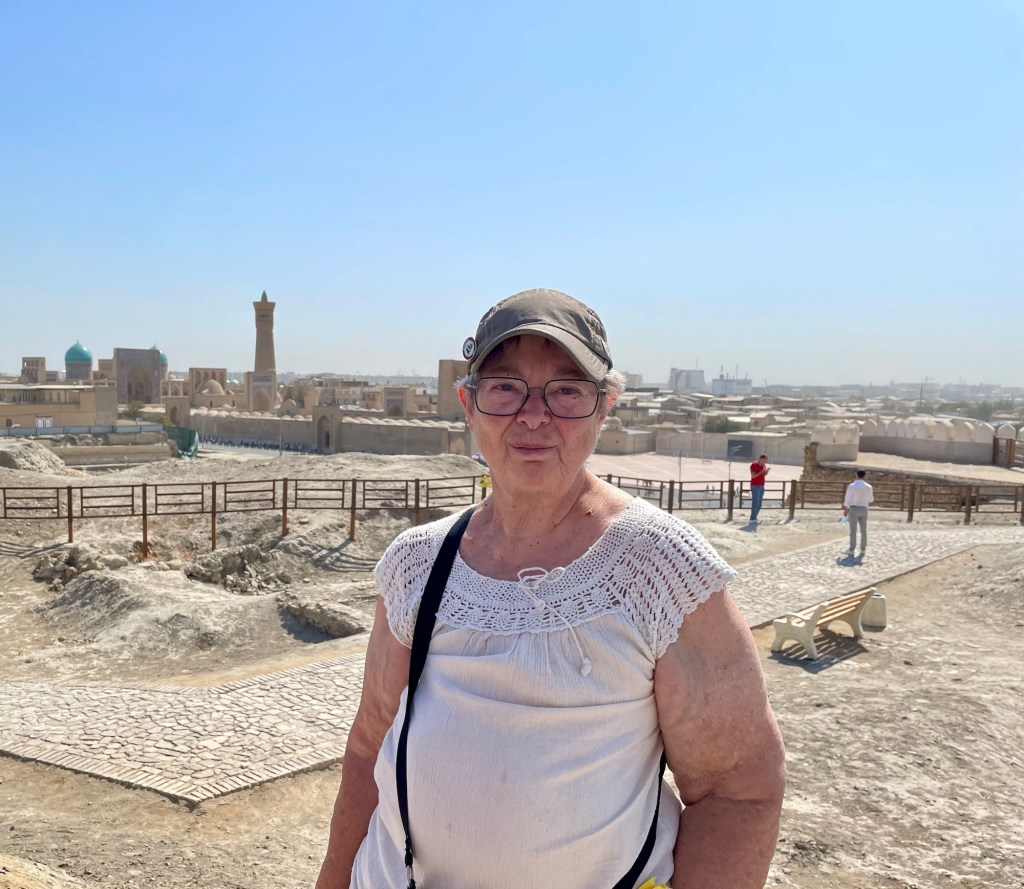
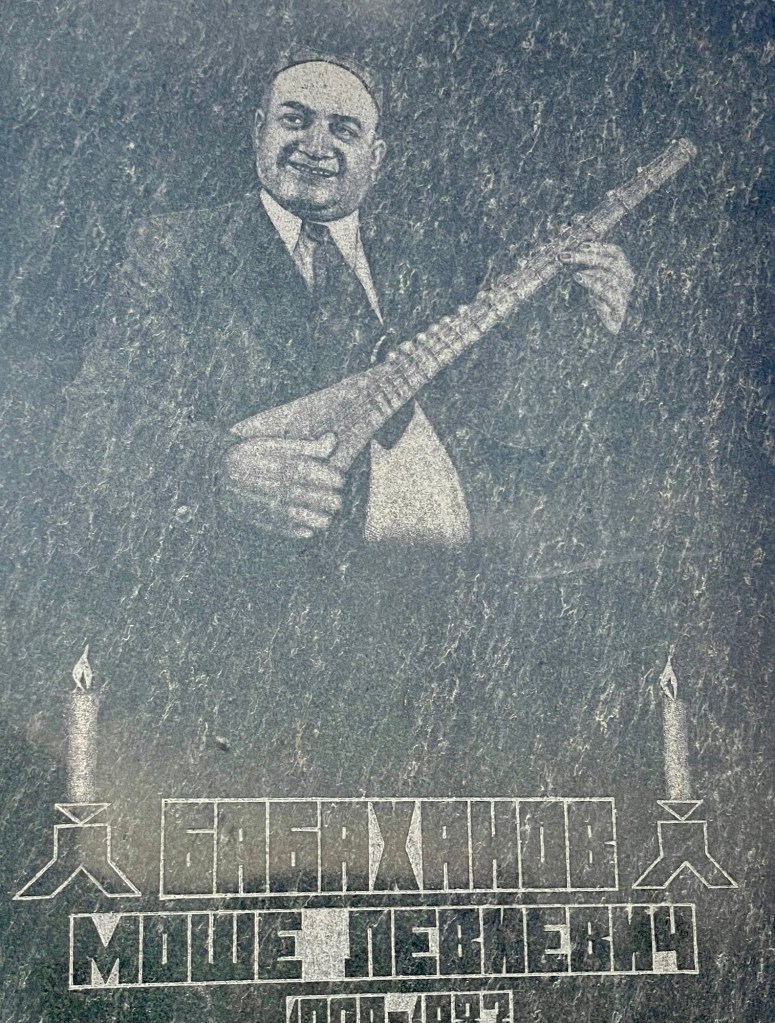
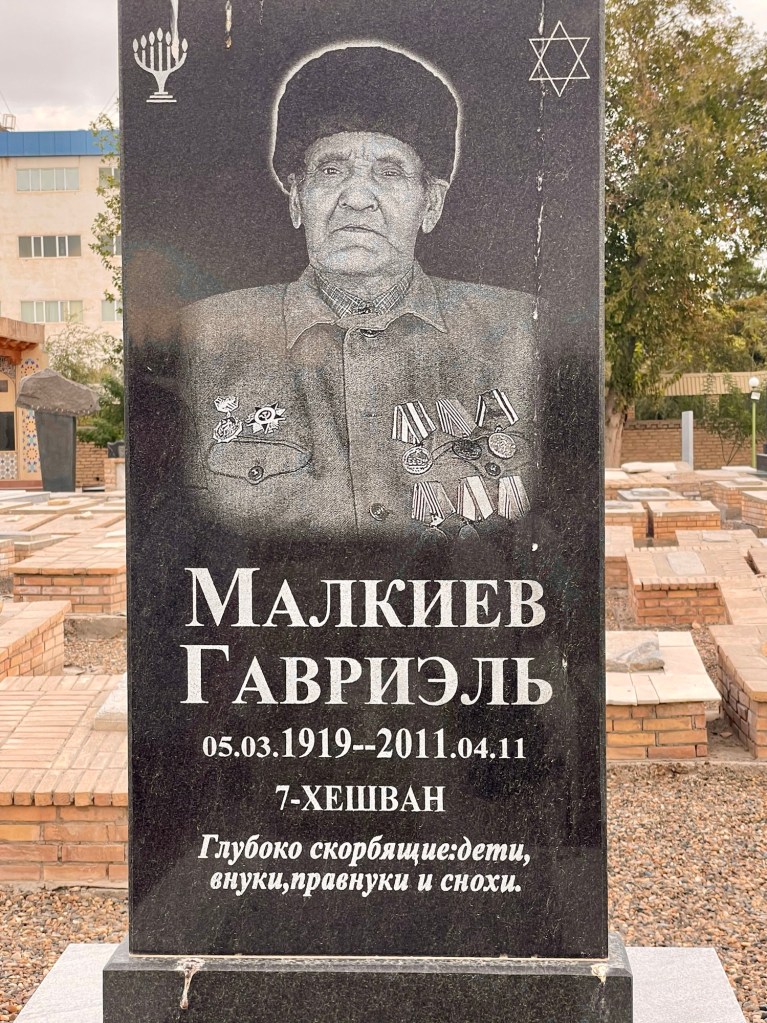
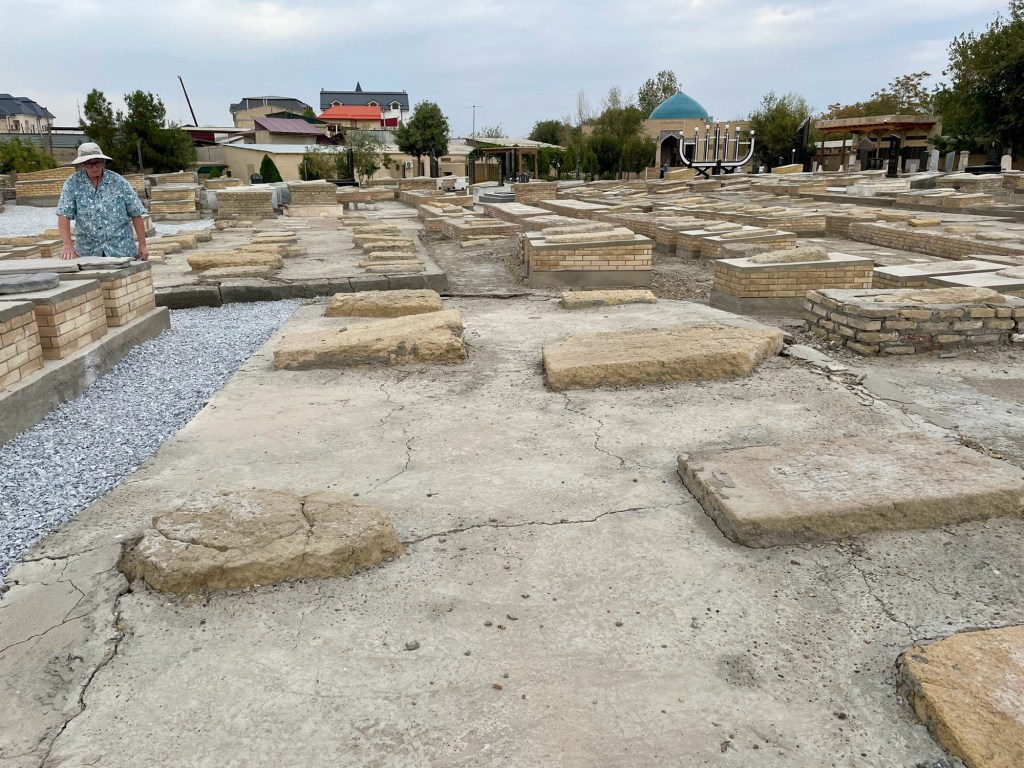
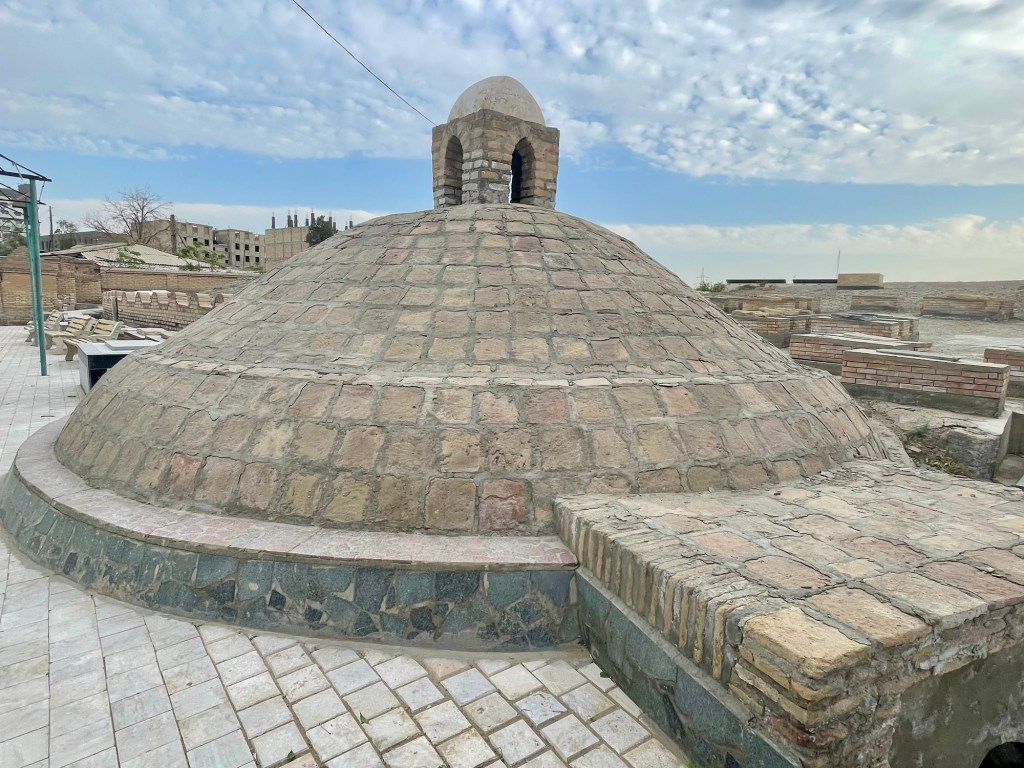
After this exhausting morning, we had lunch and then free time for the rest of the afternoon. I used the free time to go to the Jewish cemetery. I was joined by one of the other ladies on the tour. It was about a kilometer walk from our hotel on some side streets off the beaten path. So just the walk was interesting in itself. The cemetery looked very much like the Jewish cemetery I visited in Fez, Morocco. Sephardi Jews do not use vertical headstones. Whereas Askenazi Jews will put up a vertical headstone. So most of the burial sites in the cemetery were Sephardi. Since all of the vertical tombstones had pictures on them, I’m guessing that they were Russian Jews. It is really not kosher to put a picture on a headstone. However, they were more interesting to look at. Here are the pictures.
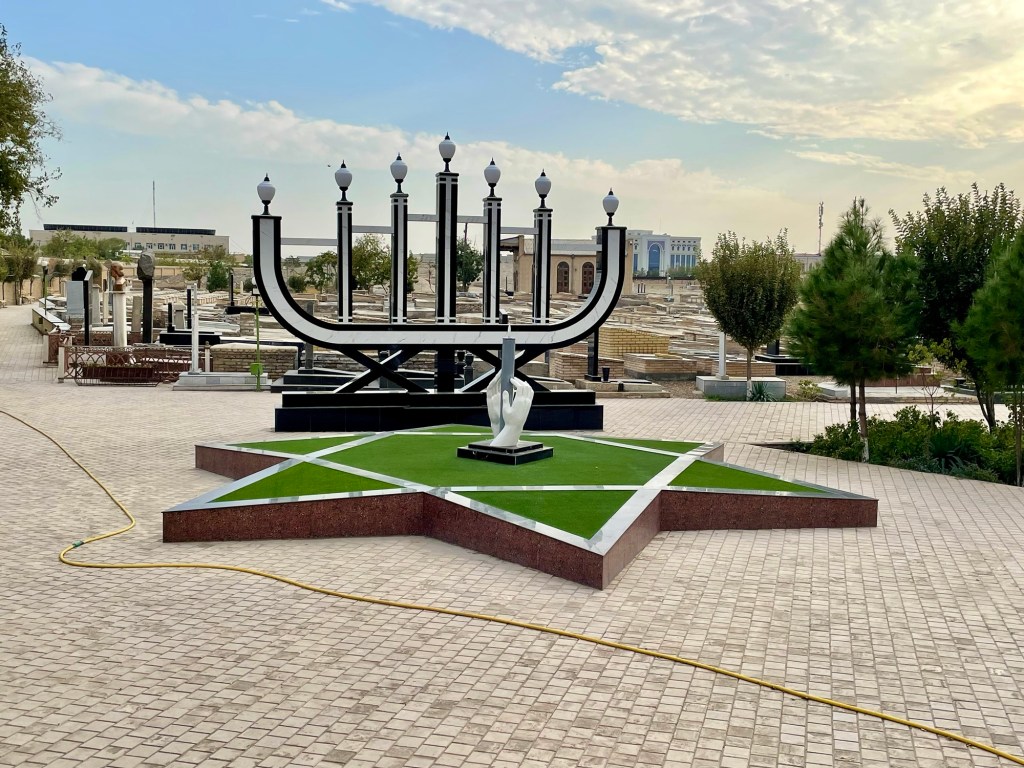
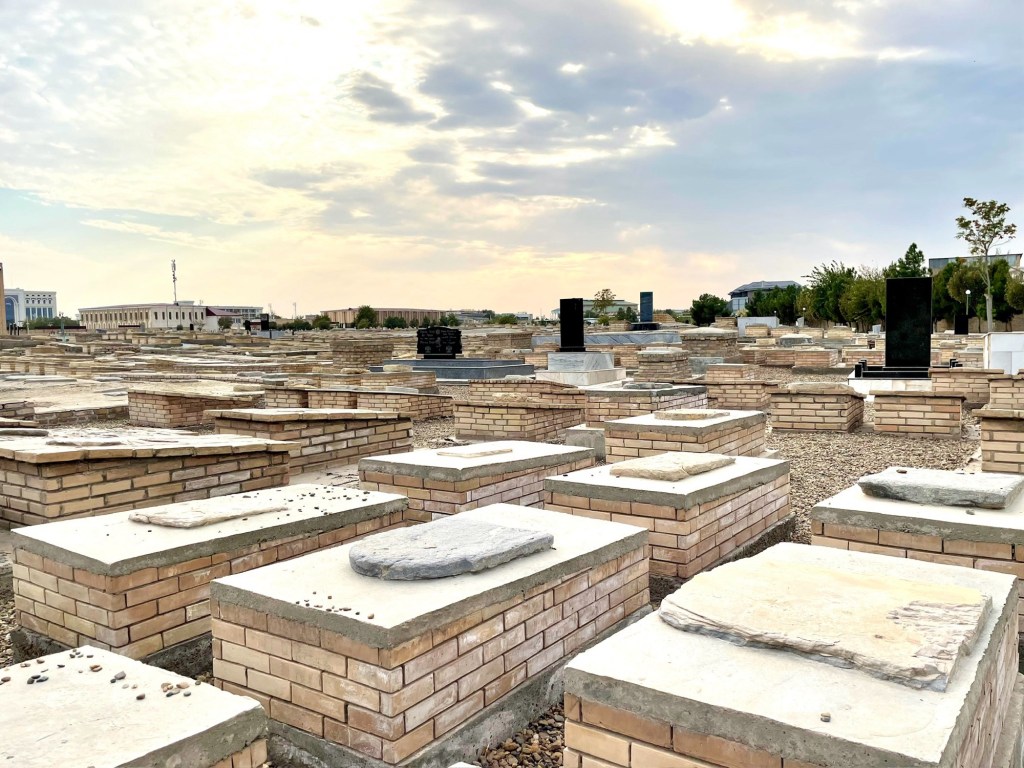
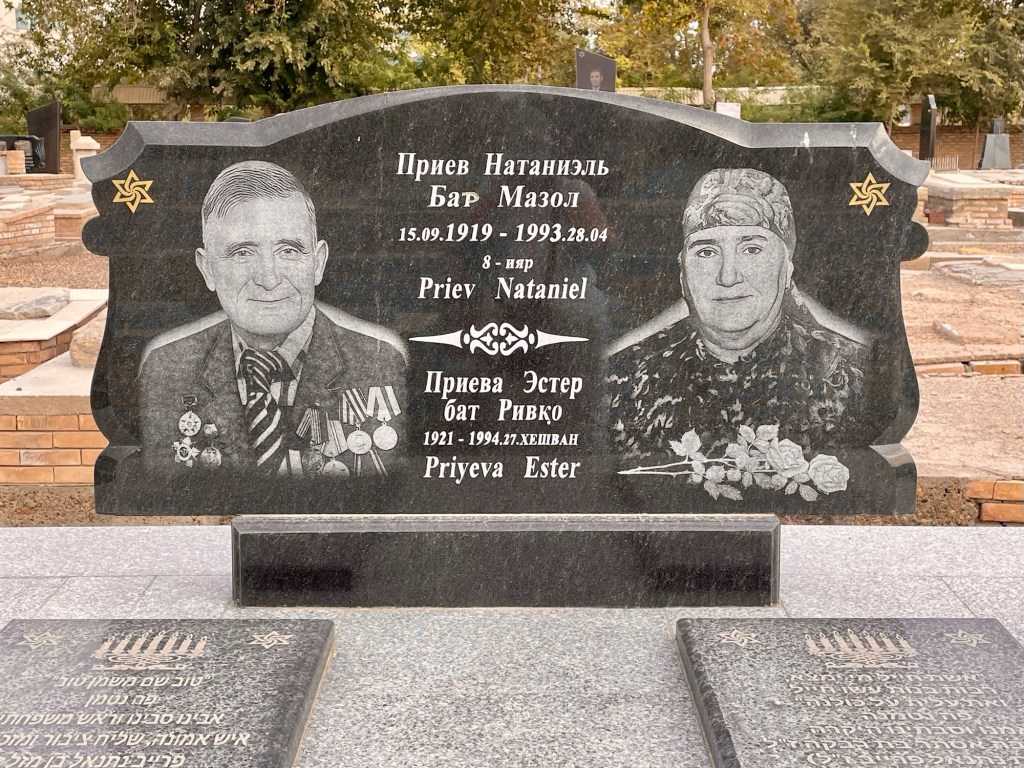
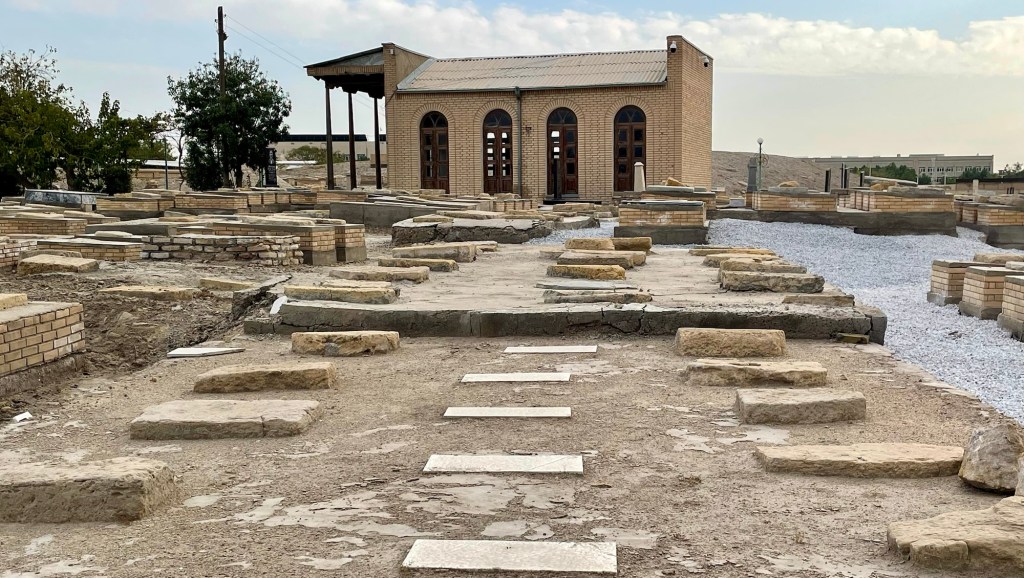
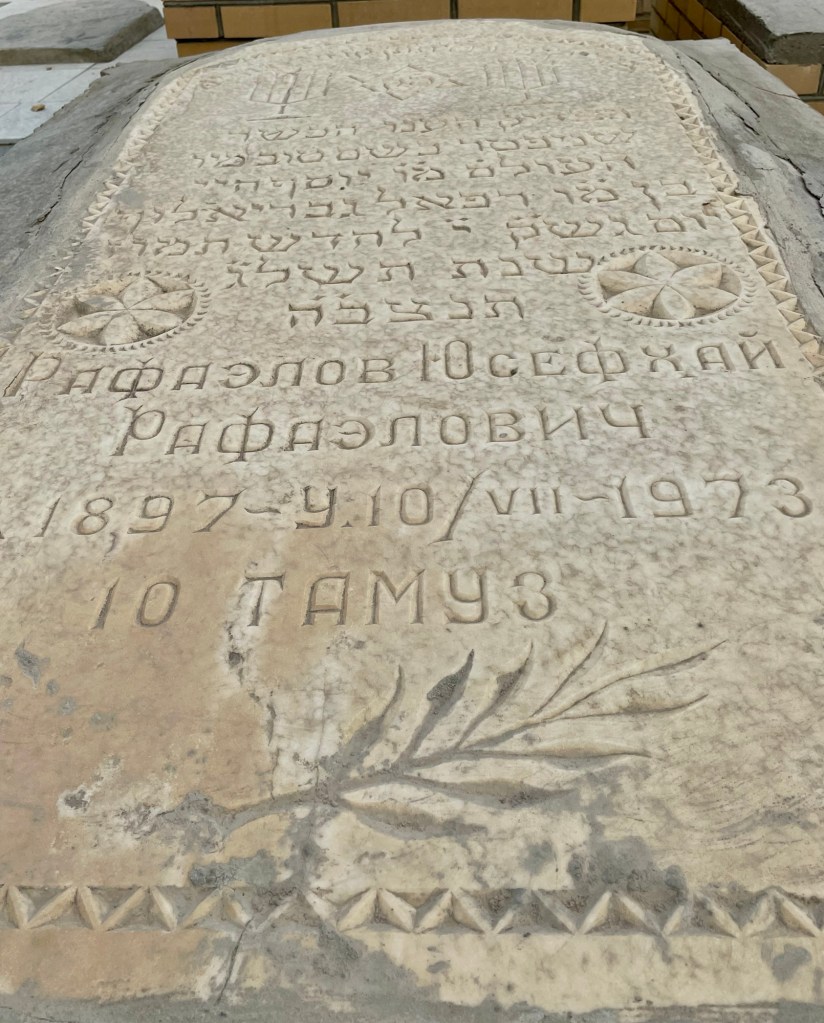
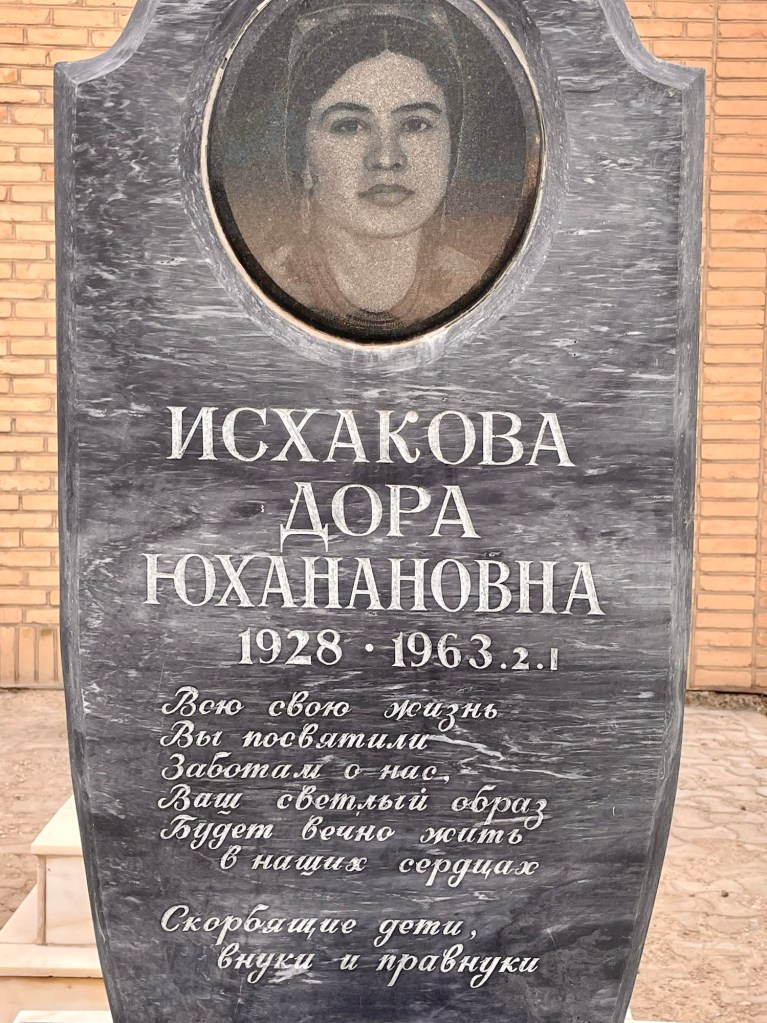
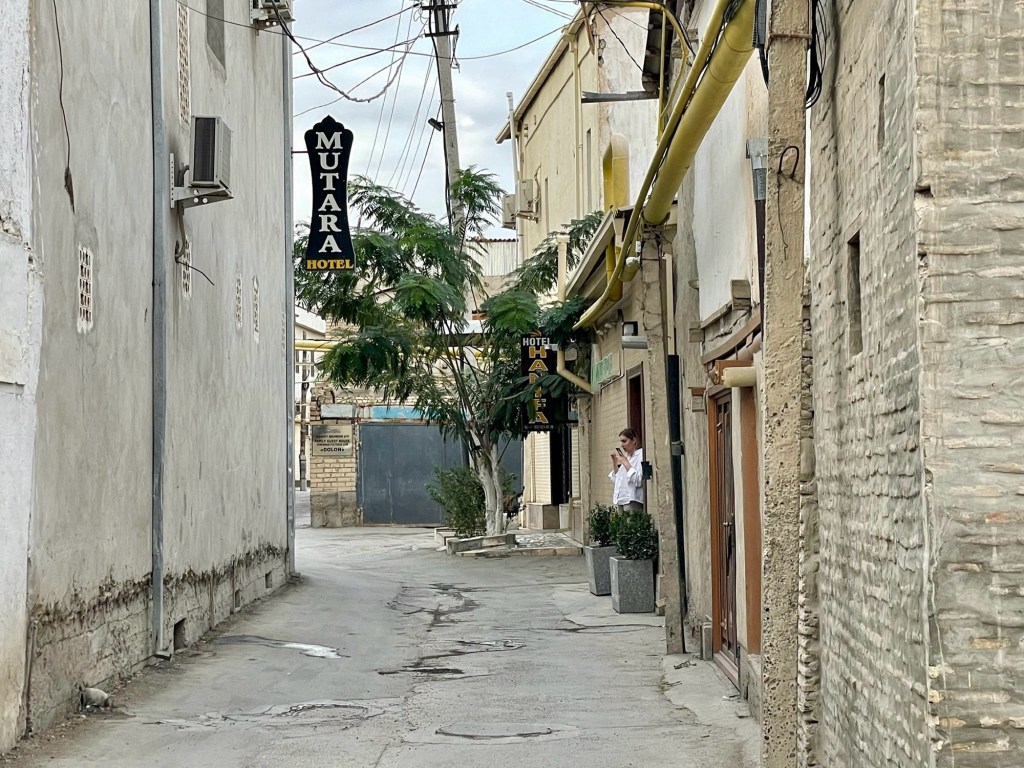
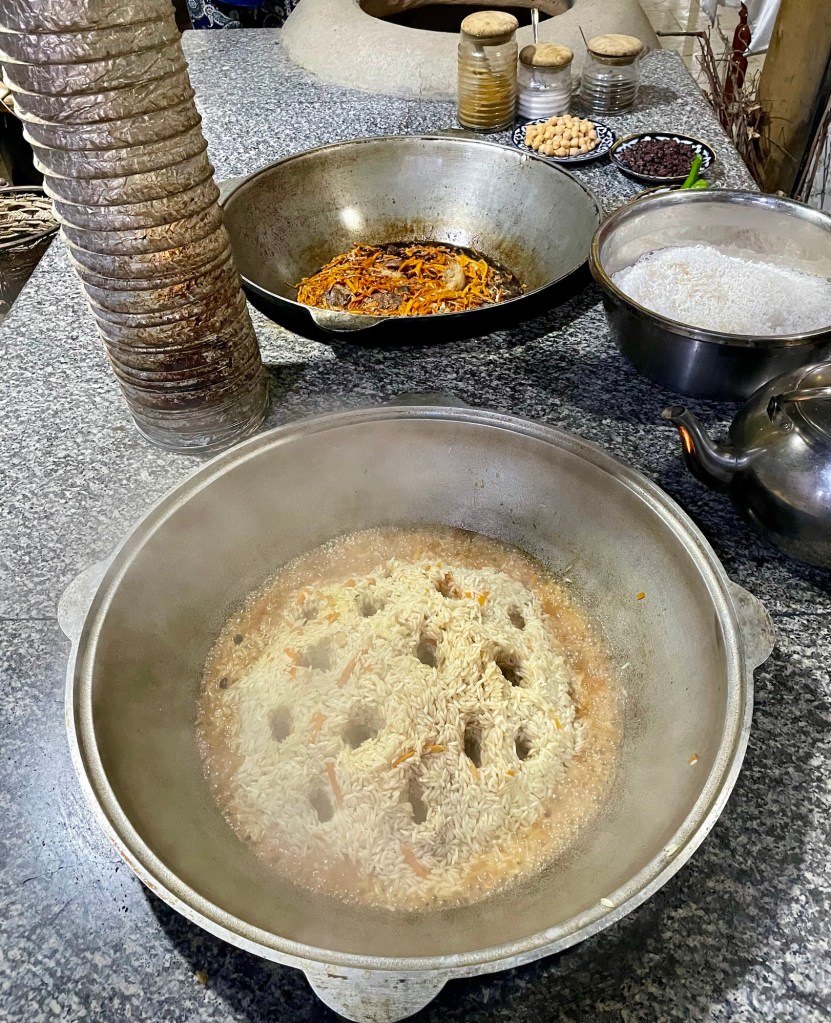
After my trip to the cemetery, I joined the rest of the group for dinner. We were taken to a restaurant that specializes in pilaf. We watched them prepare it and of course got to enjoy eating it. The few times that I’ve been able to watch cooking, I noticed that people here use a lot of oil, very different from how we cook in the states. The good news is that they use things like sunflower or olive oil, healthy oils.
Well, that’s it for this day. More of Bukhara to come.
 RobbieLambertsTravels
Wow! Quite a day. No wonder you were hot and tired! Loved all the beautiful Islamic architecture. Very reminiscent of what we saw in Iran many years ago, when the Shah was still in power and it was very pleasant to visit there. I look forward to more of Bukhara.
LikeLike